l02-best-instant-noodles.html
Last reviewed 31 October 2026 · China Food Way editorial team
The noodle aisle in my local Asian supermarket runs the length of the building, and I have walked it more times than I can count, at a pace somewhere between browsing and avoidance. It is the most confusing shelf in the shop, because three cuisines are stacked in it and only one of them is Chinese. What follows is the result of buying far too many packs, cooking many of them badly, and going back through the pile with a timer.
A scoping note before the countdown, because it matters. The big Japanese and Korean brands sit on the same shelf in brighter packaging, and they are good at what they do. They are not Chinese, they are not in this ranking, and they are judged on their own terms. This list covers what is actually in the Chinese aisle: instant noodles made for Chinese tastes, eaten with Chinese expectations, and priced like a meal rather than a snack.
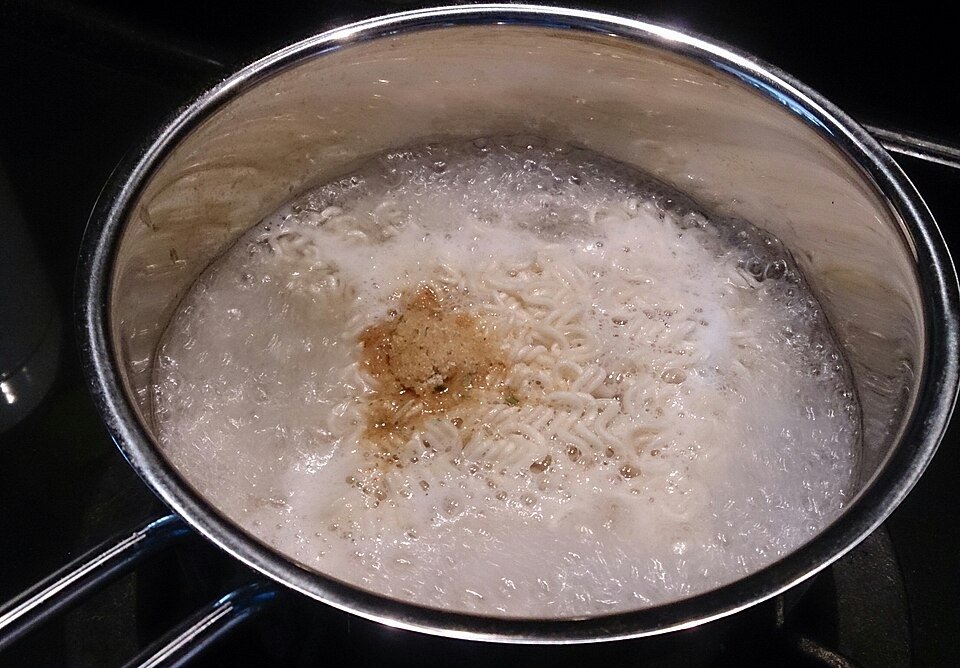
Why do the cheap cups turn to paste if I overcook them?
Cheap cups turn to paste because the noodle is a thin pre-fried disc with almost no gluten structure, so thirty seconds past the mark is enough to collapse it into a gluey lump.
The flash-frying that makes them cook in three minutes also makes them fragile: they hydrate from the outside in and the core dissolves before the edges soften properly. I set a timer and treat the packet’s stated time as a ceiling, not a target, pulling the lid at the low end and letting residual heat finish the job. The British own-brand cups are the worst offenders because the noodle is the cheapest grade on the shelf. The fix is brutal simplicity: shorter time, less water, eat immediately. A noodle that sits in hot broth after cooking keeps cooking, so the cup you forget on the desk is never coming back.
Counting Up: Ten to Seven
Number 10: the British supermarket’s own “Asian flavour” cups. They cost about a pound, they photograph well, and the noodle is a pale disc that turns to paste if you overrun the stated cooking time by thirty seconds. The powder is mostly salt and a suggestion of chicken. They are not bad, exactly; they are simply not in the same category as everything below, and I include them because a ranking that pretends they do not exist is not honest.
Number 9: the Japanese and Korean imports. Here for honesty rather than score. The Korean shin-style packs and the Japanese cup noodles are the reason many people think instant noodles mean one specific thing, and they are good at it. They are not Chinese, nothing below is ranked against them, and they deserve the mention because most readers arrive on this page assuming they are the entire story.
Number 8: Baixiang (白象) and the other domestic budget brands. The mainland’s home-grown giants, which have turned up in British Asian supermarkets in multipacks priced to undercut everything else on the shelf. The fried block is thin, the powder sachet does most of the work, and the result is honest but flat: a carbohydrate rescue rather than a meal. At around 60p to £1.20 a pack, this is what you buy when the cupboard is bare and payday is on Thursday.
Number 7: the mainland-style braised-beef bowl. Master Kong (康师傅) built its reputation on braised beef, hong shao niu rou mian (红烧牛肉面), and it is probably the most eaten bowl in the country. The bowl format beats the packet: a thicker fried block, a real sachet of spiced oil, and a soup that tastes faintly of star anise and soy. Salty, one-note, and exactly what it promises, which counts for something at one in the morning. Around £1.50 to £2.50 a bowl.
Do the flavour sachets contain real meat or just seasoning powder?
Almost none of the flavour sachets contain real meat; they are salt, oil, sugar, MSG and aroma compounds engineered to taste like a dish rather than contain one.
The ‘beef’ or ‘pork’ label describes a flavour target, not an ingredient, and the bits you see are usually dehydrated vegetables, starch and the occasional egg flake, never meat. This is why the broth tastes bright and identical cup to cup but leaves no satisfaction behind: there is no protein, no fat from the animal, nothing to slow the salt hit. I read the ingredient list and assume the claim is marketing until I see it. The better Chinese packs lean on fermented bean or chilli paste for depth instead of a meat illusion, which is why they rank higher. Treat the sachet as seasoning, then add a real egg if you want it to count as food.
Counting Up: Six to Four
Number 6: the boil-the-bowl mala (麻辣) hot pot. A bowl of potato, lotus root, tofu skin and vermicelli with a sachet of hot pot base, into which you pour boiling water and wait about fifteen minutes. When it works it is a genuine meal, and the lotus root keeps a little bite while the broth builds. The honest downside is the cast: the meat is protein cake, the chilli is blunt rather than numbing, and at roughly £5 to £7 you are paying takeaway money for a plastic bowl.
Number 5: the self-heating mala hot pot. The same idea with a chemical heat pack in the base. The first one I tried performed like a magic trick: fifteen minutes, no kettle, real steam, actual chilli bloom. Then I read the small print, which admits that most of the water is there to feed the heating sachet rather than the soup. The heat is even and the numbing is real, but at around £7 to £10 you are paying theatre money. Fine for a camping trip or a late shift; not a Tuesday. If you want the real thing at home, malatang (麻辣烫) is simpler than it looks, and my malatang recipe for a cold evening is cheaper and much better.
Number 4: instant luosifen (螺蛳粉). The river snail noodles of Guangxi, and the most polarising pack in the aisle. The rice noodles are properly slippery and slow to rehydrate, the soup is a fermented, sour, deeply funky business, and the bag of pickled bamboo shoots is the whole point. The smell will clear a room and the taste divides households, but if it is for you it is the most distinctive thing here, and my take on luosifen at home shows what the factory version is imitating. Roughly £2.50 to £4 a pack.
How can I tell a good Chinese instant noodle from a weak one on the shelf?
Judge a pack by the noodle and the sauce, not the cartoon on the front, and the good ones announce themselves three ways.
First, the noodle is wheat and visibly thicker or wavier than the pale disc cups, often sold in a block rather than a foam cup. Second, the seasoning is a paste or oil sachet built on fermented bean, chilli or sesame rather than a single salt powder. Third, the brand is a mainland Chinese name you have seen in a Chinese supermarket, not a Western ‘Asian flavour’ own-label. I skip anything whose ingredients lead with ‘flavourings’ and no named sauce. The regional tells help too: Sichuan packs lean on chilli oil and numbing pepper, northwest ones on cumin and lamb notes, and Guangdong ones on a lighter soy broth. Read the back, not the picture, and the weak cups separate themselves.
Counting Up: Three to One
Number 3: the Sichuan numbing-and-hot noodles. The mainland’s mala instant, usually a fried block with a chilli-oil sachet carrying genuine Sichuan peppercorn, and the heat arrives as a tingle rather than a burn. This is the pack I keep for emergencies, because it does what it says on the front and the noodle holds its structure instead of collapsing. Not subtle, and the soup is mostly a vehicle for the oil, but at roughly £1.50 to £2.50 it is the cheapest honest heat in the shop.
Number 2: Hong Kong-style thin wheat noodles. Thin, slightly alkaline, yellow, in a cellophane pack with one or two sachets, cooked in three minutes. The texture is the closest thing in the aisle to a real noodle, with the snap of a proper thin noodle and the ability to carry a thin soup without dissolving into it. The soup sachet is the weak point, so I treat them as noodles rather than a meal and add my own stock. My guide to Chinese noodle styles covers the family they belong to, and knowing the difference between rice and wheat noodles helps when you are stocking up. Around £1.50 to £2.50 a pack.
Number 1: the Taiwanese minced-pork sachet noodles. The classic, and the winner. Non-fried dried noodles, usually a flat bundle rather than a block, plus a sachet of rou zao (肉燥), minced pork cooked down in soy and sugar until it is almost a paste. No powder and no pretending: boil the noodles, drain them, stir in the meat and the chive oil, and you get something that tastes like a Taiwanese night-market snack rather than a simulation of one. At around £2 to £3 a pack it is the only thing on this list I would serve to a guest without apology.
The Tasting Table
| Style | Noodle texture | Soup depth | Heat | Rough price per pack |
|---|---|---|---|---|
| Supermarket own-brand cup | Pale disc, pastes fast | Thin and salty | None | About £1 |
| Baixiang and domestic budget brands | Thin fried block | Powder-forward, flat | Mild | Around 60p to £1.20 |
| Master Kong-style braised beef bowl | Thick fried block | Light, faint star anise | Mild | Around £1.50 to £2.50 |
| Boil-the-bowl mala hot pot | Mixed, potato and vermicelli | Rich but blunt | Medium-hot | Roughly £5 to £7 |
| Self-heating mala hot pot | As above | Weaker, watered down | Medium-hot, numbing | Around £7 to £10 |
| Instant luosifen | Slippery rice noodles | Funky, sour, fermented | Varies by brand | Roughly £2.50 to £4 |
| Sichuan numbing-and-hot noodles | Springy fried block | Thin and oily | Hot and numbing | Roughly £1.50 to £2.50 |
| Hong Kong-style thin wheat noodles | Thin and snappy | Thin, needs help | None to mild | Around £1.50 to £2.50 |
| Taiwanese minced-pork sachet noodles | Flat dried bundle, chewy | No soup; meat sauce instead | None | Around £2 to £3 |
The Japanese and Korean packs are deliberately absent from the table, because they are not part of the countdown, but note what the Chinese rows show: the best of them put their money into a real sauce sachet and the worst put everything into powder. That single design choice explains most of the spread.
Can I upgrade a basic pack into something closer to a real meal?
Yes, and three cheap additions take even a basic pack most of the way to a proper bowl.
A cracked egg dropped into the boiling broth cooks in the time the noodle does and adds the protein the sachet pretends to have. A handful of greens, spring onion or frozen peas stirred in at the end brings colour and a vegetable the cup never had. A teaspoon of Chinkiang vinegar or sesame oil finished off the heat lifts the whole thing past its powdery base. I keep all three by the stove precisely for this. The caveat is not to overdo it: one egg and a small handful is a meal, a fridge raid is a different dish. Do this rather than buying the premium pack — the noodle is often the same grade, and your additions are what make the difference.
What to Stock
If I could keep only three packs in the house, they would be the Taiwanese minced-pork noodles for a proper quick meal, the Sichuan numbing-and-hot for the nights when only heat will do, and one self-heating mala bowl for the evening you cannot face boiling a kettle. Everything below number three is an occasional purchase rather than a staple.
The Taiwanese sachet noodles are the only genuine everyday staple on this list.
Buy them in multipacks when you see them, keep the Sichuan pack for emergencies, and treat the hot pot bowls as a treat. If you want to build the rest of the cupboard properly, my Chinese pantry essentials list covers the sauces and dry goods that turn a pack into a dinner, and my guide to where to buy Chinese ingredients covers the shops that reliably stock the Taiwanese style.
Frequently Asked Questions
Are instant noodles bad for you? In moderation they are a reasonable emergency meal, and the non-fried sachet noodles are less of a fried-product issue than the classic fried block. The bigger dietary problem is what people leave out: an egg, a handful of greens and a spoon of leftover meat turns any pack on this list into a balanced bowl, and skipping that step is what makes instant noodles a habit rather than a rescue.
Why are the Japanese and Korean brands not ranked? Because this is a list of what is in the Chinese aisle, and those brands are neither Chinese nor pretending to be. They are good products with their own traditions, and judging them inside a Chinese ranking would confuse the comparison. Judge them against their own shelf.
Which Chinese instant noodle should a beginner try first? The Taiwanese minced-pork sachet noodles, because they taste least like a simulation and most like food you would order. If you want something hot, the Sichuan numbing-and-hot pack is the friendliest introduction to the mala style, which is the same flavour family as my malatang recipe for a cold evening.
What is the correct way to cook instant noodles? Use a timer, and stop before you think you should; overran time by a minute is what turns a springy block to paste. For the sachet-style noodles, do not tip in all the oil at once, and add a splash of the cooking water rather than draining bone dry. Small differences, big effect.
Are self-heating hot pots safe? They are common enough that millions are sold each year, and the basic safety is ordinary sense: follow the pack, keep the vent clear, never seal the lid tightly while heating, and keep the whole thing away from children and pets while it hisses. Treat it like a hob rather than a toy.
Can I make these at home? Yes, and once you have the base ingredients it is not much harder, since the pack version is mostly a spice mix, a sauce and a lot of salt. My Chinese pantry essentials list covers the chilli bean paste and Sichuan peppercorn you would need, and the home version lets you control the salt, which the packs do not.
The Short Version
The Chinese aisle is a different world from the Japanese and Korean shelves, and it is worth shopping on its own terms. The Taiwanese minced-pork sachet noodles are the one to stock, the Sichuan numbing-and-hot pack is the emergency, and the mala hot pot bowls are an occasional treat at takeaway prices. The Japanese and Korean brands are good, but they are not Chinese and are not ranked here. Judge a pack by whether its money went into a real sauce or into powder, and buy accordingly.