Oriental Pearl Tower: A Visitor’s Guide to Planning Your Trip
The first time I went to the Oriental Pearl Tower I queued for the wrong lift, bought a ticket that didn’t include the glass floor, and watched the sun set from a café instead of the observation deck. It still cost me most of an afternoon, and I learned more from that botched visit than from any brochure. This is the guide I wish I’d had: how to get there, what to pay for, when to go, and how to fit it into a Shanghai trip without wasting a day.
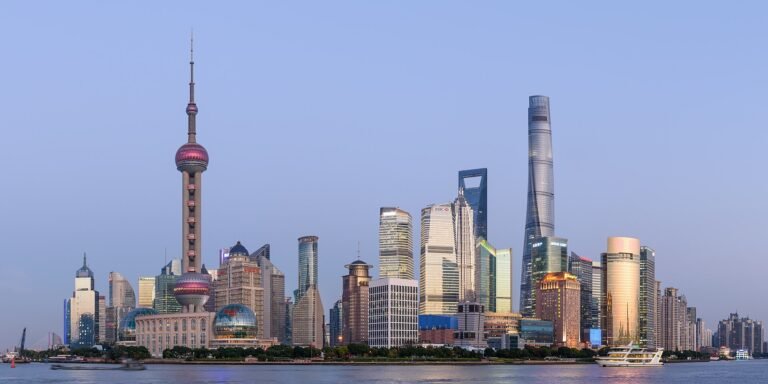
The tower sits on the tip of Lujiazui, the financial district of Pudong, on the east bank of the Huangpu River. On the far side is the Bund, the row of colonial-era buildings that most visitors photograph first. The two faces of the city sit across the water from each other, and the tower is the obvious bridge between them in your plan. Get the tower done, then cross back for the Bund at night.
How to get there without the faff
The simplest route is the metro. Take Line 2 to Lujiazui Station and leave by Exit 1; the tower is a five-minute walk through a small plaza. I timed it at roughly four minutes on a quiet morning and closer to ten when a tour group flooded the exit. Taxis and ride-hailing apps will drop you at the base, but the roads around Lujiazui are confusing for drivers, and the last kilometre often moves slowly at peak hours.
If you’re staying near the Bund, the most atmospheric approach is the Huangpu River ferry or the Bund sightseeing tunnel, though neither is strictly faster. The ferry costs a few yuan and lands you within walking distance on the Pudong side. I’d only bother with the tunnel if you have children who will enjoy the slightly silly light show inside it. For most people, the metro is the answer, and it spares you the worst of the evening traffic.
Buses run past the base as well, but they’re slower and stop often, so I wouldn’t choose them unless your hotel is right on a route. Walking from nearby Pudong hotels is pleasant in cool weather; in summer the humidity makes even a short stroll feel like a marathon. Plan the walk for the morning and save the air-conditioned metro for the hotter part of the day.
What the tower actually is
The Oriental Pearl Tower was completed in 1994 and, as Wikipedia notes, it was for several years the tallest structure in China before being overtaken by taller buildings in the same district. It isn’t one tower so much as a cluster: eleven steel columns holding up a series of spheres and a cone at the base. The design is meant to echo a line from an old Chinese poem about pearls dropping onto a jade plate, which is why the spheres look like beads strung on a stalk.
It’s worth comparing it with the country’s other famous towers, because they are very different experiences. The Canton Tower in Guangzhou is a newer, twistier structure with a similar brief: ride up, look down, take photos. Both are city icons, but they sit in different climates and different kinds of skylines.
| Feature | Oriental Pearl Tower | Canton Tower |
|---|---|---|
| City | Shanghai (Pudong) | Guangzhou (Haizhu) |
| Completed | 1994 | 2010 |
| Main draw | Spheres, glass skywalk, river view | Twisted form, bubble tram, sky drop |
| Best paired with | The Bund, Lujiazui | Pearl River night cruise |
| Crowd level | High year-round | Moderate, peaks on holidays |
The table above is a starting point. Both towers are worth a visit if your trip covers both cities, but neither replaces the other. If you only have time for one, pick the city you’re already in rather than detouring.
Tickets, hours and what to budget
Prices change, so treat the numbers below as ballparks and check the official site before you go. A basic ticket that covers the lower and main observation spheres has historically sat in the region of RMB 160–180. The package that adds the glass-floor skywalk and the higher sphere pushes toward RMB 220–260. The rotating restaurant is a separate cost altogether and is best treated as a meal with a view rather than as part of the ticket.
Opening hours have typically run from around 09:00 to 21:00, with the last entry perhaps an hour before closing. Again, check the official site before you go, because holiday periods sometimes extend the evening. I’d budget two to three hours door to door: fifteen minutes to get up, an hour on the decks, and the rest for photos, the shop, and the walk back to the metro.
There are occasional combined tickets that bundle the tower with a river cruise or a nearby museum, and these can be good value if you were going to do both anyway. I’d skip any add-on that involves a third attraction you don’t actually want, since the discounts are modest and the extra bookings add friction. Read the fine print on timed entries before you pay.
The spheres, the glass floor and the TV cabin
Once inside, the lift deposits you at the main observation sphere, around 263 metres up. The views sweep from the Bund on one side to the sprawl of Pudong on the other. Above that is the smaller upper sphere, and between the two is the transparent glass-floor skywalk — a short loop where you stand on thick glass and look straight down the column. I found it unnerving in a good way; my travel companion refused to step on it.
Lower down, the tower holds a small history museum about old Shanghai, which is a calm break from the heights and included in most tickets. There is also a “space capsule” style cabin higher up and a modest exhibition about television broadcasting. None of these are essential, but on a rainy day they fill the time when the outdoor decks are fogged over. The museum alone is worth twenty minutes if the weather turns.
When to go and how long to stay
The best months are spring (April to May) and autumn (September to November), when the air is clearer and the humidity lower. Summer is hot and crowded; winter is cold but often gives the clearest long-range views after a front passes. Within the day, late afternoon into early evening is the sweet spot: you catch daylight, the blue hour, and the city’s lights coming on, all in one visit.
Avoid the first two days of any national holiday if you can. I once arrived on the second day of a holiday week and the deck was shoulder to shoulder; you couldn’t get near the rail for a photo. A weekday in the low season is a different, almost peaceful experience. If you must go in high season, buy the earliest timed slot and be at the gate before it opens.
Bring a camera with a decent low-light sensor if photography matters to you, because the indoor deck is dim and the city at dusk is the real prize. Phones cope fine in daylight but struggle once the sun is down. A small tripod is usually banned, so brace against the rail instead.
Eating and staying nearby
Pudong around the tower is full of malls and hotel restaurants, many of them priced for the business district. For better value and more character, cross to the Bund or walk into the older streets of the former French Concession, which is a short metro ride west. I like to do the tower, then eat on the west side where the prices are saner.
Hotels immediately beside the tower are convenient but pricey, and the windows facing the tower are the ones that cost more. If you’d rather save, stay near a Line 2 station a few stops out and ride in; you’ll trade a little time for a lot of money. Either way, book a room that lets you see the skyline, because the lit tower from your window is part of the fun.
Building a wider China trip around it
Shanghai is usually one stop on a longer route, and the tower pairs naturally with other landmarks. If you’re heading north afterwards, the Badaling Great Wall near Beijing is the classic addition, and the all about beihai park piece helps you plan a quiet imperial-garden morning in the capital.
For a deeper cultural thread, the Big Wild Goose Pagoda Guide in Xi’an shows another way China has built tall structures for very different purposes. Families often extend west to the Chengdu Panda Base explained, while those drawn to old towns should read everything you need to know about ciqikou before Chongqing. And if your trip reaches the far west, how crescent lake dunhuang is really done is a very different kind of excursion.
Frequently Asked Questions
Is the Oriental Pearl Tower worth visiting if I’m afraid of heights? The observation spheres are enclosed and feel safe, but the glass-floor skywalk is genuinely exposed. Skip that add-on and you’ll still get the views from behind solid glass.
How long should I plan to spend there? Two to three hours covers the ride up, both decks, the museum, and photos. Add an hour if you eat at the rotating restaurant.
What’s the best way to combine the tower with the Bund? Visit the tower in late afternoon, come down around dusk, and cross the river to the Bund for the lit-up skyline. The waterfront is a short metro or taxi ride away.
Can I buy tickets on the day? Yes, but online is faster. During holidays the walk-up queue can be long, so an e-ticket saves time.
Is it suitable for children? Mostly yes. The sightseeing tunnel and the spheres are fun for kids, though very young children may not like the glass floor.
Do prices and hours stay fixed year-round? No. Treat any figure as a ballpark and check the official site before you go, especially around public holidays.