Ginger Milk Curd (Jiang Zhuang Nai): Set Without Rennet
My first attempt at ginger milk curd cost me about 300 ml of decent full-cream milk and a small piece of my pride. I heated the milk, poured it into ginger juice, waited, and lifted the bowl with the confidence of someone who had watched the video twice. Liquid. Sweet ginger milk, nothing more. The second attempt went the other way: something grainy and weeping, closer to curdled cottage cheese than dessert. The third sat on the counter for twenty minutes and simply refused to make up its mind.
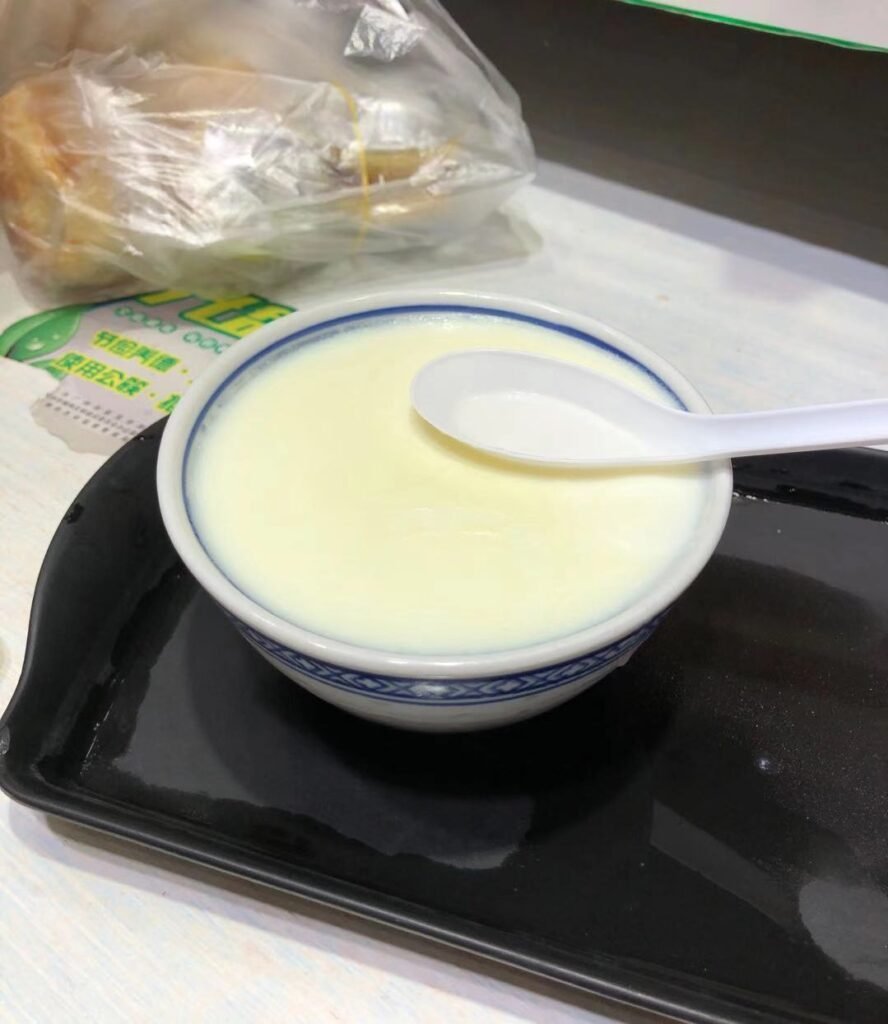
What I didn’t understand then, and what none of the recipe cards I was reading explained properly, is that jiang zhuang nai (姜撞奶) is not a pudding you cook. It is a reaction you pour. Get the enzyme, the temperature and the timing right, and the milk sets itself in about a minute, no thickener of any kind. Get one of the three wrong and you are drinking ginger milk, which is pleasant but not the point.
Why Ginger Sets Milk Without Any Rennet
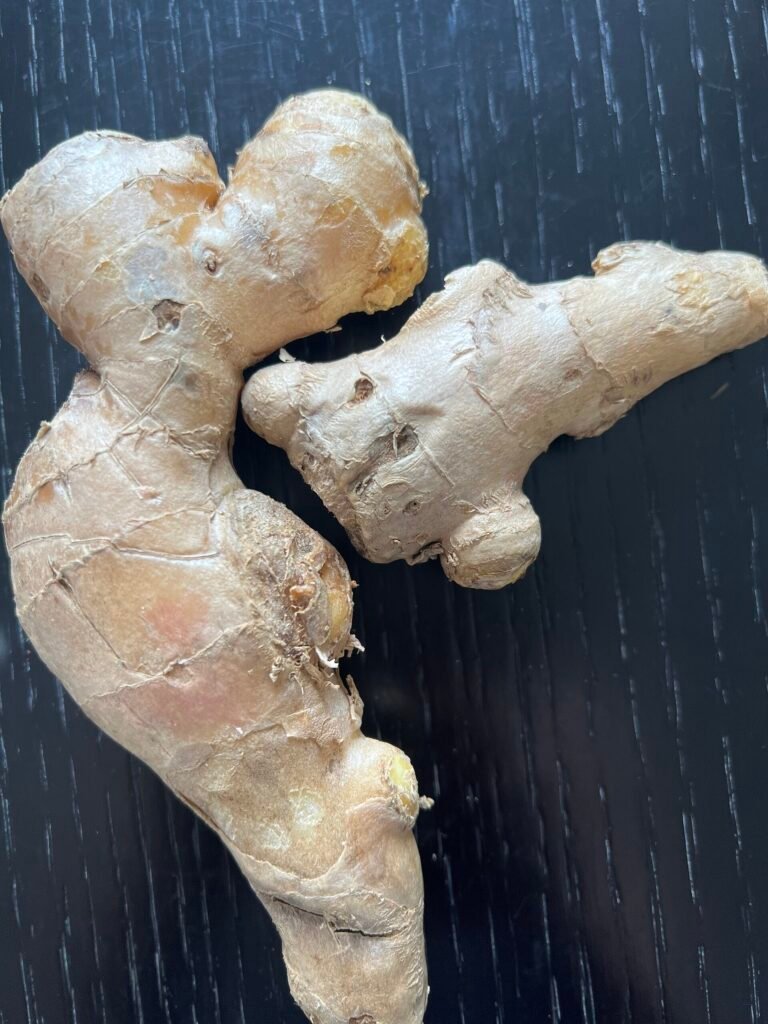
The setting agent here is not heat, not gelatine, not egg. It is a protease, an enzyme called zingibain, which exists in fresh ginger rhizome. As the Wikipedia article on ginger milk curd records, the dish is a Guangdong specialty, and it works because zingibain does to milk protein roughly what calf rennet does in cheese-making: it clips the stabilising proteins on the surface of casein micelles, so the micelles clump together into a soft gel.
That is a lot of words for a simple idea. Milk proteins normally repel each other, kept apart by electric charge on their surfaces. The enzyme snips away part of that surface layer, the proteins stop repelling, and they link up into a three-dimensional net that traps the liquid. The result, if everything goes well, is a custard with the wobble of softly set panna cotta and the warmth of ginger.
The catch is that zingibain is a delicate thing. It is most active between roughly 60 and 75 degrees Celsius, and it denatures — permanently stops working — somewhere above about 80 degrees. So the milk has to be hot enough for the reaction to run quickly, but not so hot that you kill the enzyme before it has done its job. This is the whole difficulty of the dish in one sentence.
The thirty-second window
The reaction is fast. Once milk at the right temperature meets the ginger juice, curdling starts within about thirty seconds. A proper set is visible in one to two minutes, and the bowl should be left undisturbed for eight to ten before you test it. Stirring during those first thirty seconds is fatal, because you break the protein network while it is trying to form.
This is why the Cantonese name contains the character 撞, to knock or slam. The technique is a single decisive pour from a height of twenty to thirty centimetres, which mixes juice and milk thoroughly in one motion. You pour once, cover the bowl with a saucer, and walk away. Hovering and poking achieves nothing except a thinner curd.
Old Ginger Versus Young: The Protease Question
Not all ginger is equal, and this was the failure behind my first attempt. Zingibain concentration is highest in mature rhizomes — what Chinese cooks call 老姜, old ginger: the knobbly, fibrous kind with papery skin that pushes at the edges of your grater. Young ginger, the pale tender shoots sold for stir-frying, is juicy and pretty but carries far less enzyme. Juice it and you get flavour without setting power.
When I buy ginger for this, I look for heavy pieces with taut, thin skin and a sharp, almost peppery smell at the cut end. If it snaps cleanly rather than bending, it is mature. About 40 grams of old ginger yields roughly two tablespoons of juice through a fine grater and a squeeze, and that is the right amount for 250 ml of milk. I press the juice fresh each time; juice that sits for a few hours darkens, and some of the enzyme activity goes with it.
The ratio that finally worked for me, after the failures: 250 ml full-cream milk, two tablespoons fresh old-ginger juice, about 18 grams of sugar. Skimmed milk sets more weakly because the reaction works on the protein, and full-cream gives a richer gel, but the protein content matters more than the fat. UHT milk works fine; there is no need to hunt down anything special.
Temperature: Where Most Attempts Die
This is the variable that killed my second bowl. I had read “hot but not boiling” and interpreted it generously, pouring milk at what must have been 85 degrees or more. Half the enzyme died on contact and I got a weak, patchy set with whey leaking out around the edges.
The reliable window is 70 to 80 degrees Celsius, and I aim for 75. My method now: heat the milk with the sugar until the first small bubbles appear at the edge of the pan, which is around 85 degrees. Take it off the heat, stand it for ninety seconds, and it drops to roughly 75. Pour in one motion. If you own a thermometer, use it; if you don’t, the ninety-second rest is a decent stand-in, and I have made good bowls both ways.
The table below is the troubleshooting map I wish I had on day one. Every row in it is a bowl I have personally ruined.
| What you see | What went wrong | What to do next time |
|---|---|---|
| Still liquid after 15 minutes | Milk too cool (below 65°C) or young ginger with too little enzyme | Aim for 75°C; buy old, fibrous ginger |
| Grainy curd, watery liquid pooled around it | Milk too hot — enzyme partially denatured, set uneven | Rest the boiled milk 90 seconds before pouring |
| Soft set that collapses when spooned | Too little ginger juice or milk cooled too far | Two tablespoons juice per 250 ml milk, poured at once |
| Sour, fermented edge to the flavour | Ginger juice sat too long before use | Grate and squeeze immediately before pouring |
| Strong ginger burn, weak set | Over-weighted juice compensating for low temperature | Fix the temperature first; the ratio is fine |
One note on sugar: dissolve it in the milk while heating, not afterwards. Adding cold sugar syrup later drops the temperature below the working window and you lose the set you were counting on.
The Pour, and the Guangzhou Dessert Shop It Came From
Jiang zhuang nai belongs to the tong shui — sweet water — culture of Guangdong, the network of dessert shops that serve warm bowls of soup, custard and pudding through the evening. It sits next to double-skin milk on those menus, its creamier cousin made by repeatedly skinning steamed milk. The standard origin story traces it to a village grandmother in Shunde who accidentally poured hot milk into ginger juice and discovered the set, which is almost certainly legend but is told with total conviction in Guangzhou.
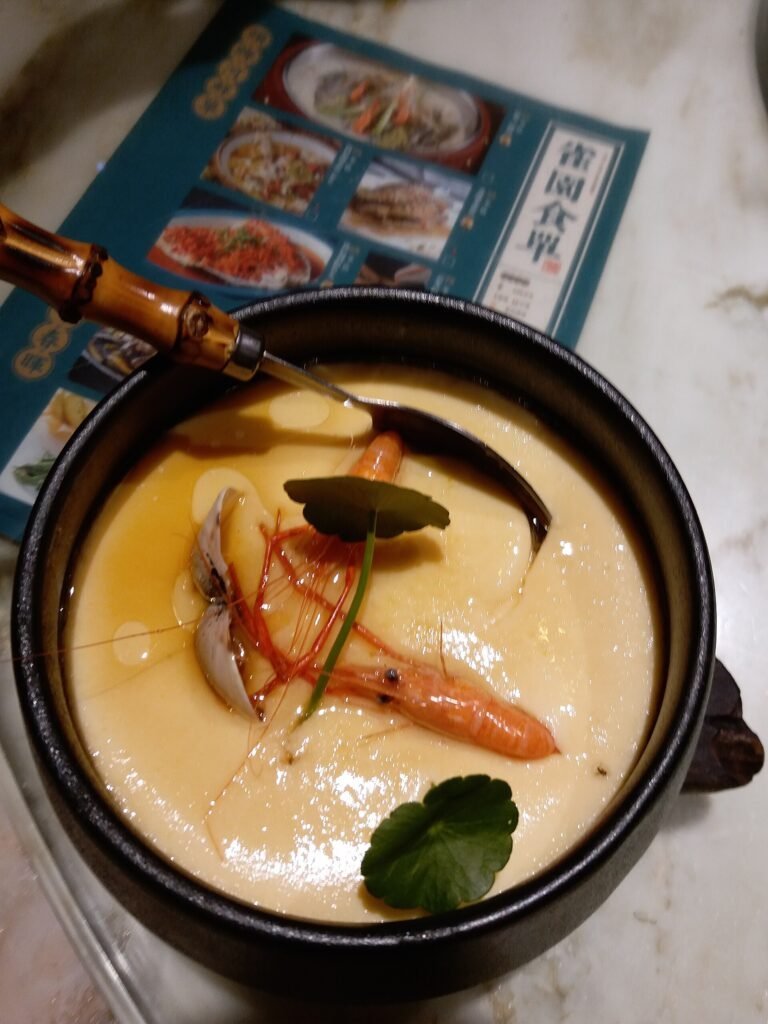
In the shops, the performance is part of the product. The server holds the milk jug high and pours in one smooth arc, the bowls go out under saucers, and customers are told not to touch them for a few minutes. A good shop serves it warm, barely sweet, the ginger a quiet heat at the back of the throat rather than a shout. If your mental image of Chinese desserts comes from northern snack culture — heavy, dough-based things you can read about in the Beijing Food guide — Cantonese tong shui will read as almost restrained, and ginger milk curd is its most restrained dish of all. The broader tradition it sits inside is covered in our Cantonese Cuisine guide.
Serving It, and Where It Fits With Everything Else
Shops serve it warm in winter and chilled in summer, and both work. I like it warm, with no more than a whisper of extra sugar. Some people add a few goji berries on top; I think that is showing off, but it is harmless.
The dish also rearranged how I think about ginger itself, which in my cooking usually lives on the savoury side — the dumpling dip built on all about chinese black vinegar, the sharp slap of it in a quick stir-fry. Ginger can carry a dessert on its own, and it does so here without any cream underneath. If most of your Chinese cooking is fierce and savoury, the way mine is — a Zha Jiang Mian Recipe weekend, a proper take on ants climbing a tree on a Tuesday — ginger milk curd is the quiet dish that balances the week. After a bowl of the chilli-heavy stuff, like what you’ll find in everything you need to know about authentic mapo tofu, a warm spoonful of this settles the burn better than any amount of water.
One thing I do not recommend: treating it as a base for experiments on night one. The window is narrow enough that a plain, correct bowl is already a small achievement. Play with toppings once it works three times in a row.
Frequently Asked Questions
Can I make ginger milk curd without a thermometer? Yes. Bring the milk and sugar just to the edge of a simmer, take it off the heat and rest it for ninety seconds before pouring. That rest lands the milk close to the 75-degree sweet spot. It is less precise than a thermometer but it has worked for me repeatedly.
Why did my ginger milk curd turn out watery? The two usual culprits are milk poured too hot, which destroys part of the enzyme, and young ginger, which simply does not contain enough zingibain to set the milk. Check the temperature first, then the ginger.
Can I use ground ginger instead of fresh juice? No. Dried ground ginger has lost most of its enzyme activity during drying, so it will flavour the milk but not set it. Fresh old ginger, grated and squeezed, is the only reliable source of the enzyme.
How long does ginger milk curd keep? It is best within a few hours. It firms slightly in the fridge overnight and stays safe for a day or so, but the texture dulls and a little whey weeps out. Shops make it to order for exactly this reason.
Is ginger milk curd the same as douhua or tofu pudding? No, and confusing them will ruin both. Douhua sets soy milk with a coagulant such as gypsum or nigari; ginger milk curd sets dairy milk with a fresh ginger enzyme. The texture is similar, the ingredients and chemistry are entirely different.