The Honest Daocheng Yading Guide – What’s Worth It and What Isn’t
At half past six the tent flap was stiff with frost, and the prayer flags up on the ridge were already snapping in a wind I could not feel down in the valley. I unzipped the sleeping bag, pulled on every layer I had brought and stepped outside into a world the colour of steel. Yangmaiyong was there, exactly where the photographs promised, and for a minute I forgot how cold my toes were. That is the trick this place plays: it waits until you are properly miserable, then shows you something worth the misery.
Spring: Getting In Before the Crowds
Spring is when the road in feels longest. Most people start from Chengdu, and a surprising number spend the morning at everything you need to know about chengdu panda base before pointing west, which seems sensible enough until you remember you are about to spend two days on a mountain road. The drive covers roughly 660 kilometres and takes the best part of two days if you stop to acclimatise, which you should. I broke it at Kangding and again near Litang, and was glad of the slow approach.
By April the valleys are greening and the lower trails are passable, though snow still lies on the high passes. There is an older rhythm to the journey that I only understood after talking to a monk in Litang: people have travelled these routes for centuries, stopping at monasteries in much the same way that pilgrims once gathered at all about big wild goose pagoda in Xi’an. Different scenery, same instinct to walk towards something larger than yourself.

Summer: Rain, Green and a Very High Airport
Summer turns the whole county into a garden. Rhododendrons and wild flowers fill the slopes, and the rivers run high. It is also the rainy season, which means afternoons can dissolve into cloud without warning. I had imagined a gentle version of the season, something like a humid afternoon out on Beihai Park in Beijing, and that was a foolish comparison: the weather here does not do gentle.
Most visitors now fly into Daocheng Yading airport, which at about 4,411 metres is one of the highest civilian airfields anywhere. Stepping off the plane feels less like arriving than being deposited on a different planet. A friend who had just come from Canton Tower Guide in Guangzhou said the contrast almost made him laugh: one city stacked vertically for pleasure, another landscape stacked vertically for altitude, and both leaving him short of breath for entirely different reasons.
One practical note about the rain: buy a proper shell before you arrive, not from the stall at the gate. I watched a family in thin plastic ponchos give up halfway along a wet path while local walkers went past in layers of wool and treated canvas. Rivers swell after heavy rain and some lower paths turn to mud, so build a spare morning into any plan. Nobody minds a wet morning here. What they mind is being stuck indoors for a whole day.
Autumn: The Month Everybody Wants
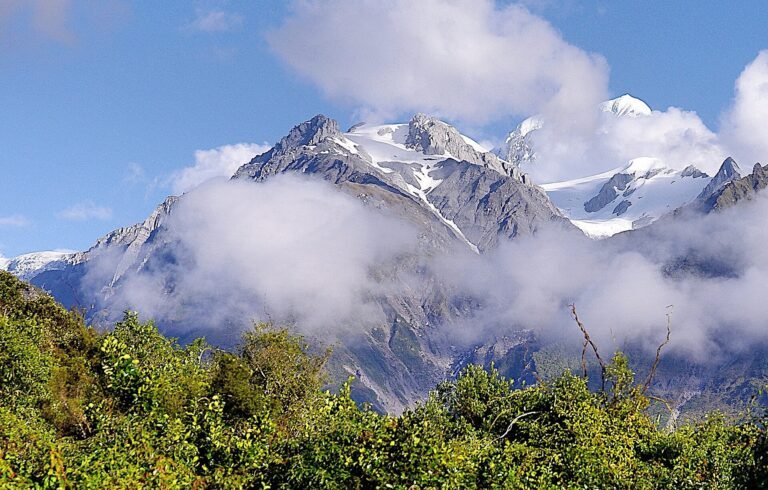
September and October are when Yading becomes famous. The larches turn gold, the air clears and the three peaks — Xian Nairi at roughly 6,032 metres, Yangmaiyong and Xianashengduo each near 5,958 metres — stand against a sky that looks almost artificially polished. I booked a room three months ahead and still paid more than I wanted. The charge is worth it if you get the light; on my second morning the ridges caught the sun at exactly the right angle and nobody spoke for a while.
It is worth saying that the crowds are real. At the gate the queues reminded me of Badaling Great Wall on a public holiday, so I arrived an hour before opening to avoid the worst. The trick, learned the hard way, is to walk past the first viewpoint. Most groups stop there, and ten minutes farther along the path you suddenly have the mountains back to yourself.
There are two walks worth understanding before you set out. The short route climbs to Pearl Lake near the base of Xian Nairi and takes perhaps two hours return; it is the one most families choose. The long route pushes on to Milk Lake and Five-Colour Lake, both above 4,500 metres, then comes back through the same scree-covered valley. I did the short one first and was glad of it, because it taught me how much slower every step becomes at that height.
Winter: The Quiet Version
Winter is the season almost nobody chooses, and that is precisely why I would recommend it to the right person. Snow settles on the peaks, the tourist buses thin out and the whole valley goes quiet. It reminds me of photographs of Chaka Salt Lake explained in Qinghai in January: a place whose appeal is mostly silence and scale. You need warm clothing and patience with road conditions, but the reward is a landscape with almost no one in it.
At this altitude the light is extraordinary, a hard clear blue that makes the rock faces look carved. One afternoon I sat above the frozen grass watching the shadows lengthen and thought of my notes on crescent lake dunhuang, another body of water surviving against the odds in a dry landscape. Neither place is comfortable. Both stay with you for exactly that reason.
A Season-by-Season Comparison
Here is the short version, based on what I saw and what other travellers told me over cups of yak-butter tea.
| Season | What you get | The catch |
|---|---|---|
| Spring | Green valleys, fewer people | Snow on high trails |
| Summer | Flowers and full rivers | Afternoon rain and cloud |
| Autumn | Golden larches, clear peaks | Crowds and higher prices |
| Winter | Silence, snow and soft light | Cold and limited services |
The Height Question
Altitude is the subject nobody stops talking about. The park entrance sits around 3,700 metres and the long trail towards the sacred lakes climbs past 4,500, so even seasoned walkers feel it. I met a couple who had flown in from how ciqikou is really done in Chongqing the day before and gone straight up; both spent their first evening lying down. My own rule is unglamorous: arrive early, sleep badly on purpose for one night, walk slowly the next day and drink more water than seems reasonable.
As Wikipedia’s entry on Yading notes, the area lies within a protected reserve in the Hengduan Mountains, and the landscape is as much ecological as spiritual. The three peaks are sacred in Tibetan Buddhism, which is why you will meet pilgrims as well as hikers on the trails. Treating the place as only a photograph opportunity misses half of what is there.
My own first night was a write-off: a headache that arrived on schedule at about three in the morning and a complete loss of interest in food. By daylight it had gone, which is the usual pattern, but the lesson stuck. I now tell people to treat the first twenty-four hours as a holiday from ambition. Walk down to the village, drink the rather fierce local tea, go to bed early. The mountain is not going anywhere.
Getting There, and What I’d Do Differently
From Chengdu you can drive, which takes two long days with a stop, or fly to Daocheng and then take a bus or hire a car to the park, about 70 kilometres farther on. Flights save a great deal of time relative to their cost, but the airport’s altitude catches people out, so check the official site before you go for current schedules and give yourself a night at lower elevation first. Entry tickets and the mandatory sightseeing bus add up to several hundred yuan, and prices shift between seasons, so check the official site before you go. On my next visit I would spend one more night in Yading village instead of rushing back.
This is not an easy destination, and it rewards the people who stop trying to tick it off. Sit still for an hour. Watch the light move across the scree. The mountains are patient; your schedule probably is not.
Frequently Asked Questions
Do I need a permit to visit Yading? No special permit is required for this part of Sichuan, unlike some higher-altitude regions elsewhere. Carry your passport for ticket checks and book lodging ahead in October, when rooms in Yading village fill quickly.
How hard is the walk to Milk Lake and Five-Colour Lake? It is steep, high and not a short outing: expect several hours at more than 4,500 metres, with horse rides available for part of the way. Turn back if you feel unwell, and check the official site before you go for the current trail conditions.
When is the best month to come? October is the favourite for golden larches and clear views, but September is close behind and slightly quieter. Weather changes fast at this altitude, so no single week is guaranteed.
Can I fly straight in from Chengdu? Yes, there are flights to Daocheng, roughly an hour in the air. The airport sits at about 4,411 metres, so plan a gentle first day rather than a big hike on arrival.
Is Yading suitable for children or older travellers? The lower valleys and short walks are manageable for most people who are used to travel, but the high lakes are genuinely demanding. Altitude, not distance, is the limiting factor.
What should I pack? Layers, a windproof jacket, strong sun protection and more water than you think you need. The sun is fierce even when the air is cold, and shops inside the park are limited.