Chinese Condiments: The Shelf That Makes a Chinese Kitchen
Last reviewed 31 October 2026 · China Food Way editorial team
When I first tried to cook Chinese food I bought twelve bottles and used three. The shelf by my stove filled up with things I could not name and recipes I never made, and for a year the only things that moved were soy sauce, sesame oil and a jar of chilli crisp I put on everything. The rest were props. What I did not realise was that a Chinese kitchen is defined not by how many sauces it owns but by a short list of them used with discipline. The two soy sauces alone do more work than the other ten combined.

So here is the shelf that actually matters, sorted by what each thing does rather than by how shiny the bottle is.
Can I get by with only one soy sauce if space is tight?
If space is tight, keep light soy sauce and skip the dark, because light does the seasoning work that most recipes assume by default. I cooked for a year with only light soy and lost little — the dark one mainly adds colour and a little body, which a teaspoon of molasses or a touch of sugar can fake in a braise. The trade is visual: dishes stay paler without dark soy, and a red-cooked pork will look less mahogany. For a minimal shelf, light soy plus a fermented bean paste covers far more ground than dark soy alone. Buy the light bottle first; add dark later once the wok sees regular braising.
The Soy Sauce Pair
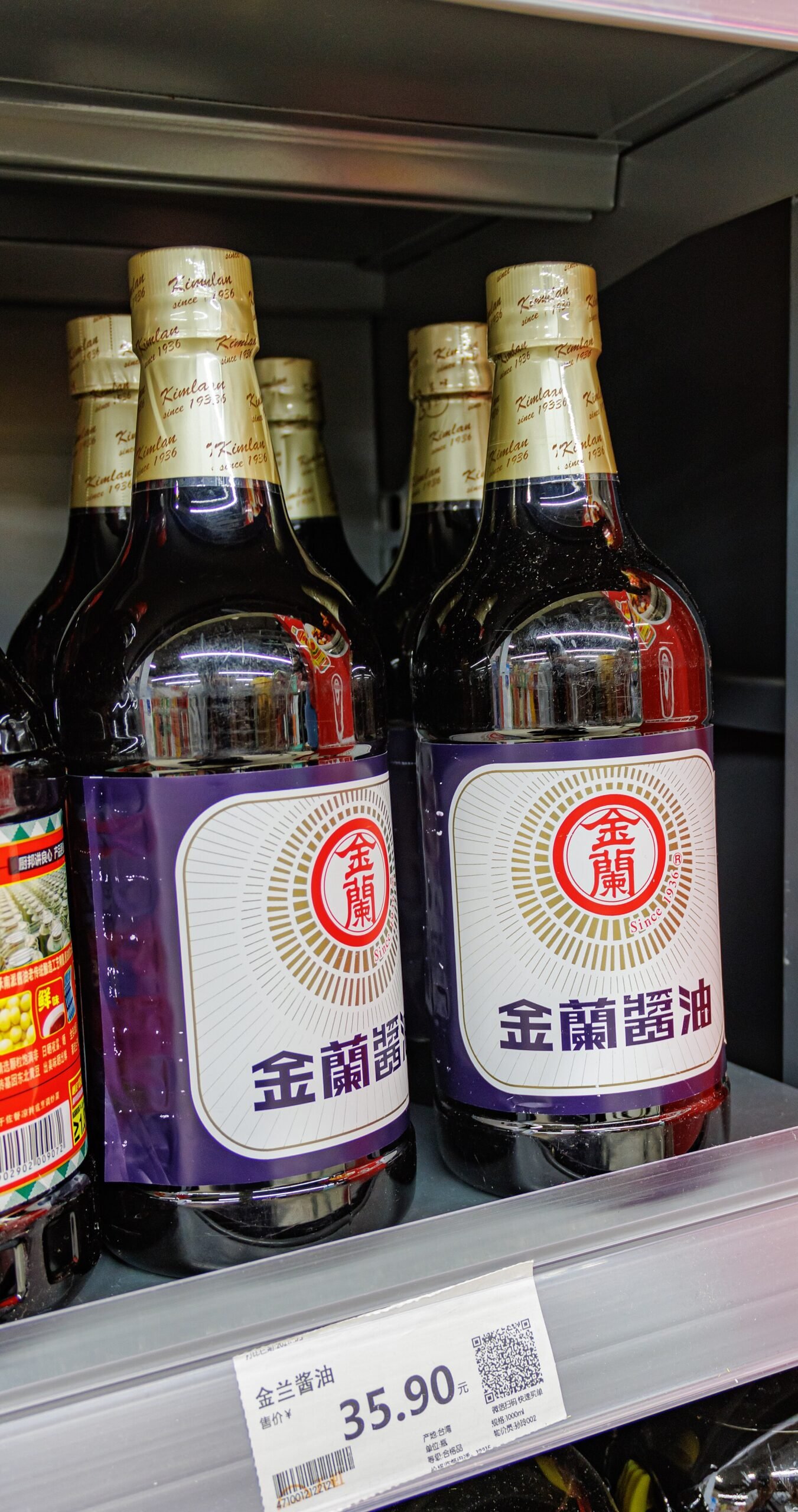
Start here, because everything else assumes you already understand these two. Light soy sauce is thin, salty and used for seasoning; dark soy is thick, sweetened with molasses and used for colour and a little body. They are not interchangeable, and the recipes that call for both mean it. I ruined a plate of braised pork by using only dark soy once and ended up with something the colour of mahogany and twice as salty as it looked. Keeping them separate, and reaching for the light one by default, fixed most of my early failures.
What is the difference between doubanjiang and tianmianjiang?
Doubanjiang is a fierce, chilli-and-broad-bean paste that drives Sichuan cooking, while tianmianjiang is a sweet, rounded bean sauce used across the north. I keep both and the gap is stark: a spoonful of doubanjiang bloomed in oil gives a dish heat and depth you cannot fake, whereas tianmianjiang coats jing jiang rou si with a glossy mild sweetness. They look similar in a jar and are not interchangeable — swap one for the other and the dish lands in the wrong region. The honest tip is to start with doubanjiang if you cook Sichuan at all, and add tianmianjiang only once you want Beijing-style sweetness. Buy Pixian doubanjiang if you can find it.
The Fermented Bean Pastes
If soy sauce is the salt, the fermented bean pastes are the soul. Doubanjiang — the fermented bean paste called doubanjiang — is mashed broad beans and chillies aged into a brick-red paste that is the base of most Sichuan cooking. A spoonful in hot oil blooms into the whole flavour of the province. Tianmianjiang, its sweeter northern cousin, is the glossy brown bean sauce that coatsjing jiang rou si and a hundred Beijing dishes. They look similar in a jar and are not: one is fierce, the other is rounded. As Wikipedia’s entry on doubanjiang explains, the Pixian version carries a protected name for a reason.
Which sour condiment should I keep besides black vinegar?
Besides black vinegar, keep a bottle of clear rice vinegar for the bright, sharp notes that black vinegar’s roundness cannot give. I reach for rice vinegar in quick pickles, in a dipping sauce that needs lift, and in hot and sour soup where the sour should prick rather than linger. Black vinegar would muddy those with its malty depth, so the two cover different jobs: dark for braises and dips, clear for brightness and balance. The honest minimal shelf skips the clear one if you only braise, but adds it the moment you pickle or dress cold dishes. A small bottle lasts months because a teaspoon goes far.
The Sweet and the Sour
Oyster sauce is the umami workhorse of the south — a bottle of oyster sauce in a stir-fry of greens gives a savoury depth that soy alone will not. Hoisin is its louder, sweeter cousin, more of a dip and glaze than a seasoning. And then there is Chinese black vinegar, the aged Zhenjiang brew that is to Chinese food what balsamic wishes it were: mellow, smoky, a little sweet. I keep a small pitcher next to the stove and use it the way a Western cook uses lemon — a few drops at the end to lift a heavy dish.
The Aromatics in a Bottle
Toasted sesame oil is not a cooking oil; it is a finisher, added off the heat so its nutty smell survives. Cooking wine — Shaoxing — deglazes and takes the raw edge off meat. And the chilli crisp you spoon over noodles, the crunchy, oily, addictive condiment that has escaped China and taken over breakfast tables everywhere, is the one modern addition I would now call essential. I put it on eggs, on tofu, on plain rice. It is not traditional in the strict sense, but neither is the modern Chinese kitchen, and it earns its place.

What Each Bottle Is Actually For
| Condiment | Region of use | What it does | Skip it? |
|---|---|---|---|
| Light soy sauce | Nationwide | Salt and savour | Never |
| Dark soy sauce | Nationwide | Colour and body | Only if space is tight |
| Doubanjiang | Sichuan | Deep fermented heat | If you avoid Sichuan food |
| Oyster sauce | Cantonese | Savoury gloss | Hard to replace |
| Black vinegar | Nationwide | Sour lift at the end | Worth the bottle |
| Chilli crisp | Modern | Crunch and heat | Your call |
| Tianmianjiang | Beijing | Sweet bean glaze | Only for northern dishes |
The point of the table is that six of these do ninety per cent of the work, and the other thirty sauces in the shop are regional specialities you can buy the day you actually cook that region.
Buying Without the Guesswork
A word on shopping, because the sauce aisle rewards the confident and punishes the curious. Soy sauce labels in particular are a thicket of grades and marketing: “superior” and “first extract” mean a cleaner brew, while the cheap stuff is salt with colour. I buy a mid-range light soy and do not agonise over it. For doubanjiang, the Pixian name matters; the red paste from that county ferments longer and tastes rounder than the anonymous tubs. Black vinegar should say Zhenjiang on it, and the good bottles are mellow enough to sip. The rest of the shelf — the hoisins, the sweet bean sauces, the mystery chilli oils — can wait until a recipe sends you there with a specific name in hand.
The other buying habit is size. A giant bottle of oyster sauce you use twice a year is a mistake; a small one you finish is a win. I treat the condiment shelf like a spice drawer: buy what I will use in a month, not what looks impressive on the shelf.
What are the three condiments no Chinese kitchen should be without?
The three no Chinese kitchen should be without are light soy sauce, a fermented bean paste, and toasted sesame oil, because together they cover salt, savoury depth, and aroma. I have cooked whole weeks on just those three plus rice and a vegetable, and the food still tasted unmistakably Chinese. Light soy seasons, the bean paste — doubanjiang or tianmianjiang — gives the dish its regional soul, and a few drops of sesame oil at the end perfume the lot. Everything else, from dark soy to chilli crisp, is an upgrade, not a foundation. If you can only stock three bottles, those are the ones; add black vinegar fourth for the widest gain.
The Minimum Viable Chinese Pantry
If you are setting up from scratch in a Western kitchen, buy five things and cook for a month: light soy, dark soy, toasted sesame oil, Chinese black vinegar, and a jar of chilli crisp. Add oyster sauce and doubanjiang as soon as you want Cantonese greens or Sichuan braises. Everything else — hoisin, tianmianjiang, cooking wine, fermented bean curd — arrives when a specific dish asks for it. I wish someone had told me this before I owned a cupboard of science experiments.
How to Store the Shelf
Most of these bottles are more stable than people fear, which is part of their appeal. Soy sauce and the bean pastes are fermented and salty enough to sit in a cupboard for months; once opened they keep best away from light and heat, and the fridge only matters for the paste once you notice the colour darkening at the edges. Oyster sauce is the fragile one — it is sweet and protein-rich and will ferment into something angry if left warm, so I keep it in the fridge door and use it within a few months. Sesame oil goes rancid slowly but surely once opened, and the smell of off sesame oil will ruin a dish before you taste it, so a small bottle you actually finish beats a large one you forget.
Chilli crisp is oil, so it keeps, but the bits at the bottom are what spoil first; keep the lid tight and the jar cool. I learned this the year I left a half-full jar next to the stove through a hot summer and opened it to a sour, almost cheesy smell. The oil looked fine. The aroma said otherwise, and I binned it. Trust the nose over the date.
The Habits That Matter More Than the Bottles
The shelf is only half the story. The cooks who make Chinese food taste right are not the ones with the most sauces; they are the ones who season in layers. Soy goes in to build a base, the vinegar and sesame oil go in off the heat to finish, and the chilli crisp goes on at the table so its crunch survives the ride to your mouth. I spent years adding everything at once and wondering why my food tasted flat and one-note. The order is the recipe.
A smaller habit: taste as you go, because every bottle varies. One brand of dark soy is thicker and sweeter than the next, and a “tablespoon” from a heavy-handed pour can turn a braise black. I measure the first few times and then learn the weight of the bottle in my hand. That, more than any ingredient, is what turned my cooking from approximate into repeatable.
Frequently Asked Questions
Do I need both light and dark soy sauce? For most cooking, light soy alone is enough, and dark soy only matters when a recipe calls for colour. If you buy one, buy light. The tianmianjiang I mentioned is a separate purchase, and only worth it once you are cooking northern dishes regularly.
Is oyster sauce vegetarian? No — it is made from oysters. There are mushroom-based substitutes, but they taste different. Check the label if that matters to you.
Can I use balsamic vinegar instead of Chinese black vinegar? Not really. Balsamic is sweet and grape-based; black vinegar is grain-based, smoky and milder. In a pinch rice vinegar is closer, though still not the same.
Does chilli crisp go off? The oil preserves it, but it does go rancid eventually, especially the bits. Keep it sealed and cool, and trust your nose. The crunch is the point, so don’t buy a barrel.
Why does my stir-fry taste flat even with soy sauce? Because soy sauce seasons but does not aromatise. Most restaurant flavour comes from the finishing touches — sesame oil, black vinegar, maybe a spoon of chilli crisp — added after the heat. Build the dish in layers rather than salting it in one.
The Point
A Chinese kitchen is not a wall of bottles. It is a short, well-used list: a pair of soy sauces, a fermented bean paste, an oyster sauce, a vinegar and an aromatic oil, with chilli crisp as the modern wildcard. Learn what each one does and you stop shopping and start cooking.