Dry Pot (Malaguiguo): The Sichuan Dish With No Soup
Reviewed 31 October 2026 by the China Food Way editorial team
The first dry pot I tried to make at home was a disaster of my own making. I had eaten malaguiguo (麻辣干锅) in a Chengdu basement restaurant where the waitress brought a sizzling cast-iron pot to the table, and I assumed the magic was in the pot. So I bought a small enamel pot, crammed it with chicken, lotus root and a terrifying amount of dried chilli, and let it bubble away like a tiny hot pot. What came out was a greasy puddle with burnt chillies stuck to the bottom and vegetables that had given up. There was no broth to save it, because a dry pot has no broth. That is the whole point, and I had missed it.
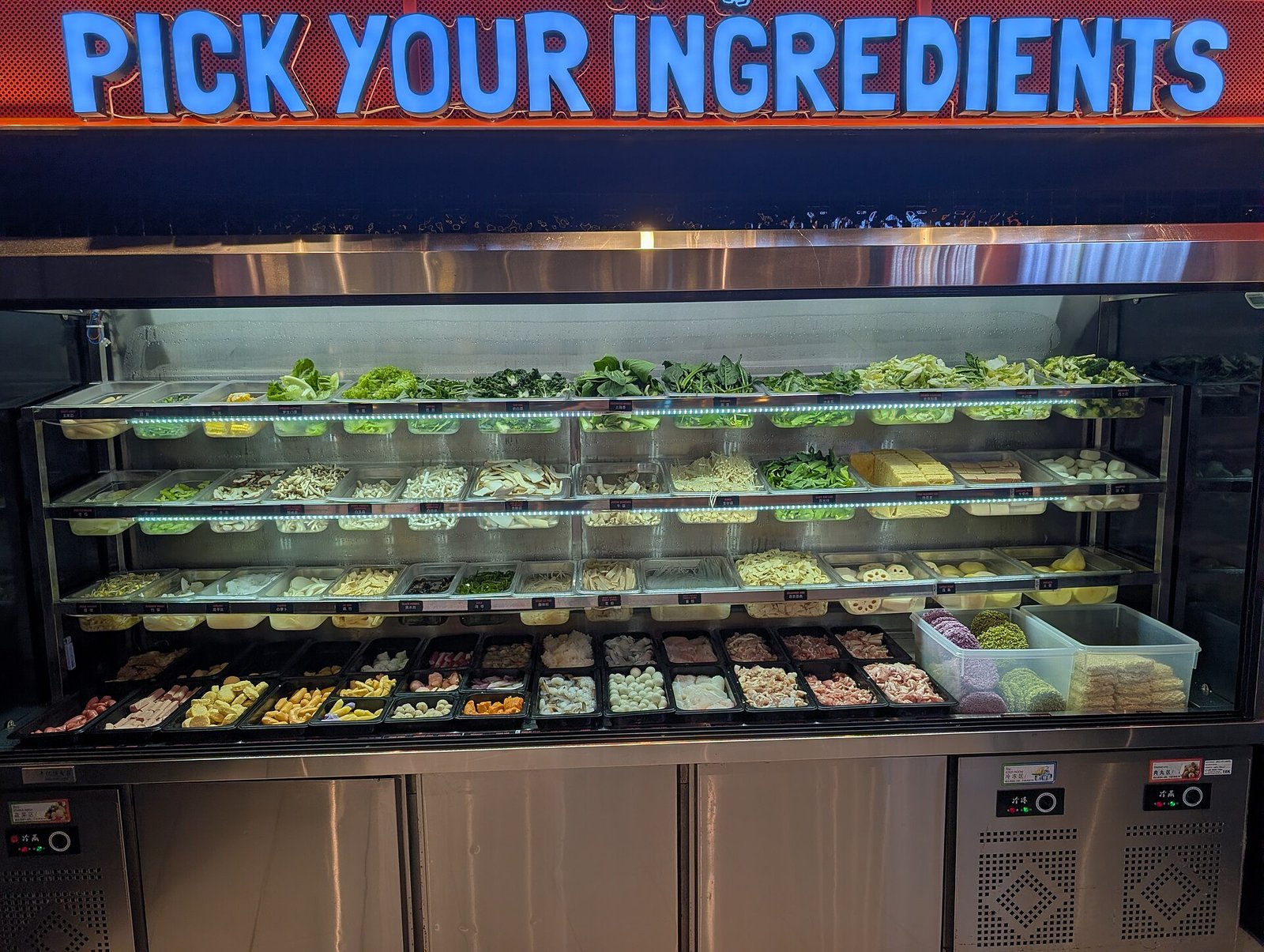
A dry pot is, more honestly, a stir-fry that wants to be hot pot. The ingredient-selection ritual — picking your own meats, tofu and vegetables from a cold counter and handing them to the kitchen — comes straight from the hot pot on the table tradition. But instead of simmering everything in a shared broth, the kitchen stir-fries it hard in a wok with just enough chilli oil to coat each piece, then serves it in a pot that is really only there to keep it warm. The dish belongs to the numbing heat of Sichuan cuisine, though the dry-pot style as a restaurant format is most associated with Chongqing. If you want the full story of what to eat in Chongqing, the dry pot is one of the dishes you will trip over on every street corner.

Which oil should I use for a dry pot, and how much?
Use a neutral oil with a high smoke point — groundnut, rapeseed or sunflower — and measure roughly 45 ml, about three tablespoons, for a pan that feeds two. Olive oil turns bitter at the heat a dry pot needs, and toasted sesame oil is a finishing oil, not a frying one; it will scorch before the chillies bloom. Whatever you choose, the oil should coat the wok in a thin red film and never pool at the bottom. Add half of it at the very end, off the heat, to wake up the Sichuan peppercorn without cooking it. Never reuse oil from a previous batch — it carries burnt chilli bitterness straight into the new pot.
The Oil-to-Chilli Ratio That Coats, Not Fries
The single number that decides whether your dry pot tastes like a restaurant or like a mistake is the ratio of oil to chilli. Too little oil and the chillies scorch before the aromatics release; too much and you are deep-frying, which defeats the “dry” in the name. In my kitchen the working ratio is about 3 tablespoons of neutral oil to 15–20 dried chillies and 1 tablespoon of Sichuan peppercorn for a portion that feeds two. The oil should look red and fragrant but never pool.
The reason this matters is that the chillies and peppercorns are not really there to be eaten — they are there to perfume the oil. As Wikipedia’s overview of mala flavour) notes, the effect comes from the combination of chilli heat and the unique numbing tingle of huajiao, and that combination lives in the fat. You are essentially making a quick chilli oil, then cooking your ingredients in it. Treat the aromatics as a seasoning medium, not as a salad.
A handful of dried chillies goes in first, over medium heat, and you pull the wok off the flame the moment they darken at the edges. The Sichuan peppercorn follows for the last ten seconds, because its volatile oils vanish if you push it. Burnt peppercorn tastes of old ash, and there is no broth to hide it in.
In what order should the ingredients go into the wok?
Hard, dense vegetables first; soft, quick ones last; aromatics in the middle. Slice lotus root, potato and cauliflower to 2–3 mm and blanch them for a minute before they go near the wok, otherwise they are still raw when everything else is done. Garlic, ginger and scallion whites follow, about thirty seconds, then the chilli and doubanjiang paste. Mushrooms go in late because they weep water and will steam the pan. Leafy greens and any pre-cooked protein are tossed back only in the final minute. Everything meets the sauce at the end, off the heat, so nothing sits and goes limp.
Build Your Ingredient Layers in the Right Order
A dry pot fails more often from bad sequencing than from bad seasoning. Everything is cooked in one wok, with no poaching liquid to even things out, so the order you add things decides what is tender and what is raw. The rule I learned after that first puddle: hard and dense first, tender and watery last.
| Ingredient | When to add | Why |
|---|---|---|
| Potatoes, lotus root, carrot | First, with the oil aromatics | They need the longest time and absorb the chilli oil best |
| Chicken, pork, firm tofu | After the hard vegetables, 4–5 min | Needs a sear to build colour before the quick stuff goes in |
| Mushrooms, peppers, cabbage | Midway, 2–3 min | Release water; adding them too early steams everything |
| Leafy greens, bean sprouts | Last 60 seconds | Wilt instantly; any longer and they turn to slime |
| Spring onion, sesame, peanuts | Off the heat, stirred through | Keep their texture and fresh note as a finish |
The other lesson from the puddle: do not crowd the wok. A home burner puts out a fraction of a restaurant’s flame, so if you heap in two kilos of wet vegetables the temperature collapses and you braise instead of fry. Cook in two batches if you must, and keep the lid off the whole time. A dry pot is defined by what is not in the pan — water.
The Savoury Spine: Doubanjiang
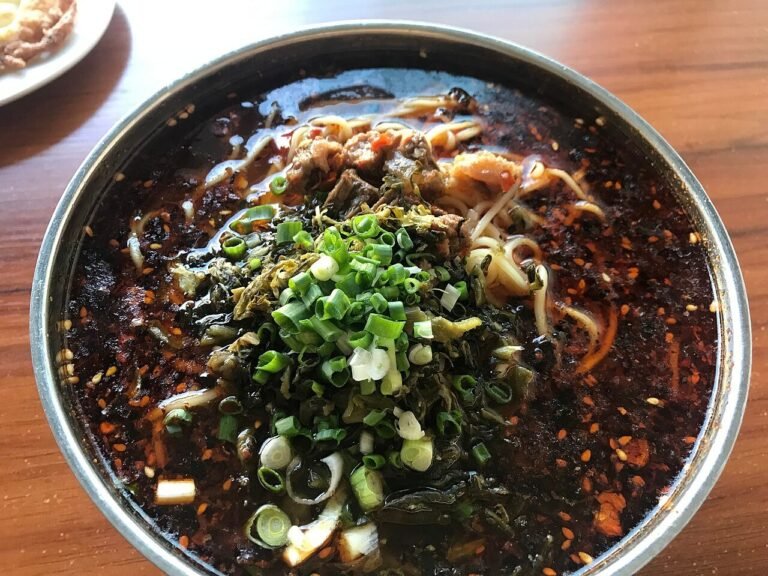
Chilli oil alone is loud but shallow. The depth in a proper dry pot comes from doubanjiang, the fermented broad-bean and chilli paste from Pixian. A flat tablespoon, fried in the oil for thirty seconds before the proteins go in, gives the whole dish a savoury, almost meaty base that plain chilli powder never manages. The paste in the bowl above is exactly the texture you are after: coarse, oily, dark red.
I used to skip it, thinking “it’s just a salty paste,” and my dry pots tasted like spiced oil with nothing behind it. They were edible and they were not Sichuan. Once I started frying the doubanjiang properly — until the oil reddens and the raw smell cooks off — the dish finally tasted like the restaurant version. If you are building a Sichuan pantry, this is the one jar that earns its shelf space; it also anchors mapo tofu and twice-cooked pork.
How long does the stir-fry itself take once everything is prepped?
Four to five minutes of hard stirring once everything is prepped and within arm’s reach; the cooking is the short part, the knife work is not. Get the wok smoking before the first ingredient goes in, and work in two batches rather than crowding it — a full wok drops in temperature and steams instead of fries. Aromatics get thirty seconds, the sauce only the last thirty seconds, and the Sichuan peppercorn goes in after the heat is off. The whole meal is about fifteen minutes at the stove. The classic home failure is medium heat and one crowded pan, which gives you warm, oily vegetables instead of a dry pot.
My Failsafe Dry Pot Method
Here is the version I cook on a Tuesday, scaled for two hungry people and a standard 30 cm wok. The exact vegetables are flexible; the sequence is not.
Start by soaking 15 dried chillies in warm water for ten minutes and slicing one lotus root and one potato into 5 mm rounds. Heat 3 tablespoons of oil in the wok over medium. Drain the chillies, add them with 1 tablespoon of Sichuan peppercorn, and stir for twenty seconds until the kitchen smells like a Chengdu alley. Add 1 tablespoon of doubanjiang and fry it out.
Turn the heat up. Add 300 g of chicken thigh, cut into bite pieces, and sear for four minutes. Add the lotus root and potato, toss to coat in the red oil, and cook three minutes more. Now the mushroomy stuff — 100 g of king oysters, a split green pepper — for two minutes. Finish with a big handful of bean sprouts and a stem of celery, thirty seconds, then kill the heat. Stir through a splash of Shaoxing wine, a pinch of sugar to round the edges, and a scatter of toasted sesame.

That is the whole method. There is no step where you add stock, and there should be no liquid left to speak of when you plate it. If the bottom of the wok looks wet, you added something watery too early or your heat was too low.
How is a dry pot different from a hot pot?
A dry pot arrives already cooked, stir-fried hard in chilli oil with almost no free liquid; a hot pot is raw ingredients and a shared pot of simmering broth that you cook yourself at the table. That single difference drives everything else. Dry-pot ingredients are usually blanched or par-fried first because they only get a few minutes in the wok, and there are no dipping sauces. The little pot it is served in is mostly a warmer over a small flame, not a cooking vessel. The Chongqing version leans heavier on dried chilli, offal and numbing peppercorn than the Chengdu one. Leftover dry-pot oil is not a broth starter.
Dry Pot vs Hot Pot vs Chongqing Dry Pot
People use the words interchangeably and then wonder why their dinner is wrong. They are three different things, and the differences are worth knowing before you shop for ingredients.
| Dish | Cooking liquid | Served in | Eat it how |
|---|---|---|---|
| Hot pot | Litres of broth | A divided boiling pot | You cook at the table, then dip |
| Sichuan dry pot | Almost none | A warm iron pot | Kitchen-cooked, brought to you finished |
| Chongqing dry pot | A little more oil, often bone-in | A deeper pot, sometimes with a grill base | Heavier on cumin and dried chilli |
The Chongqing version runs oilier and bolder, frequently using bone-in pieces and a heavier hand with cumin, closer to the street-barbecue tradition. The “dry pot” most foreigners meet outside Sichuan is the milder mala xiang guo format, where you choose the ingredients and the kitchen weights the chilli to your taste. All three share the mala flavour profile; only the water content and the table ritual change. The numbing heat of Sichuan cuisine is the through-line, whatever vessel it arrives in.
Frequently Asked Questions
Can I make a dry pot without Sichuan peppercorn?
You can, but then it is a chilli stir-fry, not a dry pot. The peppercorn is what gives the numbing ma that balances the la (heat). If you genuinely cannot source it, use a little ground black pepper and accept that the dish will taste flatter. A jar of Sichuan peppercorn is worth ordering once and it keeps for a year.
Why did my chillies burn and taste bitter?
Almost always the heat was too high or you walked away. Dried chillies go from toasted to acrid in maybe twenty seconds. Keep the flame at medium when you bloom them, pull the wok off the heat the moment they darken, and never let them sit in hot oil unattended.
Is dry pot very spicy? Can I make it mild?
Yes, easily. The heat scales with the number of chillies and how much of the fried oil you keep. Use 8 mild dried chillies instead of 20, and fish out the spent chillies before serving if you are cooking for children. The doubanjiang and peppercorn carry the flavour even at low heat.
What protein works best?
Chicken thigh is the most forgiving and the most common in restaurants. Firm tofu, pork belly, and prawns all work. Avoid lean white fish, which overcooks before the vegetables are done, and avoid anything that releases a lot of water early, like frozen spinach.
Do I need a special dry-pot pot to serve it?
No. The pot is theatrical. A warmed ceramic bowl or a cast-iron skillet keeps it hot at the table just as well. The cooking happens in the wok; the serving vessel is optional.
Can I prep the ingredients ahead?
Yes, and you should. Dry pot is a dish of assembly, not of last-minute chopping. Slice everything, soak the chillies, and have the doubanjiang measured before the wok goes on. Once the oil is hot, the whole thing is eight minutes, and you do not want to be hunting for the sesame seeds mid-sear.
The Point of Cooking It Yourself
A restaurant dry pot is fun because you pick the bits, but it is also priced by the gram and heavy on oil you did not choose. At home you control both. The method above costs a fraction, uses the exact vegetables you like, and — once you respect the layering order — comes out crisper than most places manage. The dish sits squarely inside Sichuan cuisine, but it is one of the easiest entry points into it, because there is no broth to balance and no dipping sauce to get right. Get the oil red, keep the wok dry, and the puddle problem solves itself.