Nanjing Salted Duck (Yan Shui Ya): The Poached Bird Done Right
My first yan shui ya was a salt disaster. I brined a two-kilo duck for nine hours because a forum thread said overnight was fine, then poached it at a rolling boil because I didn’t own a thermometer and assumed duck, like everything else, wanted enthusiastic heat. The result came out grey-skinned, split along the breast, and so salty that my wife drank two full glasses of water, said nothing, and left the table. It took three more birds to understand that this dish is a temperature exercise, not a salt exercise.
First, an untangling that matters on this site: this is the duck itself, not the egg. Xian ya dan — salted duck eggs with the orange, weeping yolk — is a different product entirely and has its own article here. This is the poached bird: pale, jade-white skin, soft flesh, eaten cold or at room temperature with vinegar and ginger.
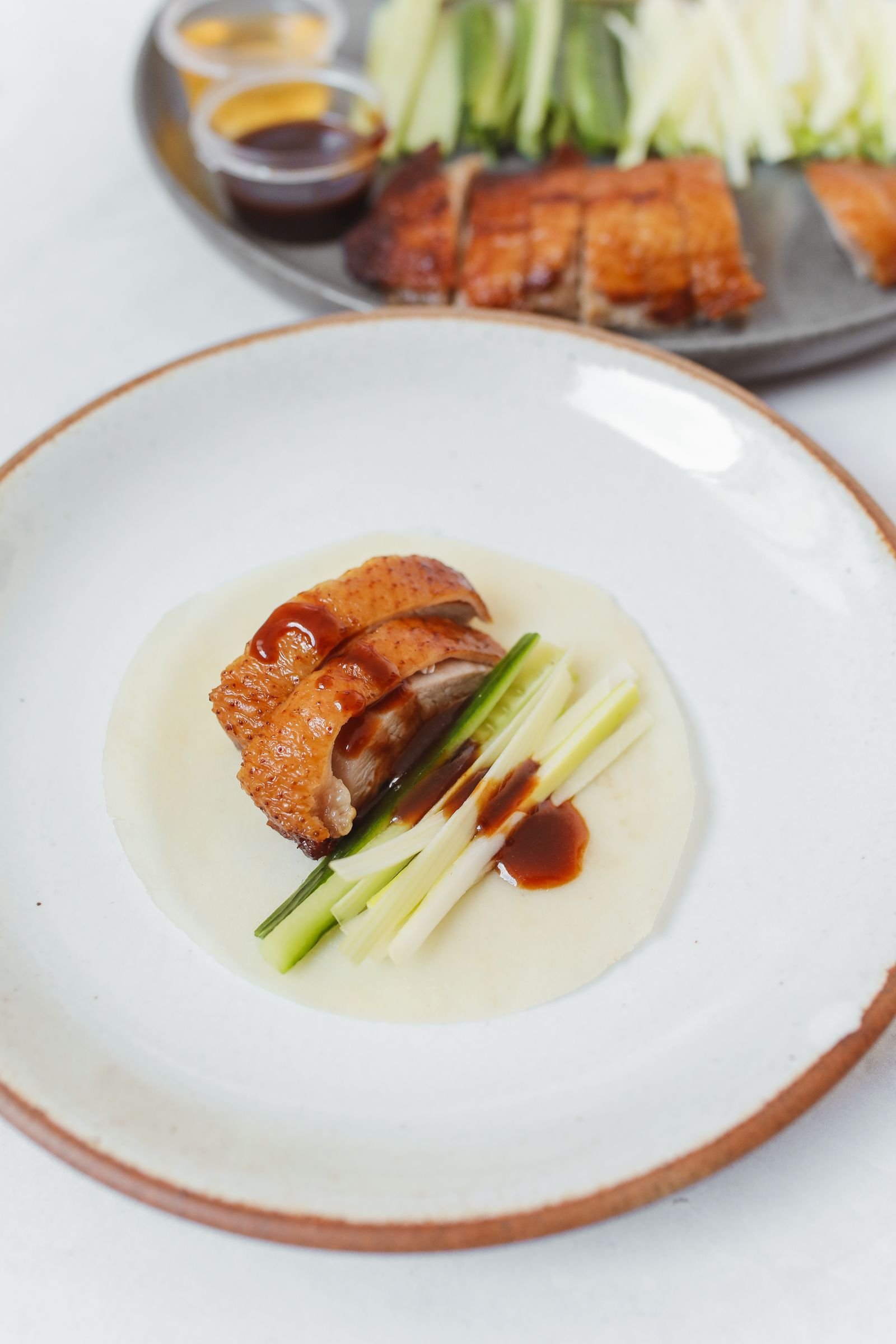
And it is emphatically not Peking duck. That bird is roasted until the skin shatters like lacquer, a completely different exercise that I cover in my piece on all about peking duck. Yan shui ya is the quiet opposite of every roast duck you’ve met: no oven, no colour, no crisp. Just brine, patience, and water that never quite boils.
What Yan Shui Ya Actually Is
The name translates plainly as “salt water duck”, and Nanjing has been making it for a very long time — Wikipedia’s entry on Nanjing Salted Duck traces the dish back over a thousand years, to the era when the city’s canals and marshes made it the duck capital of China. The classic version made around osmanthus season in autumn is called guihua ya, and shops still use the name as a badge of the good stuff.
What lands on the table looks almost underdone to first-timers: skin the colour of porcelain, flesh cooked through but pale, with a clear jelly set between skin and meat. There’s no caramelisation anywhere. The flavour comes entirely from the brine, the aromatics, and the quality of the duck itself. That’s why the technique matters so much: with nothing to hide behind, a boil or a salty brine shows immediately.
Brine or Dry Rub? The Argument in Every Nanjing Kitchen
Ask three Nanjing families and you’ll get two methods and one argument. The traditional two-step is a dry salt rub — salt and Sichuan pepper worked into the cavity and skin for a day or so — followed by a second soak in a lighter brine before cooking. The modern home method, and the one most recipes written down use, is a single wet brine for four to six hours. Then there’s the third camp, the shops, who keep a laolu — a master brine, decades old, topped up and re-boiled weekly — that no home cook can realistically copy.
| Wet brine, one step | Dry rub then re-brine | |
|---|---|---|
| Total time | 4–6 hours soak | 1–2 days dry, then 2–4 hours soak |
| Salt control | Easy to weigh and dial in | Deeper cure, more oversalting risk |
| Skin after poaching | Pale and even | Slightly firmer, drier surface |
| Flavour depth | Clean, aromatic | Rounder, more cured |
| Best for | First-timers, small ducks | Families with an inherited brine pot |
My honest verdict after five ducks: start with the wet brine. It’s controllable, it’s fast, and the flavour gap closes almost completely once you nail the poaching temperature. The dry-rub school wins on depth, but you need three or four successes before that difference is worth chasing.
Building the Brine
For a two-kilo duck, my brine is:
- 2 litres water
- 150 g coarse salt — 150, not the 250 g I used that first catastrophic time
- 20 g Sichuan peppercorns, dry-toasted until they smell like lemon and wood
- 3 star anise
- 1 piece of cassia bark, or a small cinnamon stick
- 20 g ginger, smashed
- 3 scallions, trimmed and halved
Bring everything to a boil for five minutes, then cool it completely. Not warm — cold. Warm brine on raw poultry is asking for trouble and it starts tightening the skin before you’ve begun. The peppercorns are the aromatic spine here; they’re the same buzz that runs through Sichuan Cuisine, though in a brine they hum rather than shout.
Submerge the duck breast-down in the cold brine, weight it with a plate so it stays under, and refrigerate four to six hours, flipping the bird once halfway through. Four hours for a smaller bird, six for a big one. Nine, as I proved memorably, is too many.
The Soak, Then the Dry
After the brine, lift the duck out and let it drain for ten minutes, then set it on a rack in the fridge, uncovered, for one to two hours — overnight is better if you have it. This drying step does two things the recipes never explain: it lets the surface moisture evaporate so the skin poaches into a smooth sheet instead of a wrinkled one, and it lets the salt equalise through the meat so the brine’s work finishes gently. Skipping it is why so many home attempts come out with droopy, blotchy skin.
Poaching: The Number That Matters
Here is the whole dish in one sentence: the water must never boil. Bring a pot of water big enough to cover the duck to about 90°C — a fast steam, the first lazy bubbles on the bottom — with the ginger and scallions from the brine plus a fresh star anise. Lower the duck in breast-down, keep the heat at a bare simmer, 85–90°C, for thirty minutes, then turn the bird over and give it another ten. After that, kill the heat and let the duck rest in the liquor for fifteen minutes. For a two-kilo bird that lands the thigh at just cooked, with juices running clear and no pink at the bone.
A hard boil does three kinds of damage in ten minutes: it tightens the skin until it splits along the fattest seam — the breast, in my case, historically — it squeezes the fat out into the water, and it drives the juices down the drain of the pot. Chinese cooking knows ferocious heat well; Shui Zhu Niu Rou Recipe is practically boiling chilli oil, which is exactly why the restraint here reads as real skill. Patience does the work, the same quiet-absorption lesson Ants Climbing A Tree explained about glass noodles: gentle heat, and the ingredient meets you halfway.
The Ice Bath and the Chill
The moment the duck leaves the liquor, it goes into a bath of iced water, and this is not a garnish step. The cold shock stops the carryover cooking dead, tightens the skin into that porcelain-smooth finish, and — the part nobody tells you — makes the thin layer of jelly set between skin and flesh. That jelly is the sign of a proper yan shui ya; if you’ve ever bought one in Nanjing and wondered what the wobbly translucent stuff under the skin was, that’s the poaching liquor, set. It is not fat and it is not a fault.
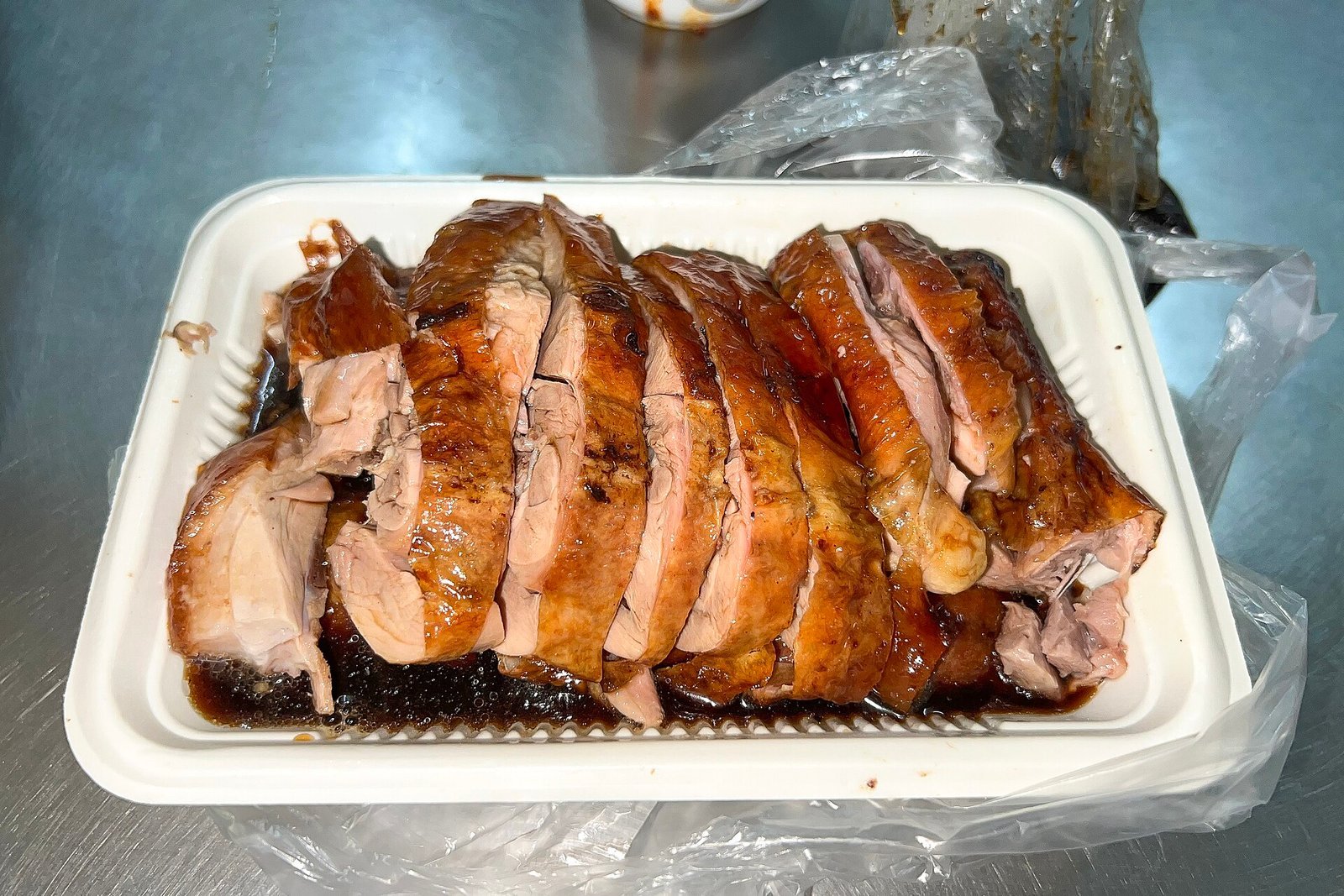
Twenty minutes in the ice bath, then into the fridge for at least two hours, better overnight. Serve the duck cold or at room temperature, never reheated — heat undoes the jelly and dulls the clean flavour. Chopped properly, with a heavy cleaver straight through the bone, the pieces hold together; sawed at with a knife they fall apart, so use the big blade.
The Nanjing Ritual: Buying by the Half
In Nanjing you don’t buy a duck, you buy half of one. Shops hang rows of pale birds, take your order, and a cleaver comes down through the whole bird — bone, skin, jelly and all — in about eight swings, the pieces packed with a scoop of set brine jelly and a small bag of vinegar-ginger dip. The queues peak late afternoon, when families are collecting dinner, and by 6 p.m. the good shops are sold out. I’ve queued at seven in the morning instead, eaten duck with a warm baozi standing on the pavement — how baozi is really done is another article — and nobody in the queue thought that was strange.
The dish travelled down the Yangtze long ago, and you’ll find respectable versions across the delta; my Shanghai Food guide lists a few shops where the cold duck shares a menu with wok dishes — my notes on beef chow fun, say — and the hot-cold contrast is the point of the table. If the rest of the meal runs fierce, everything you need to know about authentic mapo tofu level fierce, keep the duck plain and let it do its quiet job.
The vinegar dip question divides people more than the brine method does. The standard dip is Chinkiang black vinegar with a pile of shredded ginger, and it cuts cleanly through the richness of the skin. Purists argue a duck this good needs nothing at all, and on my fourth bird — the first good one — I agreed with them for exactly three pieces. Then I tried the dip. Both camps are right: eat the breast plain, dip the fattier pieces. You bought the whole half; you’re allowed both opinions.
Frequently Asked Questions
Why did my salted duck come out too salty?
Almost always the brine time, not the brine strength. A two-kilo duck needs four to six hours; every extra hour pushes salt deeper into the leg meat where the blanch can’t help. If you must hold the bird longer, pull it out, rinse it, and dry it in the fridge instead — the drying step replaces brining time safely.
Can I make this with duck legs instead of a whole bird?
Yes, and it’s a sensible weeknight version. Legs need about three hours in the brine and roughly fifteen minutes at 85–90°C, plus the same ice bath. The jelly layer is thinner but the flavour holds up well.
Why is my skin grey and wrinkled instead of pale and smooth?
Two usual suspects: the poach was too hot, or the duck went into the pot wet and un-dried. Hold the water at 85–90°C — never a boil — and dry the brined bird uncovered in the fridge for at least an hour first. Both fixes together give the porcelain finish.
Is the jelly under the skin fat?
No. It’s the poaching liquor, rich with a little gelatin from skin and bone, that sets when the duck is properly chilled. It’s considered the best part in Nanjing and is packed with takeaway orders on purpose.
How long does salted duck keep?
Two to three days in the fridge, wrapped, and it should be eaten cold or at room temperature. The flavour is best on day one, and reheating — especially in a microwave — ruins the texture of the jelly and the skin in one go.