Chinese Tea Eggs: Method and Variations
Last reviewed 31 October 2026 · China Food Way editorial team
The first time someone handed me a tea egg, I thought it had gone off. The shell was webbed with dark brown cracks, like a bruise spreading under the skin, and the staining had bled inward in thin veins. My friend peeled one to prove it was fine, and the white inside was marbled the same way — a pattern I was convinced was mould until I tasted it: faintly tea-scented, savoury, with the gentle give of an egg that has spent an hour in spiced liquid. 茶叶蛋 (cháyèdàn, “tea leaf egg”) is not a spoiled egg. It is an egg deliberately cracked and steeped until the cracks become the seasoning. As Wikipedia’s overview of the dish notes, tea eggs are sold from street stalls and convenience-store hot cases across China and Taiwan — the most everyday egg in the Chinese-speaking world, and one of the few that tastes better the longer it waits.
That last part took me years to believe.
The Crack Network Is the Whole Design
Everything about a tea egg follows from one decision: breaking the shell without removing it. An intact shell keeps the cooking liquid out; a removed shell lets it all the way in and turns the egg grey and waterlogged. The crack is the compromise — a controlled leak that lets the brine reach the white exactly where the fissures run, and nowhere else.
The technique is gentler than most descriptions suggest. I used to smash my eggs the way you tap them for a boiled-egg breakfast, and the shells came off in flaps, leaving bald patches that soaked up too much liquid and turned leathery. What works is a rolling crack: hold the egg against the counter and press the back of a spoon against it, turning the egg as you go, until the whole surface is covered in a fine, connected web. You should feel the shell give in a dozen small places, not shatter in three big ones. My mother-in-law, who has made these by the hundred, uses the flat of a cleaver and three light taps; I have never managed to reproduce her spacing.
| Crack density | Result | Notes |
|---|---|---|
| Too coarse (3–4 big gaps) | Blotchy, uneven colour | Bald patches over-marinate |
| Fine, connected web | Even marbling | The target — back of a spoon |
| Shell partly peeled | Grey, waterlogged egg | Brine reaches everywhere at once |
The liquid does the rest. It wicks along the cracks, and because the shell stays in place, the pattern is drawn in ink-thin lines rather than in a wash.
How much loose tea should I use per egg?
About 5 g of loose black tea per egg — two heaped tablespoons for a dozen — and choose a cheap, strong, fully oxidised leaf rather than a delicate one. Tea eggs (茶叶蛋) get their colour and their faint tannic edge from tannins, not from aroma, so an expensive scented or green tea gives you a pale, thin result for more money; a plain keemun or a broken orange pekoe does the job better. Add the leaf with the cold water and spices at the start so it extracts slowly through the simmer. One honest caveat: more tea does not mean a darker egg past a point — overload it and the liquid turns bitter and astringent, which you will taste in the white. Two tablespoons, then stop.
The Tea Question: What It Actually Does
Here is the part I got wrong for the longest time: the tea is not there for flavour, or at least not mainly. It is there for tannin and colour. Tea tannins bind to the egg proteins and deepen the brown that the soy sauce starts; without tea, the eggs come out a flat, oily reddish-brown that never quite becomes mahogany.
I have run the comparison more times than I should admit, using the same liquid and swapping only the tea:
| Tea | Colour after 2-hour steep | Character |
|---|---|---|
| Black (Assam, or a plain teabag) | Deep mahogany | The classic; slightly astringent edge |
| Pu-erh | Very dark, almost lacquer-black | Earthy, rounder; my preference in winter |
| Oolong (Tieguanyin) | Medium amber-brown | Lighter colour, floral top note |
| Green | Pale tan | Too faint; tastes grassy against the soy |
Pu-erh wins in my kitchen for the same reason it wins in braises: the fermented depth survives hours of simmering without turning bitter. Green tea is the one to avoid — its tannins are the wrong shape for the job, and it contributes a hay-like note that fights the spices. Oolong is the elegant compromise if that is what is in your cupboard. The amount matters less than people think: two to three teabags, or a heaped tablespoon of loose leaf, in a litre of liquid is plenty. The tea is doing structural work, not starring.

Why use both light and dark soy sauce?
Because they do two different jobs: light soy brings the salt, dark soy brings the colour, and using only one leaves you with an egg that is either grey or bland. I use about three parts light soy to one part dark, roughly 60 ml to 20 ml for a dozen eggs in a litre of water, along with a tablespoon of rock sugar, a star anise, a small cinnamon stick, a strip of tangerine peel and a few Sichuan peppercorns. Dark soy is thicker and less salty, so it builds the deep brown that reads as a proper tea egg without oversalting the white. One honest caveat: dark soy varies hugely between brands, so add it a spoonful at a time and judge the liquid’s colour before you commit — you can always darken it, never lighten it.
The Braising Liquid: Two Soy Sauces, Five Spices
The base is water, soy sauce, sugar, and spice. The soy decision is the one most recipes fudge, and it is worth getting straight: use both bottles. Light soy sauce seasons the liquid and the egg white — it is the salt-and-umami layer — while a smaller pour of dark soy sauce is there purely for colour. A teaspoon of dark soy per litre takes the liquid from tea-coloured to the deep brown you see at a stall. More is not better; past that point the eggs taste of molasses.
For the spice, I keep it to what earns its place: one piece of star anise, a short stick of cinnamon, and — if I am in the mood — a few Sichuan peppercorns.
When the whole spice cabinet feels like too much, half a teaspoon of five spice powder does the work of three separate ingredients, and most weeks that is what I actually use. Sichuan pepper is optional and regional; a few dots of numbness are pleasant but not traditional in the Shanghai versions I grew up eating. Rock sugar or white sugar, about a tablespoon per litre, and enough salt that the liquid tastes like a soup you would eat, not like seawater.
The Method: Boil, Crack, Simmer, Steep
- Boil the eggs first. Lower six to eight eggs into cold water, bring to the boil, then simmer for six minutes. You want them hard-set all the way through — a soft yolk will crumble when you crack it and weep yellow into the brine.
- Cool and crack. Transfer to cold water for two minutes — enough to stop the cooking, not enough to make handling painful. Roll each egg against the counter with the back of a spoon until the surface is a fine web.
- Return to the liquid. Put the cracked eggs back into the spiced soy-tea liquid and bring it to the barest simmer. A rolling boil will knock the shells off; you want the surface trembling, around 85–90 °C. Hold it there for 40 minutes to an hour.
- Steep — the step that does the real work. Take the pot off the heat and leave the eggs in the liquid for at least two hours, ideally four to six, or overnight in the refrigerator. The simmering seasons the surface; the steeping draws the pattern inward.
One warning from experience: do not stack the eggs more than two deep. The ones underneath come out pale because the liquid never circulates around them — a wide, shallow pot beats a tall, narrow one.
How dark should I let them go before I stop?
Stop at a clear mid-brown marbling, which usually means eight to twelve hours of steeping off the heat rather than the full day some recipes push for. Colour is the one variable that actually matters here, and it keeps developing as the eggs sit in the liquid: at four hours the veins are faint, at overnight they are strong and the white has taken on a tan cast, and past twenty-four hours the outer white turns leathery and overly salty. I steep them in the fridge, still in the liquid, and pull one out at the eight-hour mark to check. One honest caveat: steeping is not cooking — keep the pot refrigerated once it has cooled, and never leave it on a warm hob overnight, whatever the recipe says.
Steeping Time vs Colour: The Only Variable That Really Matters
If you take one thing from this article, take the steep. I have timed it side by side, same liquid, same eggs:
| Steep time | Colour | Texture |
|---|---|---|
| 40 min (simmer only) | Faint veins at the cracks | Seasoning sits at the shell |
| 2 hours | Clear marbling through the white | Balanced |
| 6 hours (or overnight) | Deep, even brown to the yolk | Fully seasoned; white slightly firmer |
Overnight is the sweet spot and the most convenient — the eggs steep in the refrigerator while you do nothing. The white firms up a little as it sits, which some people dislike; if that bothers you, four hours is plenty. Either way, the eggs keep three or four days in the liquid, and the liquid is worth saving for a pot of noodles.
Variations Worth Knowing
Iron eggs (铁蛋, tiědàn) are the Taiwanese extreme: the same eggs are repeatedly stewed, dried, and returned to a reduced, heavily spiced liquid until they shrink, darken, and take on the chew of a licorice jelly. They are a snack food and an acquired taste — intensely savoury, almost leathery. Worth trying once at a night market; not something you make at home on a Tuesday.
The sweet-leaning southern versions add a splash of Shaoxing wine and a little more sugar, and some Cantonese stalls go lighter on the spice entirely, producing a paler, more tea-forward egg. The breakfast versions — the ones sold beside soy milk and fried dough at six in the morning — are usually steeped the shortest, because the pot is emptied and refilled all day. What you buy at 9 a.m. is paler than what you buy at 4 p.m., which tells you everything about how the colour works.
When do tea eggs turn up on a Chinese table?
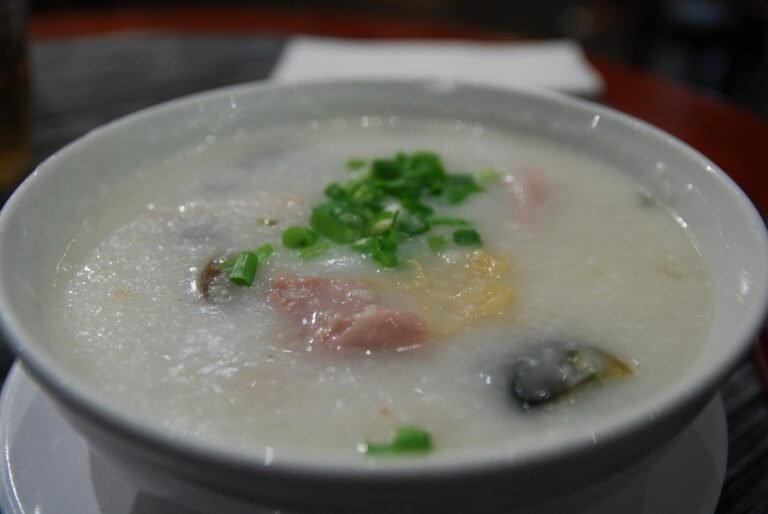
Mostly at breakfast, from a street stall or a convenience-store hot case, or as one small item on a cold spread — almost never as the centrepiece of a sitting-down meal. They are the most everyday egg in the Chinese-speaking world: cheap, portable, made in batches, and better the longer they wait, which is why they suit a train journey or a lunchbox more than a banquet. I put them out halved alongside congee, pickled greens and a few other cold dishes, where their savoury, tea-scented white acts as a salty counterpoint rather than a main course. One honest caveat: they are filling and quite salty, so one per person is plenty when there is anything else on the table. Peel them just before serving so the marbled pattern stays visible.
Where These Belong on a Table
Tea eggs are not a centrepiece; they are infrastructure. Peel one over a bowl of plain congee, or slice it — halved, cut side down on the board, a thin blade, a single confident stroke — and lay it on a plate of rice with a few drops of soy. They are the egg you eat standing up, out of a paper bag, on the way to work. If you want the wider context, they sit at the humble end of the Chinese street food hierarchy, somewhere between the stinky tofu stall and the roasted sweet potato cart, and they are one of the very few street snacks that are genuinely better homemade — mostly because you control the steep.

Frequently Asked Questions
Why did my tea eggs come out pale?
Almost always a short steep. Simmering alone seasons only the outer few millimetres; the marbling is drawn in during the hours afterwards. Give them four hours minimum, and use dark soy sauce for colour, not just light.
Can I use ordinary black teabags?
Yes — a plain breakfast teabag is the standard home substitute. Avoid flavoured teas (Earl Grey’s bergamot fights the soy) and green tea, which turns pale and grassy.
Do I need Sichuan peppercorn or five spice?
No. Star anise and cinnamon alone produce a clean, classic egg. Five spice powder is a convenient shortcut if you do not keep whole spices; Sichuan pepper is a regional optional extra.
Why did the shells fall off in the pot?
Three possible causes: cracked too aggressively (the shell came away in flaps), the liquid was at a rolling boil rather than a bare simmer, or the eggs were stacked and knocked against each other. A trembling surface and a wide pot fix most of it.
How long do tea eggs keep?
Three to four days in the refrigerator, in their liquid. Bring them back to a bare simmer for a few minutes before eating, or eat them cold — both are normal.
Is the liquid reusable?
Once, easily. Strain it, refrigerate, and use it as the base for a pot of noodles or a braise; the second time round, refresh the soy and spice.
The Point
A tea egg is the rare recipe where the interesting work happens after you stop cooking. You boil, you crack, you simmer for an hour — and then the dish goes quiet for six hours and becomes itself. The crack network you draw with the back of a spoon is the only craft involved, and even that is mostly restraint: fine, connected, everywhere. Everything else is waiting.