The Bund Guide: Tickets, Routes and What to Expect
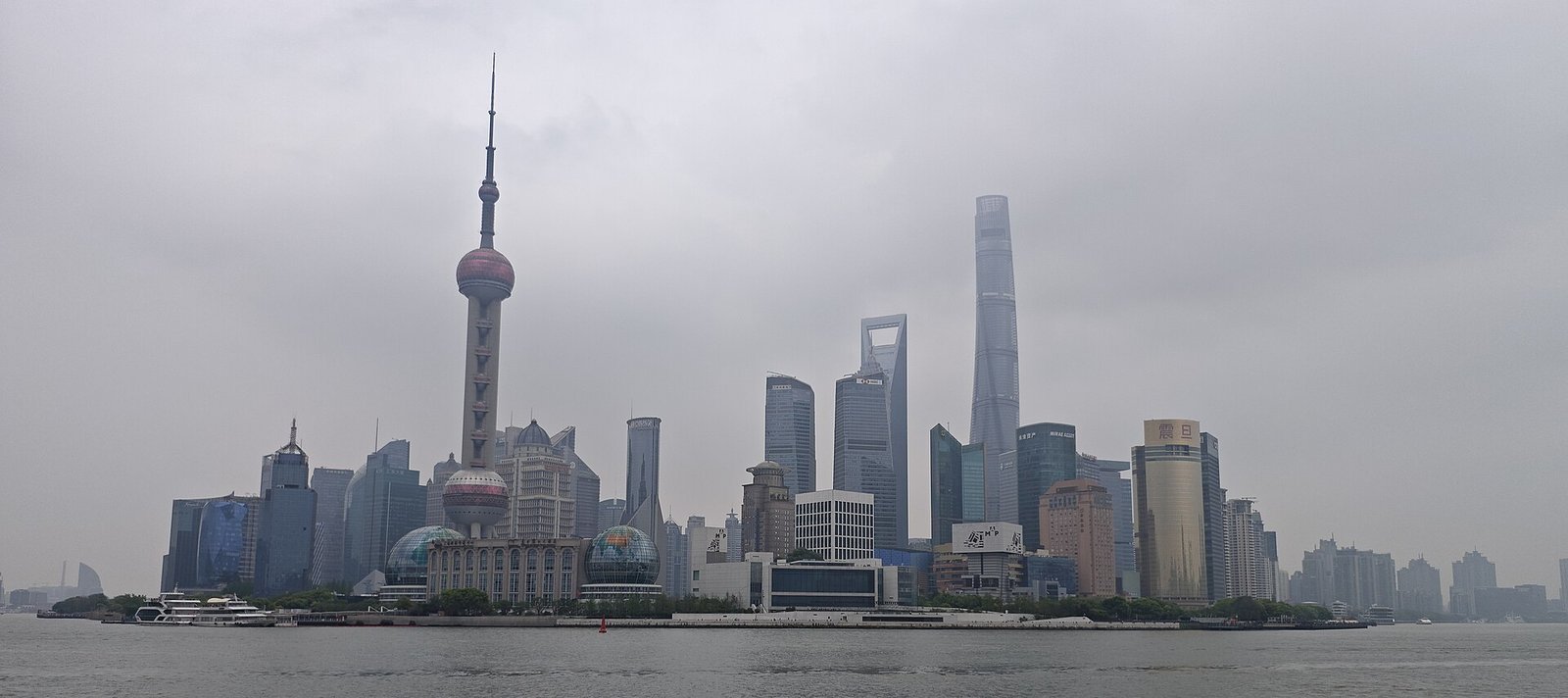
The first time I stood on the Bund, I made the beginner mistake of turning up at ten in the morning in August. The sun was flat, the river smelled of diesel, and the famous skyline across the water looked like a grey postcard. A local woman selling bottled water laughed and told me to come back after seven. She was right, and that single piece of advice shaped how I now tell friends to plan the whole visit.
The Bund is a strip of riverside road in central Shanghai, running roughly from the Waibaidu Bridge in the north down past the old customs house. On one side you have a row of early-20th-century bank and consulate buildings, mostly stone, mostly beige, with the occasional green copper roof. On the other side, across the Huangpu River, the towers of Pudong rise up. The walk itself is free, flat and about one kilometre end to end. Badaling Great Wall is a very different kind of outing, but both reward you for picking the right time of day.
As Wikipedia notes, the name refers to the muddy embankment that lined this section of the river in the 19th century, and the area became the foreign concession district where international banks and trading houses set up shop. Knowing that history helps explain why the architecture looks more like a slice of Europe than the rest of the city.
When to go and how long to spend
Shanghai has four proper seasons, and the Bund behaves differently in each. Spring, from March to May, is my favourite: the air is mild, the light is soft, and the crowds are thinner than in summer. Autumn, roughly September to November, is just as good and a bit drier. Summer is hot and sticky, and the waterfront gets packed with day-trippers from mid-morning. Winter is cold and the buildings look best under a clear low sun, but you will not want to linger outside for long.
For most visitors, plan on ninety minutes to two hours if you simply want to walk the strip and take photos. Add another hour if you intend to step inside one of the heritage buildings, sit for a coffee, or cross to Pudong. I would not spend a whole day here, but I would not rush it either. If you are shaping a longer China trip around this stop, the Chengdu Panda Base explained is an easy add a few provinces west.
The classic waterfront walk
Start at Waibaidu Bridge, the green iron span that marks the northern end. From there, walk south along Zhongshan East Road. The buildings on your left come one after another: the former HSBC building with its domed banking hall, the custom house with its clock tower, the old courthouse. Each one has a plaque, though most are in Chinese only.
About halfway down, you reach the stretch where the promenade widens. This is where the crowds gather in the evening. Keep walking to the southern end near the ferry pier if you want a quieter view back towards the bridge. The whole walk is step-free and pram-friendly, which is more than I can say for many older parts of the city.
East side: the colonial façades
The eastern row is the part everyone photographs, and for good reason. The stonework is genuine, not a film set, and several buildings are now hotels and restaurants you can actually enter. The former HSBC banking hall, now a hotel lobby, is worth a look even if you are not staying there. The ceiling mosaic is the kind of detail that survives because someone decided to keep it. Old districts like this reward slow walking, and everything you need to know about ciqikou in Chongqing is another riverside old quarter I would pair with a big city.
West side: the Pudong skyline
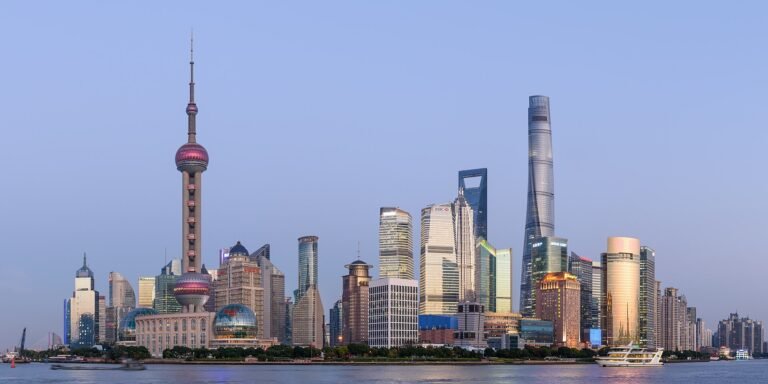
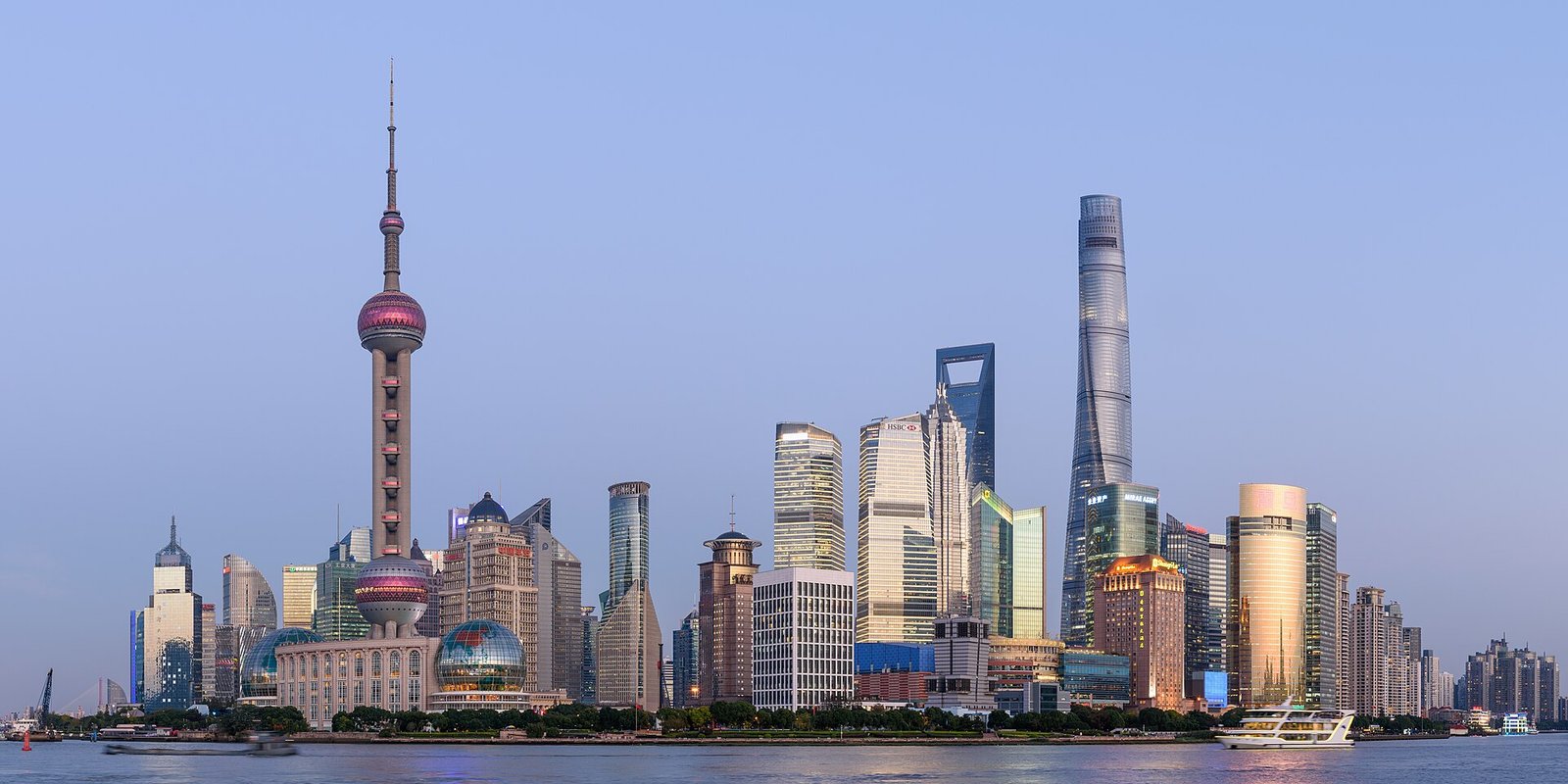
Across the river, the Pudong towers put on the show. The Oriental Pearl Tower, the Jin Mao Tower and the Shanghai Tower line up in that order as you look east. The light show is not every night in the way some guidebooks claim, so treat it as a bonus rather than the main event. The best photos come from the middle of the promenade, where the curve of the river frames the towers. If you are collecting city towers on one trip, the Canton Tower Guide covers the Guangzhou equivalent a long train ride south.
Where to stand for photos
This is the question I get asked most, and the honest answer is that the spot depends on the time. In the blue hour just after sunset, stand near the custom house steps and angle slightly north. If you want the full skyline without people in the frame, the southern ferry end is calmer. For a higher vantage, the rooftop bars charge for the view but save your legs.
A note on the floodwall: for years travellers wrote their names and messages on the concrete wall behind the promenade. The city has been cleaning and repainting it, so do not expect the wall of graffiti you might have seen in older photos. It is now mostly plain, and that is fine, because the river view is the real draw. Desert scenery is a different sort of challenge; how crescent lake dunhuang is really done walks through that very different trip.
A comparison of viewpoints
People often ask whether to view the Bund from the Bund, or from the Pudong side looking back. Both work, and they give a different feeling.
| Viewpoint | Cost | Best time | What you get |
|---|---|---|---|
| Bund promenade | Free | 6pm to 8pm | Historic façades in foreground, skyline across river |
| Pudong riverside (Lujiazui) | Free | 7pm to 9pm | Skyline of the old town, lit buildings behind you |
| Rooftop bar (e.g. on a heritage building) | Price of a drink | Sunset | Elevated, crowd-free, costs money |
| Huangpu River cruise | Ticketed, check the official site before you go | Evening | Moving view, cooler air, less walking |
I have done all four. The cruise is pleasant but not essential; the rooftop is the splurge option; the two free promenades are the backbone of any visit.
Food and drink along the way
You will not go hungry. The heritage buildings hide a few cafés where a coffee runs to around 40 to 60 RMB. Street vendors along the edge sell roasted chestnuts and skewers for a few yuan. For a proper meal, walk two blocks inland to Nanjing East Road, where the range is wider and the prices lower than on the waterfront itself.
One practical warning: the restaurants with the river view charge a premium that the food seldom earns. I would rather eat a few streets back and save the money for the ferry or a museum. Beihai Park in Beijing is another spot where the nearby cafés trade on the view, so the same rule applies there.
Getting there and getting around
The Bund is central and easy to reach. Metro lines 2, 10 and 12 all stop within a short walk at East Nanjing Road station. Taxis and ride-hailing apps will drop you at the north or south end, though traffic along Zhongshan Road is slow at peak times. The cheapest crossing to Pudong is the ferry from the southern pier, which costs a couple of yuan and runs frequently during the day; check the official site before you go for current times and fares.
If you want a longer riverside day, you can combine the Bund with a walk south towards the old city. all about big wild goose pagoda is a different city entirely, but the idea of pairing a famous tower with a relaxed stroll is one I like to repeat.
Frequently Asked Questions
Is the Bund free to visit? Yes. Walking the promenade and looking at the buildings costs nothing. You only pay if you go into a museum, take a cruise, or sit at a rooftop bar. Always check the official site before you go for any ticketed add-on.
What is the best month to visit the Bund? I would pick April, May, October or November. The light is good, the heat is manageable, and the crowds are lighter than in peak summer. Avoid the week-long National Day holiday in early October if you can.
How long should I spend at the Bund? Plan for ninety minutes to two hours for the walk and photos, plus more if you cross the river or sit down to eat. It does not need a full day, but do not try to do it in twenty minutes either.
Can I see the Bund with children? Easily. The path is flat and step-free, and there is space for a pram. The ferry to Pudong is a cheap treat for kids, and the open space means they can move around without much risk.
Is it safe at night? The area is well lit and heavily patrolled by both police and private security. The main nuisance is pickpockets in dense crowds, so keep your bag closed in front of you during the busy evening hours.
Should I take a Huangpu River cruise? It is optional. The cruise gives a cooler, moving view and avoids walking, but the free promenade offers most of the same sights. If your legs are tired or the weather is warm, it is a reasonable treat. Check the official site before you go for schedules and prices.