White Pepper Guide: The Chinese Kitchen’s Default Heat
Last reviewed 31 October 2026 · China Food Way editorial team
For years I assumed white pepper, or bai hu jiao (白胡椒), was simply black pepper with the skin removed, a cosmetic choice for cooks who disliked black specks in a pale sauce. Then I made a batch of suan la tang (酸辣汤), hot and sour soup, without it, using freshly cracked black pepper instead, and the dish was wrong in a way I could not quite name: sharper, more aggressive, less rounded. That was my introduction to the fact that white pepper is not a substitute for black but a different spice with a different job, and in most of China it is the default table pepper while black is the Western habit. The difference is in the processing, and the processing changes the flavour entirely.
I now keep a small jar of white pepper in my kitchen and reach for it far more than black when I am cooking Chinese food. It costs roughly three to five pounds for a 100-gram bag of the whole peppercorns, which I grind as needed, and the difference between a dish with white pepper and one without is the difference between tasting like a Chinese kitchen and tasting like a Western approximation of one. The trick is knowing where it matters and where it is wasted.
Why do Chinese kitchens reach for white pepper over black?
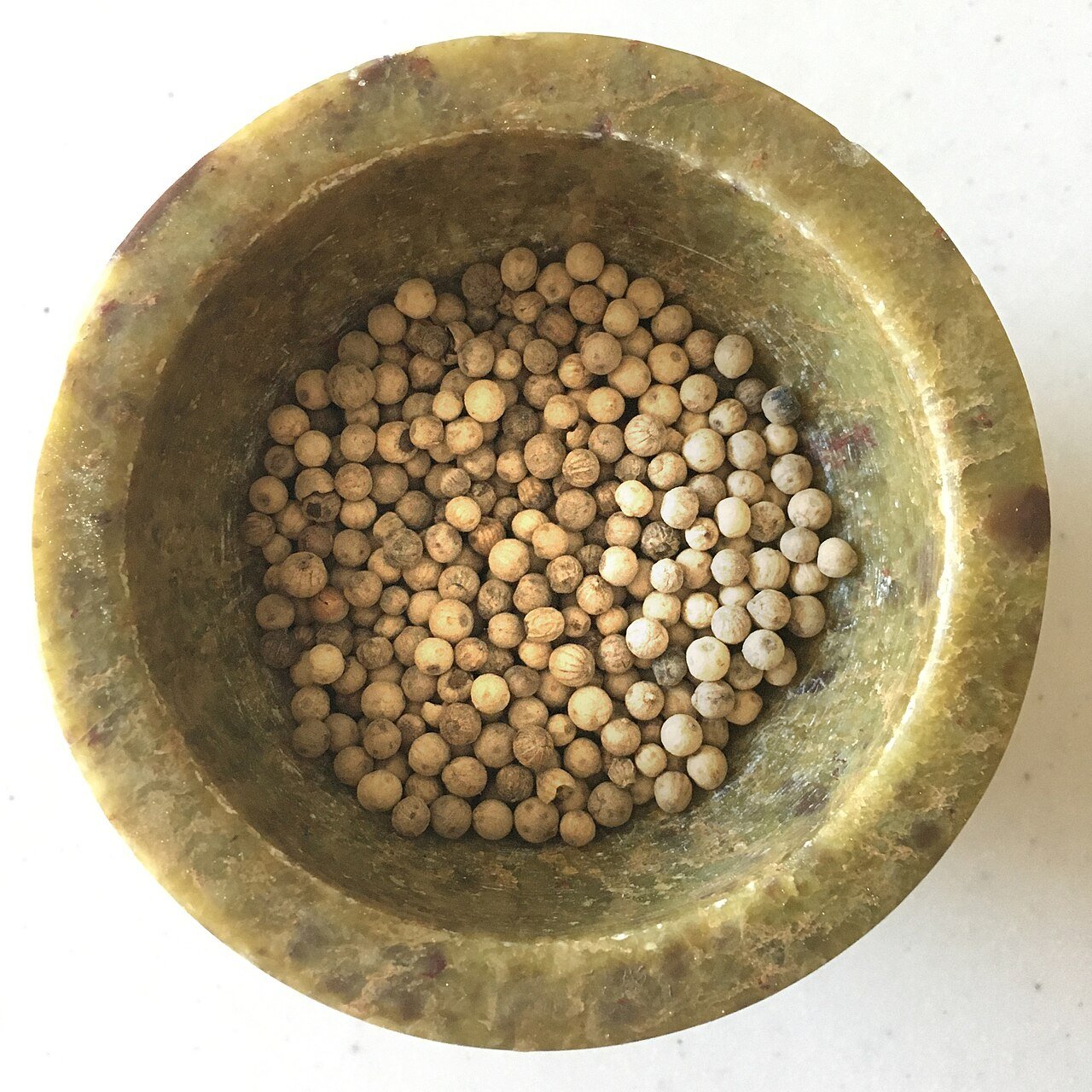
Because the processing strips away the part of the berry that shouts. White pepper comes from the same berry as black, but it is picked ripe and soaked so the outer skin rots away before the seed is dried — and that removed skin holds most of black pepper’s piney, camphoraceous top notes. What remains is a quieter, earthier, almost fermented seed that sits beneath savoury, umami-led dishes instead of over them. Chinese cooks also prefer it for appearance: a clear broth or pale sauce looks cleaner without black flecks. In a delicate wonton broth, black pepper would bellow; white pepper whispers and supports. This is a genuine regional preference, not a deficiency, and in the Cantonese kitchen especially it is used with a free hand in soups, congee and steamed dishes where clarity is the whole point.
Why White Pepper Dominates Chinese Cooking
White pepper is made from the same berry as black, but the berry is picked ripe and soaked so the outer skin rots away before the seed is dried. That removed skin is where most of black pepper’s piney, camphoraceous top notes live, so what remains is a quieter, earthier, almost fermented seed. Chinese cooks came to prefer it partly for appearance, since a clear broth or white sauce looks cleaner without black flecks, but mostly because its muted heat sits better with the savoury, umami-led flavour profiles of the cuisine. Black pepper would shout over a delicate hun tun (馄饨), or wonton, broth; white pepper whispers and supports.
This is a genuine regional preference, not a deficiency. In the Cantonese kitchen especially, white pepper is used with a free hand in soups, congee and steamed dishes where clarity is the whole point. The Sichuan kitchen reaches for it too, often alongside the region’s numbing peppercorn, but there it is one heat among several rather than the lone voice.
What does white pepper actually taste like?
Musty, in the best sense, with a barnyard funk and a faint floral sweetness that black pepper lacks. The mustiness is not a flaw but an accurate note — it comes from the fermentation-like step where the berry skin is rotted off, and it is exactly what gives hot and sour soup its characteristic savoury depth. The floral side appears when the pepper is used raw or stirred in at the very end: dust a little over stir-fried greens or a bowl of congee just before serving and the aroma is still bright. Boil it for twenty minutes and that floral note cooks off, leaving only earthy heat, which is fine for long-simmered soups but a waste for quick dishes. Poor, year-old pre-ground pepper tastes only of dust and bitterness, which is why so many Western cooks think they dislike it.
The Flavour Difference: Fermented, Musty, Floral
People describe white pepper as musty, and that is not an insult but an accurate note. Good white pepper has a barnyard, almost cheesy funk beneath the heat, with a faint floral sweetness that black lacks. The mustiness comes from the fermentation-like step in processing, and it is exactly what gives dishes like hot and sour soup their characteristic savoury depth. Poor white pepper, or pepper that has been pre-ground and sat on a shelf for a year, tastes only of dust and bitterness, which is why so many Western cooks who try it from a supermarket shaker conclude they dislike it. They have never tasted fresh.
The floral side appears when the pepper is used raw or added at the very end of cooking, as a finishing seasoning. I often dust a little over a plate of stir-fried greens or a bowl of congee just before serving, where the aroma is still bright. Once it is boiled for twenty minutes the floral note cooks off and only the earthy heat remains, which is fine for long-simmered soups but a waste for quick dishes.
Which dishes genuinely require white pepper?
A short list where leaving it out changes the dish. Hot and sour soup is the obvious one — the pepper is half the point of the name, balanced against black vinegar, and a generous teaspoon builds that characteristic warmth. Wonton filling is the second: a pinch in the pork seasoning lifts the whole parcel without adding visible specks, which matters in a pale broth. Velveted dishes, where meat is marinated in egg white, cornflour and pepper before a quick fry, depend on it too, because the gentle heat survives the short cook and supports rather than competes. Outside those, white pepper is a supporting seasoning you can use freely in congee and steamed plates. The rule is simple: where clarity and a quiet heat matter, it is not optional.
Where It Is Essential
There are a handful of dishes where white pepper is not optional. Hot and sour soup is the obvious one: the pepper is half the point of the name, balanced against black vinegar, and my hot and sour soup recipe uses a generous teaspoon to build that characteristic warmth. Wonton filling is another, where a pinch of white pepper in the pork seasoning lifts the whole parcel without adding visible specks, and my wonton soup recipe leans on it for exactly that reason. Velveted dishes, where meat is marinated in egg white, cornflour and a little pepper before quick frying, also depend on it, because the gentle heat survives the short cook and seasons the protein from within.
Beyond those classics, I use white pepper in egg drop soup, in cream-style corn soup, in steamed fish where black pepper would look wrong, and in any clear broth where I want heat without colour. It is also the traditional finish for dishes like drunken chicken and certain braised tofu. The common thread is pale food and subtle food, places where black pepper’s personality would be a distraction.
Should I grind white pepper fresh or buy it ready ground?
Grind whole peppercorns as you need them, and the difference is worth the small effort. Whole white peppercorns cost roughly three to five pounds for a 100-gram bag and keep their aroma for a long time; pre-ground pepper starts losing it the day the tub is opened and tastes of dust within a year, which is why so many supermarket shakers disappoint. A small dedicated grinder or a mortar and pestle turns out a brighter, cleaner heat that actually smells of something. Buy whole, grind a pinch per dish, and you get the floral top note that makes the spice worth using at all. Ready-ground is acceptable in a long braise where the aroma was always going to cook off anyway, but nowhere else.
The Pre-Ground Freshness Question
White pepper loses its aroma faster than black, partly because the protective skin is gone, so buying it pre-ground is a gamble. I buy whole white peppercorns and grind them in a dedicated small grinder, because a pinch of fresh-ground pepper tastes dramatically better than anything from a tin. The whole corns keep their character for a year or so in a sealed jar away from light; the ground powder is noticeably faded after a month. If you only have pre-ground, buy a small pot from a shop with high turnover and replace it often rather than keeping a vast tub for years.
A practical habit is to grind a little extra and keep it in a small airtight jar for the week, replenishing every Sunday. This gives you the convenience of ready powder with most of the flavour of fresh grinding, and it is what I do when I am cooking through a busy period. The dumpling guide I wrote uses this approach for the filling seasoning, where a steady supply of fresh white pepper makes the difference between a flat dumpling and a lively one.
Dosing Advice
White pepper is hotter and more concentrated than its mild aroma suggests, so the rule is to start small and build. For a family pot of soup I begin with about half a teaspoon of ground pepper and taste before adding more, because the heat develops as it sits. In a marinade for 300 grams of minced pork I use roughly an eighth of a teaspoon, enough to notice without numbing. The mistake most beginners make is treating it like black pepper and shaking freely, then wondering why the dish tastes medicinal and sharp. A light hand suits it.
One more note: white pepper and black do not swap cleanly. If a recipe calls for white and you only have black, use about two thirds the amount and accept that the flavour will be brighter and the colour speckled. The reverse works better, because white is the subtler spice and stands in for black in pale dishes without complaint.
| Quality | White pepper | Black pepper |
|---|---|---|
| Source berry | Ripe, skin removed | Unripe, skin on |
| Flavour | Earthy, musty, floral | Bright, piney, sharp |
| Best in | Pale soups, broths, velvet | Roasts, crusts, visible speckle |
| Freshness loss | Fast once ground | Slower |
| Swap ratio | Use two thirds if substituting black | Use three quarters if substituting white |

Buying and Storing
You will find white pepper in two forms: whole corns and ground. The whole corns are usually labelled “white peppercorns” and sold in bags or jars at Chinese grocers and many supermarkets; the ground is sold both as “white pepper” and sometimes mislabelled simply as “pepper” in Asian shops, so check the colour. I pay around four pounds for 100 grams of corns, which lasts me the better part of a year. Store it in a dark cupboard in a sealed container, and keep the grinder dry, because damp pepper clumps and loses aroma.
If you want to test the freshness of what you have, crush a few corns and smell: you should get a pungent, slightly funky, floral hit. If it smells of nothing or of cardboard, it is time to replace it. The flavour gap between fresh and stale white pepper is wider than with almost any other common spice, and it is the reason the ingredient has a reputation problem in the West.
Frequently Asked Questions
Is white pepper just black pepper without the skin? Roughly, but the soaking and removal of the skin changes the flavour from bright and piney to earthy, musty and floral. They are not interchangeable in taste.
Can I use black pepper instead? In a pinch, use about two thirds the amount and expect a brighter, speckled result. For pale dishes like wonton soup or hot and sour soup, white is worth seeking out.
Why does my white pepper taste bitter? It is probably stale or overheated. Fresh white pepper is pungent, not bitter; long boiling or old powder turns it harsh.
Should I buy whole or ground? Whole corns ground as needed taste far better. Pre-ground is acceptable if fresh and from a busy shop, but fades within weeks.
How much should I use? Start with half a teaspoon per pot of soup or an eighth of a teaspoon in a small marinade, then taste. It is more potent than it smells.
Does it spoil? It does not go bad, but it loses aroma. Whole corns keep about a year; ground powder is best within a month and acceptable for a few.
The Short Version
White pepper is not black pepper minus its skin but a distinctly earthy, musty, faintly floral spice that Chinese kitchens prefer for pale and subtle dishes because its quiet heat supports rather than shouts, so buy it whole and grind it fresh for the best flavour, use it generously in hot and sour soup, wonton filling and velveted meats where it is essential, dose it lightly because it is more potent than it smells, and keep it away from light and air so it does not fade into the dusty bitterness that gives this wonderful spice a bad name in the West.