Dried Chillies in Chinese Cooking: Erjingtiao and Beyond
Updated 31 October 2026 · reviewed by the China Food Way editorial team
The first time I made mapo tofu from a Sichuan cookbook, I could not find the chillies the recipe asked for, so I used what the British supermarket had: a bag of small dried Thai bird’s eye chillies. I chopped a handful, bloomed them in oil, and built the dish exactly as instructed. The result was technically mapo tofu and culinarily a mistake — aggressive, flat heat that scorched the tongue and vanished in three seconds, with none of the warm, raisin-like fragrance the dish is supposed to carry. The chillies were the problem. I had treated “dried chilli” as a single ingredient with one setting, and Chinese cooking treats it as a shelf of varieties with different jobs.
That was the year I learnt to read a chilli by its shape.
Which dried chilli gives the most aroma rather than heat?
Erjingtiao (二荆条), the long slender Sichuan pod, wins on fragrance every time. Its heat is mild to medium, but its smell — fruity, almost raisin-sweet, deeply perfumed — is enormous, which is why it is the chilli behind Pixian doubanjiang and a good chilli oil. Facing-heaven is hotter and brighter, better for red-oil dishes and dry-pot where you want a cleaner sting. Bullet or xiaomi types are purely about heat and bring little scent, so save them for when fire is the point. I keep erjingtiao as my default and add a few facing-heaven when a dish needs bite. The mistake is treating all three as one ingredient; the aroma chilli and the heat chilli do different jobs and should be bought and stored separately.
Three Families of Chinese Dried Chilli
Chinese dried chillies are broadly sorted by variety, not just by heat, and each region has its workhorses. Three matter most to a home cook.
| Variety | Chinese | Heat | Flavour | Best for |
|---|---|---|---|---|
| Erjingtiao | 二荆条 | Mild to medium | Fruity, raisin-sweet, deeply fragrant | Chilli oil, doubanjiang, mapo tofu |
| Facing heaven | 朝天椒 | Medium to hot | Bright, sharp, aromatic | Red-oil dishes, dry-pot, garnishes |
| Bullet / Xiaomi | 子弹头 / 小米辣 | Very hot | Simple, direct heat | When heat is the point, in small numbers |
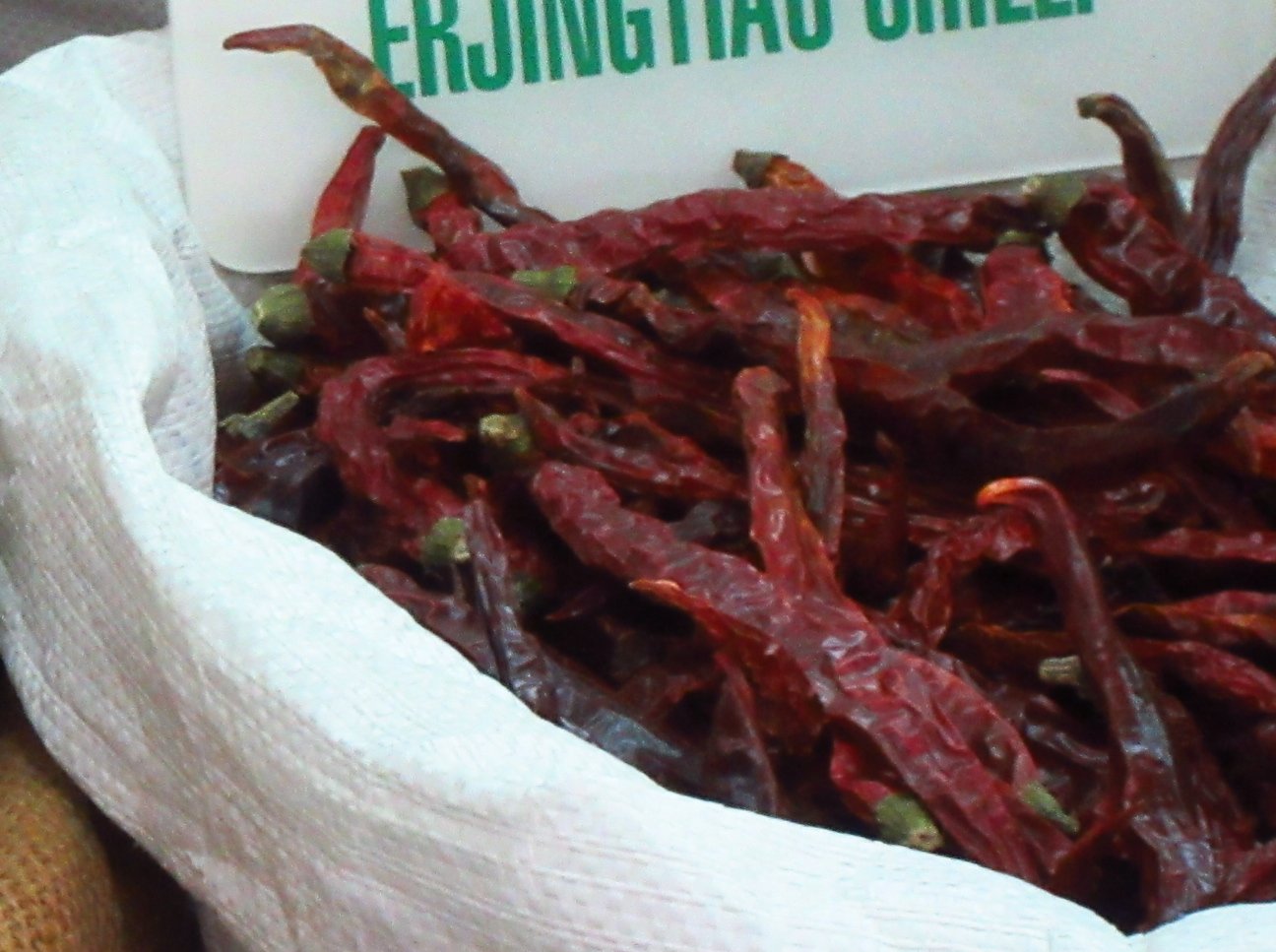
Erjingtiao (二荆条) is the Sichuan chilli of choice, a long, slender, slightly curled pod that grows near Chengdu and dries to a deep, wrinkled red. Its heat is modest; its aroma is enormous. It is the chilli behind Pixian doubanjiang, and it is what gives a good chilli oil its fruity, almost sweet smell. If a recipe simply says “dried chillies” and the dish is Sichuan, erjingtiao is almost always what is meant — as Wikipedia’s overview of the variety notes, it is prized for exactly this balance of low heat and high fragrance.
Facing heaven (朝天椒) points upwards on the plant, hence the name, and comes in several regional types. It is hotter and brighter than erjingtiao, with a cleaner, more assertive aroma, and it is the chilli you find studded through Chongqing dry-pots and cold-dressed dishes where the visual count of chillies is part of the theatre.
Bullet chillies (子弹头, and the very small 小米辣) are short, blunt and fierce. A few sliced into a Hunan stir-fry will do the work of a handful of anything else. These are the chillies that make Western cooks sweat and Chinese cooks shrug — in the right dish, in the right number, they are correct.
Why do Sichuan recipes care more about chilli flavour than burn?
Because the regional goal is fragrance and layered warmth, not raw pain. Sichuan cooking builds its red colour and scent from dried chillies chosen for aroma — erjingtiao especially — and treats the burn as a supporting note beneath the numbing tingle of Sichuan peppercorn and the depth of fermented paste. A chilli picked only for heat gives a flat, one-second sting that scorches the tongue and vanishes, which is what happens when you reach for generic bird’s-eye. The cooks I learned from tasted the chilli before cooking, judging it the way a sommelier judges a grape. I now buy by variety and smell the bag at the shop. The dish that taught me this was mapo tofu, where the wrong chilli made it aggressive and the right one made it perfumed.
Flavour First, Heat Second
The useful mental model is that heat and flavour are separate properties, and a good chilli has both in different proportions. Erjingtiao trades heat for fragrance; bullet chillies trade fragrance for heat. A dish built on erjingtiao and loaded with bullets will taste harsh; a dish built on bullets and finished with erjingtiao oil will taste flat. Match the chilli to the job.
This is also where Sichuan pepper enters the conversation, because the two spices are constantly confused. Sichuan pepper is not a chilli at all — it is the husk of a prickly ash, and it delivers the numbing, electric sensation called má (麻) rather than heat. Chilli gives the burning (là); Sichuan pepper gives the tingling. A dish with one and not the other is half a dish, and the classic pairing is the whole point of mala flavour. Add them at different moments, too: Sichuan pepper goes in early and blooms slowly, while chilli is often added late so its aroma survives.
The regional contrast is worth tasting once. Hunan cooking, as the guide to Hunan cuisine explains, is built on fresh chillies and vinegar rather than the dried-and-numbing Sichuan axis — the same family of ingredients doing a completely different job.
What temperature should the oil be for chilli oil?
Depends on the result, but the safe rule is to pour oil at about 180°C over mild flakes for colour, then a lower 140°C over fragrant ones to keep their scent. Too hot — past 200°C — and the flakes brown and turn bitter within seconds; too cool and the oil stays raw and flat. The three-temperature method splits the chillies by what they give: high heat for red colour from thick skins, medium for aroma from thin fragrant pods, low for delicate ones you do not want to scorch. I heat the oil, let it drop to the right point, then add in stages rather than all at once. A wooden chopstick that bubbles lazily, not violently, means you are in the right zone.
Chilli Oil at Three Temperatures
Chilli oil (辣椒油, hājiāoyóu) is where the chillies’ differences show most clearly, and the method that works is the three-temperature pour. It is also where most home attempts fail, because temperature is doing two jobs at once: low heat draws out fragrance and colour, high heat sets the colour and toasts the chilli, and too much of the second ruins the first.
Warm 250 ml of neutral oil to about 120°C with a slice of ginger and a scallion, then fish them out. Let it climb to roughly 160°C and pour a third of it over 40 g of coarse chilli flakes in a heatproof bowl — the hiss should be immediate and violent. Wait a minute, add the second third at a slightly lower heat. Wait two minutes, add the rest. The first pour sets the colour, the second builds body, the third finishes the aroma. Stir in a spoonful of salt and a pinch of sugar once the sizzling stops, and leave it overnight.
The crunchy condiment version — the one with the soybeans and sesame in the jar — is a different product with a different method, and it has its own guide: chilli crisp keeps the sediment and goes in off the heat at the table, while chilli oil is an ingredient you cook with. Both start from the same flakes.
When to Add Them
Timing decides whether a chilli perfumes or punishes.
- Bloomed in oil at the start — the base move for red-oil dishes: whole pods in warm oil until they darken and the oil reddens, thirty seconds or so. The chillies usually stay in as garnish.
- Simmered in liquid — for soupy dishes like pickled mustard fish, pods go into the broth itself, where they flavour without any risk of scorching.
- Sliced late, off the heat — for cold dressings and quick stir-fries where raw chilli bite is wanted.
- Ground into the base — the doubanjiang tradition, where chillies are fermented into a paste rather than used whole.
The burn line is lower than people expect. Chilli goes from fruity to acrid in about fifteen seconds past the point you would fry garlic, and there is no rescuing a scorched chilli — the bitterness is in the oil and the oil is in everything. When in doubt, take the pan off the heat, add the chillies, and let the residual warmth do the work.
How do I keep dried chillies from going stale?
Store them whole, in an airtight jar, away from light and heat, and they hold their colour and scent for a year. Once ground into flakes the oils fade within weeks, so buy whole and crush small batches at home with a spice grinder. A stale chilli looks dull brown rather than deep red and smells of dust; trust your nose at the shop. If you cannot find Chinese varieties, a mix of a mild dried chilli for aroma and a pinch of cayenne for heat is the closest Western stand-in, though it will not match erjingtiao’s fruitiness. I keep three kinds in the cupboard and label each by name and date, because they are not interchangeable and the wrong one quietly ruins a dish. For the full varietal breakdown see my dried chilli guide.
Picking, Storing and Substituting
Buy chillies that bend. A fresh dried chilli is leathery and pliable; a two-year-old one is brittle and rattles in the bag. Brittleness does not mean useless, but it does mean dead aroma, so use those for colour and save the pliable ones for oil. Store airtight, in the dark, at room temperature; a sealed bag in the freezer keeps them for years with almost no loss.
Substitutions are about direction rather than exactness:
| If the recipe wants | Use | Adjust |
|---|---|---|
| Erjingtiao | Guajillo (dried, Mexican) | Closest match for fragrance and mildness |
| Erjingtiao, milder still | Ancho or pasilla | Sweeter, darker; use a bit more |
| Facing heaven | Árbol or cascabel | Brighter, hotter; use three-quarters of the amount |
| Bullet / xiaomi | Thai bird’s eye or pequin | Same heat, less aroma — this is the chilli that ruined my mapo tofu |
| Any, in an emergency | Chilli flakes plus a drop of smoked paprika | Acceptable in a tomato-based dish, nowhere else |
Avoid supermarket “chilli powder” as a substitute: it is usually a blend with cumin, garlic and salt already in it, and it will pull the dish somewhere you did not intend to go.
Frequently Asked Questions
Are dried chillies hotter than fresh?
Usually, weight for weight, yes — drying concentrates the capsaicin — but the comparison across varieties matters more. Dried erjingtiao is milder than fresh facing heaven. Read the variety, not the state.
Do I take the seeds out?
For oil and slow-cooked dishes, many cooks shake the seeds out because they make the oil gritty and sharper; for stir-fries, leaving them in adds visual authenticity. The seeds are not bitter, so this is a texture choice, not a correctness one.
My chilli oil went brown and bitter. What happened?
The oil was too hot when it hit the flakes, or the flakes were old and scorched before the oil arrived. Keep the first pour under 170°C, and if the flakes look black rather than red, start again.
Can I substitute chilli oil for whole dried chillies in a recipe?
In a dressing or a finishing dish, yes. In a stir-fry, no — the oil behaves differently in a hot pan, and you lose the ability to control the heat by removing the pods.
How do I make a dish less chilli-hot without starting over?
Add fat and sweetness rather than water: a spoon of sugar, more oil, or for a Sichuan dish a spoon of sesame paste. Dairy works on the tongue but not in the sauce — it is a rescue for the eater, not the pot.
Is chilli oil the same as chilli crisp?
No, and the difference matters. Chilli oil is sieved or lightly flecked and used as an ingredient; chilli crisp keeps crunchy sediment and is used as a condiment. Frying chilli crisp kills the crunch, which is why it never goes in the wok.
The Variety Shelf
The fix for my ruined mapo tofu was not a hotter chilli or a milder one; it was the right chilli. A bag of erjingtiao, a jar of oil made at three temperatures, and a habit of tasting before adding the second handful turn “spicy Chinese food” from a dare into a flavour. The chillies are the cheapest sophistication on the shelf — a sack of erjingtiao costs less than the jar of oil it becomes.