Mooncake Recipe: Mid-Autumn Pastries at Home
Fact-checked and reviewed 31 October 2026 · China Food Way editorial team
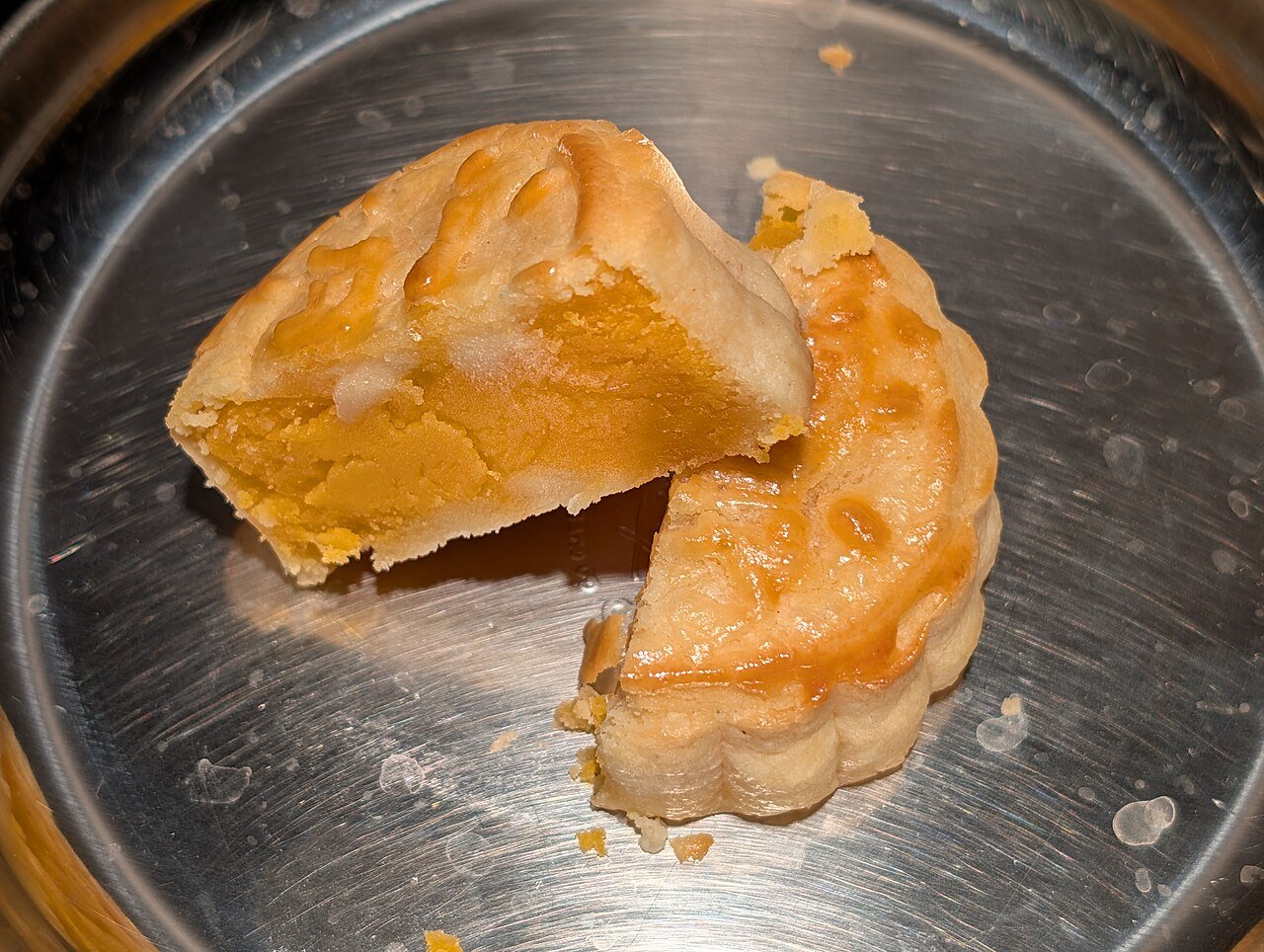
The first proper yue bing (月饼) I ate was bought, not made, from a bakery in Guangzhou during the Mid-Autumn Festival, when the city’s windows glow with cardboard boxes of them and everyone is politely exchanging heavy gift tins. It was a Cantonese mooncake, about the size of a small jam jar lid, with a glossy brown top and a salted egg yolk buried in a dense sweet lotus paste. I expected something like a Western pastry and got instead a rich, faintly chewy disc that was more confection than cake. One was enough to feel indulgent; a box of four was a commitment. Years later I tried to make them at home and learned that the bought version conceals a genuinely fussy little pastry.
Mooncakes are the centrepiece of the Mid-Autumn Festival, eaten while looking at the full moon, usually with tea and shared rather than eaten alone. The Cantonese style, with its golden syrup dough and lotus or red bean filling, is the one most people outside China recognise. I will be honest up front: this is a difficult bake, more chemistry than cooking, and my first batch cracked on top, leaked filling, and tasted of raw flour. But the second batch, made with patience and a proper mould, was close enough to the bakery that I stopped buying them. If you enjoy filled dough generally, the steamed bun method is an easier entry to the same wrapping instinct.
The festival itself is less about the cake than the gathering, and the cakes are symbols more than snacks. For the regional cooking that produced them, our Cantonese cuisine guide explains the south’s preference for subtlety and sweet-savoury balance that mooncakes express in miniature.
What is the right skin-to-filling ratio for a Cantonese mooncake?
Tradition lands at roughly two parts filling to one part skin by weight, so a standard fifty-gram cake is about thirty-three grams of filling and seventeen grams of dough. I weigh both on cheap digital scales now, because guessing was the reason my early cakes leaked: too little skin and the filling bursts through the thin top, too much and you get a bready mouthful that hides the lotus paste. Wrap the dough around a ball of filling rather than pressing it into a lined mould, and keep the skin an even thickness all round. The honest caveat is that a very wet filling needs a slightly thicker skin, so treat two-to-one as a starting point, not a law.
The Skin-to-Filling Ratio
The single most important proportion in a Cantonese mooncake is the skin to filling, and tradition lands at roughly two parts filling to one part skin by weight. For a standard fifty-gram cake, that means about thirty-three grams of filling and seventeen grams of dough. The skin is a thin sheath, not a bready crust; too much dough and you lose the dense, almost fudgy centre that defines the cake. I weigh each portion on a small scale, because guessing by eye is how you end up with a lopsided cake that bursts in the oven.
Beginners often reverse the ratio, making a thick soft crust like a cookie, which is wrong and also makes the cake harder to seal. Trust the two-to-one rule. The dough isthere to hold and glaze the filling, not to be the star. If you want a more substantial pastry, that is a different tradition; this one is about the filling.
The Golden Syrup Dough and Its Rest
The skin is built on golden syrup, not sugar, which keeps it soft and gives the characteristic sheen and colour. Mix about 100 grams of golden syrup with 25 grams of alkaline water called jian shui, a teaspoon of toasted sesame oil for aroma, and 30 grams of vegetable oil, then work in roughly 150 grams of plain flour until a soft dough forms. Do not knead it hard; a few gentle folds to bring it together are enough. The critical step that I ignored on my first try is the rest: wrap the dough and leave it at room temperature for at least two hours, ideally three, so the flour hydrates and the dough relaxes. Skipping the rest makes the skin snap back when you try to wrap it and crack in the oven.
Use plain low-protein flour, not bread flour, which would make the skin tough. The alkaline water is not optional; it reacts with the syrup to give the brown colour and the soft bite. You can buy it from an Asian grocer, or use a pinch of baking soda dissolved in water as a weak substitute, though the colour will be less authentic. A drop of the toasted sesame oil I keep for finishing other dishes lifts the aroma without changing the texture.
How many salted yolks belong in one mooncake?
One salted yolk per fifty-gram cake, or two if you are making the larger ‘double yolk’ version that bakeries charge a premium for. I bake the yolks for five to eight minutes first, until the edges just start to sweat oil, and let them cool before wrapping; a raw yolk steams inside the paste and leaves a damp grey ring. A quick brush of Shaoxing wine or a light dusting of flour helps the paste grip it. Push the yolk into the weighed filling ball so it sits dead centre, or the mould will press it off to one side. The caveat is that yolks vary in size, so weigh the whole ball after adding one and trim a little paste if it has crept over the target.
The Salted Yolk Centre
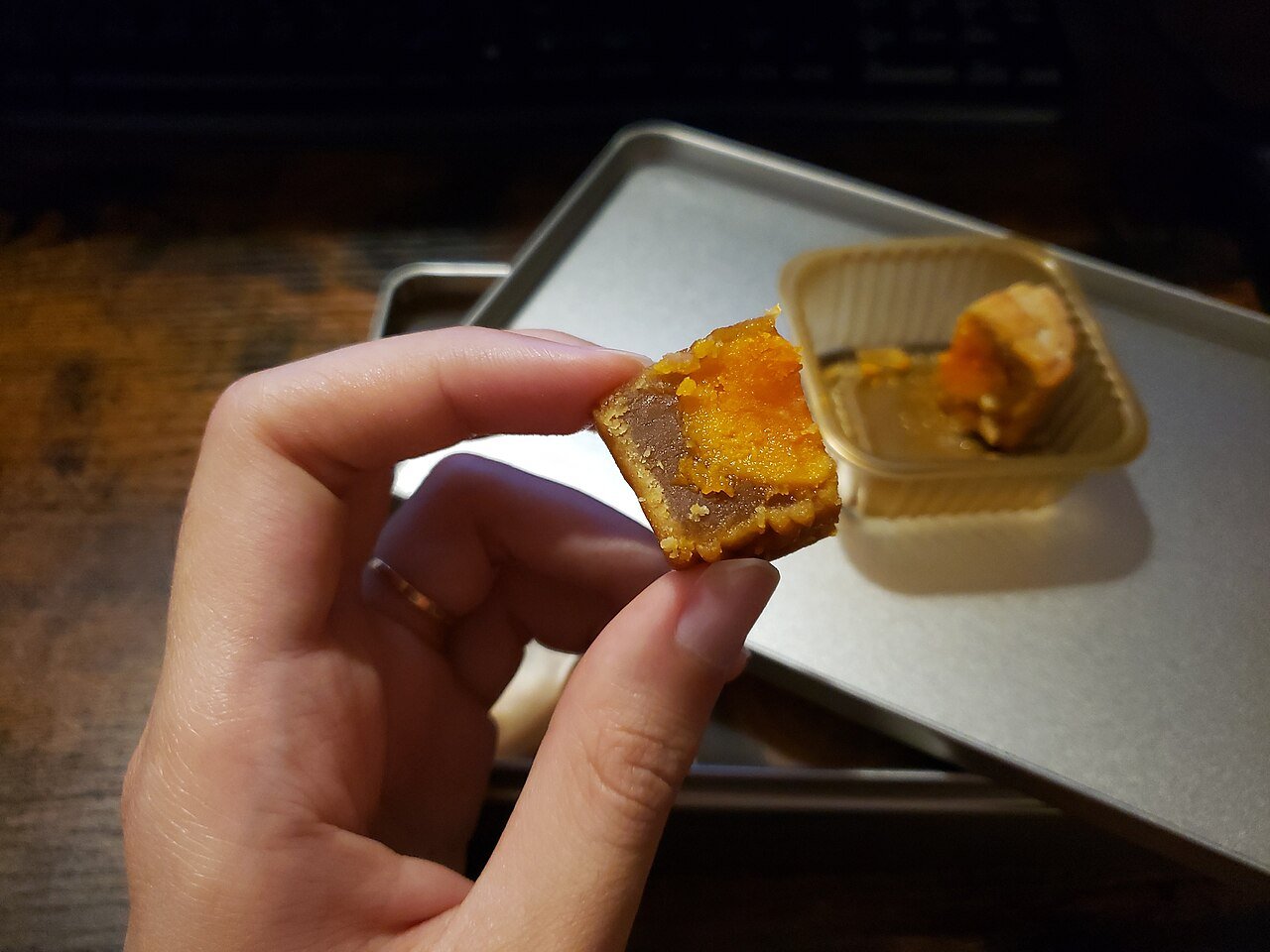
The classic Cantonese filling is lotus seed paste, smooth and mildly sweet, with a salted duck egg yolk pressed into the middle. You can buy salted yolks vacuum-packed, or cure your own by burying yolks in a heavy salt solution for a few days, but bought ones are reliable. Before wrapping, many cooks brush the yolks with a little rice wine and bake them for five minutes at 150 degrees to take the raw edge off; I do this because an underbaked yolk tastes of sulphur. Around the yolk you pack the lotus paste into a ball, then flatten it, nestle the yolk in, and close the paste around it.
Alternatively, a char siu mooncake swaps the sweet centre for a savoury barbecued pork filling, which is less common but beloved in Hong Kong. I make a tray of lotus-yolk and a smaller tray of char siu for variety. The savoury version needs a slightly firmer paste around it so the moisture from the pork does not soften the skin during baking.
How do I keep the dough from sticking in the mould?
Dust the mould lightly with flour, tap the excess out, and press the dough ball in firmly and once — a heavy flour coating is what leaves those pale grey patches on a finished crust. I chill the shaped dough balls for fifteen minutes before they go near the mould, since cold dough holds the stamped pattern far more sharply than warm, soft dough that squidges sideways. Press the plunger straight down and lift straight off rather than twisting, which smears the edges. If the cake sticks, the dough is too warm or too wet, not under-floured. The honest caveat is that a wooden mould needs a good dusting the first few uses until the carving picks up a little oil and releases cleanly.
The Mould Technique
The mould is what gives the cake its carved top and rounded sides, and it is the part that looks intimidating but is mostly about flour and confidence. Lightly dust the wrapped cake ball in flour, tap off the excess, and press it into a wooden or plastic mooncake mould, then push the plunger to compact it and ease it out onto a tray lined with baking paper. The flour prevents sticking; too little and the cake tears, too much and the pattern clogs. I keep a small bowl of flour and a brush beside me and dust between every two cakes.
Avoid the beginner urge to overfill the mould. The ball should sit just below the rim, and a firm even press gives a clean relief. If the pattern comes out blurred, you used too much filling or too little flour. The moulds are cheap online and last forever, and once you own one the cakes become genuinely fun to stamp out, like a very adult version of playdough.
| Component | Weight per 50g cake | Notes |
|---|---|---|
| Skin dough | 17g | Rested 2–3 hours |
| Lotus paste | 28g | Smooth, packed around yolk |
| Salted yolk | 1, about 5g | Pre-baked 5 min optional |
| Total | 50g | 2:1 filling to skin |
That table is the template I weigh to. Scale it up for larger festival cakes, but keep the ratio or the bake times drift and the skin burns before the centre sets.
The Egg Wash and Bake-and-Rest Rhythm
Mooncakes are baked twice, with a rest between, and this is the step where the gloss and colour develop. Brush the shaped cakes with a light egg wash, just the top and upper sides, not a heavy coat, and bake at around 180 degrees Celsius for eight minutes until the tops set and pale. Pull them out, let them cool on the tray for ten minutes, then brush again with egg wash and return for another eight to ten minutes until golden. The two-stage bake stops the top from cracking and lets the pattern hold.
The crucial, often-missed step is what comes after: the baked cakes must rest at room temperature for at least a day, ideally two, before eating. Fresh from the oven the skin is pale and dry and tastes of flour; over the rest it absorbs moisture from the filling, the colour deepens to a glossy brown, and the texture turns soft and slightly chewy. I learned this the hard way by biting one warm and being disappointed, then tasting the same cake two days later and finding it transformed. The wait is not optional.
Is mooncake-making realistically a first-bake project?
Honestly, no — it is more chemistry than cooking, and my first batch cracked on top, leaked filling and tasted of raw flour. The golden syrup dough, the alkaline water, the two-part bake and the day of resting afterwards are each unforgiving in a way a stir-fry is not, and they compound: one small error in the dough shows up as a crack two hours later. The second batch, made with a proper mould and patience, was close enough to the bakery that I stopped buying them, so it is learnable in one retry. The caveat is that it is a project for a clear afternoon, not a weeknight, and you should expect to eat the ugly ones yourself.
Honest Notes on Difficulty
I want to be straight with you: mooncakes are not a casual bake. The dough rest, the weighing, the moulding, and the two-day wait mean this is a weekend project at best, and the margin for error is real. The two failures I see most are cracked tops from skipping the rest or over-baking, and leaking filling from too little skin or a weak seal. If you can manage a Hong Kong bakery crawl instead and simply buy them, nobody will think less of you; but making even one decent batch teaches you more about Chinese pastry proportions than any number of bought tins.
For the wider city context, our Guangzhou food guide covers where the festival is celebrated with the most serious baking, and a trip around Mid-Autumn is worth it just to see the boxes stacked in every shop. The five-spice powder I keep for savoury versions is optional in the sweet cake but useful if you branch into the pork-filled style.
Frequently Asked Questions
Why do my mooncakes crack on top? Usually the dough was not rested, or the oven was too hot, or you skipped the two-stage bake. Rest the dough fully, bake at 180°C, and brush and rest between bakes to let the skin relax.
Can I eat them straight from the oven? Technically yes, but they will taste dry and floury. The traditional rest of one to two days lets the skin soften and the colour develop. Most bakers agree they are best on day two or three.
Where do I get golden syrup and alkaline water? Golden syrup is in the baking aisle of most supermarkets; alkaline water, jian shui, is from Asian grocers or online. A pinch of baking soda in water is a weak substitute for the alkali.
How long do they keep? At room temperature in an airtight tin, about a week; refrigerated, two weeks; frozen, a couple of months. The high sugar content preserves them well, which is why they are exchanged as gifts.
My filling leaked out. You used too little skin or sealed poorly, or the filling was too wet. Keep the two-to-one ratio, pinch the seal firmly, and use a firmer paste. A small leak is cosmetic; a big one means rebalance the weights.
Can I make a non-sweet version? Yes, the savoury char siu mooncake is a recognised style, using barbecued pork in a savoury paste. It needs a slightly firmer filling and careful sealing so the moisture does not soften the skin.
The Short Version
Weigh a two-to-one filling-to-skin ratio, wrap a salted yolk in lotus paste inside a golden-syrup dough rested for two to three hours, press the ball into a floured mould, and bake in two stages at around 180 degrees with an egg wash between, then leave the cakes to rest a day or two so the skin softens and browns. Mooncakes are a difficult, chemistry-led bake rather than an easy pastry, but the Mid-Autumn ritual of sharing them by the moon is the real point, and a single successful batch is quietly satisfying.