Guangzhou Food Guide: Dim Sum Capital
Updated 31 October 2026 · reviewed by the China Food Way editorial team
The tea house in Guangzhou where my grandfather took me every Sunday opened at six in the morning, and by half past the queue stretched past the bakery next door. Old men with birdcages. Families with grandparents in the middle and children at both ends. Students who had clearly not been to bed. Nobody was in a hurry, and yet the tables turned over every fifteen minutes, because dim sum is eaten in small pieces and the trolleys keep moving. My grandfather always ordered the same things. He always let me order one extra basket of whatever looked strangest, and he always watched with amusement while I worked out whether I liked it. That, as much as any dish, is the Guangzhou way of teaching someone to eat.
The City That Eats Everything
Guangzhou — Canton, in the older spelling — has a reputation in China that is half admiration and half suspicion. The admiration is for its cooking: this is the city that gave Chinese cuisine its most refined approach to freshness, and the phrase 食在广州 (eat in Guangzhou) has been repeated for centuries. The suspicion is folkloric — a joke about Cantonese people eating anything with four legs except tables — and it is both unfair and faintly earned, given the range of creatures in the market tanks.
What is true is this: Guangzhou is the capital of a cuisine built on restraint, in a city with the money and the markets to demand the best ingredients. If Sichuan is a sauce cuisine and Shanghai is a sweet-savoury cuisine, Cantonese cooking is an ingredient cuisine, and its technique exists to get out of the way. My Cantonese cuisine guide covers the wider tradition; this piece is about how to eat your way through the city itself.
Yum Cha: How It Actually Works
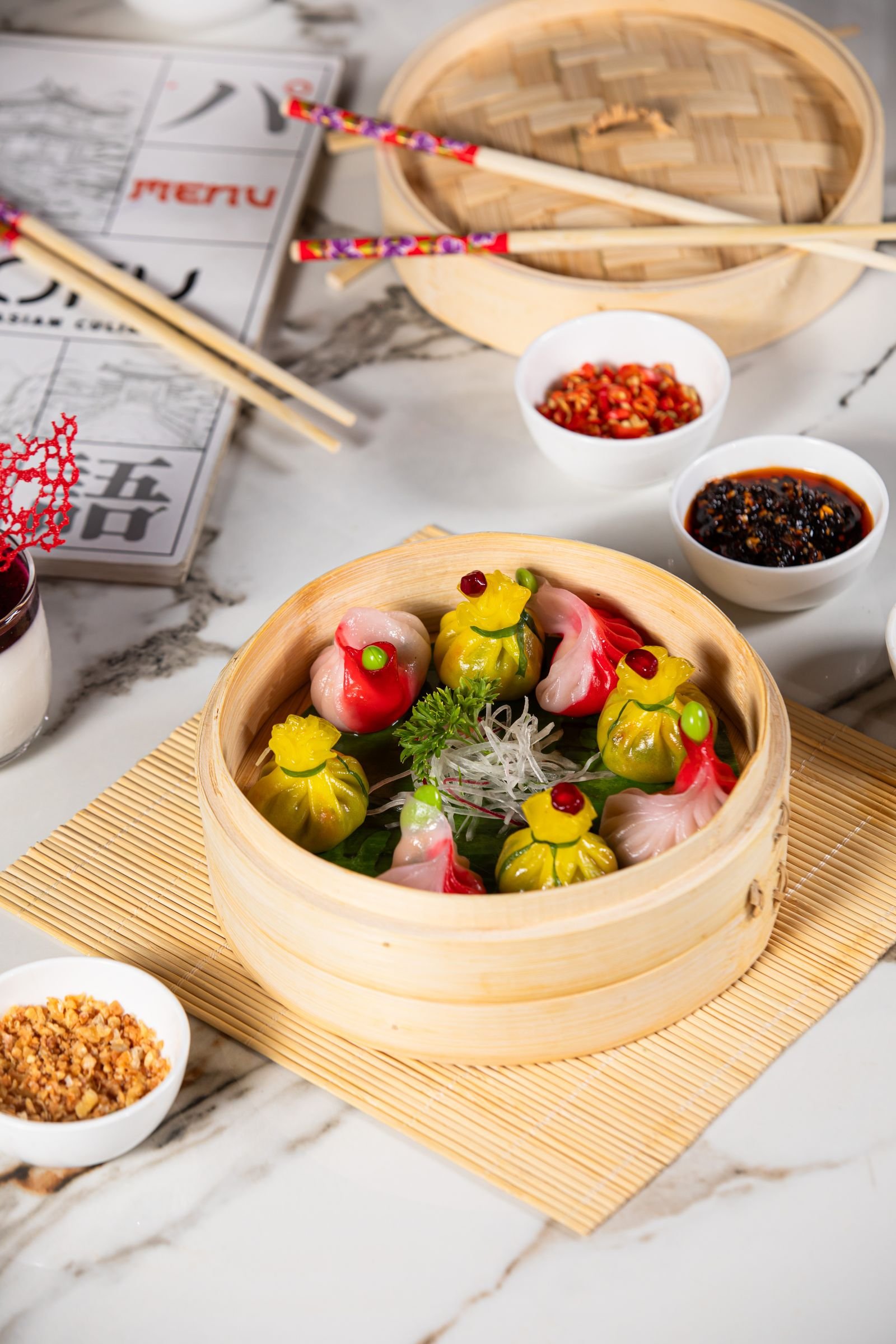
The morning tea ritual — yum cha, “drinking tea” — is the backbone of the city’s food culture. You arrive, choose tea (pu’er for the regulars, oolong or jasmine if you are unsure), and then the food arrives either by trolley, where you flag down what you want and get your card stamped, or by order sheet at the more modern houses.
The etiquette is simple and worth learning. Pour tea for others before yourself. When someone pours for you, tap the table twice with two bent fingers — a gesture that supposedly commemorates a Qianlong-era emperor travelling incognito whose companions needed to bow without giving him away. Tea is functional: it cuts the grease of the fried dim sum and resets your palate between baskets. The pot gets refilled the moment it empties, and the bill does not appear until you ask.
Which dim sum dishes should a first-timer actually order?
Order the four that define the form. Har gow, har gow (虾饺), are translucent shrimp dumplings with a pleated skin that should snap, not chew — the test of any dim sum kitchen. Siu mai are open pork-and-prawn baskets, savoury and forgiving. Char siu bao are steamed buns filled with sweet-savoury roast pork, the entry-level favourite. And cheung fun are rice noodle rolls, silky and dressed in light soy, plain or with shrimp. That quartet covers the skills a kitchen must have: wrapping, dough, filling and steaming. Add a custard tart if you have room, because the Guangzhou version is flaky and gentle. Skip the showy fried items on a first visit; the steamed classics tell you whether the place is serious, and they are where the city’s reputation actually lives.
The Dim Sum Canon
| Basket | What it is | The test of quality |
|---|---|---|
| Har gow (虾饺) | Shrimp dumplings, translucent wrapper | Ten-plus pleats, wrapper thin enough to read through, shrimp that snaps |
| Siu mai (烧卖) | Open-topped pork and shrimp dumplings | Filling proud of the wrapper, not dense and rubbery |
| Cheung fun (肠粉) | Rice noodle rolls with beef, shrimp or doughstick | Silky sheets poured to order, sauce barely sweet |
| Char siu bao (叉烧包) | Steamed buns with barbecue pork | Dome that splits into three peaks when opened |
| Feng zhua (凤爪) | Braised chicken feet | Soft but not collapsing; sweet-savoury black bean sauce |
| Dan tat (蛋挞) | Egg tart | Flaky pastry, barely sweet custard, still warm |
Order har gow and siu mai first — they are the two baskets that reveal a kitchen within thirty seconds — then one strange thing. My childhood strange thing was chicken feet; my grandfather’s approval came the day I ate a whole one without making a face. The same wrapper tradition appears across China: northern jiaozi are wheat-dough cousins of these dumplings, and the folding logic in my guide to making Chinese dumplings explains the family resemblance.
What is there to eat in Guangzhou apart from dim sum?
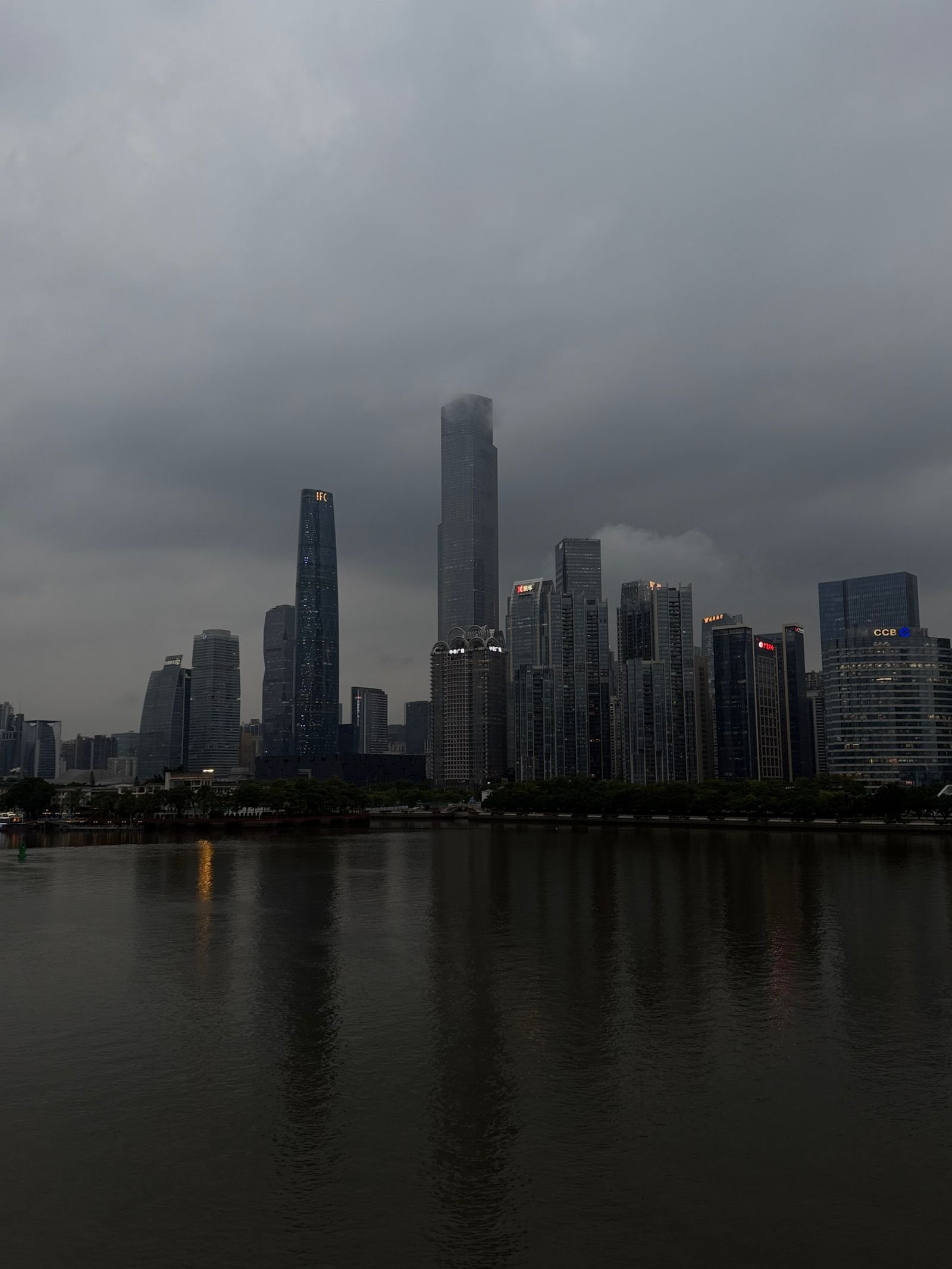
A great deal, because dim sum is only the morning. The city’s roast meat counters — siu mei — display glazed char siu, crisp-skinned roast duck and soy-braised goose in the windows, sold by the plate for lunch. Wok cooking runs from simple greens with ginger to claypot rice finished with a crackling base, eaten late at night. Congee shops open early and close late, and the street food after dark is its own meal: grilled skewers, rice rolls, sweet tofu pudding. Guangzhou eats from dawn to midnight with barely a gap, so do not treat it as a dim-sum town. The serious eating often happens at the unremarkable neighbourhood joints, not the famous teahouses. Follow the locals and the opening hours, and the city feeds you around the clock.
Beyond the Steamer
Roast meats. The windows of 烧腊 shops hang lacquered roast duck, char siu and crispy pork belly, and a plate of mixed roast meat over rice is the city’s everyday lunch. Look for meat carved to order, not pre-sliced and sitting under heat lamps.
Seafood. Guangzhou eats seafood by the tank — pick your crab or fish, agree a price per catty before cooking, and choose 清蒸 (steamed with ginger and scallion) unless the fish is exceptional enough to justify more. The bill will be honest if you were clear about the price first; this is true in any Chinese seafood city.
Congee. Cantonese congee is cooked until the grains collapse into a silky porridge, then topped with raw ingredients that cook in the hot bowl — fish slices, thin pork, preserved egg. It is breakfast for people who find dim sum too heavy, which is most of the city by the third day.
Sweets. The city’s dessert tradition is mild by Western standards: 双皮奶 (double-skin milk pudding), ginger milk curd, and sweet soups with red bean or sesame. Eat them in the afternoon, not after dinner.
How do I plan a full day of eating in Guangzhou?
Build the day around the city’s rhythm rather than three equal meals. Start with yum cha before nine, when the teahouses are lively and the trolleys full, and make it your big sit-down. Lunch should be light — a noodle or a rice roll grabbed between neighbourhoods. Late afternoon is for a walk and a sweet, maybe double-skin milk if you find a shop. Dinner is the roast-meat or claypot moment, heavier and eaten after six. Then a last round of street snacks before bed, because Guangzhou does not really close. The trick is to under-eat at every step so the next one is possible; the city punishes a full stomach by offering something better an hour later. Pace it and you taste more, not less.
A Day of Eating in Guangzhou
Morning. Yum cha, between seven and nine, at a neighbourhood tea house rather than the famous ones near the tourist sights. Two or three baskets each, a pot of pu’er, and no hurry. This is breakfast, and it should take an hour.
Midday. Roast meat over rice from a 烧腊 window — ask for 例汤 (the daily soup, usually free with rice) and eat standing at the counter if the shop is busy. It costs almost nothing and it is the best-value meal in the city.
Afternoon. Walk off breakfast and lunch along the Pearl River or through the arcades of Liwan, where the colonial-era 骑楼 provide shade and the side streets hide the old dessert shops. Stop for 双皮奶 (double-skin milk) if the day is warm, which it usually is.
Evening. Either a seafood dinner — pick your fish from the tank, agree the price, ask for 清蒸 — or a hot pot meal at a Chaoshan beef restaurant, where the beef is sliced paper-thin and cooked in seconds in a clear broth. Both are Guangzhou experiences; the first is classical, the second is the city’s modern appetite.
Late. The city’s late-night tradition is 糖水 (sweet soup) shops and congee stalls that stay open past midnight. A bowl of sesame soup or congee with preserved egg is the correct end to a Cantonese day, and it is what the locals do after a night out.
Which neighbourhoods are best for eating in Guangzhou?
The old centre is the safest bet. Shangxiajiu and the lanes around Beijing Road hold the classic teahouses, roast-meat counters and noodle shops within a walk, and they stay busy with locals rather than only tourists. Yide Road and the wholesale district feed you cheaply and authentically if you go early. For a calmer, more local feel, the streets around the old temples and the Pearl River ferry piers reward wandering, with small congee and rice-roll spots that have no English sign. Avoid eating at the attractions themselves; the food improves a few streets away from any famous gate. The city is dense and walkable, so pick one old neighbourhood, settle in, and graze — the best Guangzhou meal is the one you assemble on foot over an afternoon.
Neighbourhoods and Practical Notes
Yum cha is a morning institution, roughly seven to eleven. Tea houses in the older districts — Liwan, around Shangxiajiu — are the classic experience; the newer houses in Zhujiang New Town are quieter and more comfortable but less atmospheric. A morning for two at a neighbourhood tea house costs 60 to 120 yuan. Lunch of roast meat rice runs 25 to 40 yuan. Seafood is the only place costs balloon, and it balloons quickly.
The city is enormous and the food is spread across it. Base yourself in the old districts for eating; use the metro, which is excellent; and do not try to “do” the city’s food in one day. Guangzhou rewards repeat visits to the same few places, which is precisely how the locals treat it.
One last warning about the tanks. Seafood restaurants in Guangzhou price by the catty, and the catty in question is 500g before cooking — the animal’s weight, not the plate’s. Ask the price before the crab goes in the pot, confirm whether the price is per jin or per kilogram, and keep an eye on the arithmetic. This is not a scam; it is a market, and markets reward the attentive. For a very different Chinese city approach to food, my Shanghai food guide and my Sichuan cuisine guide show how far Chinese regional cooking ranges — and my overview of the eight great cuisines puts Guangzhou’s tradition in context.
Frequently Asked Questions
When should I go for yum cha?
Early. The best baskets sell out by nine, and the room is calmer before the families arrive. Going at seven gets you a table without a wait; going at eleven gets you a queue and the leftovers.
Is it rude to take the last item from a trolley?
No, but it is polite to offer it to the table first if you are with others. The servers are used to tourist hesitation; pointing and smiling works better than translating.
What about vegetarians?
Guangzhou has excellent Buddhist vegetarian restaurants serving sophisticated mock-meat dishes. Every dim sum house has vegetarian options — cheung fun without meat, steamed buns, vegetable dumplings — but kitchens are not separated, so strict vegetarians should stick to dedicated restaurants.
How do I pay?
Mobile payment dominates, including at tea houses. Set up Alipay or WeChat Pay with a foreign card before you arrive; the old tea houses may not take cards at all, and cash is increasingly awkward.
Guangzhou is the most relaxed of China’s great food cities — nothing here shouts, and everything rewards attention. If you would like a trip built around morning tea, seafood markets and the best roast-meat windows in the province, tell us what you would like to eat and we will plan it with you.