The Ultimate Guide to Chinese Snacks
Reviewed 31 October 2026 by the China Food Way editorial team
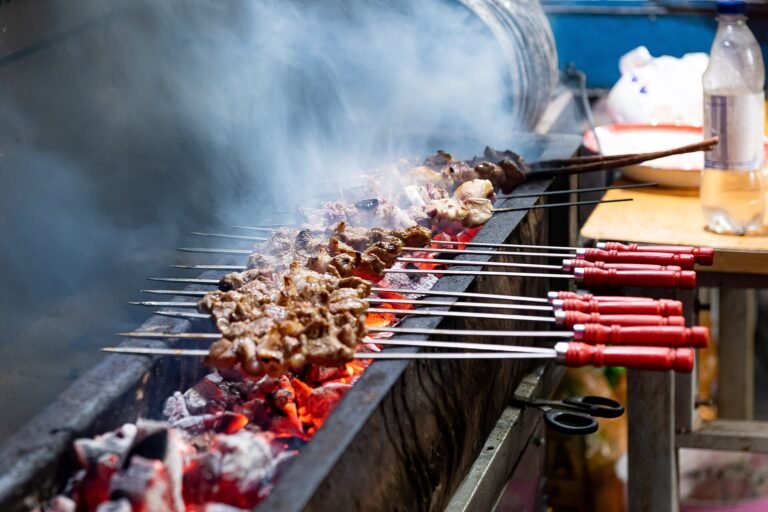
“What is that on the stick?” I asked, pointing at a smoking grill in Chongqing. The vendor didn’t look up. “Eat first,” he said. “Ask later.” I ate. It was cumin lamb, charred at the edges and humming with heat, and the lesson stuck: in China, a snack is rarely just a snack. It is a small, deliberate pleasure that sits outside the three-meal rhythm and, in many cities, does more to explain a place than any restaurant ever will.
Most travellers treat snacks as filler. I made that mistake on my first trip, saving room for “proper” dinners and missing the point entirely. The breakfasts, the afternoon bites, the late-night skewers — these are where regional character survives. If you want to understand how a city actually eats, you start with the snack map, not the banquet menu.

How do I spot a good snack stall?
Stand at a corner for five minutes and watch where the locals queue. A stall with a fast-turning crowd of residents, not a photo-snapping cluster of tourists, is your signal; the auntie who has flipped the same jianbing for twenty years and refuses to diversify is worth more than any English menu the size of a newspaper. Timing matters as much as the stall: breakfast snacks peak between 6:30 and 9:00, afternoon dim-sum bites run 14:00 to 17:00, and the night market is its own meal from roughly 19:00. Show up at the wrong hour and the best stuff is sold out or not yet fired up, so plan the wander around the clock, not the other way round.
Step 1 — Read the Streets Before You Read the Menu
The first skill is observational, and it costs nothing. Stand at a corner for five minutes and watch where the queues form. A stall with a turning crowd of locals, not a photo-snapping cluster of tourists, is your signal. In Shanghai I learned to trust the auntie who sells only one thing — she had done the same Jianbing (savory crepe) flip for twenty years and had no interest in diversifying.
Margin note: Queues are a rating system. A short, fast-moving line means high turnover and fresh stock; a long, patient one usually means something is worth waiting for. Avoid the stall with no locals and a laminated “English menu” the size of a newspaper.
Time your wandering. Breakfast snacks peak between 6:30 and 9:00; afternoon tea snacks (the dim sum world) run 14:00 to 17:00; and the night market is its own meal from roughly 19:00 onward. Show up at the wrong hour and the best stuff is either sold out or not yet fired up.
Why do my steamed buns collapse after cooking?
Usually the heat is too high or the lid comes off too soon. Keep the water at a steady simmer, not a rolling boil, and rest the buns off the heat for two minutes before lifting the lid so they do not weep and sink. The dough itself should be proofed until it springs back slowly rather than bouncing back fast, and the filling seasoned to taste salty on its own because the bread carries no salt at all — that 2-millimetre detail is the gap between a good bao and a forgettable one. One honest caveat: collapsed, grey tops also mean over-proofed or old dough, so watch the clock as well as the steam, and steam in a single layer with space for the buns to rise.
Step 2 — Master the Steamed Bun Before Anything Else
If you learn one snack properly, make it the steamed bun. The difference between a good bao and a forgettable one is a 2-millimetre detail: the dough should be proofed until it springs back slowly, not bounced back fast, and the filling should be seasoned to taste salty on its own because the bread carries no salt at all. I steamed my first batch at too high a heat and got grey, collapsed tops — keep the water at a steady simmer, not a rolling boil, and rest the buns off the heat for two minutes before lifting the lid so they don’t weep and sink.
This is where regional lines get interesting. The soup dumplings of the east coast are a different animal from the plain round buns of the north, and the filled rolls of Shanghai Food carry a sweetness the northern versions never do.
When I want the northern baseline done right, I go back to a proper take on beijing cuisine, where the bao is plainer, larger, and meant to be eaten with a smear of fermented tofu rather than admired.

What does Sichuan peppercorn actually feel like?
It is a citrusy numbness that coats the lips, not chilli heat. The tingle makes the next bite feel brighter, which is why it confuses newcomers who expect fire and instead get a buzzing coolness on the tongue. Freshness matters more than colour: the green variety is brighter and more aromatic, the red more rounded, but both lose their punch sitting in a humid jar for a year. If you have only met it in takeaway kung pao, you have met a weak echo. One honest caveat: a little numbing is the point, but a heavy hand numbs everything indiscriminately and flattens the dish, so toast the peppercorns, grind them coarse, and add toward the end rather than early in the cook.
Step 3 — Don’t Fear the Numbing Peppercorn
The single ingredient that confuses newcomers most is the Sichuan peppercorn, and learning to recognise its tingle is the fastest way to sound like you know what you’re doing. It isn’t chilli heat — it’s a citrusy numbness that coats the lips and makes the next bite feel brighter. If you’ve only met it in takeaway kung pao, you’ve met a weak echo. I spent a week in Chengdu eating nothing but small plates just to map the sensation, and the moment it clicked, Sichuan Cuisine stopped being “spicy food” and became a study in layered mouthfeel.
For the curious, all about sichuan peppercorn covers the red versus green varieties and why freshness matters more than heat level. A peppercorn older than eight months has already lost its perfume, and most airport “Sichuan spice” jars are well past that.
What are the classic fried Chinese snacks?
The chewy-fried family centres on a few repeats: sesame balls (jian dui) with their hollow, glutinous shell; fried dough sticks (youtiao) pulled long and blistered; and the sweet red-bean buns or pan-fried versions that sit between snack and dessert. What unites them is texture — crisp outside, chewy or molten within — achieved with glutinous rice flour or a twice-fried dough rather than with filling alone. They are sold from breakfast through the night market and rarely improve after the first hour. One honest caveat: fried snacks are best eaten standing up, hot, within minutes; by the time they reach a hotel buffet they are soggy and greasy, so buy from the stall whose wok is active, not the tray that has been sitting.
Step 4 — Sweet, Chewy, and Fried
Western visitors expect Chinese sweets to be fruit-forward and light. They are usually wrong. The snack universe leans chewy, glutinous, and gently sweet — sticky rice cakes, sugar-coated haws on a stick (tanghulu), and the fried dough twists sold at every station. The Cantonese dim sum tradition takes this further into the savoury-sweet overlap, with egg tarts and coconut puddings that finish a snack run rather than start it.
I lean on everything you need to know about cantonese cuisine whenever I’m planning a teahouse morning, because the etiquette of ordering by the basket and the pacing of savoury-to-sweet is its own small art. Get the order wrong and you’ll be full before the good things arrive.
Step 5 — The Quiet Regional Ones
Every province hides a snack that never travelled. Anhui Cuisine is the one most guides skip, yet its street food — pressed tofu, dried bamboo, and walnut-shaped pastries — is exactly the kind of humble, salty-savoury bite that teaches you how mountain provinces eat when nobody is performing for tourists. I found my favourite version at a bus-station stall with no sign, bought by weight, and eaten standing up. That is the whole game.
What to Drink, and How to Order for a Group
Snacks are rarely eaten dry in China, and the drink is not an afterthought. The default is tea, but the choice signals region as clearly as the food. In the north, a rough brick tea or a plain green tea cuts the grease of fried dough; in the south, a fragrant oolong or pu-erh is poured endlessly at the dim sum table and refilled by the waiter without you asking. I once watched a Guangzhou tea house pour for a table of eight for two hours and never once bring a bill until they stood up — the tea is the hospitality, the snacks are the excuse.
For chilli-heavy snacking in the west, the local move is plain soy milk or a sour plum drink (suanmeitang) that cools the mouth without adding sugar weight. Beer appears at night markets but is a late arrival; the traditional pairing for skewers is still tea or a warm barley water. If you order nothing to drink, you’ll be handed a glass of hot water by default in most sit-down snack shops — accept it, it is not a slight, it is the baseline of service.
The mistake I see visitors make is ordering a full portion of everything at the first stall. Snacking is cumulative, and four people buying six items each will be defeated by the third stop. Agree on one or two bites per stall, share off a single plate, and let the group vote on a second round only after the first has landed. Stalls price by the piece or by weight, so there is no penalty for buying three skewers instead of ten — the flexibility is the whole point.
North vs South: A Quick Comparison
The easiest framework for a beginner is the north–south split, because it predicts texture and timing more reliably than any list of dish names.
| Habit | North (Beijing, Tianjin, Shaanxi) | South (Shanghai, Guangzhou, Sichuan) |
|---|---|---|
| Starch base | Wheat — buns, pancakes, noodles | Rice — cakes, rolls, congee |
| Signature bite | Jianbing, roujiamo, roasted seeds | Dim sum, soup dumplings, skewers |
| Sweetness | Restrained, often savoury | Present, even in “savoury” items |
| Best hour | Morning and late afternoon | Morning tea and late night |
| Eat it with | Fermented tofu, pickles | Tea, soy dip, chilli oil |
Once you internalise this table, a new city stops being overwhelming. You walk in, locate the starch, and let the region tell you the rest.
As Wikipedia notes in its overview of Chinese cuisine, snacking has historically sat outside the formal meal structure rather than between it — which is why the best snacks rarely try to be miniature dinners. They are their own category, and treating them that way is the first step to enjoying them.
Frequently Asked Questions
Are Chinese street snacks safe to eat? Generally yes, if you follow the queue rule and pick stalls with high turnover. Heat kills most risks, so grilled, boiled, and steamed items are safer than pre-cut fruit sitting in the sun. I’ve eaten street food across a dozen provinces without a single bad night by sticking to busy, fast-moving stalls.
How much should I budget per snack? Most individual snacks run from ¥3 to ¥15 (roughly 40p to £1.70). A full evening of grazing — six or seven different bites — rarely tops £10. The expensive mistake is ordering too many at once; buy one, finish it, move on.
What’s the difference between a snack and a small dish? A snack is usually portable, single-handed, and sold from a stall or cart. A small dish (xiaocai) is served at a table as part of drinking or a light meal. The line blurs at night markets, where the same skewer is both.
Can I find good snacks if I don’t eat pork? Absolutely. Vegetable bao, sesame balls, roasted sweet potato, starchy noodles, and most Jianbing can be made without pork — just ask “you rou ma?” (is there pork?). Buddhist-run stalls and the Cantonese dim sum houses are reliably pork-optional, and their tradition of pork-free fillings is well documented.
Is tipping expected at snack stalls? No. Snack culture is fast and cash-light; you pay, you leave. Rounding up is polite but never required, and a thank-you in Mandarin goes further than a coin.