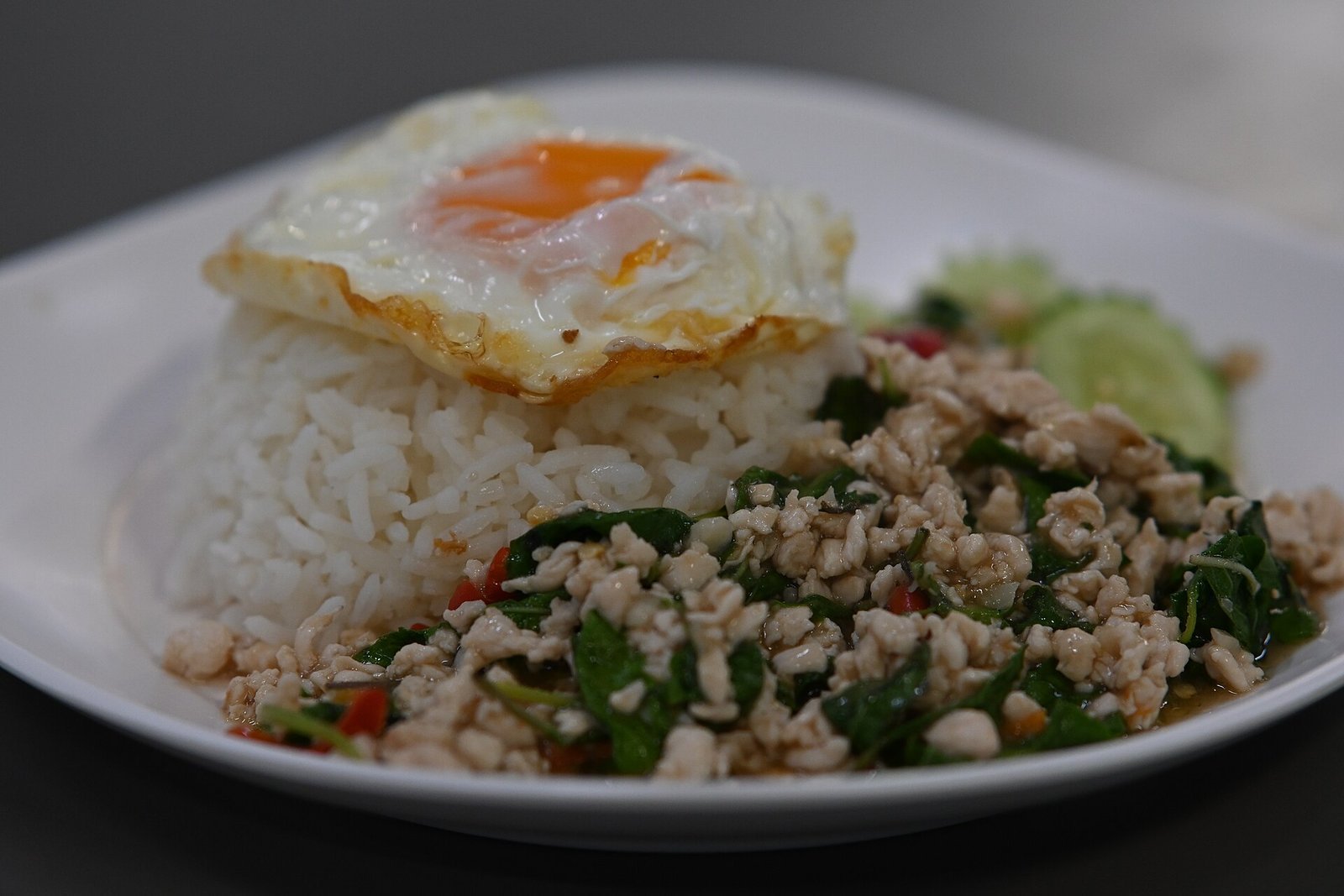
Three Cup Chicken: Taiwan’s Basil, Soy and Sesame Classic
The first time I made three cup chicken, I ruined it in the most instructive way possible: I treated sesame oil like sunflower oil, cranked the hob to maximum, and threw in the basil at the start because it looked pretty. What came out of the wok was bitter, sludgy and smelled like burnt seeds. My Taiwanese flatmate at the time ate a forkful, put the fork down, and said only, “the oil, Mei. The oil is everything.” She was right, and it took me four more attempts to work out exactly what she meant — which is what this article is for.
Despite the name, this is not a dish about measuring cups. The Wikipedia entry on three-cup chicken attributes it to Jiangxi origins and its popularisation in Taiwan, where the “three cups” became a fixed ratio: one part soy sauce, one part rice wine, one part sesame oil, per kilo of chicken. Modern recipes have quietly rebalanced that, because a literal interpretation produces something far too salty and far too oily. I’ll give you the working ratios below, but the point to hold onto is that this is a ratio dish — change the proportions and you’ve changed the dish itself.
The ratios, corrected for a real kitchen
The traditional equal-thirds formula belongs to a cuisine that cooked over charcoal and reduced hard. In a Western kitchen with a domestic hob, I’ve settled on this, which most Taiwanese home cooks I’ve quizzed would recognise:
| Ingredient | Per 1 kg chicken, bone-in | Why this amount |
|---|---|---|
| Light soy sauce | 3 tbsp | Salt backbone; never dark soy as the base |
| Taiwanese rice wine (Michiu) | 4 tbsp | Aromatic lift, cooks off in the glaze |
| Toasted sesame oil | 2 tbsp, split | Flavour carrier only — see the next section |
| Dark soy sauce | 1 tsp | Colour, not salt |
| Rock sugar | 15 g | The glaze needs sugar to shine |
| Ginger | 40 g, thick slices | Half the aromatics; more than you think |
| Whole garlic cloves | 10–12, skin on | They fry whole and go sweet |
Notice the sesame oil is deliberately less than the soy and wine. That single adjustment is the difference between my flatmate’s approval and my first disaster. If you can’t find Michiu, dry sherry is the honest substitute; rice vinegar is not.
Bone-in, skin-on thighs cut into 4 cm chunks are the correct meat. Breast meat turns to chalk under the hard reduction this dish requires. If you mostly cook chicken the steamed-and-silky way — the approach in everything you need to know about chinese mouthwatering chicken, where gentle poaching is the whole point — three cup chicken is its philosophical opposite: brown it hard, reduce it hard, finish it fast.
Sesame oil: low heat or nothing
Here is the part I got wrong for four attempts. Toasted sesame oil is a finishing oil with a low smoke point, roughly 175 °C. Used as your frying oil at wok temperatures, it burns in under a minute and turns acrid — the bitterness I tasted in batch one never left the pot, because scorched sesame oil poisons everything it touches.
The Taiwanese method, properly done, looks almost timid. You start the pot with a small amount of neutral oil (or none, if the chicken skin renders enough), lay in the ginger slices flat, and fry them slowly at medium-low until the edges curl and brown — three to four minutes, patiently. The sesame oil goes in in two stages: half at the start, over that gentle heat, where it can perfume the ginger without scorching; the other half right at the end, off the flame, where it hits the glaze raw and does its aromatic work. Sesame oil added raw at the finish is the single detail that makes a three cup chicken taste Taiwanese rather than generically soy-braised.
The same principle applies across the Chinese repertoire wherever sesame oil appears — it is a seasoning, not a medium. I once saw a friend deep-fry in it for a drunken attempt at all about easy chow mein, and the kitchen smelled like an incense stick for two days.
Building the pot: ginger, garlic, chicken, wine
Order matters more here than in most stir-fries, because everything cooks in the same shallow layer and nothing gets a high-heat toss.
- Medium-low heat, half the sesame oil plus a teaspoon of neutral oil. Fry ginger slices until golden at the edges. Add garlic cloves, skin on, and cook two minutes more.
- Raise heat to medium-high. Add chicken pieces skin-side down in one layer. Don’t move them for three minutes — you want real browning, because that fond is the savoury base of the glaze.
- Add the rice wine around the edge of the pot, then the light soy, dark soy and rock sugar. Stir once, scraping the fond.
- Bring to a simmer, then cover and cook 12–15 minutes over medium-low, until the chicken is just done. Bone-in thighs need the full fifteen; check one piece.
One small but real debate: some cooks blanch the chicken first to keep the braise clean; others, me included, think the Maillard fond is worth the slightly murkier sauce. If you grew up on Cantonese-adjacent cooking — the sealed-packet logic of Beggars Chicken Recipe territory — you’ll probably side with the browning camp too.
The claypot and the Taiwanese table
In Taiwan, three cup chicken arrives at the table in the small claypot it finished cooking in, still bubbling over a live flame, the sauce spitting at the rim. This isn’t only presentation. The claypot’s residual heat keeps reducing the glaze while you eat, thickening it further onto the chicken, and the last spoonfuls scraped from the pot are the best of the meal — sauce, crackly bits, a garlic clove squeezed from its skin.
You don’t need a specialised claypot. Any small, shallow, heavy pot works: a small cast-iron casserole, an earthenware tagine base, even a wide sauté pan. What matters is that it holds heat and can go to the table. If you own one shallow pot for braising and use it for everything, that’s fine — the pot in Jiangxi and Taiwan was never fancy, just clay and fire.
Why not rice alongside? Actually, rice is non-negotiable for most people — the glaze over plain white rice is the entire appeal. My own preference is a plain starch and something hot elsewhere on the table; a bowl of Dan Dan Noodles makes the meal too heavy, though the sesame-chilli logic overlaps pleasantly if you’re cooking for a crowd and want two centrepieces. Something sour and light works better — pickled mustard greens, or a quick cucumber salad. If you want a gentle soup course to open, a proper take on chicken congee before this is a lovely, mild on-ramp.
Basil timing and the final reduction
Thai basil — the purple-stemmed, anise-flavoured kind — is the correct basil. Sweet Italian basil works in a pinch but delivers a different, rounder note; do not use dried, obviously, and don’t use holy basil, which shifts the dish toward Thai cooking.
Timing is unforgiving in one direction only: too early is fatal, too late is fine. With one minute of cooking left, kill the heat, pile in the basil leaves and tender stems, and fold them through the glaze with the remaining raw sesame oil. The residual heat wilts them in thirty seconds — bruised, glossy, still green. Added any earlier and they blacken and turn bitter, which is failure number two from my opening paragraph.
Then the reduction. Uncover, raise the heat to medium, and let the sauce boil down for two to four minutes until it coats the back of a spoon and turns from liquid to glaze — you’ll see it change from a thin sauce to a syrup that clings and slow-drips. Rock sugar is doing the work here; it gives that lacquered shine without the gritty sweetness of white sugar. Watch it in the last minute: soy plus sugar goes from glaze to toffee to carbon fast, and I have one charred memory of exactly that.
If you enjoy the fermented-depth side of the flavour spectrum, this dish sits closer to soy-and-wine territory than to chilli-bean territory — for the latter, my notes on Doubanjiang cover the other pole of Taiwanese and Sichuan savouriness. The rest is technique you already have and appetite you don’t need an excuse for.
Frequently Asked Questions
Can I make three cup chicken with chicken breast? You can, but reduce the covered cooking to 6–8 minutes and expect a firmer result. Breast lacks the fat and collagen that make the glaze cling, so add half a teaspoon of cornflour slurry at the reduction stage to help the sauce hold.
What if I can’t find Thai basil? Use Italian sweet basil plus two thinly sliced spring onions for the missing anise note, added with the basil at the end. The dish will be recognisably three cup chicken, just a rounder, less peppery version.
Is the sesame oil really necessary, or can I use less? It’s the defining aroma — without it you have soy-braised chicken, not three cup chicken. If you must cut back, keep at least one tablespoon and add it entirely at the end, raw, where a small amount is most aromatic.
Why is my sauce bitter? Almost certainly scorched sesame oil or blackened basil. Start the pot with neutral oil, keep sesame oil away from high heat, and never add basil before the final minute. If the glaze reduced too far and caught on the pot’s base, transfer to a clean pot immediately rather than scraping.
Can I prepare it ahead for a dinner party? Cook it through the covered stage up to a day ahead, refrigerate in the pot, then reheat gently and do the basil and final reduction fresh. The glaze actually improves from resting overnight; only the basil is time-critical.
What’s the difference between three cup chicken and ordinary soy-braised chicken? Three things: the fixed ratio of soy, wine and sesame oil; the raw sesame oil finish; and the Thai basil added off the heat. Take any one away and it becomes a different dish.