Dan Dan Noodles Recipe (Authentic Sichuan)
Updated 31 October 2026 · reviewed by the China Food Way editorial team
The Noodle That Started as a Street Vendor’s Shoulder Pole
Dan dan mian takes its name from the carrying pole — 擔擔, dan dan — that vendors in late nineteenth-century Chengdu used to balance their loads. On one end hung a pot of noodles and the burner to cook them; on the other, the bowls, the seasonings and the water. Everything about the dish follows from that piece of equipment. It had to be assembled fast, it had to be assembled cold-sauce-first so that nothing needed cooking to order except the noodles themselves, and it had to be small enough that a customer standing in the street could eat it and move on. That is why traditional portions look almost comically modest to first-timers: a few mouthfuls of noodle in a small bowl, with an aggressive quantity of sauce at the bottom.
Modern restaurant versions have inflated the bowl and, in my experience, diluted the point. If you make this at home in the right proportion — a small tangle of noodles, a big hit of everything else — you will understand why people queue for it.
The first time I made dan dan noodles from a recipe, it came out as wet, sweet mince on dry noodles. Edible, wrong. The problem was that I treated it as one dish rather than four components assembled in a specific order. Once I laid them out separately — noodle, sauce base, seasoned pork, aromatics — everything clicked, and it became a dish I cook when I want maximum flavour for about twenty minutes of work.
Why is the sauce mixed before the noodles are cooked?
Because the whole dish is built cold-sauce-first, the way a vendor balancing a shoulder pole had to work — nothing is cooked to order except the noodles. Dan dan mian (擔擔麵) arrived as a standing street snack, so the seasoning had to be waiting in the bowl before the hot noodles landed on top; there was no second pan for finishing a sauce. Four components go into it: a neutral tangle of thin wheat noodles, a sauce base of sesame paste, soy, vinegar, chilli oil, sugar and peppercorn, a topping of fried minced pork with preserved vegetable, and the scallion and sesame garnish. One honest caveat: treat them as four separate things, not one stir-together — the first time I ignored this I got sweet wet mince on dry noodles, which is edible and completely wrong.
What You Are Actually Building
| Component | Role | Can you shortcut it? |
|---|---|---|
| Fresh thin wheat noodles | Neutral carrier, slightly chewy | Dried noodles are fine; avoid egg noodles |
| Sauce base in the bottom of the bowl | Sesame paste, soy, vinegar, chilli oil, sugar, peppercorn | No — this is the dish |
| Fried minced pork with preserved vegetable | Savoury-salty-funky topping | Substitute finely minced mushrooms for vegetarian |
| Chilli oil with sediment | Heat, colour, body | Buy good jarred; homemade is better |
| Scallion and sesame garnish | Freshness, crunch | Essential; do not skip |
Ingredients (Serves 2 as a proper small bowl each)
- 200 g fresh thin wheat noodles (or 160 g dried)
- 150 g minced pork, 20% fat minimum
- 3 tbsp Sichuan preserved vegetable (碎米芽菜, sui mi ya cai), rinsed and finely chopped
- 1½ tbsp Chinese sesame paste (or tahini in a pinch — see note)
- 2 tbsp chilli oil with plenty of sediment from the bottom of the jar
- 1½ tbsp light soy sauce
- 2 tsp Chinkiang black vinegar
- 1 tsp sugar
- ¼ tsp ground Sichuan pepper, freshly ground and sieved
- 2 cloves garlic, finely minced
- 1 tsp Shaoxing wine
- 2 spring onions, green parts only, finely sliced
- 2 tbsp roasted peanuts or sesame seeds, roughly crushed
- Optional: a handful of blanched greens per bowl
On sesame paste: Chinese sesame paste (芝麻醬, zhi ma jiang) is made from toasted sesame and is darker, thicker and more bitter-savoury than Middle Eastern tahini, which is usually made from raw sesame. Tahini works and produces a recognisable dish, but the result is rounder and less assertive. If you use it, add an extra half-teaspoon of soy to compensate.
How much sesame paste goes in the bottom of the bowl?
About one tablespoon per bowl, loosened with warm water or a spoonful of the hot noodle water until it pours like single cream — any more and the base turns claggy and smothers the chilli. Into each of two bowls I put that sesame paste, a tablespoon of light soy, two teaspoons of Chinkiang vinegar, a scant teaspoon of sugar, a good spoonful of chilli oil with its sediment, and a pinch of ground Sichuan peppercorn. Whisk it together before the noodles are anywhere near done, because once the hot noodles land you have seconds, not minutes, to toss. One honest caveat: Chinese sesame paste is far thicker and darker than tahini, so if you substitute, start with half the quantity and add liquid slowly rather than following the spoonful blindly.
The Sauce Base: Do This First
Everything else depends on the bowl being ready before the noodles are. In each serving bowl combine half the sesame paste, half the soy sauce, half the vinegar, half the sugar, half the garlic and half the Sichuan pepper. Pour two tablespoons of the noodle cooking water — or hot stock, which is better — into each bowl and stir hard until the sesame paste loosens into a smooth, pourable emulsion. It should look like a thin, cloudy, brownish cream. This loosening step is the difference between silky and grainy, and it takes maybe forty seconds.
Taste it now, before anything goes on top. You want salt clearly present, sourness audible, sweetness just enough to blunt the vinegar, and a background bitterness from the sesame. Adjust — more vinegar if it is flat, a pinch more sugar if it is harsh. Seasoning a sauce base like this is the same discipline discussed in Chinese black vinegar notes, where acidity is used to lift rather than to dominate.

The Pork
Heat a dry wok or heavy pan until it is properly hot, add a tablespoon of neutral oil, and add the minced pork. Spread it, then leave it alone for a full minute before touching it. Browning matters here — this is where the savoury depth comes from, and pale steamed mince produces a dish with no bottom end. Break it up once it has colour, add the Shaoxing wine, and keep frying until the pork is dry and slightly crisp at the edges, three to four minutes in total.
Push the pork to one side, add the chopped preserved vegetable to the bare metal, and fry it for thirty seconds until it smells fragrant and slightly sour. Then combine everything. Some cooks add half a tablespoon of the fermented bean paste at this stage; it is authentic to some versions and it does deepen things, though I find it can swamp the sesame, so I leave it out most of the time.
Vegetarian version: use finely minced shiitake mushrooms, fried harder and longer than you think necessary, with an extra half-teaspoon of soy. The texture is remarkably close, and the earthiness substitutes for the funk that ya cai normally supplies.
In what order do the components go into the bowl?
Sauce in the bottom first, hot drained noodles on top of it, then the fried pork, then the garnish — that order is the whole method. I drop the noodles into boiling water for sixty to ninety seconds, lift them out still wet, and set them directly on the sauce so their heat loosens the paste and their clinging water thins it to a coating consistency. A splash of the cooking water goes in only if the bowl looks tight. Spoon the crisp minced pork and preserved vegetable over one side, scatter scallion and toasted sesame over the other, and serve immediately. One honest caveat: toss at the table, twice, not in the kitchen — a bowl stirred early goes slick and the pork loses its crunch before anyone sits down.
Assembly
Cook the noodles one minute short of the packet instruction, or ninety seconds if fresh. Drain well — this matters more than usual, because water clinging to the noodles will wash out your sauce base. As soon as they are drained, divide them between the two prepared bowls.
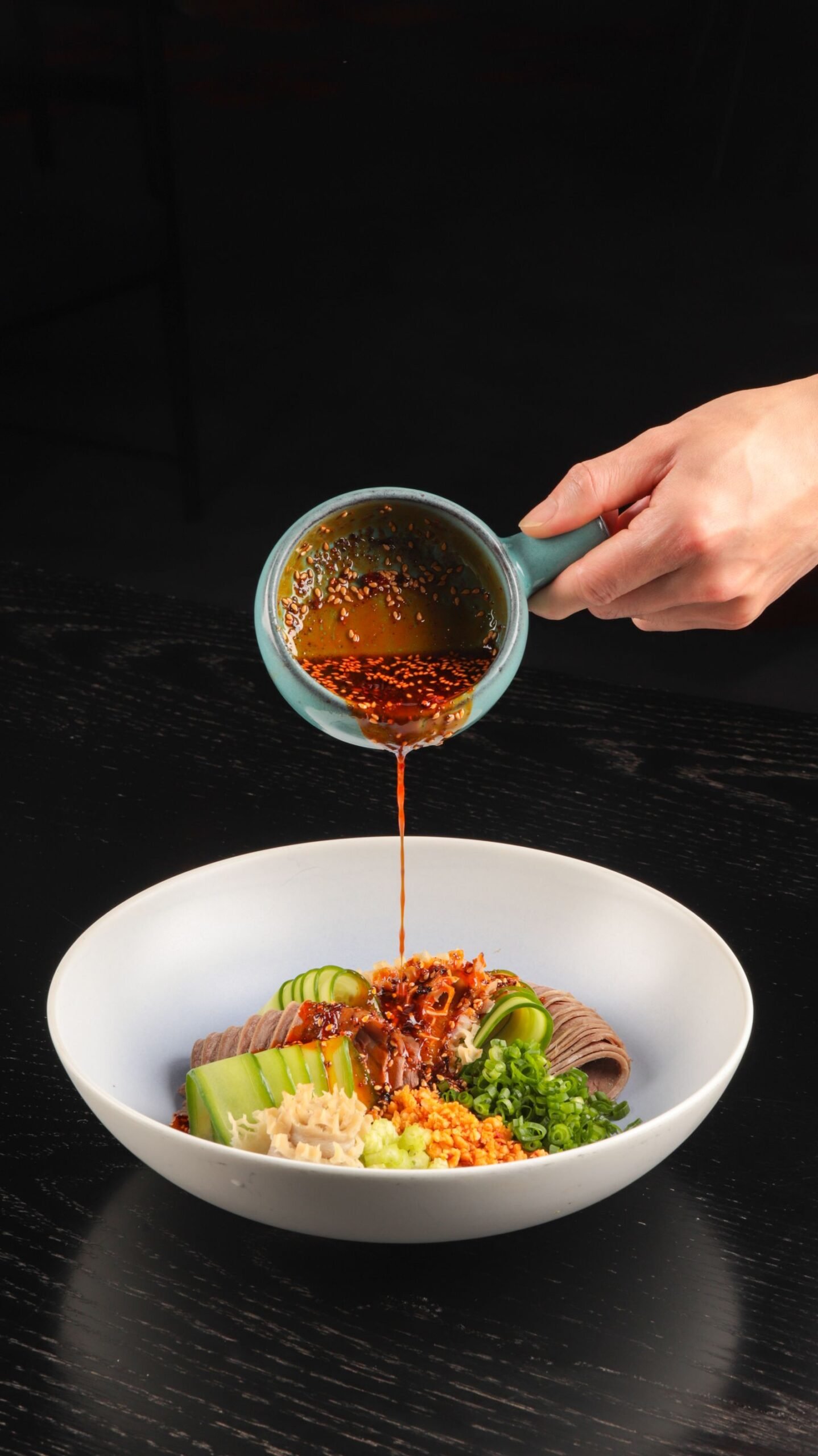
Top each with half the pork mixture, then spoon over chilli oil with real sediment from the jar bottom — the flakes are not decoration, they are texture and heat. Finish with the spring onion and crushed peanuts.
Then, and this is the part people skip, stir from the bottom hard. Everything needs to come up off the base of the bowl and coat every strand. The dish is served mixed, not layered, and a properly stirred bowl is dramatically better than an untouched one.
How do I fix a bowl that tastes flat?
Add acid first, then salt, then a little more numbing heat — a flat dan dan bowl is almost always short of vinegar rather than chilli. A bare half-teaspoon of Chinkiang vinegar stirred through wakes the whole thing up; if it still tastes dull, a splash more soy or a pinch of salt is the next move, and only then a dusting of ground Sichuan peppercorn for the ma la tingle. Too sweet means you overdid the sugar, which a few extra drops of vinegar will balance. Taste it after tossing, not before, since the noodles dilute the base as they sit. One honest caveat: resist simply adding more chilli oil, which makes the bowl hot but not more interesting — heat and seasoning are different problems, and most flat bowls need the sour one fixed.
Getting the Balance Right
Dan dan noodles should hit several notes at once, and the most common failure is sweetness. Restaurant versions — particularly outside Sichuan — add sugar and more sesame paste to appeal to a broader palate, which turns a savoury, numbing, sour dish into something closer to a peanut sauce. If yours tastes sweet, cut the sugar entirely next time and add another teaspoon of vinegar.
| Problem | Cause | Fix |
|---|---|---|
| Gritty, claggy sauce | Sesame paste not loosened with enough hot liquid | Add hot water a teaspoon at a time, stir hard |
| Bland despite dark colour | Chilli oil without sediment; little salt in the base | Use oil with flakes; taste base before topping |
| No numbness | Pre-ground pepper stored too long | Grind fresh; Sichuan pepper loses aroma within months |
| Too salty | Preserved vegetable not rinsed | Rinse and squeeze dry before chopping |
| Noodles soggy | Dressed too early or overcooked | Undercook by a minute; serve immediately |
The numbing quality deserves a word, because it is what separates this from any other sesame-chilli noodle in the region. Ground Sichuan pepper is not heat — it is a tingling, slightly citrusy sensation that arrives on the front of the tongue and lingers. If you have never cooked with it, my guide to Sichuan peppercorn covers sourcing and grinding in much more detail, including why the pre-ground dust in most supermarkets is barely worth opening.
Variations You Will Actually Encounter
Dry versus soupy. Authentic Chengdu style has almost no liquid beyond what clings to the noodles. Many restaurants elsewhere serve it in a bowl of stock, which is pleasant but is a different dish, closer to a noodle soup with the same seasonings. Both are legitimate; the version here is the dry one.
Added greens. A few blanched choy sum stems per bowl is common in Chengdu and gives textural contrast. Blanch them in the noodle water while the noodles rest.
Without pork. Beyond the mushroom version, some cooks skip the topping entirely and serve only noodles, sauce and chilli oil. This is the original hawker form in some accounts and is worth trying once, since it shows how much work the base seasoning is doing.
It belongs squarely within the flavour logic described in my Sichuan cuisine notes — the pairing of heat with numbing, sourness used as a structural device, and the deliberate use of preserved ingredients for depth rather than relying on fresh aromatics alone.
Frequently Asked Questions
Are dan dan noodles supposed to be spicy?
Yes, though heat is adjustable by how much sediment you spoon in with the oil. The distinctive part is the Sichuan pepper tingle, which is not heat and should be present even in a mild bowl.
What can I use instead of Chinese preserved vegetable?
Rinsed and finely chopped pickled mustard greens or suan cai are closest. In a pinch, use finely chopped capers rinsed well — different, but it supplies the salty-funky note the dish needs.
Can I make this ahead?
The pork keeps for three days refrigerated and reheats well. Assemble the bowls fresh; prepared sauce bases seize as they sit and the noodles will go soft.
Why are restaurant portions so small in Sichuan?
Traditionally it was a street snack eaten standing, designed to be one item among several in a meal rather than a full course.
Is there gluten in dan dan noodles?
The wheat noodles and soy sauce both contain gluten. Rice noodles with tamari make a workable substitute, though the texture is noticeably different.
Planning a food trip through Sichuan, or want help sourcing proper ingredients at home? Drop us a line through our contact page.