Chinese Cooking Methods Explained
Updated 31 October 2026 · reviewed by the China Food Way editorial team
The first thing a Chinese cook learns, usually within a week of starting, is that the heat is not the point. The heat is a tool, and the tool has one job: to make the oil move. In a restaurant kitchen in Chengdu I watched a cook take a wok that had been heating for six minutes, add a spoonful of oil, and in the next four seconds move that oil around the curve of the pan until it was a mirror. Everything he did afterwards followed from those four seconds, because the wok itself was not hot — the oil was.
This is the most useful thing a visitor can understand about Chinese cooking, because almost every difference between a Chinese dish and a Western one with similar ingredients comes down to what the cook did with heat and time. A stir-fried green bean and a steamed green bean are the same vegetable at different temperatures. A braised pork belly and a fried pork belly are the same cut. The technique is the dish.

Why is a wok thin and round-bottomed while a clay pot is heavy?
Because the two are built for opposite relationships with heat. A wok is thin carbon steel or iron, round-bottomed, with no lid, designed to be held over a fierce flame and to shed heat fast — which is why it can be scorching one moment and cool enough to handle the next. A clay pot, casserole or double-boiler holds heat slowly and evenly for an hour or more. Almost every Chinese method belongs firmly to one side: stir-frying and deep-frying to the wok, braising and stewing to the pot. A professional kitchen runs both, and the choice is not preference but what the dish needs. My first lesson in a Chengdu kitchen was that the wok itself was not hot — the oil was, moved around the curve in four seconds.
Wok Versus Pot: Two Infrastructures
The division between the wok and the pot is the division between Chinese cooking’s speed and its patience. The wok is a thin, round-bottomed iron or carbon-steel pan with no lid, built to be held in one hand over a fierce flame and to shed heat fast. The clay pot, the casserole and the double-boiler are built to hold heat slowly and evenly for an hour or more. Almost every method in the repertoire belongs firmly to one side or the other.
A professional kitchen runs both, and the choice is not preference but what the dish needs. Wok work is loud, fast and produces what the trade calls wok hei — the breath of the wok, the slightly scorched, smoky note that clings to food cooked at very high heat with very little moisture. Nothing else produces it. My guide to Chinese fried rice is the clearest demonstration: the same rice, cooked in a domestic pan, tastes like a different dish.
Stir-Frying: The Wok’s Signature
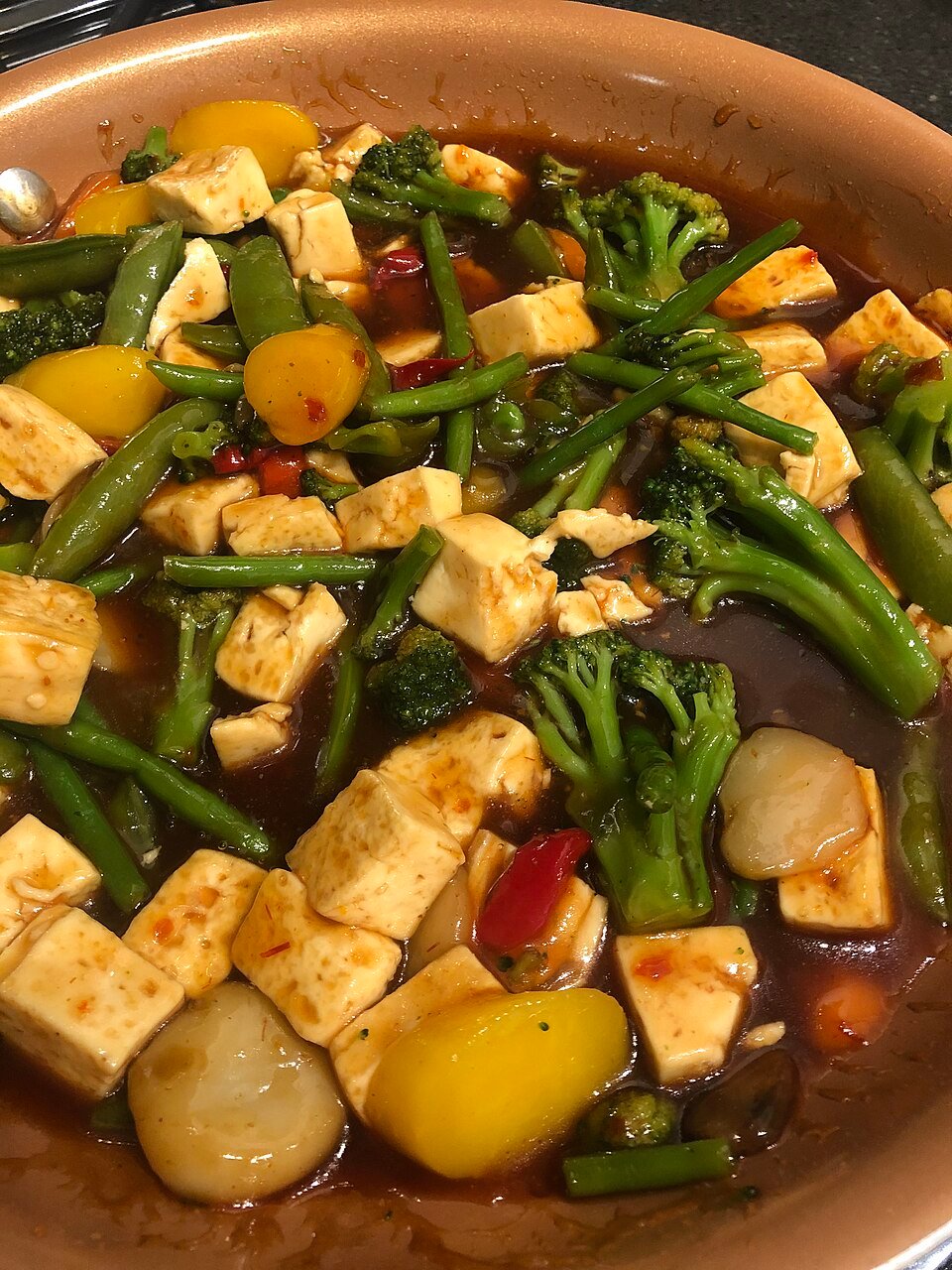
Stir-frying, chao, is the technique the outside world knows best and usually understands worst. It is not frying in the Western sense: there is no deep immersion, no batter, and the food does not spend long in the pan. Ingredients are cut small, to the size of a thumbnail, because they need to cook fast and evenly. The wok is heated, oil is added, the hardest ingredient goes in first for a few seconds, then the softer ones in order, and the whole thing is tossed continuously so nothing sits still.
Timing is everything and it is measured in seconds. Garlic, ginger and chilli go in at the last moment for aroma, not for cooking. A stir-fry leaves the wok once the vegetables still have a little bite. My easy chow mein method walks through the sequence in a domestic pan, and the same discipline separates a good stir-fry from a disappointing one.
There is a family of related techniques that use the same equipment. Dry-frying, gan bian, throws out the oil after a quick sear and finishes the dish in the dry pan, which concentrates flavour and gives that dry, brittle texture to green beans or beef. Soft-frying, an jian, fries gently in a shallow bath of oil at a lower temperature. Both are wok methods with different heat discipline.
Why does Chinese deep-frying work in small batches?
Because a crowded pan drops the oil temperature and the food soaks up fat instead of crisping. The oil comes only halfway up the food, the heat is judged by feel and by how fast the batter colours, and the cook fries a few pieces at a time so the standing heat recovers between batches. This is less common in everyday home cooking than visitors expect; its real job is producing the crisp elements scattered over soups and cold dishes — fried shallots, ginger, garlic and peanuts. The archetype is sweet and sour pork: a batter that shatters, sauce added at the end so it stays glossy, and cubes small enough to eat in one go with chopsticks. One caveat: let the oil come back up between batches or the second lot will be greasy.
Deep-Frying: Crispness and Standing Heat
Deep-frying, zha, produces the crunch Chinese restaurants are known for, and it is less common in everyday home cooking than visitors expect. The oil comes halfway up the food, the temperature is judged by feel and by how quickly the batter or skin colours, and the cook works in small batches because a crowded pan drops the temperature and the food soaks up oil.
Deep-frying also generates the crisp elements that get scattered over soups and cold dishes in every region — fried shallots, ginger, garlic and peanuts. My sweet and sour pork recipe is the archetype of the technique done properly: a batter that shatters, a sauce added at the end so it stays glossy, and a cut into cubes small enough to be eaten with chopsticks in one go.
Steaming: The Method That Judges Ingredients
Steaming, zheng, is the most demanding method in the Chinese kitchen and the least forgiving of mediocre produce. Because nothing is browned and almost no fat is added, there is nowhere for a bad ingredient to hide: a steamed fish is exactly as good as the fish. This is why steaming is the default method for the most expensive ingredients in the country, and why a restaurant that steams badly is a bad restaurant.
The technique itself is simple. The food sits on a rack above boiling water in a closed basket or bamboo steamer, and the timing is counted from the moment the lid goes on. My method for steaming a whole fish sets out the timings for a whole fish, and tea eggs are the other great steamed dish, cooked gently and then cracked and steeped in tea and spice.
Steaming also produces the most delicate soups, because a clear broth can be made in a bamboo steamer as easily as on a stove, and the top layer of a double-boiler is the traditional home method. It is also the fastest of the slow methods, which is why it appears at breakfast more often than anywhere else.
What does the word hongshao tell you on a Chinese menu?
That the dish was braised and glazed to a dark red, and it is the single most useful piece of menu vocabulary you can learn. Hongshao means ‘red-braised’: dark soy, rock sugar and only enough liquid to reduce to a lacquer rather than to cover the meat. It is braising, men, with a specific colour and a specific logic, and the sweetness is structural. Hongshao rou, red-braised pork belly, is the archetype — a slab of pork cooked until the fat goes translucent. Stewing, dun, is the neighbouring but different method: lower heat, longer time, no reduction, the northern winter lamb pot. Once you know the words, the menu describes itself: chao went through a wok, zheng was steamed, zha was fried.
Braising, Red-Cooking and Stewing
The pot methods are where Chinese cooking becomes slow, and where the difference from the Western kitchen is most visible. Braising, men, means cooking meat submerged in a seasoned liquid at a simmer, with the liquid reduced at the end and often thickened. The archetype is hongshao rou (红烧肉), the red-braised pork belly, in which a slab of pork goes through a long braise in soy, sugar, aromatics and stock until the fat has gone translucent.
Red-cooking, hongshao, is braising with a specific colour and a specific logic: dark soy, rock sugar, and enough liquid to glaze rather than to cover. The name means “red-braised” and the colour is the point. My twice-cooked pork method shows the same family’s logic in a Sichuan key, and mapo tofu applies it to a soft ingredient that has to be handled gently.
Stewing, dun, is braising at a lower temperature for longer, without the reduction. It is the method of the northern winter and of the minority cuisines of the west and north-west — the lamb and mutton pots, the Tibetan and Uyghur stews, and the long-cooked broths that my hot pot at home guide relies on for its base. A Chongqing chilli wonton is the case in point: the filling is stewed before the wrappers are hand-rolled and the whole thing is assembled in boiling water at the last minute.
Boiling and Blanching
Boiling, zhu, is the most underrated method in Chinese cooking and the one most overlooked by visitors, because it produces no show and no browning. Plain boiled pork dumplings in a clear broth, blanched spinach with a drizzle of soy, boiled peanuts, a whole boiled egg — boiling is how the Chinese kitchen gets the pure, clean, unadorned flavour of an ingredient without masking it. Egg drop soup is a study in what boiling does with almost nothing but timing.
Blanching, zhulu, is boiling used as a preparatory step: vegetables dropped into boiling water for thirty seconds and then shocked in cold water, which fixes the colour and keeps them crisp. It is also how bones are washed before a stock and how tofu is firmed before frying. Dumplings are the great example of one food belonging to three methods at once, boiled, steamed and fried depending on the day.
| Method | Pinyin | Equipment | Result | Archetype dish |
|---|---|---|---|---|
| Stir-frying | chao | Wok, very high heat | Smoky, charred edges, still crisp | Beef with spring onions |
| Deep-frying | zha | Wok or deep pan of oil | Crisp, golden, rich | Sweet and sour pork |
| Braising and red-cooking | men, hongshao | Clay pot or heavy pan | Dark, glossy, tender, sweet-savoury | Red-braised pork belly |
| Stewing | dun | Covered pot, lowest heat | Deep, rounded, falling apart | Lamb and mixed stew |
| Steaming | zheng | Bamboo steamer over boiling water | Pure, delicate, no browning | Whole steamed fish |
| Boiling | zhu | Pot of water | Clean, honest, unadorned | Boiled dumplings in broth |

Can I tell how a dish was cooked just from its Chinese name?
Often, yes, because the method is usually sitting in the name. Chao means it went through a wok, zheng that it was steamed, zha that it was fried; men or hongshao means braised and glazed, and dun means a long, low stew. If none of those appear, you are probably looking at a cold dish, a soup or a dumpling. The catch is that almost no finished dish uses only one method — a Chinese plate is assembled like a sentence from a braised main, a stir-fried vegetable, a steamed fish, a cold dressed salad and a soup that was blanched then simmered. A restaurant kitchen is a set of stations each running one technique at volume. Dumplings are the useful exception: boiled, steamed or fried depending on the day.
Methods Combined: The Real Chinese Plate
Almost no finished Chinese dish is the product of one method. The logic is closer to building a sentence from parts: a braised main, a stir-fried vegetable, a steamed fish, a cold dressed salad, and a soup that has been blanched and then simmered. A restaurant kitchen is a set of stations, each running one technique at volume, and the dishes are assembled from those outputs.
This is why a Chinese menu is easier to read than it looks. The cooking method is usually in the dish name, and once you know the vocabulary the menu starts to describe itself: chao means it went through a wok, zheng means it was steamed, and zha means it was fried.
Two more cover most of the rest. Men or hongshao means it was braised and glazed, and if the name contains none of these at all it is probably a cold dish, a soup, or a dumpling. Dumplings are the one category that is boiled, steamed and fried depending on the day.
The test of whether you have understood is whether you can look at a Chinese kitchen and hear the methods: the roar and clatter of the wok station, the steam pouring off a bamboo tower, the sudden hiss of oil, and behind it all a low simmer from the stock pots that will supply the broth for the rest of the service. Four sounds, four sets of temperatures, and a menu that is mostly a list of decisions already made for you.
Frequently Asked Questions
What is the difference between stir-frying and deep-frying in Chinese cooking? Stir-frying uses a small amount of very hot oil in a wok and cooks fast, leaving the food crisp and slightly smoky. Deep-frying immerses the food in a deeper bath of moderately hot oil for longer, producing an even golden crust and a richer, heavier result.
What does wok hei actually mean? It is the smoky, slightly scorched flavour produced by cooking at very high heat in a seasoned carbon-steel wok. It comes from the oil and the pan reaching temperatures above a domestic stove’s range, and it is the hardest thing to reproduce outside a professional kitchen.
Is braising the same as stewing? They overlap. In Chinese usage, men is a simmer in liquid that is then reduced or thickened, while dun is a longer, gentler cook at lower heat with the liquid left unreduced. Both are pot methods; the difference is temperature, time and whether the sauce is finished.
Why does steamed food taste so clean? Because nothing is browned and little fat is added, so there is nothing to hide behind. Steam cooks at just above 100 degrees, which preserves the natural sweetness and delicate textures of the ingredient. It is also why only the best produce is steamed in Chinese cooking.
Can I make Chinese stir-fry in a domestic pan? Yes, and my chow mein method is written for a home wok. Use the hottest ring, get the oil smoking before the food goes in, cut everything small, and do not crowd the pan. A crowded pan steams instead of frying, which is the usual failure.
Which method is most characteristic of Chinese cooking? None of them is unique to China, and each was borrowed or invented independently. What is distinctive is the combination and the range — the same kitchen running a screaming wok and a barely-bubbling clay pot at the same time, which is what makes the repertoire wider than the number of techniques suggests.
The Short Version
Chinese cooking is organised around speed and patience, the wok against the pot. Stir-frying at extreme heat produces smoke and char; deep-frying produces a crisp golden crust; braising and red-cooking turn tough cuts glossy and tender; stewing gives depth; steaming preserves whatever the ingredient already is; and boiling keeps things honest. No finished plate uses only one of these — the kitchen runs several methods at once and assembles the results. Read the method words on a menu and it stops being a list of foreign names and starts being a description of what the kitchen did.