Lamb in Chinese Cooking
I once asked a Beijing waiter which cut we were eating, and he answered with a province. “Inner Mongolia,” he said. “Grass, not grain.” I had asked about anatomy; he heard a question about origin, and across most of northern China that is the correct answer. The meat arrived as pale frozen ribbons, thin enough to read the table through, and we dropped them into a copper pot with chopsticks. Fifteen seconds later they were gone. Nobody mentioned tenderness or marbling. They talked about where the animal had grazed.
It took two genuinely bad braises to understand why origin outranks cut here. Grassland sheep lay down fat that tastes sweeter and less waxy than grain-finished fat, and northern cooks build their whole method around that difference. The repertoire — skewers, the copper pot, offal soup, red-braise — is really a set of arguments about how to treat sheep fat.
One clarification first. English splits the animal by age — lamb under a year, mutton older — while 羊肉 (yáng ròu) simply means sheep meat and covers both, so the menu will not tell you which you are getting. As the Wikipedia entry on lamb and mutton sets out, the line sits at about twelve months. Most of what smells powerfully to a British nose is either older meat or a fatty cut handled carelessly.
Where Lamb Actually Matters
Draw a band across northern China — Inner Mongolia, Ningxia, Gansu, Xinjiang, Shaanxi, Shanxi, Hebei, Beijing — and you have drawn the lamb belt. Grassland, cold winters and a long history of Hui and Uyghur Muslim kitchens (清真, qīngzhēn) make sheep the default red meat, with pork in a supporting role.
Each place has a signature. Xi’an crumbles flatbread into mutton soup (羊肉泡馍) and grills heavily seasoned skewers on wide iron griddles. Xinjiang roasts skewered cubes over charcoal with nothing but salt, cumin and chilli, and folds lamb into pilaf (手抓饭) with carrots and onions. Inner Mongolia boils large pieces simply and eats them with a knife. Beijing has the copper pot. Ningxia’s Tan sheep (滩羊), raised on alkaline land, are prized enough to be named on menus.
Cross the Yangtze and the picture changes: lamb becomes seasonal and slightly suspicious — “heating” food, in the local framing, eaten in winter, avoided in August.
The Cuts, and What Each One Is Actually For
A northern butcher breaks a carcass roughly the way a British one does, but the cuts go to different jobs. What surprised me is how little the tender cuts matter: Chinese lamb cooking is built on shoulder, leg and breast, with the loin a luxury for quick stir-fries.
| Cut | Mandarin | Fat and texture | What it is for | Rough timing |
|---|---|---|---|---|
| Leg | 后腿 (hòu tuǐ) | Lean, firm, mild | Hot pot ribbons, roasting, braising | 15 sec sliced; 90 min braised |
| Shoulder | 前腿 (qián tuǐ) | Marbled, plenty of connective tissue | Skewers, red-braise, stews | 8–10 min grilled; 2 hr stewed |
| Loin | 里脊 (lǐ jǐ) | Very lean, tender, no fat cap | Quick stir-fry, velveted slices | 60–90 sec in the wok |
| Rib | 羊排 (yáng pái) | Fatty, rich, good on the bone | Chops with cumin crust, roasting | 12–15 min |
| Breast and flank | 腹肉 (fù ròu) | Very fatty, cheap, chewy | Street skewers, offal soups | 10 min grilled |
| Neck and shank | 羊颈 / 羊腱 | Tough, gelatinous | Long soups, 羊蝎子 hot pot | 2.5–3 hr |
Offal is not a footnote. 羊杂汤 (yáng zá tāng) — tripe, lung, heart and liver with coriander and white pepper — is breakfast food in parts of the north, and 爆肚, blanched tripe dipped in sesame sauce, is a Beijing snack I now order without hesitating.
The Smell: Where It Comes From, and What to Do
The aroma people call “gamey” is chemistry, not imagination. The compounds responsible are branched-chain fatty acids held in the fat — 4-methyloctanoic and 4-methylnonanoic acid, if you want the names — concentrated in the hard white fat rather than the lean. That fact explains most of the technique.
My worst failure came early. I cubed a shoulder, dropped it into a pot with soy and star anise, simmered it for an hour, and produced something that smelled like a wet dog in a cardigan. I had skipped the blanch because I was in a hurry. I have not skipped it since.
| What went wrong | Why | What to do instead |
|---|---|---|
| Grey scum, cloudy broth, strong smell | Soluble proteins and fat rendering before the water boils | Cover with cold water, bring to the boil, 2–3 min, pour it all away, rinse meat and pot |
| Meat smells fine raw, strong once cooked | Fat cap left on | Trim the hard white fat back to a 3–5 mm layer before cooking |
| Braise tastes flat and muttony | No aromatics competing early | 1 tsp Sichuan pepper and 4 slices of ginger per 500 g, plus 1 tbsp Shaoxing wine |
| Skewers taste bitter | Chilli and cumin burnt on too-hot coals | Salt only over the fire; cumin and chilli in the last minute |
| Stir-fried slices tough | Slices too thick, pan not hot enough | 2–3 mm slices, wok smoking, 60–90 sec |
The blanch is the big one. Cover the meat with cold water, bring it to a rolling boil, let it go for two or three minutes until the grey scum stops rising, then tip the lot into the sink and wash both pot and meat. You lose a little surface flavour and gain a dish people will finish. For anything long-cooked, add Sichuan pepper (花椒) early — the citrusy, numbing note sits on top of those fatty acids rather than merely shouting over them. Cumin helps too, but only when fresh; a jar open since last summer contributes dust. For stir-fry, ¼ teaspoon of bicarbonate of soda per 250 g of sliced meat, left for twenty minutes and rinsed off, is the difference between pleasant and chewy.
Four Preparations Worth Knowing
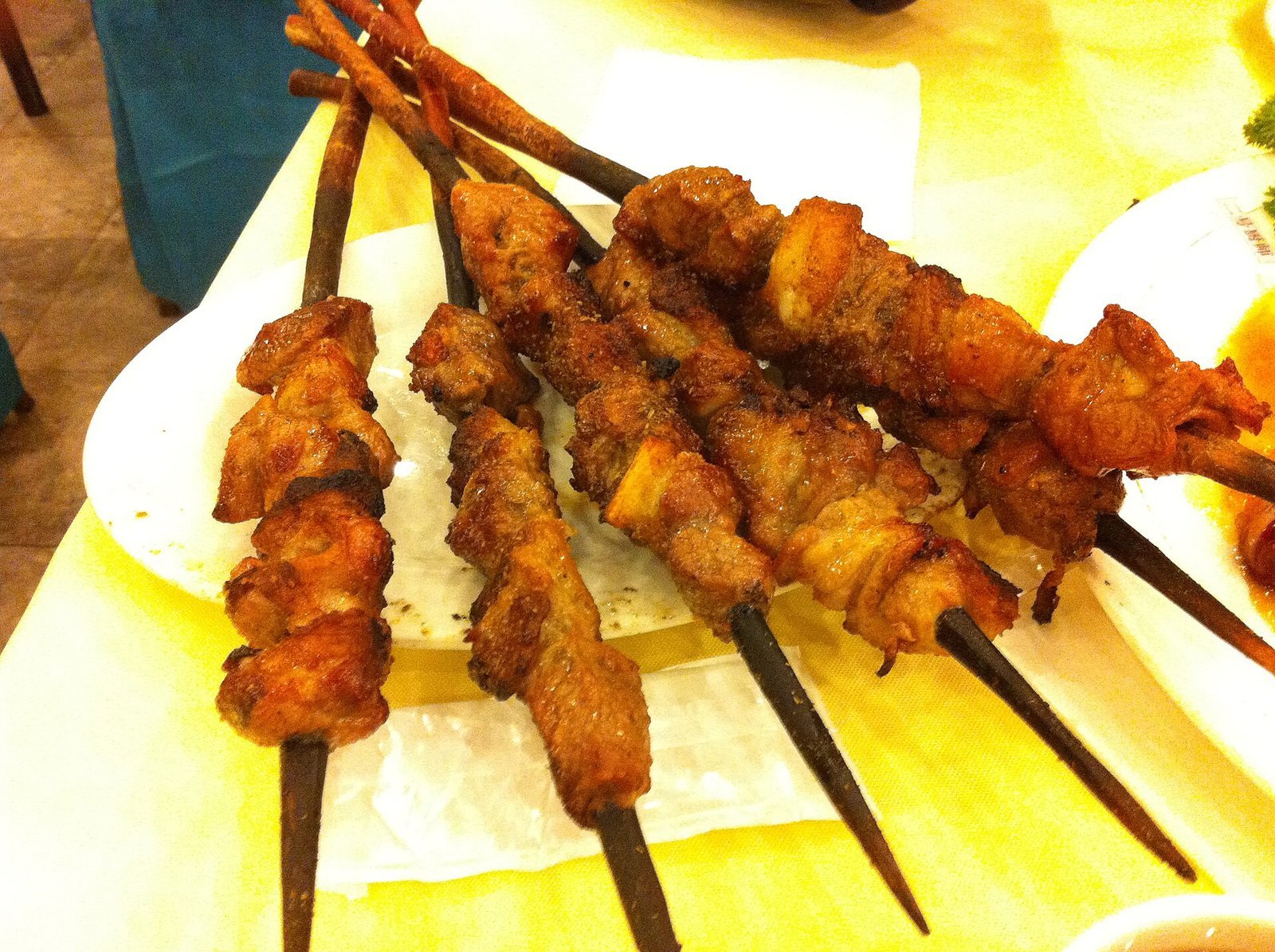
Xinjiang skewers (羊肉串). Shoulder or leg cut into 2 cm cubes, with a cube of pure fat every third piece. Thread them flat on metal or soaked bamboo skewers so they lie against the grate. Salt only once they are over the fire — salt earlier draws out water, and wet meat steams. Turn every two minutes for eight to ten minutes, then dust with cumin and chilli in the final sixty seconds. The fat cube is not a cost-saving measure; it bastes everything downstream of it.
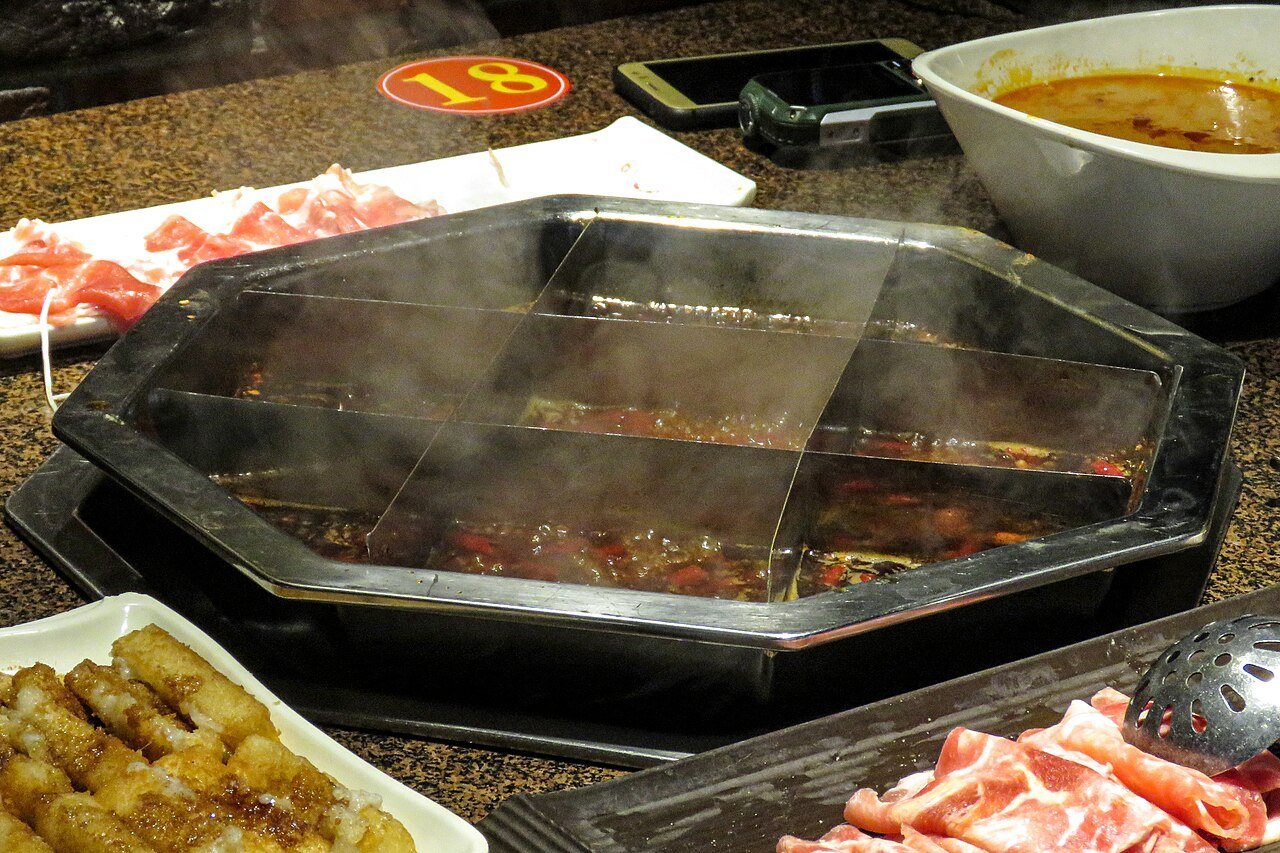
Instant-boiled mutton (涮羊肉). Freeze a boned leg for two hours until firm but not solid, then slice at about 1.5 mm across the grain. The rolls should curl. Drop them into a rolling pot of water with ginger, spring onion and a few goji berries, count fifteen seconds, and eat. The dipping sauce is where the personality lives: sesame paste thinned with hot water, fermented bean curd (腐乳), chive flower sauce (韭菜花), coriander, and — non-negotiably for me — a splash of Chinkiang vinegar; all about chinese black vinegar covers the bottle in detail. The whole ritual, including where to eat it, is at greater length in our Beijing Food guide.
Lamb soup (羊肉汤). Blanch bones and meat, then simmer hard — not gently — for two to three hours with ginger, Sichuan pepper and white pepper. Hard boiling emulsifies the fat into the liquid and turns it the colour of milk; a lazy simmer gives you clear broth under a layer of grease. Serve with coriander, salt and a vinegary chilli oil.
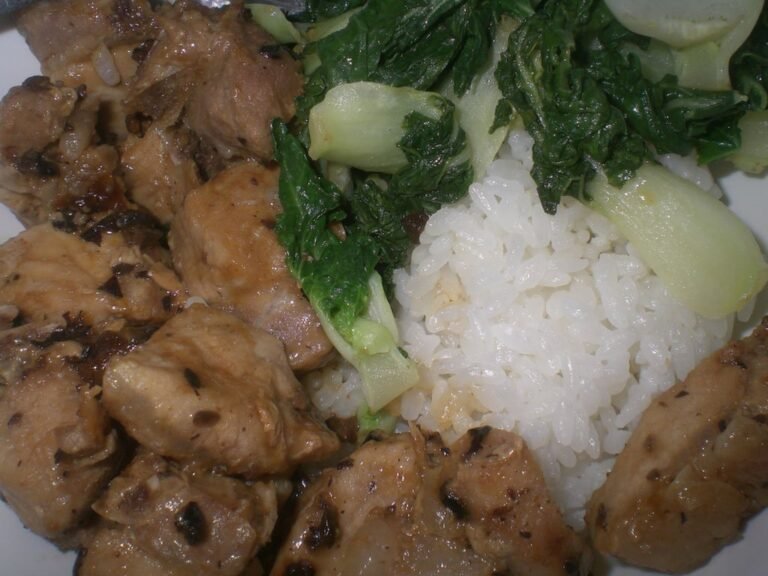
Red-braised lamb (红烧羊肉). The southern answer, and my favourite cold-weather cooking. Blanch 1 kg of shoulder, brown it with ginger and spring onion, add 2 tbsp light soy, 1 tbsp dark soy, 1 tbsp sugar, a star anise and water to cover, then simmer for ninety minutes, adding chunks of mooli radish for the last thirty. Dried or winter shoots go in the same way, and the blanching rules in our Bamboo Shoots Guide apply unchanged. Chilli oil belongs on the table, never in the marinade — the crunch dies over heat, which is the short version of everything you need to know about chili crisp.
The Southern Exception
Lamb in Guangdong arrives in a clay pot on a portable stove, usually in December. 支竹羊肉 braises lamb with bean curd sticks (支竹), fermented bean curd, water chestnuts and a length of sugar cane — the cane adds a clean sweetness that cuts the fat. Even in Cantonese Cuisine, where the repertoire is unusually wide, lamb occupies one narrow seasonal corner.
Northern cold plates run to a similar kind of acquired taste. If you have made peace with the smell of lamb fat, a proper take on century egg will make more sense than you expect.
Buying, Freezing and Slicing at Home
Buy shoulder for skewers and braises, leg for hot pot and stir-fry, and ask the butcher to leave a little fat on. A bone-in shoulder for four is about 1.2 kg; a boned leg for hot pot, 800 g.
For slicing, freeze the block for two hours and use a long, thin knife — I get better results with a serrated bread knife than a chef’s knife, because it saws through frozen meat instead of skidding across it. Wrap the unsliced remainder tightly and put it straight back in the freezer; refreezing partly thawed lamb gives grey, watery slices. Whole cuts keep three days in the fridge and three months frozen; mince, one day. Braised lamb improves overnight, and making it a day ahead lets me skim the fat off the top.
Temperatures: skewers over charcoal at roughly 220°C; braises at a bare simmer, 92–96°C, never a boil; hot pot at a full rolling boil, because fifteen seconds only works if the water recovers its heat the moment the meat goes in.
Frequently Asked Questions
Is Chinese lamb actually mutton? Mostly it sits on the young side of the twelve-month line, so “lamb” is the fairer translation, but 羊肉 makes no distinction and fatty cuts from older animals do turn up in soups. If a dish smells stronger than you expected, suspect the animal’s age first.
How do I get rid of the gamey smell? Blanch from cold water for two to three minutes and throw the water away, trim the hard white fat to a thin layer, and cook with ginger, Sichuan pepper and a splash of Shaoxing wine. Those three steps together handle almost every case I have met.
Which cut should I buy for hot pot? Boned leg, partly frozen and sliced at 1.5 mm. Shoulder works but its marbling makes for a heavier mouthful in the pot, and breast is too fatty to slice cleanly.
Can I use supermarket lamb for skewers? Yes, and I do. Buy shoulder rather than leg steaks, cut it yourself into 2 cm cubes, and add a cube of fat trimmed from elsewhere if the shoulder looks lean. Salt and cumin is a sufficient marinade.
Is lamb common in southern Chinese cooking? No. It appears as a seasonal winter braise — the Cantonese clay pot with bean curd sticks — and otherwise sits outside the everyday repertoire. Pork is the default.
What should I dip it in? Sesame paste loosened with warm water, fermented bean curd, chive flower sauce, coriander and black vinegar for hot pot; dry cumin-and-chilli salt for skewers; plain soy with grated ginger for poached dishes.