Fenghuang Travel Guide: Beyond the Postcard Stops
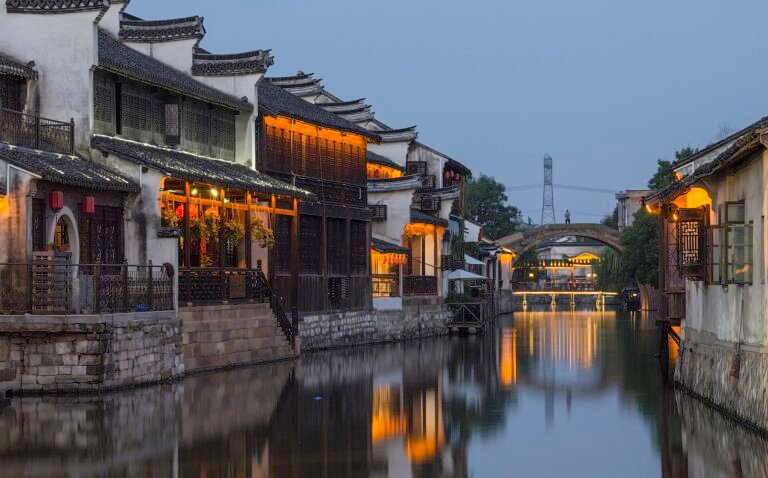
The first time I walked the Tuojiang River bank in Fenghuang, it was 6am and the town was still asleep. No lanterns lit, no music, just a woman rinsing vegetables at the water’s edge and a few ducks arguing over something in the reeds. Then I came back at eight that evening and barely recognised the place. The wooden houses were strung with red light, boats drifted under paper lanterns, and a singer on a floating stage was working through his third ballad. Both versions are Fenghuang. The trick is knowing which one you are actually there to see.
Fenghuang — the name means “phoenix” — is a riverside town in the far west of Hunan, built by the Miao and Tujia peoples along a bend in the Tuojiang. As Wikipedia notes, the county sits near the border with Guizhou and Chongqing, and the old town itself is what most travellers mean when they say Fenghuang. It is small, it is old in feel, and it has been photographed to death. But the postcard is only the riverfront. Step one street back and the performances stop.
The Tuojiang River and the stilted houses
The diaojiaolou, the wooden stilt houses, are the town’s bones. They lean out over the water on timber legs, some of them a few centuries old, and the river on a still morning throws their reflection back almost perfectly. The best view is from the older stone bridges, not the central one where everyone clusters. Walk north along the bank and you get the rows of houses without the crowd in your frame.
Boats run up and down the Tuojiang during the day, and they are pleasant enough, but the river is the kind of place you remember more by standing still than by riding across it. I spent one afternoon on a low wall near the north gate doing nothing, and it was the calmest hour of the trip. A fisherman nodded at me once and went back to his line. Nobody was selling anything.
The two famous bridges are worth a slow crossing each. The stone arch near the south gate is the older of the pair, and at night its reflection doubles in the water. The newer pedestrian bridge further along carries the bulk of the evening crowd, so I crossed it early and saved the quiet stone one for dusk. Neither takes long, but both frame the houses better than any postcard stall will admit.
Lantern nights and what they hide
Everyone comes for the lanterns, and they are genuinely lovely. After dusk the river turns into a long mirror of red and gold, and the reflection of the hillside houses is the image you have seen online. Go once, properly, and stay for the whole sequence as the light deepens.
What the postcards do not show is how performative the centre becomes. The floating stage, the costume photo stalls, the loudspeakers — they are concentrated in the middle two hundred metres. Move toward either end of the old town and the sound drops away. The lanterns stay; the noise does not. That quieter version is the one worth your evening walk.

The Miao and Tujia thread
Fenghuang sits inside a region that is still substantially Miao and Tujia, and that culture is the part most day-trippers skip. The silverwork is the easy entry point: Miao silversmiths here make intricate neckrings and headpieces, and the workshops near the east gate are real, not just souvenir counters. Watching a smith work is more interesting than buying the finished piece.
There are also song-and-dance performances pitched at tourists, and they vary in quality. The better ones use local performers and genuine dress; the weaker ones feel assembled. If you want the real thing, ask at your guesthouse about village days outside town where markets still run in traditional dress. Those are not in any brochure I was given, and they were the most memorable hours of my stay.
Food is where the local character shows most clearly. The riverside grills turn out small river fish and stuffed peppers, and the sour soups of the Miao table — fermented, sharp, nothing like the sweet-sour of a takeaway — are worth a bowl even if you are not usually a soup person. I ate at a place with three tables and a television showing a cooking show, and it was better than the riverside restaurants charging double for the view. Ask what is fresh that morning; the answer changes with the river.
Beyond the postcard: quiet alleys and real life
The single best decision I made was to stay overnight. Fenghuang is marketed as a stop between bigger cities, and most visitors arrive by coach at ten and leave by four. Sleep in the old town and you get the hours they miss. Mornings belong to residents — washing at the river, sweeping steps, hanging laundry across the lanes. Evenings after the coaches leave belong to you.
The alleys behind the riverfront are where this shows. There is a bakery I found by accident that makes a dense brown sugar cake, a tea house with no sign, and a courtyard where an old man was repairing a fishing net for an hour without looking up. None of it is in the guidebook. All of it is the town.
The town also keeps a few small museums that most coaches skip — a former residence of a local writer, and a modest building on the hill that explains the area’s republican-era history without dressing it up. None needs more than half an hour, but they give the pretty streets a backbone. I liked knowing that the lanes I was wandering had a recorded past, not just a photographed present.
Getting to Fenghuang from Changsha or Zhangjiajie
Most people reach Fenghuang from Changsha, the Hunan capital, and all about changsha explains why that city deserves a day or two on its own. A high-speed rail link now runs close to the town, cutting what used to be a long bus ride to a far shorter journey; for the current timetable and the station-to-town transfer, check the official site before you go.
If you are already in the region, pairing this with the quartz peaks to the north works well, and Zhangjiajie makes a natural Hunan loop with Fenghuang. For the rail approach itself, a practical rail overview helps you read the booking system and avoid the common mistakes with train classes. The town is compact, so once you arrive, everything is walkable.
One practical note: the station is outside the old town, and the walk in is flat but long with luggage, so a short taxi or the local shuttle saves your legs for the hills you will actually climb. Keep your hotel inside the old town walls if you can — the difference between stepping out into the lanterns and arriving by car at ten at night is the difference between the two versions of Fenghuang I described at the start.
When to go, and how long to stay
Spring and autumn suit Fenghuang best: comfortable, green, and free of the summer stickiness that drives people off the river. The town floods on rare heavy-rain years, so if you travel in peak summer, keep an eye on the forecast. One full day sees the headline sights; an overnight stay is what turns it from a photo stop into a place you understood.
Here is how I would split the time:
| Plan | Covers | Effort | Crowd exposure | My view |
|---|---|---|---|---|
| Day trip, riverfront only | Lanterns, boat, central bridge | Low | High | Fine if passing through, but thin |
| One night, both banks | River by day + quiet alleys at night | Medium | Medium | The right minimum |
| Two nights, with a village visit | Local culture, markets, slow mornings | Higher | Low | Best if you actually want Fenghuang |
If your China trip is larger than Hunan, the connections are easy. Many routes start in Beijing, and a Chengde Travel Guide pairs naturally with that northern leg. South-west, everything you need to know about chongqing and a proper take on chengdu both sit on comfortable rail lines, while the far north-east offers a slower contrast through Changchun. None of these are required, but the rail map makes them temptingly close.
Frequently Asked Questions
How do I get to Fenghuang from Changsha? A high-speed rail link now serves the area, with a short transfer into the old town; earlier visitors relied on longer bus routes. Timetables change, so check the official site before you go and book ahead around holidays.
Is one day enough in Fenghuang? A day catches the river and the lanterns, but you miss the quiet hours. Stay one night and you see the town both asleep and awake, which is the whole point.
Are the Miao and Tujia experiences authentic? Partly. The silverwork and some performances use real local craft and performers; others are staged for coaches. Ask at a guesthouse about village market days for the genuine version.
When is the best time to visit? Spring and autumn are mildest and greenest. Avoid the worst of summer heat and watch the forecast for rare flood risk after heavy rain.
Is Fenghuang worth visiting with Zhangjiajie? Yes, if you are already in Hunan. The peaks and the riverside town are different experiences, and together they make a rounded trip without a long detour.
Is the town walkable, or do I need transport? The old town is compact and entirely walkable. Boats cover the river, but you will not need a car inside the walls.