Why Changchun Deserves More Than a Day Trip
I booked Changchun as a six-hour gap between two trains and almost missed the point entirely. The plan was to sit in the station lounge, charge my phone, and move on towards the Korean border. A delayed connection forced me into the city for one night, and by the next morning I’d walked through a palace I couldn’t stop thinking about, eaten noodles I still crave, and realised the “boring transit city” label is just a rumour started by people who never left the platform.
Why most travellers skip it
Changchun sits in the middle of China’s northeast, a region foreign visitors usually approach through Beijing at one end and the Russian border at the other. It doesn’t have a Great Wall section or a famous mountain, so it falls off most first-timers’ lists. That’s the mistake.
The city was the capital of Manchukuo, a puppet state recognised by few governments at the time (Wikipedia), and before that a railway town built by the Russians and Japanese. That layered past shows up everywhere if you slow down. What you get for the effort is a place that feels lived-in rather than staged: wide boulevards, a calm pace, and museums good enough that I’d rank one of them above several more famous stops. If your trip already covers Chengdu Travel Guide, think of Changchun as the quiet, colder cousin that rounds out a northeast leg.
Practically, that means Soviet-style blocks sitting next to Japanese-era facades next to shiny new malls, often on the same street. It’s not a pretty city in the postcard sense, but it’s an honest one, and the food, the parks, and that one extraordinary palace are enough to fill two days more easily than I expected.
Getting there and getting around
High-speed trains run to Changchun from Beijing in roughly five to six hours, and the city is a standard stop on any northeast routing that also takes in how dalian is really done. Within the centre, the metro has two lines that matter for visitors; taxis are cheap and the drivers I met used the meter without fuss. Buses are numerous but the signage is almost entirely in Chinese, so I leaned on the metro and my own feet.
Plan your base near Renmin (People’s) Square or the commercial strip around Chongqing Road. From there most sights are a short ride or a long-ish walk. The centre is flat and gridded, which makes it forgiving if you get turned around, and it’s a genuinely pleasant city to wander once you stop treating it as a waiting room.
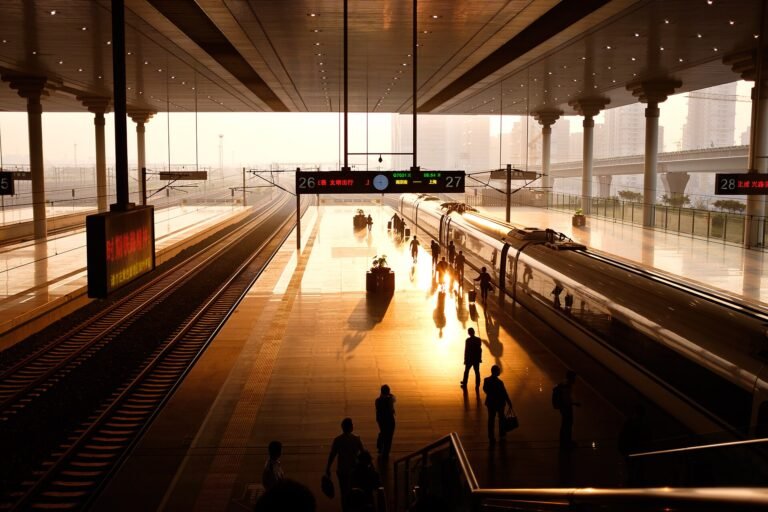
Budget-wise, Changchun is kind to travellers. A decent central hotel runs 250 to 400 RMB a night, a metro ride is 2 to 4 RMB, and a full meal with a local beer rarely tops 50 RMB. The station itself is modern and has left-luggage if you’re passing through again, and the staff at the information desk helped me rebook without a word of English between us beyond pointing at a screen.
The Puppet Emperor’s Palace — the one sight you shouldn’t miss
This is the reason to stop, full stop. The former palace of Puyi, the last emperor of China who was installed here as a figurehead, is preserved as a museum with the original furnishings, a small private garden, and rooms that tell an uncomfortable, well-documented story. Give it a morning. The audio guide is worth the rental; the exhibits explain the Manchukuo period in plain terms without drowning you in dates. Give yourself time at the underground exhibition on the later years of Puyi’s life; it’s the part that reframes the whole visit and the part most day-trippers skip.
I expected a dusty building and got a genuinely moving two hours. The contrast between the ornate reception halls and Puyi’s cramped private quarters stays with you. If you want imperial history with more spectacle, Chongqing explained covers a very different corner of the country, but for a single sobering site, this one is hard to beat.
The film studios and the “Hollywood of the East” claim
Changchun is home to the oldest film studio in China, and a section of it operates as an open set you can walk through. The “Hollywood of the East” tag is marketing, but the studio tour is a real look at how Chinese cinema grew up, with old equipment, vintage posters, and reconstructed street scenes from earlier decades. It’s an easy half-day if the weather turns.
The studio also keeps a small museum of early Chinese cinema, including cameras and posters from the 1940s and 50s, which I found more interesting than the reconstructed streets. Tickets are modest — around 80 to 120 RMB for the combined pass — and the site is a 40-minute metro ride from the centre, so pair it with a lunch stop rather than racing back.
If old towns and film history appeal, you might enjoy everything you need to know about dali as a contrasting stop — Dali trades film sets for a lakeside old town, but both reward travellers who like their history with a side of atmosphere rather than a queue.
Parks, bread, and the slow centre of the city
Changchun calls itself the “forest city,” and the green coverage is real. Nanhu Park is the easy default: a lake, a long walking bridge, and enough locals doing morning exercise that you’ll feel the rhythm of the place. In autumn the ginkgo and maple plantings along the main boulevards turn the commute into a postcard, and the light is soft enough that I filled a memory card in one short walk.
Food is hearty northeastern fare — dumplings, cold noodles in summer, and a bread culture that surprised me. The streets near the university fill with late-night stalls; I had a bowl of suan cai (pickled cabbage) noodles for about 18 RMB that beat meals three times the price elsewhere. The central market near Chongqing Road is worth a slow loop even if you’re not buying. Stalls sell dried mushrooms, walnuts from the surrounding hills, and a glutinous sausage I still can’t name but would eat again. Mornings are busiest; by late afternoon the vendors are packing up and the prices drop, which is the right time to try your hand at gentle bargaining. For a different regional angle, all about chengde covers a nearby imperial retreat with its own culinary traditions worth comparing.
Winter versus summer: when to actually go
This is the decision that shapes your whole visit.
| Factor | Winter (Dec–Feb) | Summer (Jun–Aug) |
|---|---|---|
| Temperature | Around −15°C to −25°C | 20°C to 28°C |
| Crowds | Light, except near New Year | Moderate |
| Best for | Ice, snow, empty museums | Walking, parks, long days |
| Drawback | Extreme cold, short daylight | Occasional heavy rain |
I went in late autumn and caught the tail of the colour without the winter bite. If you want snow and the ice festivals of the wider region, winter wins; if you’d rather stroll, summer is kinder. Either way, check the forecast a week out and pack for the extreme end rather than the average, because the cold in particular arrives without warning.

Day trips worth the train ride
From Changchun you can reach my notes on datong and Changsha by high-speed rail with a change, but the smarter day trips are closer. Jingyuetan, a large forested lake on the southern edge, is a half-hour ride and good for a quiet walk among the pines. The volcanic scenery further out needs a full day and, in my view, a local guide who knows the roads.
For a longer northeast sweep, pair Changchun with Dalian on the coast or push north towards Harbin. The rail network makes stringing two or three of these together simple, and Changchun works well as the calm middle stop where you catch your breath between louder cities.
In winter the same forests become cross-country ski terrain, and the city runs a modest ice-and-snow park near the lake that costs far less than the famous festivals further north. I rented skates for 30 RMB and spent an hour going in circles, which was exactly the low-stakes fun the bigger ice cities can’t offer once the crowds arrive.
Frequently Asked Questions
Is Changchun safe for foreign visitors? Yes. I walked the centre alone at night without a second thought, and the city sees fewer tourists than the headline destinations, so there’s little of the scam pressure you might meet elsewhere.
How many days do I need? Two full days covers the palace, the studios, a park, and the food scene without rushing. Add a third if you want a day trip to Jingyuetan or the surrounding countryside.
Do people speak English? Barely, outside hotels and the palace ticket desk. Download a translation app and learn the characters for your hotel name; it smoothed every taxi ride I took.
What’s the food like compared with southern China? Heavier and colder-weather oriented — more wheat, more pickled vegetables, more lamb. It sits at the opposite end of the scale from the chilli-forward cooking you’ll find further south, so come hungry but expect warming rather than fiery.
When is the ice and snow season? Roughly late November through February, with the deepest snow in January. The city itself doesn’t run a Harbin-scale festival, but the region’s winter infrastructure is solid.
Can I visit on a China transit visa? Changchun is not a usual port for the 144-hour transit exemption, so most visitors need a standard tourist visa. Rules change, so confirm the current list of eligible cities with the official embassy notice before you book.