Fermented Bean Curd (Furu): The Cheese of China
Last reviewed 31 October 2026 · China Food Way editorial team
The first time furu appeared in front of me, it was a white cube the size of a sugar lump, floating in a shallow dish of pinkish brine on a Beijing breakfast table. I watched the man opposite me break off a quarter of his cube, smear it on a fried mantou slice, and work through half a bowl of congee with a look of enormous satisfaction. So I took half a cube. It was like licking a salt block that had been aged in a brewery. My host laughed and said the sentence I have since repeated to every Western friend I have introduced to the stuff: “it is not food, it is seasoning.” He was describing, in his way, the single most important fact about 腐乳 (fǔrǔ) — fermented bean curd, the condiment that China, with some justice, calls its own cheese.
What Furu Actually Is
Furu is tofu that has been taken off the shelf and put through a second fermentation. Firm tofu — the well-pressed, low-moisture end of the texture ladder described in our guide to tofu in Chinese cooking — is cut into small cubes and left to air-dry until a fine white mould grows over the surface. The process is not rot but a controlled inoculation, typically with Actinomucor elegans or Mucor species, and the mouldy cubes are known in Chinese as 霉豆腐 (méi dòufu, “mould tofu”). The cubes are then packed into jars and buried in brine: salt, plenty of it, plus Shaoxing wine, sesame oil, and whatever flavourings the maker favours — chilli, sugar, spices, or red yeast rice. Weeks to months later, the proteins have broken down into something creamy, salty and savoury that spreads like a soft blue cheese.
That comparison is not mine alone. As Wikipedia’s article on fermented bean curd notes, the texture and flavour resemble a creamy blue cheese closely enough that English writers have been calling it “Chinese cheese” for over a century — and the process genuinely parallels cheesemaking: a bland, perishable curd is ripened with microorganisms into something intensely flavoured and long-lasting. The documented history is shorter than tofu’s own; a clear reference to fermented tofu appears in a 1610 Chinese text under the name 醢腐 (hǎifǔ), centuries after the fresh curd itself was invented.
What is the difference between white and red furu?
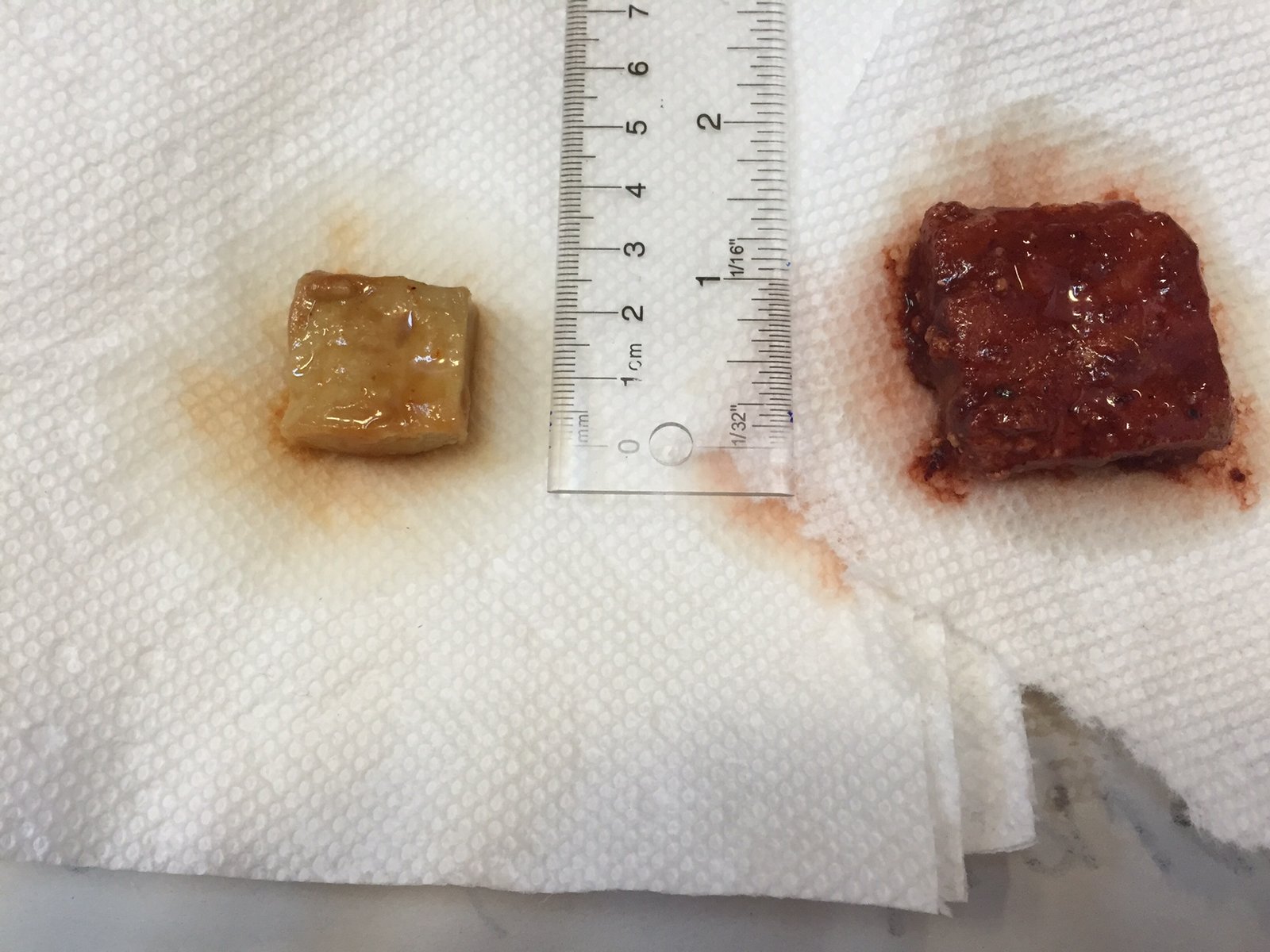
White furu, fu ru (腐乳), is the plain member: cubes ripened in a clear brine of salt, wine and sometimes ginger, so the flavour is creamy, salty and mildly funky. Red furu gets red yeast rice stirred into that brine, which tints the cubes a deep rose, adds a faint fermented-rice sweetness, and deepens the savour. There are also chilli and ‘stinky’ variants at the edges of the family. For cooking, white is the all-rounder you stir into braises and dressings; red is the one to reach for when you want colour and a rounder, almost sweet-savoury note, as in red-cooked pork. Buy one of each once and you will quickly learn which jar belongs in which dish.
White, Red, and the Rest of the Family
The jar in your local Asian supermarket is one member of a much wider family:
| Type | Chinese | Look and flavour | Typical use |
|---|---|---|---|
| White | 白腐乳 (bái fǔrǔ) | Pale beige, salty, mildly boozy | Congee, mantou, stir-fried greens |
| Red | 紅腐乳 / 南乳 (hóng fǔrǔ / nán rǔ) | Deep red, thicker, wine-forward | Braising (the classic is nam yu pig trotters), marinades |
| Rose | 玫瑰腐乳 | Red, perfumed with rose wine and sugar | Eaten straight from the jar as a snack |
| Drunken cubes | 醉方 (zuì fāng) | White, double the rice wine | Snacking; the alcohol is part of the flavour |
| Stinky | 臭腐乳 | Grey-white, months of fermentation | Acquired taste; the pungent end of the shelf |
| Chiang-style | 江豆腐 (jiàng dòufu) | Reddish-brown, miso or soy brine | Taiwan and Japanese-influenced versions |
The red variety gets its colour from red yeast rice — rice cultured with the Monascus purpureus mould — which also colours char siu and Fujian red wine chicken, as Wikipedia’s red yeast rice entry explains. It is a colouring agent and a mild flavour in its own right, and red furu carries a noticeably thicker, more wine-like aroma than the white.
How much furu should I use the first time?
Use less than you think. Furu is a concentrate, not a condiment you spoon freely, and a single cube can season a dish for four people. For a braise or a plate of greens, start with half a cube mashed smooth and add more only after tasting; the salt is unforgiving and there is no easy way back once it is in. Red and chilli versions taste stronger than white, so weight for weight they need a lighter hand. The other trap is using it where another salty ingredient already leads — soy, oyster sauce, fermented black beans — because the cumulative salt will flatten the dish. Think of furu as you would a stock cube: a background note, not the headline.
The Strength Warning
Here is the practical part, learned over one disastrous breakfast. Furu is sold as cubes for the same reason stock cubes are sold as cubes: you are meant to use a fraction of the piece.
- For a bowl of congee, a quarter to half a cube, mashed against the side of the bowl with a little of its brine, is the traditional amount. A whole cube is a dare.
- In stir-fries, half a cube mashed with a spoonful of brine replaces salt entirely. It goes in near the end, off high heat, so the alcohol does not scorch.
- As a spread on steamed or fried mantou, a thin scrape of half a cube across one slice is plenty.
The mistake to avoid is treating furu as a side dish. It sits in its little dish at breakfast looking like a small cheese course, and Western instinct says eat the whole thing. It is a condiment in the same sense that fish sauce is a condiment: enormous flavour, tiny quantity, and no forgiving middle setting.
What can I cook with furu besides congee?
Plenty, once you treat furu as a salty seasoning rather than a spread. Mash a cube into a marinade for pork or aubergine, where it both salts and tenderises; stir a little into the braising liquid for greens or tofu so the whole dish picks up a cheesy depth; or whisk it with oil and a splash of vinegar as a dressing for cold noodles. A small piece melted into scrambled eggs just before they set gives them a savoury, almost blue-cheese edge. The rule is restraint: start with half a cube for two people and taste, because the salt load is high. Used this way a single jar lasts months and earns its shelf space far beyond the breakfast table.
The Congee Pairing and Beyond
The classic home of furu is the breakfast table, alongside a bowl of plain rice porridge. The pairing is a study in contrasts: the congee is bland, creamy and neutral — the canvas — and the furu is the concentrated, salty line drawn across it. Our guide to century egg congee covers the porridge itself; furu is simply what you add when there is no century egg in the house. The mildness of the rice matters here, which is why the short-grain japonica described in our guide to Chinese rice is the right base — its starch breaks down into the creamy texture that carries the condiment.
Beyond breakfast, furu works where a dish needs fermented depth rather than straightforward salt:
- Braised pig trotters (南乳豬手, nánrǔ zhūshǒu) — the Cantonese classic, red furu braised with the trotters until the sauce reduces to a sticky lacquer.
- Stir-fried water spinach (空心菜, kōngxīn cài) — a cube of white furu mashed with garlic and a splash of its brine, tossed through the greens at the end. This is the dish that converted me.
- Hot pot dipping sauces — a little mashed furu in the sesame-and-black vinegar base for a southern-style dip.
- Chaoshan furu bing (腐乳饼) — a stuffed biscuit from the Chaozhou region with furu in the sweet pastry, which sounds improbable and tastes convincing.
How long does an opened jar of furu keep?
An opened jar of furu keeps for several months in the fridge, provided the cubes stay submerged under their brine. The salt and alcohol in that liquid are preservatives, not suggestions, so as long as nothing dry is poking above the surface mould cannot get started. Keep the lid on tight and a clean spoon goes in — introducing food scraps is the only common way to spoil it. Unopened, a sealed jar sits happily in a cool cupboard for a year or more. If a cube develops bright mould, a pink or blue tinge, or a sharp off-smell rather than the usual funk, bin it; but in practice a well-covered jar outlasts your urge to finish it.
Buying, Storing, Substituting
Buying. The best-known brand is Wangzhihe (王致和), the Beijing maker whose jars have been a pantry standard since the seventeenth century, but any Asian supermarket will stock several: read the label for chilli content if you want mild, and check that the brine covers the cubes. Glass jars with the cubes fully submerged will keep for a year or more unopened; once opened, refrigerate.
I have tried making furu once, at home, with firm tofu left on a plate near a sunny window for two days. The mould that grew was, in retrospect, probably not Actinomucor elegans, and I did not eat the result — but the attempt taught me why the jar version is cheap. Commercial production controls the fermentation; a kitchen windowsill does not, and the whole appeal of the ingredient is that a jar costs very little and lasts a very long time.
Storing. Furu is one of the most forgiving condiments in existence. Refrigerated, an opened jar keeps for months — some say years improve it — provided the cubes stay under the brine and you use clean chopsticks. Dried cubes sold in paper cartons, without brine, are a different product and keep even longer.
Substituting. Furu is hard to replace exactly, because no other ingredient combines salt, alcohol and fermented soy depth in one spoon. My experiments, in order of usefulness:
| What you need | Try this | Honest verdict |
|---|---|---|
| White furu in a stir-fry | White miso, half the amount | Close on salt and fermentation, sweeter, no alcohol bite |
| Red furu for a marinade | A little tomato paste + dark soy + a pinch of sugar | Reproduces the colour, not the flavour |
| Furu on congee | A smear of anchovy paste or a strong blue cheese | Works as a salty contrast; culturally wrong, culinarily defensible |
| Nothing at all | Salt plus a drop of Shaoxing wine | The fallback that keeps the dish balanced |
Frequently Asked Questions
Can I eat furu straight from the jar?
Yes, in small quantities — a quarter of a cube is the customary first portion. Rose and drunken varieties are specifically made for eating straight as a snack.
Is furu the same as stinky tofu?
No. Stinky tofu (臭豆腐) is fresh tofu fermented in a smelly brine and eaten in cubes with chilli oil; stinky furu is its own, much saltier product. They share an aroma strategy and little else.
Why is my jar’s brine cloudy?
A slight cloudiness is normal fermentation residue. If the cubes smell sour rather than wine-like, or the brine has turned slimy, discard the jar — though this is rare in a refrigerated, properly sealed jar.
Does furu contain alcohol?
Usually yes — the brine is built on rice wine, typically around ten per cent, and the drunken variety uses double. Most of it stays in the brine, but the cubes do carry a noticeable boozy note, which is part of the flavour.
How much furu should replace salt in a recipe?
Roughly: one cube (about 2 cm square) plus its brine carries the salt of a teaspoon of salt in a dish for two. Start with half a cube, taste, and add more only if the dish lacks depth rather than salt — with furu, those are different problems.