Ganzhou Travel Guide: Beyond the Postcard Stops
Three and a half kilometres of Song-dynasty wall. A storm-water system laid out in the 1060s that still drains the old streets. More than two hundred carvings cut into a cliff face. I drove to Ganzhou expecting a provincial capital with one attractively lit river and not much else, and came away with a notebook of figures that did not match that description. The real question is whether those details add up to a trip, or whether this is a city best admired from a distance and left alone. After two days I have a fairly firm answer.
Why Ganzhou is not on most itineraries
Ganzhou sits in the far south of Jiangxi, well off the classic Yangtze and Guilin circuits. That is the whole problem. Travellers fly to Shanghai or Guilin and never think to look a few hundred kilometres inland, even though the high-speed line now puts the city within about two hours of Shenzhen and Nanchang. From Beijing the direct service takes roughly seven to eight hours, which is a long day but a straightforward one. Ganzhou Huangjin Airport handles a handful of domestic routes if you prefer to fly.
Ganzhou West station is some distance from the old centre; allow thirty to forty minutes by taxi, or take the single metro line and change. A taxi ride within the centre starts around 8 RMB. Base yourself near the old city wall or the Bajingtai area rather than out by the station: a clean mid-range room costs 180 to 300 RMB a night, and you save a great deal of time. I stayed on a lane behind the river and could walk to the wall in five minutes, which changed the trip completely.
The Song wall and the towers above the river
As Wikipedia notes, the city stands where the Zhang and Gong rivers join to form the Gan, the waterway that gives Jiangxi its short name. That confluence is not scenery you have to hunt for. From Bajingtai, the Eight Views Terrace at the eastern end of the old wall, you can watch two brown rivers become one. The terrace and the ramparts date from the Northern Song, when the wall was first built, and around 3.6 km of it survives today — an unusual amount for a Chinese city of this size.
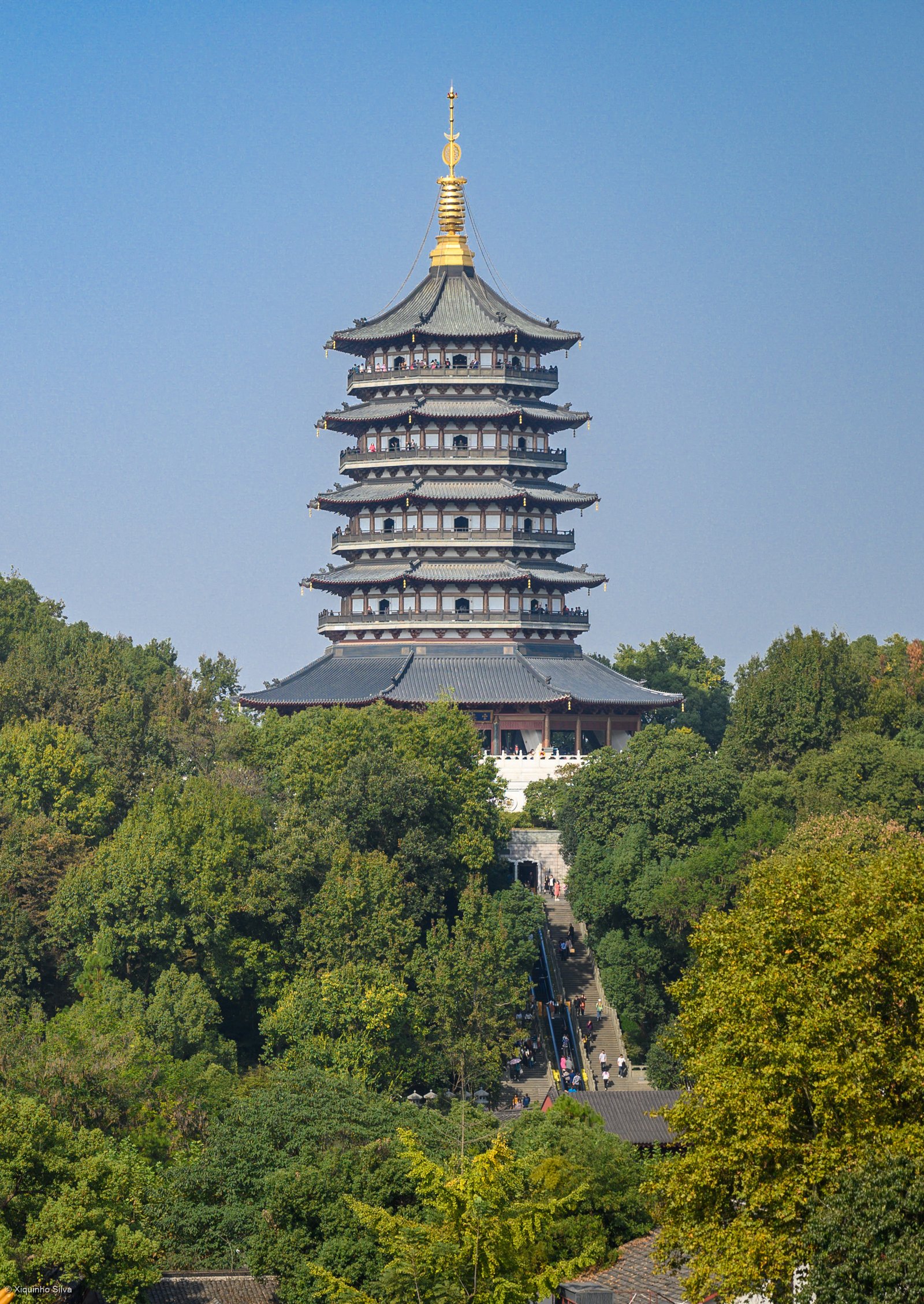
Walk the wall from Bajingtai towards Yugulou, the Solitary Tower set on a small hill inside the old city. The going is easy, with shaded stretches and steps at intervals, and the whole walk takes under an hour if you keep moving. Yugulou is tied to a famous line by the Song poet Xin Qiji, which is reason enough for many Chinese visitors to climb it. The interiors have opening hours that shift with the season, so check the official site before you go.
If you know Chengde Travel Guide, the contrast is instructive. Chengde’s structures were built as an imperial retreat with money to spare; Ganzhou’s wall was practical civic defence, repaired again and again by ordinary administrators. It is less beautiful in the postcard sense and more interesting for that.

Fushougou: the drain that outlived dynasties
Here is the detail that made me take the city seriously. In the 1060s the local official Liu Yi oversaw the building of Fushougou, a paired network of covered drains — the Fu and the Shou channels — that used gravity and tide gates to carry rain and waste out of the old city. The system is still in use. Versions of it have been restored, but the basic logic has not changed in nearly a thousand years.
There is a small exhibition near the old city explaining how it works, with sections of the original channel and diagrams of the sluice gates. I spent about thirty minutes there and came out with a new respect for the people who designed it. Entry is modest, but hours and prices change, so check the official site before you go. Be realistic about what this is: an exhibition and a short underground section, not a walk-through sewer attraction. Go because the engineering matters, not because you expect a spectacle.
The reason it matters is plain once you walk the low streets after heavy rain. Neighbouring cities flood; the old core of Ganzhou mostly does not. That is a claim you can verify with your own eyes, and it says more about the place than a pagoda does.
Tongtian Rock and the cliff carvings
Ten kilometres northwest of the centre, Tongtian Rock is the most substantial sight outside the wall. A taxi costs around 25 to 30 RMB from the old city and takes half an hour; tickets have been around 60 RMB in recent years, though you should check the official site before you go. The site is a sandstone cliff lined with Buddhist grottoes and inscribed panels, many from the Song dynasty, and the count runs to more than two hundred carved pieces.
Give it a morning. The path is shaded in places and the air is cooler among the rocks, which makes this a better summer choice than the exposed wall. What I liked was the scale: these are not monumental figures designed to overwhelm, but small, repeated acts of devotion cut by people whose names mostly survive only in the inscriptions. It lacks the polish of the famous northern grottoes, and that is fine. Bring water and wear shoes with grip, since the stone steps get slick after rain.
Hakka country and the enclosed houses
South of Ganzhou, towards Longnan county, the landscape changes to Hakka country. The enclosed houses there — weiwu, fortified compounds with rooms arranged around a central courtyard — were built by families who needed protection as well as space. Guanxi New House is the easiest example to reach, roughly an hour and a half by road, and parts of it are still used by local families rather than being roped off as a set. Tickets are typically in the 30 to 50 RMB range; check the official site before you go.
This is heritage that functions as a neighbourhood, not a museum display. If the idea of a day among old courtyards and family shrines appeals, a proper take on chengdu explains the teahouse version of that life; Ganzhou’s version is stone walls, ancestral halls and a slower kind of curiosity. You need a full half day, and preferably a driver who knows the lanes. Public buses run but the last one leaves early.
What to eat, and why the oranges matter
Gannan navel oranges are the local obsession, and from November to January you will see them piled at every roadside stall. They sell for roughly 6 to 12 RMB a kilogram depending on the grade, and the better stalls will pack a box for shipping home. I bought too many, ate them for three days, and would do exactly the same again. Winter is genuinely a good time to come for this reason alone.
The cooking is southern Jiangxi fare: Ningdu three-cup chicken, fish cakes, stuffed tofu and rice-noodle soup that costs 12 to 20 RMB in a morning shop. A proper meal in a neighbourhood restaurant runs 30 to 50 RMB. The heat is gentler than in all about changsha, so do not brace yourself for a chilli assault; the flavours here lean towards fermented, sour and herbal notes. Nightlife is limited, and I was usually the only foreigner in the room, which never felt awkward.
Practicalities: when, where, how much
March to May and October to December are the comfortable months. January brings plum blossom to the Meiguan ancient post road south of the city, a historic route over the Nanling hills that once linked the Yangtze basin to the Pearl River delta. July and August are hot and wet, often above 35°C, and the exposed wall is miserable at midday. For a sense of scale, a January day here is mild beside Changchun, but it is still coat weather in the evenings.
| Plan | Time needed | Rough cost | Best for | Drawback |
|---|---|---|---|---|
| Old city wall and towers | Half a day | Under 50 RMB | History, river views | Exposed in summer |
| Tongtian Rock | Half a day | Around 60 RMB | Grottoes, shade | A taxi ride from centre |
| Longnan Hakka houses | Full day | 100–200 RMB with transport | Architecture, families | Long travel, early buses |
Ganzhou has the same river-city instinct as everything you need to know about chongqing, but on a smaller, calmer scale. Two days covers the wall, the drain, the grottoes and a decent amount of eating. Add a third for Longnan or the plum blossom at Meiguan.
Frequently Asked Questions
Is Ganzhou worth a detour? Yes, if you care about how cities actually work rather than just how they photograph. The wall and Fushougou together justify the journey. If you want famous landmarks and a busy night scene, look elsewhere.
How long should I stay? Two full days for the city and Tongtian Rock. A third day is needed for the Hakka houses at Longnan or the Meiguan post road.
Can I see Fushougou in person? You can visit the exhibition and a short preserved section, but there is no long underground tour. Allow thirty minutes and check the official site before you go.
When are the oranges best? November through January, with December usually the sweetest. Stalls price by the kilogram and will box fruit for delivery.
Is English widely spoken? Not really, outside the main hotels and the odd ticket desk. A translation app and your hotel address written in Chinese characters cover most situations.
Is it easy to reach from Shenzhen or Guangzhou? Yes. High-speed trains reach Ganzhou West from Shenzhen in about two hours and from Guangzhou in roughly two and a half to three hours. Check the current timetable before booking, as services vary by day.