General Tso’s Chicken: The Chinese-American Story, Cooked Properly
Fact-checked and reviewed 31 October 2026 · China Food Way editorial team
The first time I tried to make General Tso’s chicken at home, I used plain flour for the coating because that is what every recipe I had bookmarked told me to do. What came out of the wok was a pale, bready lump that turned to paste the moment it met the sauce — the sort of result that makes you wonder why you didn’t just order in. It took three more attempts and a long read of the Wikipedia entry on the dish to realise the coating was never supposed to be flour at all.
That detail matters more than any single ingredient, and it is the difference between a dish that tastes like a takeaway and one that tastes like cooking.
When and where was the dish actually invented?
In 1952, in Taipei, by a Hunan-born chef named Peng Chang-kuei — not in Hunan and not in America.
Peng cooked for banquets catering to exiled Nationalist officials, and his original was a savoury dish: lightly battered chicken, flash-fried, then tossed with scallion, ginger, garlic, a little soy, black vinegar and a whisper of chilli. There was no lake of syrup. The sweet, sticky, orange version most people know arrived in the 1970s, when Hunan restaurateurs in New York found that American diners wanted sugar and re-engineered the dish for the takeaway box. General Tso himself, a nineteenth-century Qing general, never ate it and had no opinion about it; he simply lent the province’s most famous name. The gap between the two versions is wider than most menus admit.
A Dish With Two Birth Certificates
Here is the part that surprises people. General Tso’s chicken (左宗棠鸡, zuǒ zōng táng jī) was not invented in China, and it was not invented in America either. It was created in 1952 in Taipei by Peng Chang-kuei (彭長貴), a Hunan-born chef who ran a restaurant catering to exiled Nationalist officials. As the account of Peng Chang-kuei’s career makes clear, his original was savoury: chicken lightly battered and flash-fried, then tossed with scallion, ginger, garlic, a little soy, and a whisper of chilli and black vinegar. There was no lake of syrup.
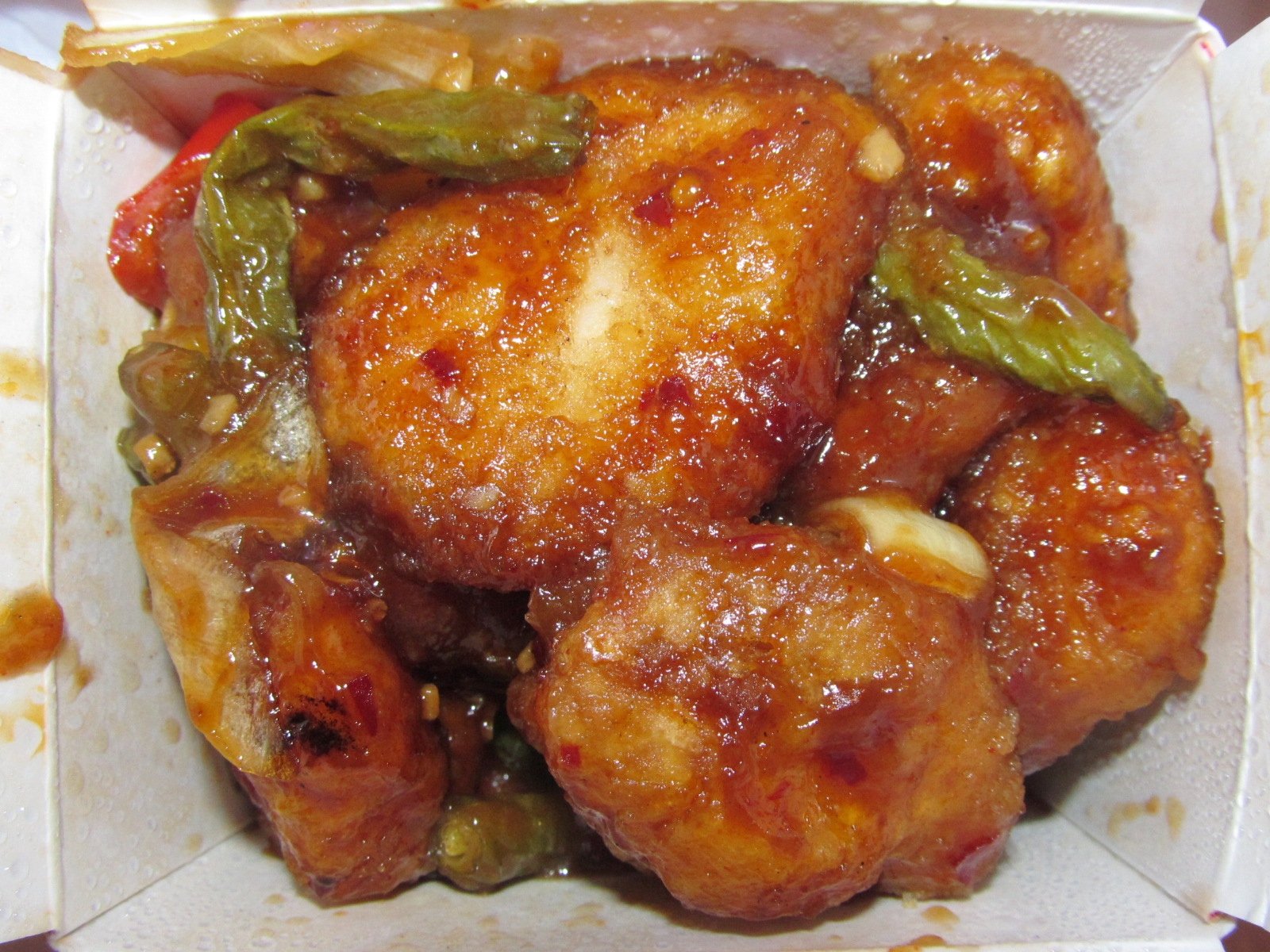
The sweet, sticky, orange-tinted version most of the world knows arrived later, in the 1970s, when Hunan restaurateurs in New York — Peng among them, briefly — discovered that American diners wanted sugar. The dish was re-engineered for the takeaway box. I am not here to police authenticity, but I am here to tell you that if you only ever eat the New York version, you have not eaten the dish. You have eaten its candy-coated descendant.
The gap between the two is wider than most people realise, and it is worth laying side by side before you decide how sweet you want your own version.
| Element | Taipei original (1952) | New York takeaway |
|---|---|---|
| Sweetness | Low, a background note | Dominant, often cloying |
| Sour | Black vinegar present | Usually absent |
| Chilli | Fresh and dried, aromatic | Dried, mostly decorative |
| Coating | Thin cornstarch shell | Thick, often flour batter |
| Colour | Brown from soy | Orange from dye or juice |
| Fermented paste | Doubanjiang in the sauce | Rarely used |
None of this makes the takeaway version wrong. It makes it a different dish with a different job: to travel, sit under a heat lamp, and please a crowd that associates “Chinese” with “sweet and crispy”. The recipe below is built to taste like the original while still working in a home kitchen.
Can I swap cornstarch for potato starch or plain flour?
Potato starch is a fine swap; plain flour is not, and it is the single most common reason a home coating fails.
Cornstarch and potato starch are both nearly pure starch with no gluten, so they fry into a thin, brittle shell that stays crisp under sauce. Wheat flour brings gluten and protein: it drinks oil, browns into a bready crust, and turns to paste the moment it meets a wet sauce. My first batch used flour and came out a pale lump for exactly this reason. A 50:50 blend of cornstarch and potato starch gives an even lighter, glassier crunch if you have both. Whichever you use, season the chicken itself, not just the coating, and let the dredged pieces rest five minutes so the starch hydrates and does not fall off in the oil.
Why Cornstarch, Not Flour
The coating is the whole argument. Flour forms gluten when it meets liquid and heat, which is why a flour-dredged piece of chicken gets a thick, bready crust that sponges up sauce and goes soft in ninety seconds. Cornstarch forms no gluten. It sets into a thin, glassy shell that shatters, and — crucially — stays crisp for a while after saucing.
I learned this the hard way with a batch that used half flour, half cornstarch, on the theory that “some structure is good.” It wasn’t. The flour portion went chewy and the cornstarch portion stayed crisp, so every bite was two textures fighting each other. Use pure cornstarch, or read up on cornstarch and potato starch if you want to understand why the Chinese kitchen reaches for starch where a Western one reaches for flour.
| Coating | Texture | Holds crispness | Taste of batter |
|---|---|---|---|
| Plain flour | Thick, bready, chewy | Poor (sogs in 1 min) | Floury |
| Flour + cornstarch 50/50 | Uneven, patchy | Fair | Floury with cracks |
| Pure cornstarch | Thin, glassy, shatters | Good (several minutes) | Neutral |
The Batter and the Double Fry
You want roughly 600 g of boneless chicken thigh, cut into 2.5 cm cubes. Thigh, not breast — breast goes dry before the coating colours, and the original was never a diet dish. Toss the cubes with 1 teaspoon of soy sauce, 1 teaspoon of Shaoxing wine (or dry sherry), and a pinch of white pepper, then let it sit ten minutes.
For the dredge, put 120 g of cornstarch in a bowl with a pinch of salt and a tablespoon of water, mixing to a sandy, clumpy texture rather than a thin liquid. You are not making a wet batter; you are making a dry-ish coat that clings in uneven nubs. Those nubs are what crisp up into crags.
Fry in two stages. First at 160 °C until the chicken is cooked through and pale, about two minutes. Pull it out, rest it two minutes, then fry again at 190 °C for forty-five seconds to set the shell. The second fry is not optional — it is what drives moisture out of the coating so the sauce can’t immediately undo it. This is the same logic behind proper kung pao chicken, where the nuts and the chicken both need to stay distinct under a wet sauce.
The Sauce: Sharp First, Sweet Second
The takeaway sauce is mostly sugar, ketchup, and cornflour slurry, which is why it coats like varnish and tastes like a lolly. The better version builds the sauce in the wok before the chicken goes back in: 2 tablespoons of soy sauce, 1 tablespoon of Chinese black vinegar, 1 tablespoon of sugar, 1 teaspoon of hoisin, and a bruised dried chilli or two. Bring it to a simmer and let it reduce until it sheets off a spoon, then toss the chicken through for twenty seconds only.
Notice what is missing: no ketchup, no orange colouring, and only a tablespoon of sugar. The original Hunan-leaning balance is sour-savoury with a chilli edge. If you want the New York sweetness, add another tablespoon of sugar, but understand you are moving the dish one step further from Taipei and one step closer to the cardboard box. For a genuinely sweet-sour reference point from the same family, the classic sweet and sour pork shows the old-school balance done with restraint.
Peng’s original also carried a note of fermented bean paste. A spoon of doubanjiang stirred into the sauce adds the savoury depth that sugar alone can never provide, and it is the single best way to make a home version taste like a restaurant’s rather than a child’s.
Why are the dried chillies left whole in the sauce?
They are there for aroma and colour, not to be eaten — diners are meant to push them to the side of the plate.
Whole dried chillies bloomed in hot oil perfume the sauce and give it those dark, glossy flecks without releasing much capsaicin; cut them open or crush them and the dish turns aggressively hot and the seeds grit the sauce. Use 6-10 small dried red chillies for a batch serving two, added to the wok just before the aromatics so they toast for a few seconds without blackening — a scorched chilli turns bitter and ruins the whole pan. In the original Taipei version fresh and dried chilli both appeared; the takeaway version uses dried alone. If you want genuine heat, add a pinch of chilli flakes at the end rather than breaking the whole ones.
The Chillies Go In Whole, and Stay There
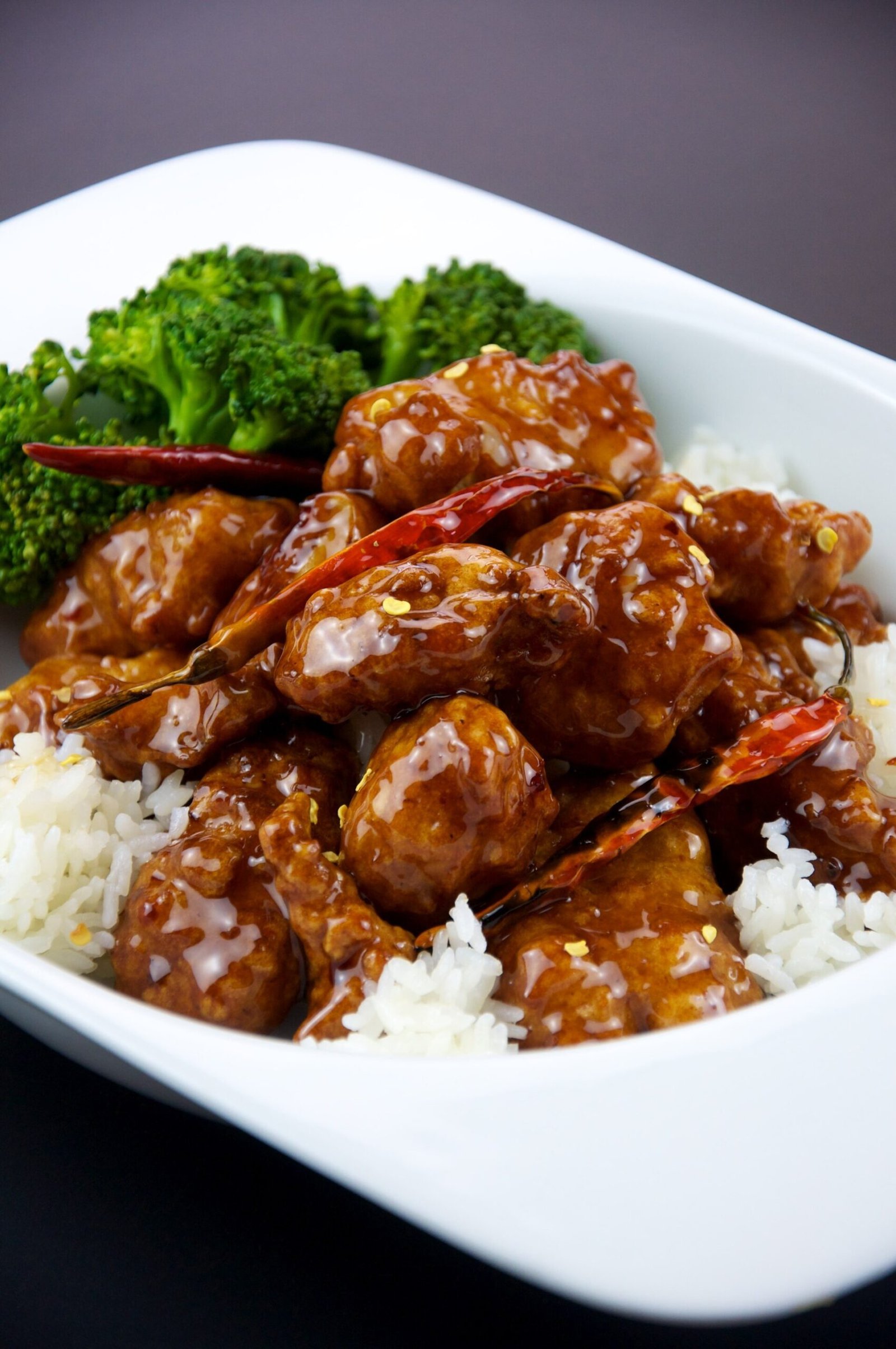
One habit the takeaway version gets halfway right: the dried red chillies are there for aroma, not for eating. In the Sichuan-influenced original they are fried briefly in oil to bloom their fragrance, then left whole in the bowl as a warning. Biting into one is a mistake you make once. The dry-fried Sichuan version takes this further, burying the chicken in a landslide of chillies, but the principle is identical: fragrance first, capsaicin as a background hum.
Three Mistakes That Ruined My Early Batches
Before the method above settled, I wasted a lot of good chicken. The failures clustered around three habits that feel sensible and are all wrong.
The first was crowding the wok. I would tip in the whole 600 g at once, the temperature would crash, and the coating would steam instead of fry. Fry in two or three batches so the oil stays above 150 °C; it takes longer but it is the only way to keep the shell thin and crisp. The second was saucing while the chicken was still hot and wet from the fryer, which meant the coating never had a chance to set. Let it rest on a rack, not on paper that traps steam, for the full two minutes.
The third, and the most stubborn, was treating the sauce like a Western gravy. I reached for cornflour slurry to thicken it, the way every takeaway does, and ended up with a glue that dulled the vinegar and hid the chilli. Reduce the sauce instead. A tablespoon of sugar and a tablespoon of vinegar, simmered until it coats a spoon, gives you a gloss that clings without smothering — and it keeps the flavour bright rather than muddy.
How far ahead can I fry the chicken before saucing?
Fry it up to an hour ahead and hold it uncovered on a rack, but sauce it only at the very last second.
The double fry — first at about 160 °C to cook through, then a second at 190 °C to crisp the shell — is what builds a crust that survives contact with the sauce, and it gives you a window to get everything else ready. Keep the fried pieces in a single layer on a wire rack, never piled in a bowl, where trapped steam softens them within minutes; a low oven at 90 °C holds them well. Have the sauce reduced and waiting in the wok, add the chicken, toss for no more than twenty seconds, and serve immediately. Every extra minute in the sauce costs you crunch. If the pieces have gone limp, a quick 30-second re-fry rescues them.
Putting It Together
Have your sauce mixed before you fry — the whole finish happens in under a minute, and you cannot measure sugar while oil is spitting. Fry the chicken, empty the wok of oil except a film, sizzle a teaspoon of minced ginger and garlic for five seconds, pour the sauce, let it bubble, then return the chicken and toss. Scatter with scallion and toasted sesame, and serve immediately against plain rice. It does not reheat well; the coating is a one-way ticket, so cook to order.
Frequently Asked Questions
Is General Tso a real person? Yes. Zuo Zongtang (左宗棠) was a Qing-dynasty general from Hunan. Peng Chang-kuei named the dish after him, though there is no record the general ever ate it. The name is homage, not biography.
Why does my coating go soft so fast? Almost always flour in the dredge, or skipping the second fry, or saucing too early. Pure cornstarch plus a hot second fry buys you several minutes of crispness. After that, accept defeat and eat quicker.
Can I make it less sweet? Easily. Drop the sugar to one teaspoon and add another teaspoon of black vinegar. You will land somewhere closer to Peng’s 1952 plate, which was barely sweet at all.
Chicken thigh or breast? Thigh, every time. Breast overcooks before the coating browns and has none of the fat that carries the savoury notes. If you must use breast, pull it at 70 °C and don’t blink.
What do I serve with it? Plain jasmine rice and a quickly stir-fried green — choy sum or broccoli. The dish is rich enough that the side should be plain, not another sauced thing.
Is this the same as orange chicken? No, though they are cousins on the American-Chinese shelf. Orange chicken adds orange juice or zest and more sugar; General Tso’s leans on vinegar and chilli. Both suffer the same fate without a proper cornstarch coating.