Guilin Rice Noodles: Pickled Beans and Braised Broth
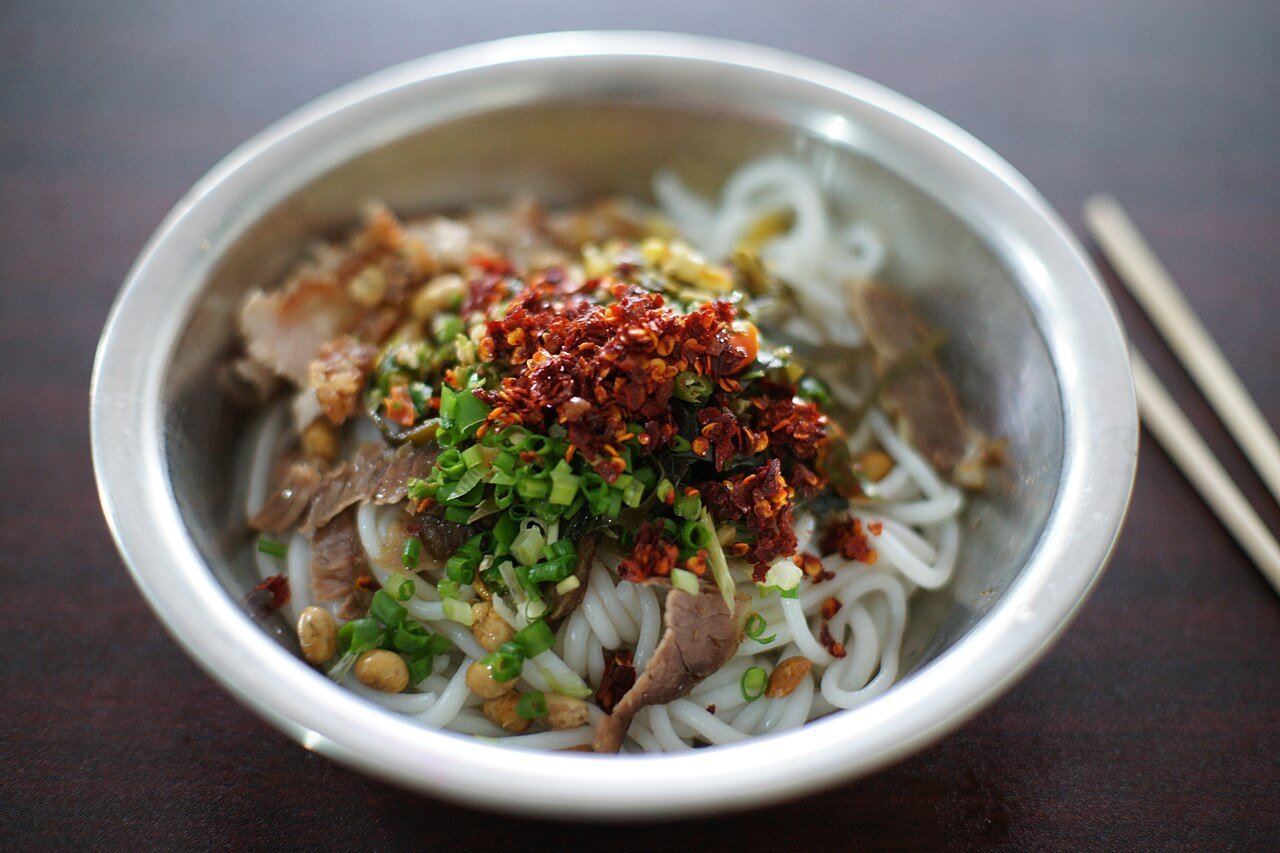
“要辣吗?” the woman behind the counter asked me at twenty past seven in the morning, ladle already moving. I said a little. She didn’t slow down: noodles from the blanching basket into a steel bowl, a pour of dark braising liquor from a dented aluminium pot, a tongs-ful of chopped sour beans, a scoop each of fried soybeans and peanuts, a pinch of scallion, done. Ten seconds, maybe fifteen. I carried the bowl to a plastic stool on the pavement and finished it in about the same time it took to make. That’s the dish. Nobody assembles anything; nobody lingers over a tray. Guilin rice noodles are made for the counter, and eaten — if you’re doing it right — more or less standing up.
What a Guilin Bowl Actually Is
Forget soup-noodle assumptions for a moment. A standard bowl starts with rice noodles that have been cooked earlier and drained — not dropped to order — then dressed rather than simmered. The liquid element is lu shui (卤水), a spiced braising broth with soy sauce and rock sugar that the shop ladles over sparingly, more marinade than soup. On top go the signatures: chopped brined long beans for sour crunch, crispy fried soybeans, roasted peanuts, spring onion, and whatever braised meat the shop has in the pot that day.
The result eats somewhere between a noodle salad and a quick soup, and it’s saltier, sourer and chewier than most first-time visitors expect. Compared with brothy, beef-forward bowls elsewhere on this site — everything you need to know about taiwanese beef noodle soup is built on hours of simmered stock, for instance — Guilin’s bowl barely has any soup at all. That’s not a shortfall; it’s the design. There’s a useful historical footnote here: in the older telling, recorded in Wikipedia’s entry on Guilin rice noodles, the dish began as a way to use up braising marinade from shops that cooked horse meat and other meats in lu shui — the noodles were dressed with that marinade and the leftover braised bits. Most shops today use pork or beef, but the logic hasn’t changed: the noodles exist to carry the braise.
Lu Shui: The Braising Broth That Defines the Bowl
Every shop’s lu shui is a guarded recipe, but the shape of it is consistent: a strongly spiced soy-heavy broth used to braise meat and then redeployed as the dressing for the noodles. Mine, scaled for home:
- 2 litres of water plus 500 ml of the chicken or pork stock you already make
- 80 ml light soy sauce, 20 ml dark soy sauce for colour
- 30 g rock sugar
- 2 slices ginger, 3 smashed garlic cloves, 2 spring onions
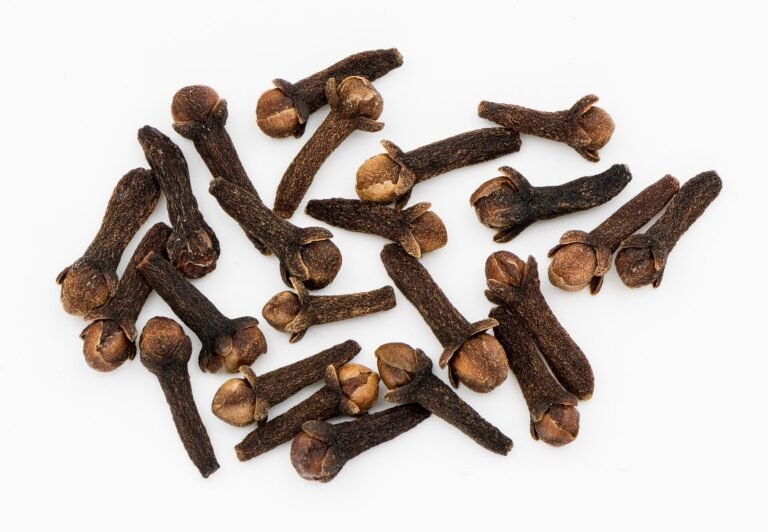
- spices: 1 cassia cinnamon stick, 2 star anise, 1 small piece caoguo (black cardamom), 1 teaspoon fennel seeds, 2 bay leaves, 1 small piece dried tangerine peel
- 30 ml Shaoxing wine
Simmer everything for 45 minutes, then it does double duty: braise 400 g of pork belly or beef shin in a ladle of it for the “meat on top”, and reserve the rest as the dressing liquid. If you cook Sichuanese food regularly you’ll recognise half the spice list from Doubanjiang territory — though Guilin’s version is fragrant and savoury rather than fermented-hot. I’ve burned batches by rushing the simmer at full boil; the sugar catches and the whole pot turns bitter. Low and slow, skimming once.
The Noodles: Soak, Blanch, Done
Guilin shops use fresh round rice noodles and hold them cooked in warm water through the morning rush. Abroad, dried rice noodles are the reality, and the two-stage method matters because a single soak leaves them either chalky or mushy:
| Stage | Method | Time | What to look for |
|---|---|---|---|
| Soak | Dried noodles in cold water, fully submerged | 3–4 hours (or overnight) | Flexible, bendable, still translucent-white |
| Blanch | Boiling water | 1–2 minutes | Uniformly translucent, springy with a slight chew |
| Hold | Warm (not boiling) water | Until needed | Loose, separated strands |
The cold soak is doing the real work — it hydrates the strand evenly so the blanch is just a finish, the same principle behind why all about chinese sticky rice insists on soaking before steaming. Skip it and you’ll be boiling dried noodles for ten minutes, which is exactly how you get a gluey, broken bowl. I’ve done it both ways in the same week and the difference isn’t subtle.
The Toppings: Where the Character Lives
Three components do most of the work, and two of them are beans, which confuses everyone until they taste it.
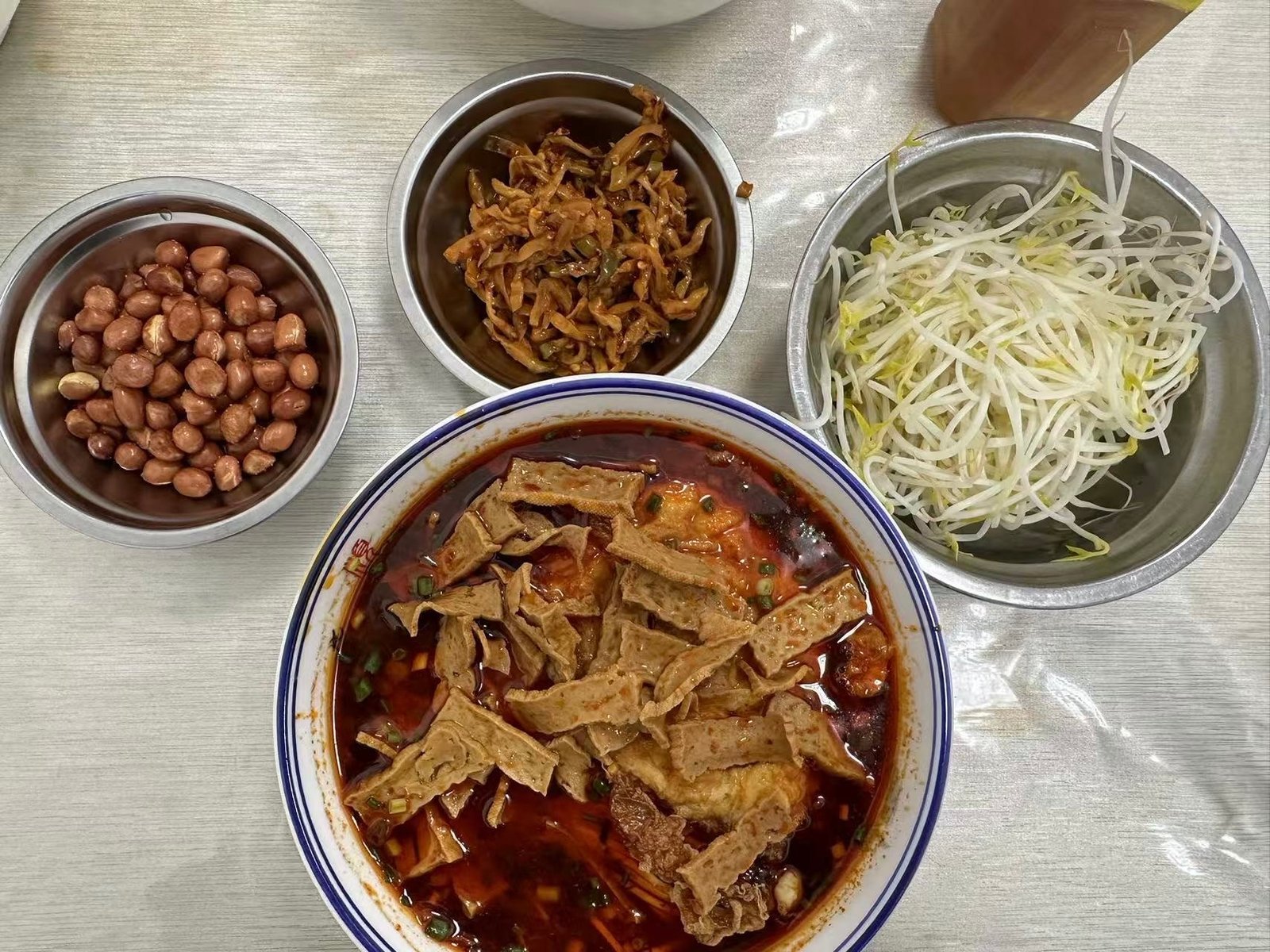
Pickled long beans (酸豆角) are the sour crunch. Chop them fine — half-centimetre pieces — and if you buy them brined in vacuum packs, rinse briefly and chop; some brands are aggressively salty. Their lactic sourness is the counterweight to the salty lu shui, and without them the bowl flattens into an ordinary soy-dressed noodle.
Crispy soybeans and roasted peanuts are the fried crunch. Deep-fry soaked soybeans at 170°C until they rattle in the pan and split their skins — they must be bone-dry before frying or they’ll spit and stay chewy. I fry a big jar’s worth at once; they keep for a fortnight and vanish faster than that.
The braised meat is whatever your lu shui produced: pork belly slices, beef shin, sometimes a chopped braised egg. Slice it thin and pile a few pieces per bowl. This isn’t the protein-forward eating of Lanzhou Beef Noodle Soup — three or four slices is a proper Guilin portion, because the toppings, not the meat, are the point.
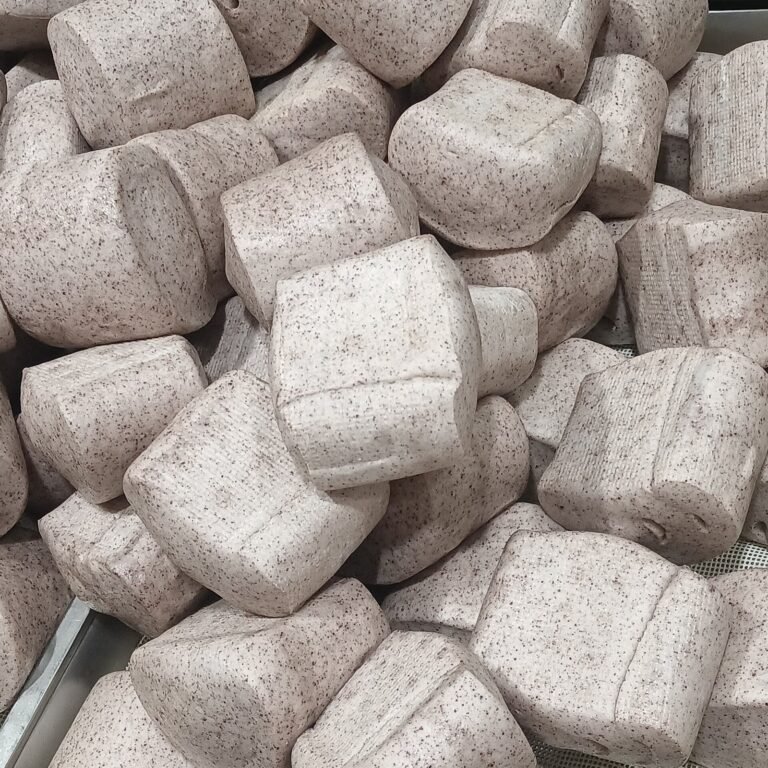
Spring onion and coriander finish it, plus chilli oil if you answered “a little” at the counter like I did. Sweet tooths will notice that Guilin breakfast stalls often sell Red Bean Bun explained alongside the noodle pot — a soft, sweet counterpoint to the salty, sour bowl, and a very real breakfast pairing if you’re feeding people who don’t do savoury mornings.
Mixing It Like a Local: Dry First, Soup If You Must
The default order is dry-mixed (拌粉): the ladle of lu shui moistens the noodles, nothing more, and every bite carries toppings. The soup version (汤粉) adds hot broth and reads closer to a conventional noodle soup, but locals mostly take the dry bowl, work through it, then finish with a small complimentary cup of bone broth from the counter to wash it down. That little cup is one of the nicer rituals in Chinese street food, and it costs the shop nothing.
At home I’d say learn the dry version first. It’s more forgiving — if your lu shui is strong, a dry bowl stays balanced, while a soup version exposes a weak stock instantly. If you want to compare philosophies of topping-heavy noodles, how yangzhou fried rice is really done makes the same argument in rice form: the carrier should never drown the goods. And the dry-mix approach isn’t unique to Guangxi, either — Dan Dan Noodles build their entire flavour on a sauce pooled at the bottom of the bowl, with the eater doing the mixing.
One warning from my own kitchen: don’t overload the bowl with lu shui. It’s a dressing, and 2–3 tablespoons per bowl is plenty. My first attempt tasted like dipping noodles in a brine tank. Second attempt, I cut it to two tablespoons and added an extra scatter of sour beans instead — the sourness fixed what the salt couldn’t.
If you’re heading to Guangxi itself, the city side of eating your way through Guilin is covered elsewhere on this site; this bowl, though, is reproducible in any kitchen with a spice shelf.
Frequently Asked Questions
Are Guilin rice noodles served hot or cold? Hot, generally. The noodles are blanched or held in warm water, the lu shui dressing is warm, and the optional soup is hot. The toppings sit at room temperature, so the final bowl is warm rather than steaming — part of why it eats so fast.
What’s the difference between Guilin rice noodles and other southern rice noodle dishes? The dressing. Guilin’s bowl is defined by spiced braising marinade and pickled beans, mixed dry by default. Yunnan’s guoqiao mixian, by contrast, is a hot clear broth with raw ingredients cooked tableside. Same raw material — rice noodles — completely different architecture.
Can I make the pickled long beans at home? Yes: salt chopped long beans at 2% of their weight, pack them in a jar, and leave them at room temperature for 3–5 days in warm weather until sour. Or skip straight to vacuum-packed suandoujiao from a Chinese grocer, rinsed and chopped. Either way, they’re non-negotiable in this bowl.
Is the lu shui reusable? It improves for two or three braise cycles. Strain it, bring it back to a boil after each use, top up with water and a splash of soy, and refrigerate between uses. Discard it once the spice fragrance fades or the liquid turns cloudy.
Why do my fried soybeans go soft overnight? Almost always moisture — either the beans weren’t dried fully before frying or they were stored warm. Cool them completely on paper towel, store in a sealed jar with the lid off until cold, and they’ll hold their crunch for a couple of weeks.
How spicy is a typical Guilin bowl? Mild by Sichuan standards. Chilli oil is optional and usually self-served from a jar on the counter. The dominant notes are salty, savoury and sour; the heat, when there is any, is a finishing accent rather than the point.