Nanjing Food Guide: Duck Capital
Fact-checked and reviewed 31 October 2026 · China Food Way editorial team
Why Nanjing Is the Duck Capital of China
The first thing a Nanjing cook will tell you is that this is not a subtle city. The second thing, usually delivered while slicing a plate of cold salted duck, is that every part of the bird gets used — meat, skin, bones, blood, even the neck, deep-fried and eaten as a snack while you wait for something else. Nanjing eats more duck per person than anywhere else in China, and unlike the roast duck traditions that were polished for imperial tables further north, this is everyday food. It is sold in plastic tubs from shopfronts with fluorescent lights, wrapped in paper, and carried home on the back of a scooter.
I came here expecting the famous roast duck reputation to dominate and found almost the opposite. Roast versions exist, but the default is the quiet one: salted duck, pale pink-grey, glistening, sliced thin across the grain and served cold. There is no sauce beyond a little of the briny liquid from the pot. Centre the whole experiences around restraint, and Nanjing rewards you generously.
A practical note before anything else: this is a city where the best food often closes by eight in the evening. Noodle shops and duck windows open early — six in the morning is normal — and they close when they sell out. Plan Nanjing meals around lunch. A late dinner here will push you toward chain restaurants and shopping-mall floors, which is a waste of a very good food city.
How do I choose a good salted duck in Nanjing?
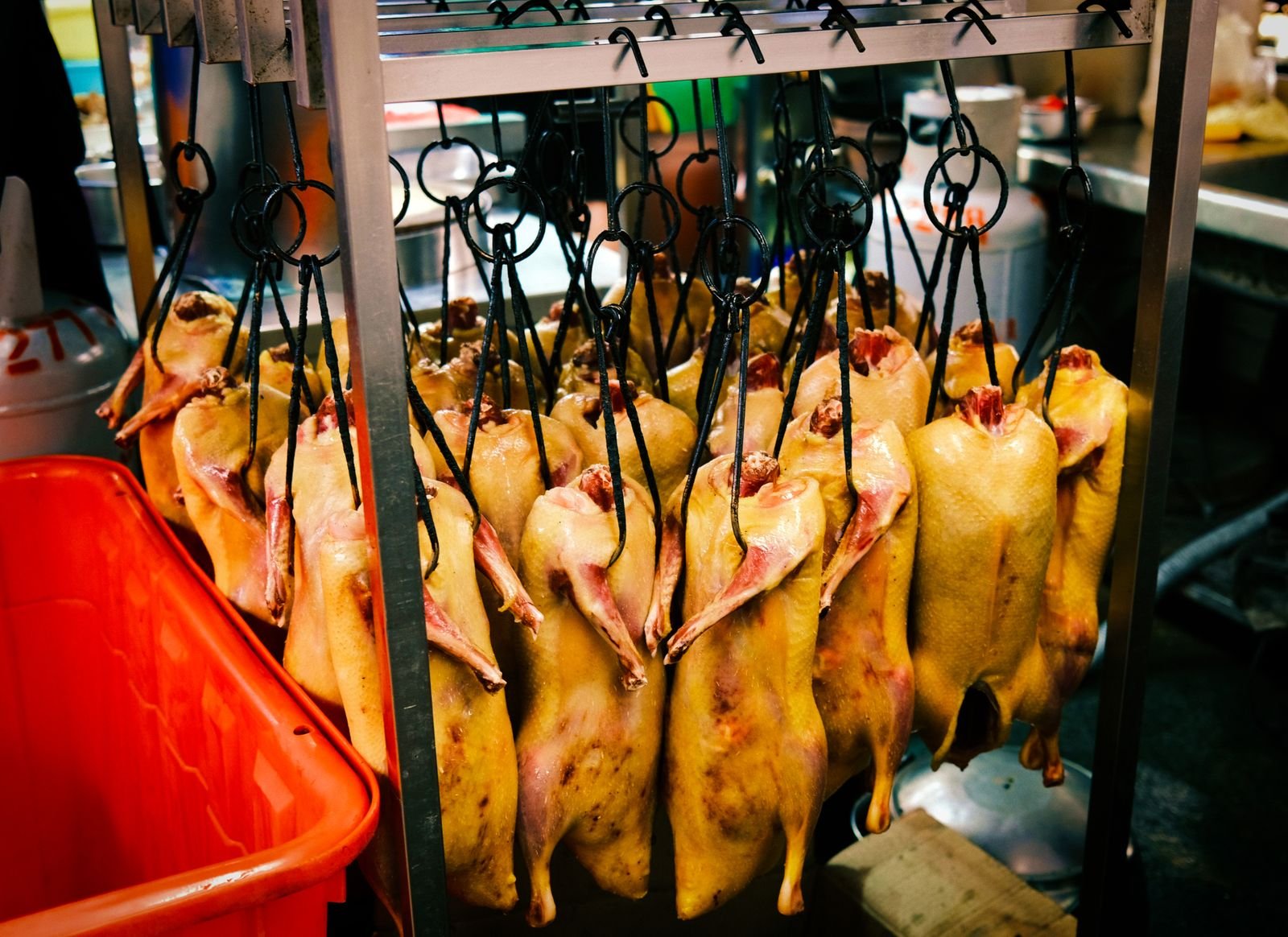
Choose a salted duck by the skin and the scent: it should be ivory, slightly shrunk from a proper brining, and smell of ginger and star anise rather than anything sharp or chemical. The bird is dry-cured or brined, then poached gently and chilled before slicing, and the best versions keep the breast moist and the skin intact. Avoid any duck with yellow, waxy skin or a dye sheen — that is a sign of shortcuts. The honest method is to buy from a shopfront that sells out daily, where the turnover guarantees freshness. A practical note — eat it at room temperature, not fridge-cold, because the chill dulls the fat; a few slices with plain rice is the local way, and the briny liquid from the pot is the only sauce you need.
Salted Duck: The Dish You Actually Came For
Nanjing salted duck (盐水鸭, yan shui ya) is a study in controlling salt. The bird is dry-cured or brined, then poached gently in a stock that already holds ginger, scallion and star anise. It is cooked slowly enough that the skin stays intact and the breast stays moist, then chilled before slicing. Chilling matters: warm salted duck is flabby, and the texture is half the pleasure.
What you are looking for when you buy it:
| Sign | What it tells you |
|---|---|
| Skin slightly shrunk, ivory not yellow | Properly brined and rested, not dyed or roasted |
| Meat pale pink, not grey-brown | Fresh; oxidised duck turns dull within hours |
| Jelly visible at the joint | Cooked gently; collagen held rather than boiled away |
| Salt on the edge of too much, then not | The classic Nanjing balance — it should read as savoury, never saline |
How to eat it the way locals do. Buy a quarter or half bird — hindquarters cost more and are worth it — ask them to chop it (they will ask anyway), and eat it standing or sitting with a bowl of plain rice or congee. Some shops offer a sachet of the poaching liquid to pour over. Take it. There is also a proper gravy version sold alongside: a light brown broth made from the duck stock, used to moisten rice. If you are given the choice between the two, order both, because they taste nothing alike.
Price expectations help avoid tourist inflation. A quarter bird from a good neighbourhood shop should cost roughly the same as a mid-range sandwich back home; half a bird is a generous meal for two with rice and a vegetable. Anything that looks restaurant-priced in a shopfront with no queue is probably aimed at visitors.
What is in Nanjing duck blood and vermicelli soup?
The soup is built on a clear duck broth poured over blocks of set duck blood, slippery vermicelli, a few shreds of duck offal or pressed tofu, and a scatter of coriander and chilli oil. The duck blood is gently poached so it sets into a soft, quivering cube that holds the broth without turning grainy — the texture is the whole point. It is a street breakfast and a late supper, eaten from a bowl with a plastic spoon, and it costs a few yuan from a lane stall. The honest note is that good versions use real duck stock; tourist spots thicken it with powder and the blood turns rubbery. A practical tip — look for a stall with a simmering cauldron and a quick turnover, and ask for extra coriander and a little less oil if the chilli runs hot for you.
Duck Blood and Vermicelli Soup
The dish outsiders flinch at first and then order again is 鸭血粉丝汤 (ya xue fen si tang) — duck blood and vermicelli soup. The blood arrives set into soft, dark cubes with the texture of very silken tofu, mild and mineral, closer to a savoury custard than anything gamy. In the bowl it comes with sweet potato vermicelli, bits of duck meat and offal, fried tofu puffs, coriander, and a white pepper heat that builds slowly.
Ordering strategy: ask for the plain version first. Many shops will offer add-ons — intestine, gizzard, liver — and while each is good, a bowl crowded with offal obscures the thing worth tasting, which is the broth. Pepper is the dominant note; if you are sensitive to heat, say so, because Nanjing vendors tend to be liberal with it.
The best version I had was in a small shop near a school, at eleven in the morning, where the man serving was ladling from a pot that had clearly been going since dawn. This is a breakfast and lunch dish. Ordering it at nine at night means warmed-up leftovers.
Is the Confucius Temple area worth eating in, or just for show?
The Confucius Temple area is worth a walk but the food is mostly for show, because the Qinhuai snack stalls there are priced for visitors and the recipes are softened for out-of-town palates. The real value is the spectacle — the lantern-lit canal, the old buildings, and a bite of the classic eight snacks on a stick — but a proper salted duck or a bowl of duck-blood soup tastes better a few streets away. The honest move is to treat the temple quarter as a sampler: try one or two small items, then eat your main meal in the residential lanes. A practical note — the enclosed snack street charges a premium for the same cakes sold cheaper near the universities, so go for the atmosphere and a single curious bite rather than a full dinner on the canal.
Qinhuai Snacks and the Confucius Temple Area
The Qinhuai River district around the Confucius Temple (夫子庙, Fuzimiao) is where most visitors funnel, and it deserves a measured verdict. It is genuinely pretty at night, the lantern boats are worth seeing once, and yes, a good deal of the food aimed directly at it is mediocre. The trick is to know which few items are legitimately local and to eat elsewhere for everything else.
Worth eating there:
- Glutinous rice lotus root. Sticky rice pressed into lotus root holes, steamed, sliced to show the pattern, and drizzled with sweet osmanthus syrup. Sold warm from steaming trays, and it travels well.
- Fried stinky tofu. The Nanjing version is crisp-edged with a soft centre and served with a chilli-and-garlic water rather than a thick sauce. Smell it before you commit; that is part of the ritual and locals do it too.
- Duck oil sesame cakes. Flaky discs baked with duck fat instead of lard, nutty and rich. Ask for them fresh from the oven — the tray rotation is fast, and you can time your purchase.
- Tangyuan. Glutinous rice balls in a light sweet broth, usually sesame or red bean. They belong to the same broad family as the ones covered in my tangyuan notes, though the Nanjing fillings lean sweeter.
Skip the pre-packaged gift boxes, the skewers of unidentified meat, and anything with a photograph larger than the portion. Walk ten minutes away from the water before eating anything substantial.
What noodle breakfast do locals actually eat in Nanjing lanes?
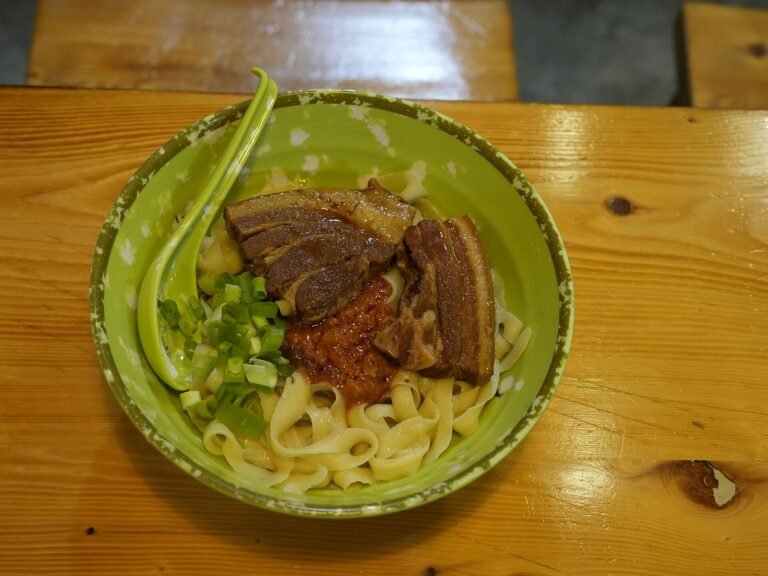
Locals eat a bowl of thin wheat noodles in a clear, savoury broth — often with a braised pork topping or a soft-boiled egg — grabbed at a lane stall on the way to work, not the tourist duck dishes. The breakfast noodle is fast, cheap and eaten standing, and the broth is the quiet cousin of the duck soups: pork-boned, lightly seasoned, never chilli-forward. The honest staple is the xiao guo mian, a small bowl of mixed toppings, which regulars order by habit and the cook assembles without asking. A practical note — the good stalls open at six and sell out before ten, so timing matters more than choice. Skip the bright franchises on the main roads; the unmarked shutter with a queue of commuters is where the broth is made that morning.
Nanjing Noodles and Breakfast in the Lane
Nanjing breakfast belongs to the broader eastern tradition outlined in my Huaiyang cuisine notes — light stocks, restrained seasoning, a preference for the natural flavour of the ingredient over heavy spicing — but with more wheat than you would find further south in Suzhou. Noodle shops open absurdly early and work through the morning.
The default order is a bowl of noodles in a light soy-based broth with a topping chosen from a board. Common choices include:
- Duck leg noodles. The house standard, a whole braised leg sitting on top of thin wheat noodles.
- Three-delicacies. Usually shredded chicken, ham and bamboo shoot in a clear broth.
- Salted duck noodles. Chilled duck slices laid on hot noodles, which warms the meat without cooking it further.
Noodles here are thinner than Lanzhou or northern styles and arrive softer; if you prefer firmer noodles, say “hard noodles” and the cook will pull them earlier. Condiments on the table vary by shop but generally include vinegar, chilli oil and pickled garlic. Use the vinegar — it is doing structural work on a rich bowl, and the logic of acidity is the same one I describe in my Chinese black vinegar guide.
Practical Eating Strategy for Two to Three Days
| Meal | What to eat | Why here |
|---|---|---|
| Day 1 breakfast | Duck blood vermicelli soup, sesame cake | The most characteristically Nanjing meal exists before noon |
| Day 1 lunch | Salted duck quarter with rice, plain greens | Shopfront duck is at its freshest between 11:00 and 13:00 |
| Day 1 evening | Noodles, then Confucius Temple for lanterns and snacks | Duck shops close early; evening belongs to atmosphere |
| Day 2 lunch | Braised duck leg noodles, pickled vegetables | Leftover broth is deepest on the second day |
| Day 2 dinner | Huaiyang-style restaurant, river shrimp and lion’s head meatballs | Nanjing sits at the western end of that cooking tradition |
The one thing visitors consistently get wrong is pacing. Nanjing portions are modest by northern standards, and the best strategy is four or five small eatings a day rather than three large ones. Keep a mental map of where the good duck windows are relative to the sights you are visiting — you will pass several, and unlike Sichuan or Hunan itineraries where every meal is a production, here the reward is a fifteen-minute stop that costs very little.
Dietary restrictions: soy and gluten appear in almost everything, including the broths. Salted duck itself is naturally gluten-free as served, since the cure is salt and spice, but the poaching liquid at some shops contains soy sauce. Ask, and order the duck plain if you need certainty. Vegetarians should note that even vegetable dishes are frequently finished with duck fat — the abundant use of animal fat in green vegetable cooking is standard eastern practice, and asking for oil instead is reasonable but needs to be said explicitly.
Frequently Asked Questions
What is Nanjing best known for food-wise?
Duck, in several forms at once. Salted duck is the everyday standard, duck blood and vermicelli soup is the signature breakfast, and roast duck exists as a variation rather than the headline.
Is Nanjing food spicy?
No. Compared with the cooking covered in my eight great cuisines overview it is restrained, leaning on salt, ginger, star anise and white pepper. Chilli appears as a table condiment, not a base note.
How much should a good Nanjing meal cost?
Very little by the standards of a capital city. A substantial noodle breakfast runs to a couple of dollars-equivalent; a shared restaurant dinner with several dishes is modest. Prices near the Confucius Temple waterfront are the notable exception.
Can I visit Nanjing as a day trip from Shanghai?
Yes — high-speed rail makes it straightforward — but you will eat better if you stay overnight, because the best food happens early in the morning and the strongest duck shops sell out by afternoon.
What should I bring home?
Vacuum-packed salted duck travels well and is sold everywhere, including at the railway station. Buy it on your last day, keep it chilled if your journey is long, and check your home country’s rules on bringing meat products in before you do so.
Ready to plan a food-focused trip through eastern China? Get in touch through our contact page and tell us what you want to eat.