Things to Do in Qinhuangdao, and the Ones Locals Actually Recommend
Four numbers sum up Qinhuangdao better than any brochure. Roughly 300 kilometres from Beijing, a coastline that runs for more than 20 kilometres inside the city, a Great Wall that walks into the sea at one end, and a beach district that fills to bursting for about six weeks every summer. None of that prepared me for the shape of the place. I arrived expecting a single seaside town and found a cluster of separate settlements, each with its own rhythm and its own idea of what a holiday should be.
I’ve been three times: once in a humid August that taught me why locals vanish at noon, once in a windy October that I’d recommend to anyone, and once in a low-season February when the wall at Shanhaiguan was almost empty. The order below is the one I use myself now, and it starts well away from the water.
Begin at the Pass, Not the Beach
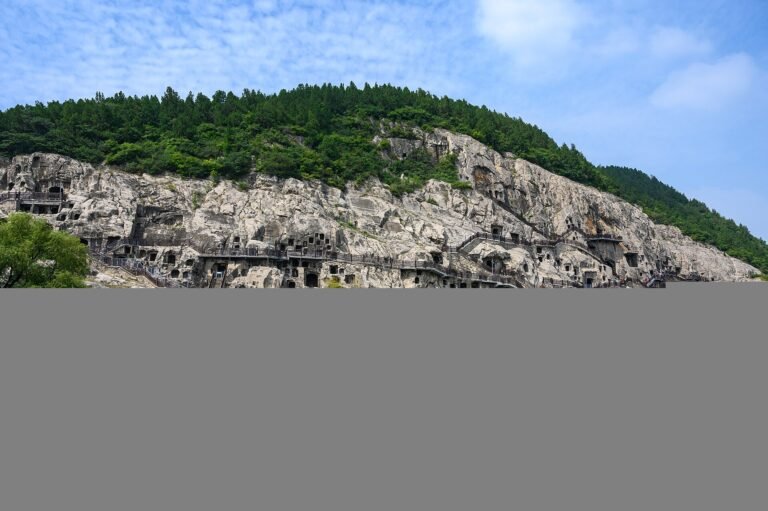
Most visitors step off the train and head straight for the sand. I did that on my first trip and wasted a morning. The place makes far more sense if you start inland, at Shanhaiguan — the “Mountain-Sea Pass” — where the Ming Great Wall turns toward the Bohai coast. This is the eastern end of the walled line, and the great gate known as the First Pass Under Heaven still carries a plaque attributed to a Ming calligrapher. Stand on the ramparts at eight and the reason for the site becomes obvious: mountains to the north, sea to the south, and a narrow strip of flat ground in between that any army had to cross.
Wikipedia’s entry on Qinhuangdao confirms that the city takes its name from Qin Shi Huang, the first emperor, said to have come here in search of an elixir of immortality. The story is almost certainly softer than the politics, but it colours the coast. Where Beijing is about imperial ceremony, this is about imperial longing — a windier, plainer cousin with much better fish.
Out to Old Dragon’s Head
From the gate it is a short taxi ride, or a walk of twenty minutes if you keep to the quiet roads, to Laolongtou — Old Dragon’s Head — where a rebuilt stretch of wall runs straight into the water. This is the photograph people come for, and at sunrise it earns the hype. The stones are wet, the tide slaps the base, and the battlements simply stop, as though the builders gave up caring where the land ended. Fees and opening hours shift with the season, so check the official site before you go.
I’ve watched that same view in July, when a souvenir seller had claimed the best corner, and in February, when the only other person there was a man photographing ice. The wall does not change; the hour and the month do. Take the early start if you can manage it.
The climate here is gentler than people expect of northern China. Set against Changchun further north-east, Qinhuangdao’s winter is a blustery, damp affair rather than a deep freeze, and the sea takes the edge off the extremes. That said, the wind coming off the Bohai in January finds every gap in a coat, and I learned to carry an extra layer even on days that looked mild.
The Lanes Behind the Gate
The old town inside Shanhaiguan is small enough to cross in fifteen minutes, which is exactly why most people miss it. I prefer the lanes behind the main tourist street, where the houses sit low and grey and the shops sell things to residents rather than to cameras. There is a small museum devoted to the legend of Mengjiangnu, whose tears are said to have brought down a section of the wall; it is a melancholy tale handled with surprising restraint.
Food is the reason to linger. A bowl of hand-pulled noodles in seafood broth cost me around RMB 25 to 35 in the places I used, while a plate of grilled squid from a street stall was closer to RMB 15. A port city makes people practical about fish: it is sold by weight, and the vendor will usually tell you plainly which catch came in that morning. If you want the wider habit of late-night eating in Chinese cities explained, my all about changsha notes set the scene; the version here is quieter, with plastic stools outside and the harbour lights behind them.
Beidaihe, and the Summer I Got Wrong
Beidaihe is the part of Qinhuangdao that appears in old photographs of leaders on holiday, and it remains a proper resort: a broad beach, villas set back among trees, and a promenade that fills after seven in the evening. My first visit fell in mid-August, and I made the classic mistake of assuming a beach town would empty out after dinner. It does not. Families stay until ten, traffic knots at the main junction, and the hotel I had booked without checking its address turned out to be a twenty-minute walk from anywhere useful.
What I would tell a friend: come in September. The sea is still warm enough to swim, the crowds have thinned sharply, and the light is softer on the villas. July and August suit people who enjoy company; September suits people who want the place to themselves. Room rates in peak weeks can run to two or three times the quiet-season price, so either book early or avoid those weeks. Check the official site before you go for beach opening dates and lifeguard cover, both of which vary with the weather.
Aranya and the Library on the Sand
The surprise of the region is Aranya, a coastal development in Changli county roughly 40 kilometres west of the city centre. It began as a holiday community for people from the capital and has grown into something odder: a pale concrete chapel on the beach, a bookshop with a whole glass wall facing the waves, and an arts programme that pulls in visitors who would never call themselves resort guests. I went sceptical and stayed the afternoon.
The library is the real draw. It is a working bookshop rather than a photo set, and late afternoon is the hour to go, when the light comes in low and the readers outnumber the photographers. Access rules have shifted over the years — guests of the development’s hotels have had priority at some points, with limited day visits for others — so check the official site before you go. The Chengde Travel Guide covers another place built to escape a capital’s heat; Aranya is the modern, salt-air answer to the same old instinct.
Getting There and Moving Around
The high-speed line from the capital reaches Qinhuangdao in around two hours, and there are direct services from several other northern cities. The main station sits close enough to the sea that a taxi gets you to a central hotel in ten minutes, which is a pleasant surprise after the long walk out of so many Chinese stations. Within the city, taxis and ride-hailing apps do most of the work. Buses exist, but the intervals stretch out badly once you leave the built-up districts.
Distances matter more than they look on a map. Shanhaiguan, Beidaihe and Aranya are separate stops rather than neighbourhoods, and a day “in Qinhuangdao” usually means choosing one of them. A car helps if you want all three inside forty-eight hours, though parking near the beach in August becomes its own small contest. Travellers who thrive on dense, vertical cities may find this spread unsettling; everything you need to know about chongqing is a useful counterpoint, a place that stacks upward instead of spreading along a shore.
The Order I Would Actually Use
Here is the sequence I now recommend, with the reason for each stop in the order I make it. It is deliberately front-loaded: the historic wall first, the beach later, the modern experiment last.
| Order | Stop | Why this position | What I would skip |
|---|---|---|---|
| 1 | Shanhaiguan gate | Quiet at opening; the ramparts explain the whole region | The souvenir arcade by the car park |
| 2 | Old Dragon’s Head | Best light at sunrise; walk from the gate if you can | Midday, when the tour groups arrive |
| 3 | Old town lanes | Lunch and the Mengjiangnu museum, unhurried | The themed photo props on the main street |
| 4 | Beidaihe | Evening promenade once the heat breaks | A peak-week hotel with an unchecked address |
| 5 | Aranya | Late-afternoon library and the chapel | The drive out if you only have one day |
If time is short, stops one to three fit into a single day on foot and by taxi. Beidaihe deserves an evening of its own, and Aranya only makes sense with a half-day to spare. And if what you really want is a city where every meal feels like an event, a proper take on chengdu is the opposite of this coast — inland, humid and gloriously noisy — and worth pairing with a northern beach rather than substituted for it.
Frequently Asked Questions
How many days do I need in Qinhuangdao? Two full days cover the wall, the old lanes and one evening in Beidaihe. Add a third for Aranya and a slower morning at the gate. A long weekend works better than a single day trip from the capital.
Is Old Dragon’s Head worth the early start? Yes, if the photograph matters to you. At sunrise the wall is wet and almost empty; by ten in summer the same spot is lined with tour groups. The walk from Shanhaiguan takes about twenty minutes and passes through the quieter part of town.
When is the best time to visit? September and October are my pick: warm sea, thin crowds, clear light. July and August are hot, busy and expensive. February is stark but wonderfully empty, provided you dress for the wind.
Can I reach the Great Wall’s eastern end without a tour? Easily. Take the train to Shanhaiguan, then a taxi or the local bus to Laolongtou. Check the official site before you go for current opening hours and ticket arrangements, which change between the beach season and winter.
Is Beidaihe still worth visiting? For the promenade, the old villas and a genuine slice of Chinese holiday culture, yes. Go in the evening and do not expect a quiet beach in August. Manage the crowd expectations and it rewards an evening.
How do I get to Aranya from the city centre? It is roughly 40 kilometres by road, so a taxi or ride-hailing car is simplest; allow the best part of an hour. Access conditions for non-guests have changed before, so check the official site before you set out.