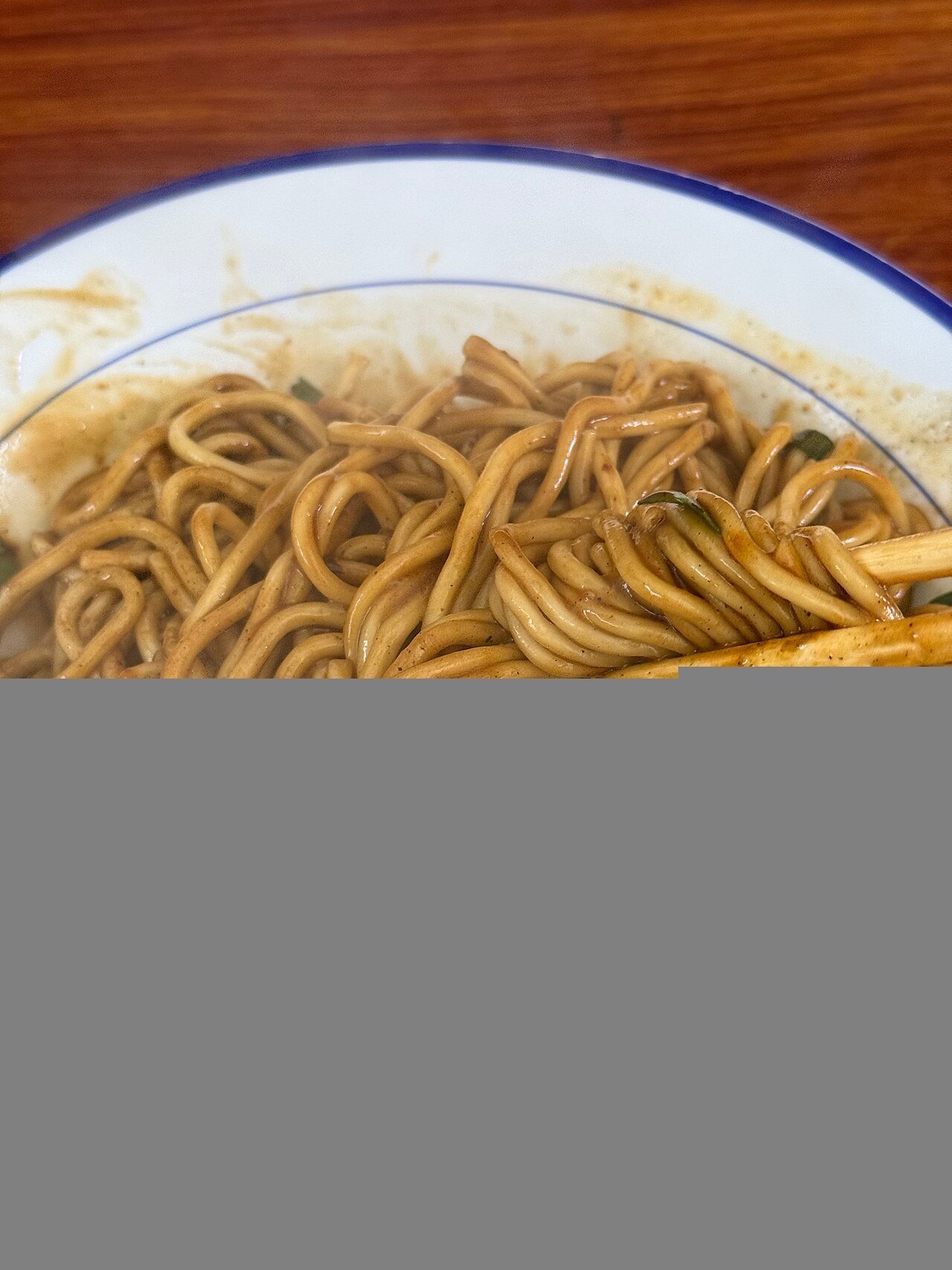
Reganmian: Wuhan’s Hot Dry Noodles with Sesame Paste
The first time I ate reganmian properly — not from a hotel buffet, but from a proper neighbourhood stall in Wuchang at twenty to seven on a Tuesday morning — I nearly lost my place in the queue by hesitating. The woman behind the counter had no patience for dithering. Noodles into a wire basket, into boiling water, out again, into a paper bowl; sauce flicked over them with what looked like five different ladles in four seconds; bowl shoved at me, next order already under way. That speed is not theatre. It is the architecture of the dish, and the name — Reganmian translates literally as “hot dry noodles” — tells you why. There is no broth to hide behind. Everything must be right, and fast.
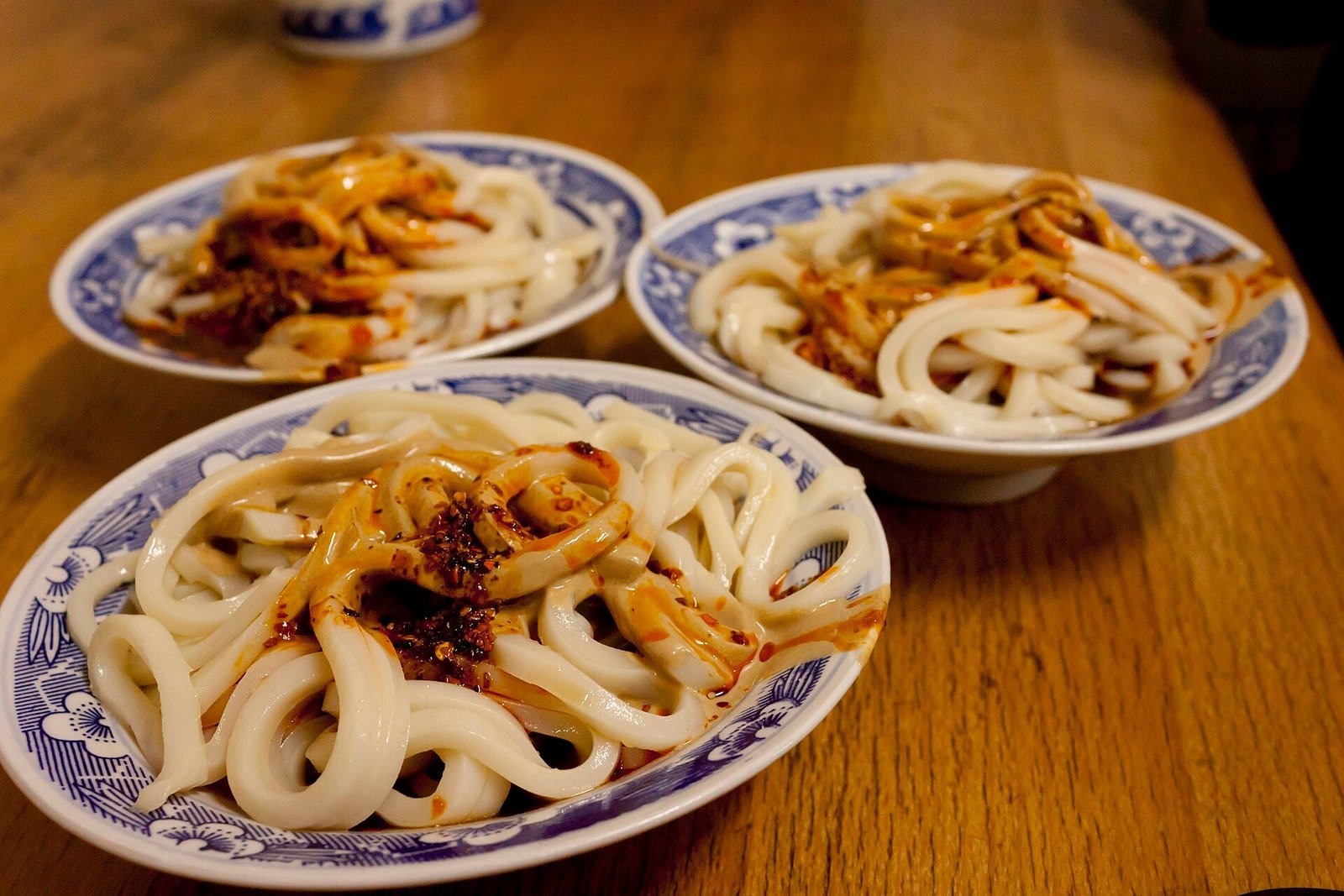
I spent a long winter trying to recreate that bowl at home and failed, embarrassingly, several times. What follows is the recipe I wish I’d had at the start, deconstructed ingredient by ingredient, because each component has one specific job and the dish collapses if any of them is done casually.
The noodles: why they must be alkaline
This is the part most recipes hand-wave, and it’s the part that matters most. Reganmian noodles are made with jian shui — alkaline water, usually potassium carbonate — worked into the dough. The alkali does two things: it gives the noodles their faintly eggy, yellow colour (often no egg at all, despite what people assume) and, more importantly, it changes how the wheat proteins behave. Alkaline noodles are firm, springy and slightly slippery, so they survive blanching, draining, tossing and carrying without turning to mush.
If you can buy fresh alkaline noodles — from a Chinese grocer, sometimes labelled “Shanghai-style” or “Wuhan hot dry noodles” — use them. If you can’t, two realistic options.
Option one: bicarbonate bake. Spread plain baking soda on a lined tray and bake at 120°C fan for an hour. This converts some of it into sodium carbonate, a stronger alkali, which is a decent stand-in for jian shui. Dissolve 2 grams of the baked soda in 150 ml of water per 300 grams of plain flour, knead into a stiff dough, rest it thirty minutes, then roll and cut. It’s fiddly, but it works.
Option two: buy decent dried alkaline noodles (the kind sold for dan dan noodles) and accept a 70 per cent result. Do not substitute ordinary Italian pasta or fresh egg noodles — I tried both; pasta has no alkalinity or spring, egg noodles go limp in ninety seconds, and both produced bowls I ate anyway, at eleven at night, quietly disappointed in myself.
The sesame paste problem
Here is where most Western versions go wrong, and it’s almost never the cook’s fault — it’s the jar of paste. Chinese sesame paste (zhi ma jiang) is made from toasted sesame seeds, so it’s dark, bitter-edged and intensely nutty. Tahini, the Levantine paste most supermarkets stock, is made from hulled, often unroasted seeds: paler, sweeter, thinner. Diluted with water, as some recipes suggest, tahini makes a sad health-food dressing. I’ve done it. Don’t.
If you can get real Chinese sesame paste, use it, and thin it with sesame oil first, then light soy — plain water alone seizes the paste into grey gravel. My working ratio is 60 grams of paste loosened with 2 tablespoons of toasted sesame oil and 1 tablespoon of light soy, whisked until it pours slowly off the spoon in a ribbon. For brands, toasting and the white-versus-black question, see Chinese Sesame Paste explained.
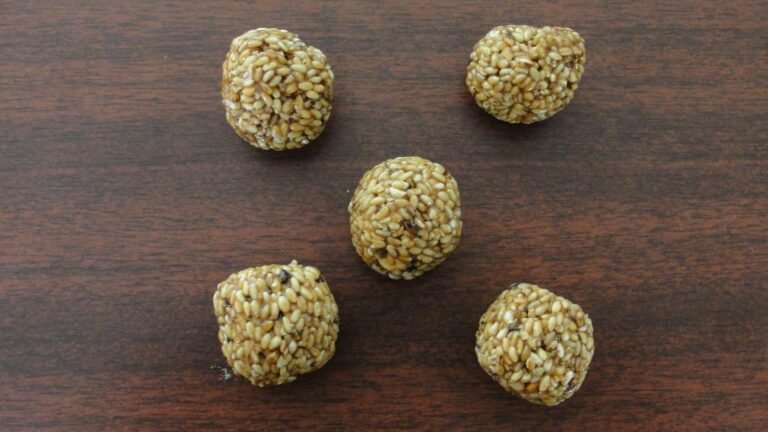
In an emergency — I have had this emergency — blitz 100 grams of toasted sesame seeds in a food processor with 1 tablespoon of neutral oil until it turns liquid: four minutes, rougher, but honest. (Sesame seeds also anchor desserts, the sweet end of the same seed — see everything you need to know about chinese sesame balls.)
The sauce bowl: doubanjiang, chilli oil and the supporting cast
A Wuhan vendor’s station holds five or six liquids and pastes, and the ratio is muscle memory. Rebuilding it at home, I landed on this, per serving:
| Component | Amount | Job in the bowl |
|---|---|---|
| Sesame paste (thinned as above) | 60 g | Body, nuttiness, the coat |
| Chilli oil, mostly sediment | 2 tsp | Heat and colour |
| Fermented broad bean paste (doubanjiang) | 1 tsp, mashed | Salty fermented depth |
| Light soy sauce | 1 tbsp | Salt and savouriness |
| Dark soy sauce | ½ tsp | Colour |
| Garlic water | 1 tbsp | Sharpness without raw chunks |
| Black vinegar | ½ tsp | A whisper of acid |
The doubanjiang-to-chilli-oil ratio is worth fussing over. Chilli oil alone is heat with no floor to it; doubanjiang alone is salty mud. Together, with the sesame paste mediating, you get the layered savouriness that makes people order a second bowl. Start at one teaspoon of doubanjiang to two of chilli oil and adjust after the first bowl; my taste drifted to nearer 1:3, which my sinuses noticed before I did.
The Sichuan cousin of this dish is how dan dan noodles is really done — related DNA, completely different temperament.
The toppings: pickled long beans and minced pork
Two toppings do almost all the textural work. Skippable at your peril.
Suan dou jiao (pickled long beans). These are the sour, crunchy, slightly funky chopped pickles that cut through the heavy sesame coat. Without them the bowl is a brick of nutty starch with no lift. In Wuhan they’re a house-made staple; in Britain I buy vacuum-packed ones from Chinese grocers, or in a true emergency substitute chopped dill pickles with a little rice vinegar. You need about 2 tablespoons per bowl. Sour pickled mustard greens work too, though the character shifts.
Minced pork. Traditional stalls often skip it; modern ones add a spoonful of crisp-fried minced pork with a hit of sweet bean sauce. Fry 100 grams of pork mince hard in a teaspoon of oil until the edges crisp, add 1 tablespoon of sweet bean sauce (tian mian jiang) and a splash of water, and cook to a crumbly dark mince, about four minutes. A spoonful per bowl.
Scallions go on last, always raw and generous. Some stalls scatter diced pickled radish too.
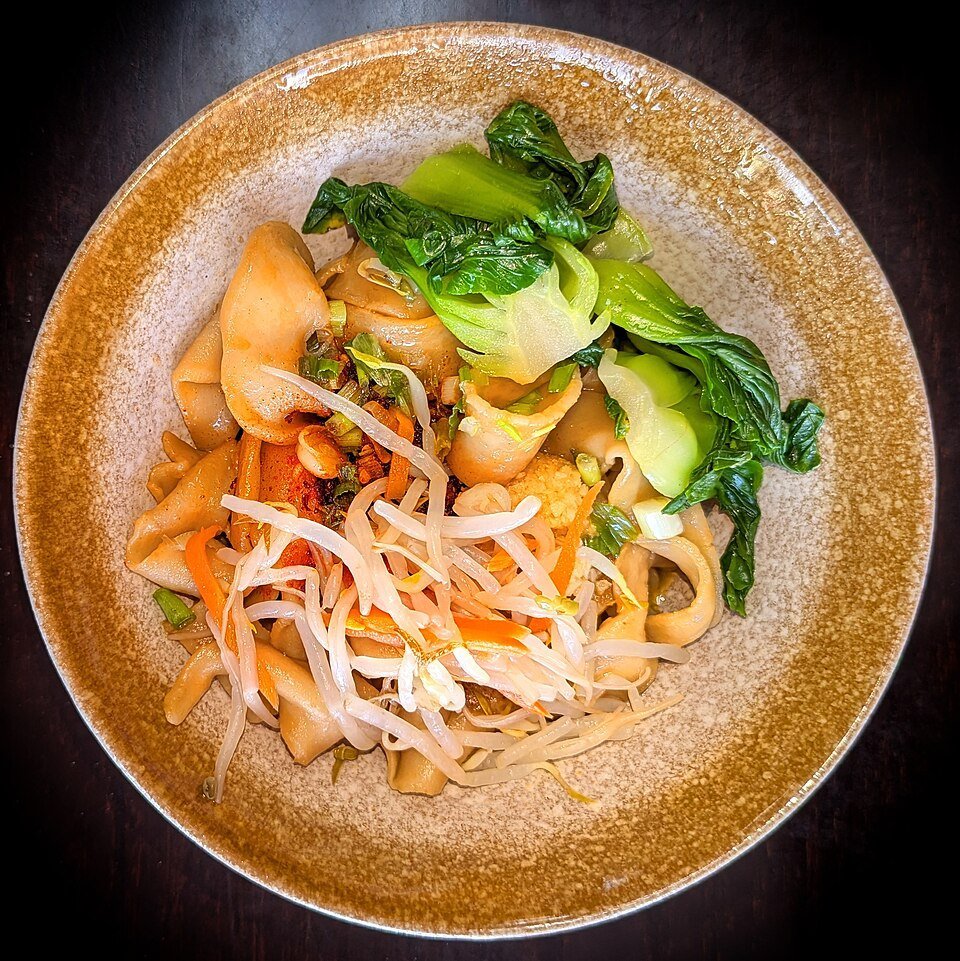
The method: blanch, drain, toss — the “dry” part
Now the technique that separates reganmian from every other sesame noodle you’ve had. The noodles are not boiled to order from raw. Vendors pre-boil big batches until just under done, toss them with oil, and spread them on trays to cool — the a-mian step. The chilled oiled noodles are dunked in boiling water for ten to twenty seconds to reheat, shaken violently dry, and sauced immediately.
At home, the practical version:
- Boil your alkaline noodles until they have barely lost their crunch — 90 seconds for fresh, 3 minutes for dried, tasting as you go.
- Drain, rinse briefly under cold water, then toss with 1 tablespoon of sesame oil per 300 grams of noodles so they don’t clump. Spread on a tray. (Do this the night before, which is exactly what vendors do.)
- When you want to eat: dunk the portioned noodles in freshly boiling water for 15 seconds, lift out, and shake the colander hard for a good ten seconds. Water clinging to the noodles is the enemy. The dish is called dry for a reason.
- Into the bowl with the sauce base, then toss. Not stir — toss, like tossing a salad, lifting from the bottom. You have maybe twenty seconds before the residual heat dulls the sauce’s gloss.
This is unusual if you know other Chinese noodle styles: all about chinese noodle styles covers the full family, from soup-heavy Lanzhou beef noodles to the oil-tossed Xi’an styles in all about biang biang noodles — reganmian sits closer to the latter in spirit despite being half a country away.
Vendor rhythm versus soup noodles
Soup noodle service is forgiving: the broth buffers temperature, dilutes minor sins, buys the cook time. Reganmian service is a metronome. Noodle, dunk, shake, sauce, toss, hand over — the vendor I watched that first Tuesday ran the whole cycle in under a minute and expected you to start eating immediately, standing up, most likely.
What this means in a home kitchen: everything must be mise en place before the water boils. Sauce base in the bowl, toppings chopped, scallions cut; the cooking itself is twenty seconds of dunking and ten of tossing. If you’re still grating garlic while your noodles cool, you’ll serve a gluey, lukewarm bowl and wonder why it doesn’t taste like Wuhan. I made this mistake four times before the lesson stuck.
And eat hot and fast, mixing continuously as you go — the sesame paste stiffens as the bowl cools, which is why locals who dawdle end up clumping through the last third. It’s also why a cold bowl can be revived with a ten-second re-dunk in boiling water. Nobody in Wuhan admits to doing this. I do it.
The full recipe at a glance
Serves 2. Fresh or dried alkaline noodles 300 g; Chinese sesame paste 120 g; toasted sesame oil 4 tbsp (plus 1 tbsp for the noodles); light soy 2 tbsp; dark soy 1 tsp; doubanjiang 2 tsp; chilli oil 4 tsp; garlic water 2 tbsp; black vinegar 1 tsp; pickled long beans 4 tbsp, chopped; fried minced pork (optional) 100 g raw; scallions 3, sliced; sugar ½ tsp.
Boil noodles under-done, rinse, toss with the 1 tbsp sesame oil, spread to cool. Whisk sesame paste with 3 tbsp of the sesame oil and 1 tbsp light soy until it ribbons. In two serving bowls: light soy, dark soy, doubanjiang, chilli oil, garlic water, vinegar, sugar. Re-dunk noodles 15 seconds, shake dry, divide, add a generous spoon of thinned sesame paste to each, toss hard for ten seconds. Top with pickled beans, pork, scallions. Eat immediately.
If you want a second dish with entirely different physics, Yangzhou Fried Rice — light, separate-grained — makes a good next cook. And when you’re ready to plan the real thing, Wuhan Food points you at the early-morning stalls worth queueing for.
Frequently Asked Questions
Can I make reganmian with tahini instead of Chinese sesame paste? You can, but expect a sweeter, thinner, paler bowl; Chinese sesame paste is made from roasted seeds and tastes far darker. Toast the tahini gently in a dry pan and thin it with sesame oil, not water — two-thirds of the way there at best.
Why do my sesame paste noodles go gluey and clumpy? Three usual culprits: water left on the noodles after the re-dunk, paste thinned with water alone (which splits it), or too slow a toss so the paste stiffens before it coats. Shake the colander properly and toss within twenty seconds.
Are the noodles actually made with egg? Usually not. The yellow tint comes from alkaline water reacting with the flour — the same reason egg-free alkaline noodles across China carry that colour.
How far ahead can I prepare the noodles? The night before is authentic — vendors cook and oil their noodles overnight; kept oiled on a tray in the fridge, they last happily until the next morning.
Is reganmian very spicy? The base sesame paste is not spicy; heat comes entirely from the chilli oil, which you dose yourself. A mild bowl with 1 teaspoon of chilli oil is completely normal, even in Wuhan.