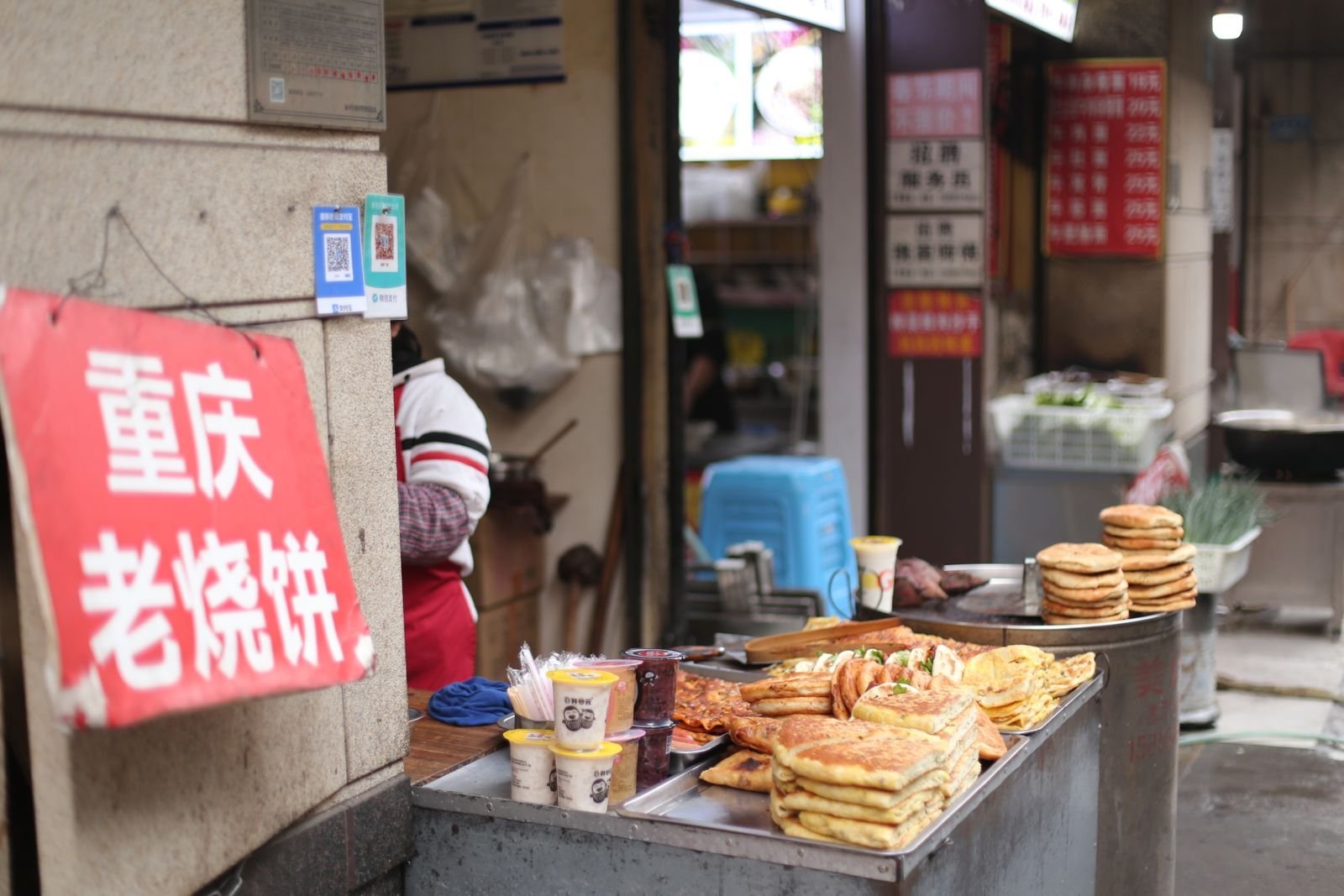
Shaobing: The Flaky Sesame Baked Flatbread
My first batch of shaobing came out of the oven looking like a tray of hockey pucks. I had done what most recipes written for Western kitchens tell you to do — treated the dough like bread, kneaded it into submission, and rolled it flat with a plain oil brush. No roux, no lamination, no layers. What I got was edible, crusty, and completely wrong: dense, chalky, the kind of thing you dunk out of politeness. It took three more batches, a conversation with a Hui baker in Xi’an that I mostly spent miming, and a change in how I thought about the dough, before a shaobing of mine finally shattered into flakes the way it’s supposed to.
Shaobing (shāobǐng, “baked bing”) is not bread, not a pancake, and not a stuffed bun. It’s a laminated flatbread — thin sheets of dough separated by a paste of flour and hot oil or lard — with a sesame-studded crust, and once you understand that it is closer to a rough cousin of puff pastry than to anything leavened, everything else about it falls into place.
What shaobing is, and what it isn’t
There are two broad families. The first is the layered, mostly unfilled kind: flat, flaky rounds, puffed here and there with steam pockets, usually plain or lightly scented with five spice or scallion. The second family is the filled round — a thicker disc wrapped around red bean paste, brown sugar, scallion, or minced meat, where the layers matter less because the filling does the talking. Both are baked, traditionally in a domed clay oven or a charcoal barrel, and both are breakfast and street food rather than dinner-party fare, though nobody will stop you.
Wikipedia’s entry on shaobing traces the bread back to the hu bing of the Han dynasty, sesame baked bread associated with traders from Central Asia. Two thousand years is a long time to refine one technique, and it shows: the classic version is a small masterclass in how to build tenderness into a lean dough.
It is not a scallion pancake. That gets confused constantly in English recipes, and the confusion ruined my first batches. Scallion pancakes are yeast-free, pan-fried in oil, and laminated with layers of fat brushed between folds — a different dough and a different finish entirely. Shaobing is a stiff dough, a smear of roux, a dry pan and an oven. Bing in general is a bigger family than people expect; if you want the full map, I’ve written all about chinese bread separately, because the range from steamed to baked goes further than most menus admit.
The dough: stiff, lean, and patient
Shaobing dough sits at roughly 55 to 60 per cent hydration — much lower than a yeasted bread, closer to a fresh pasta. It should feel firm and slightly dry, just shy of cracking. You can make it with or without a trace of yeast; the old bakeries use a tiny amount of old dough for flavour rather than lift, but at home I leave it out. Everything in this recipe is by weight, because measuring flour by cup is how dense flatbreads happen.
| Ingredient | Amount | Why it’s there |
|---|---|---|
| Plain (all-purpose) flour, plus extra for dusting | 300 g | The structure; nothing fancy needed |
| Warm water (around 40°C) | 175 g | Hydration at 58% — stiff, not dry |
| Salt | 3 g | Seasoning the base dough |
| Neutral oil (or melted lard) | 15 g | A little tenderness in the dough itself |
| For the roux: flour | 30 g | The layering paste body |
| For the roux: hot neutral oil or lard | 45 g | Hot fat, poured in, makes a spreadable paste |
| Water, for the sesame dip | 30 ml | Glue for the seeds |
| White sesame seeds | 60 g | The crust, generous — don’t stint |
Knead the dough four to five minutes until smooth, then rest it, covered, for at least thirty minutes at room temperature. The rest matters more here than in most doughs: a low-hydration dough fresh off the knead will fight the rolling pin and spring back, and if you push it you tear the layers you haven’t built yet. An hour is better. Two is best. This is a good thing to make on a weekend afternoon while doing other things.
The roux layer: where the flakes come from
Here is the whole trick. Heat the 45 g of oil until it shimmers, pour it over the 30 g of flour with a small pinch of salt, and stir to a thick, glossy paste — like smooth peanut butter, slightly looser if your kitchen is cold. This paste is your lamination. Rolled between the layers of dough and exposed to heat, the flour in it cooks and the water in the dough turns to steam, and the two separate into sheets. No paste, no flakes. Full stop.
To assemble: roll the rested dough into a rectangle roughly 30 by 40 centimetres, thin enough that it’s almost translucent. Spread the roux in an even film, right to the edges — a palette knife or the back of a spoon both work, and if the paste tears the dough, you’ve rolled too thin or the paste is too stiff. Then roll the whole thing up into a tight log, coil the log into a spiral, flatten the coil, and roll it out again to about 1.5 centimetres thick. That second rolling is where the layers multiply: you’re folding dozens of dough-and-paste sheets back on themselves.
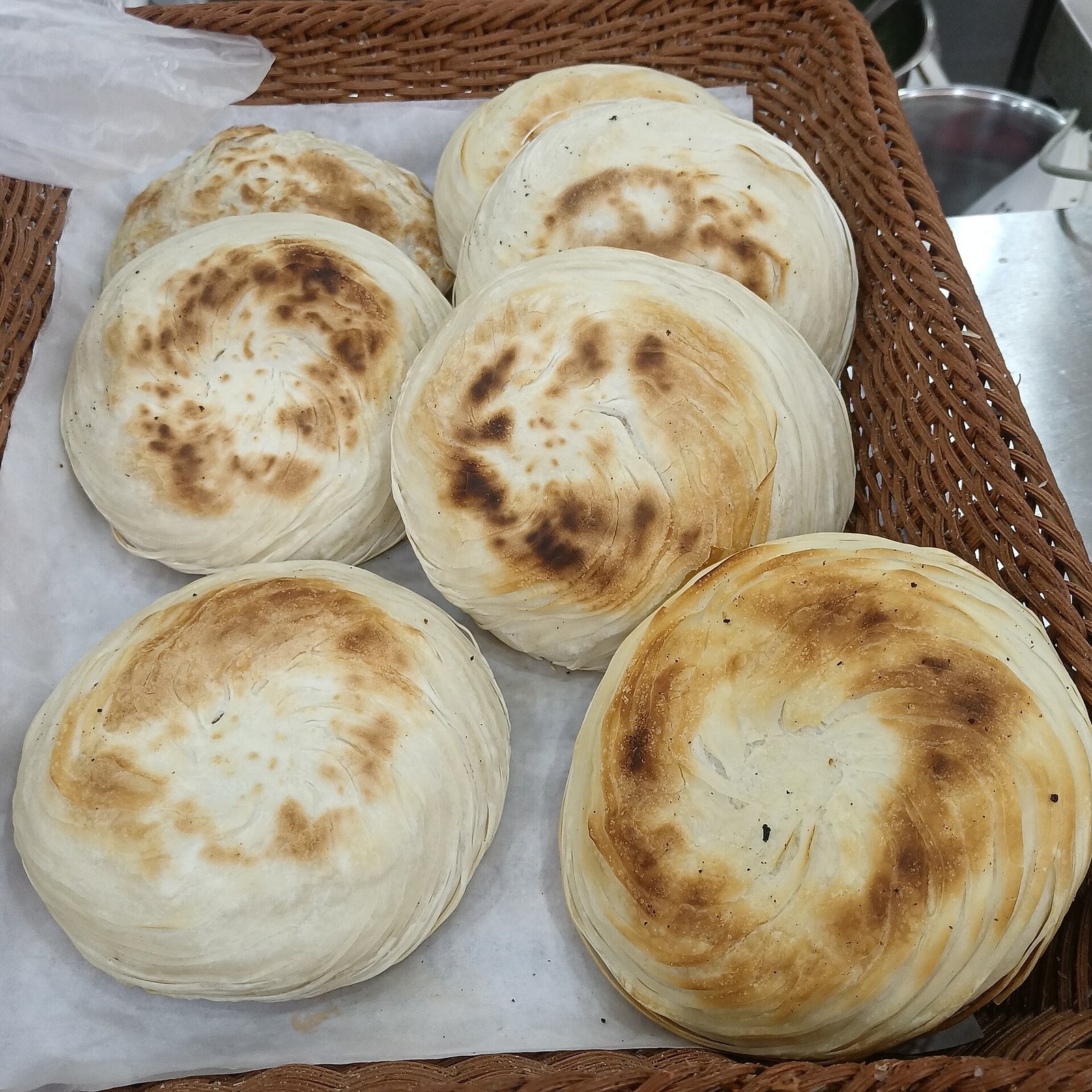
Mistakes I’ve made in exactly this order: roux too runny (it leaked out and the flatbread baked solid), coil rolled too tight and torn (same result), and skipping the second rest after coiling, which left the dough shrugging back to 3 centimetres thick every time I touched it. Give the coiled dough ten to fifteen minutes, covered, before the final roll. It makes the whole operation calm.
The sesame crust
The seeds need glue. The traditional method is to dip the shaped disc in water — or a thin honey-water mixture for a browner crust — then press the top face into a plate of sesame seeds until a solid layer sticks. Press firmly; loose seeds end up in the oven floor and smell like regret for a week. I use white sesame for the classic look and flavour, sometimes a half-and-half mix with black for looks when I’m feeling decorative.
One confession from the failed-experiments file: I once brushed the surface with toasted sesame oil instead of plain water, reasoning that more sesame flavour must be better. Toasted Sesame Oil is a finishing ingredient, not a glue, and at 200°C it scorched into bitterness while refusing to hold a single seed. Water first, oil never, on this step.
Pan, then oven: the domestic method
Traditional shaobing bake against hot clay, which is hard to replicate, so I use two stages. First the pan: a dry, heavy frying pan over medium heat, flatbread sesame-side down, three to four minutes until the sesame toasts and dark golden spots appear underneath. Flip, two minutes more. The dough will puff slightly in patches — that’s the steam separating your layers, and it’s a very satisfying moment. Then transfer to a preheated oven at 200°C for eight to ten minutes to cook the crumb through and finish the crust.
Skip the pan and the seeds steam rather than toast; skip the oven and the centre stays doughy at 1.5 centimetres thick. I’ve tested both shortcuts so you don’t have to. Eat them within the hour — the crust is at its loudest when hot, and it mellow-sighs into softness as it cools, which is exactly why bakery shaobing sell out by mid-morning.
Filled rounds, and what to serve with them
For the filled family, after the second roll, wrap a spoonful of filling into the centre — sweet red bean paste or brown sugar with a little flour mixed in (which keeps the sugar from flooding out), or scallion and fat with five-spice for the savoury classic — pinch it shut like a tiny parcel, flatten gently, seed it, and bake the same way, adding a few minutes for the extra thickness. The dough wraps more easily if the filling is cold and firm, a lesson from a batch of sugar shaobing that flooded my oven floor with caramel.
As a meal, a plain flaky shaobing split open makes a superb mop — split one alongside a bowl of Wonton Soup and you have a lunch I’d defend against most restaurant versions. If you’re building a sesame-themed menu, my Chinese Sesame Balls Recipe handles dessert and a proper take on sesame chicken covers the main, though maybe not all on the same night. And shaobing belongs firmly to the morning shift of Chinese street food; for the bigger picture, how the chinese breakfast table is really done is the companion piece I wish I’d read before my puck-filled first attempt.
Leftovers (rare) re-crisp in a dry pan for two minutes a side. Don’t microwave them. You know why.
Frequently Asked Questions
Can I make shaobing dough ahead? Yes. The base dough holds in the fridge for up to 24 hours, covered; bring it back to room temperature before rolling. The fully assembled and shaped flatbreads freeze well too — freeze after shaping, then pan and oven straight from frozen, adding a few minutes.
Do I have to use lard? No. Lard is the traditional fat and gives the most tender flakes, but neutral oil works properly well. Butter, oddly, doesn’t — its water content makes the roux paste greasy and slippery instead of spreadable.
Why didn’t my shaobing puff? Usually one of three things: the roux was too thin and soaked into the dough, the layers were crushed by heavy rolling, or the pan heat was too low, so the steam escaped before the structure set. A few small blisters is normal, though — bakery puffs are bigger only because of the clay oven.
What’s the difference between shaobing and scallion pancake? Different dough, different fat, different finish. Scallion pancake dough is often just flour and water laminated with oil folds and pan-fried; shaobing uses a stiff dough with a flour-paste roux, then pan-toasting plus baking, and always the sesame crust.
Is there yeast in shaobing? Traditionally only a whisper — a little old dough for flavour, or nothing at all. The lift in a good shaobing comes from steam between the laminated layers, not from fermentation, so a yeast-free version is entirely authentic.