The Honest Shaolin Temple Guide – What’s Worth It and What Isn’t
I went to Shaolin expecting disappointment and left partly won over, which is the most honest way I can put it. The legend is enormous: the cradle of Chan Buddhism and the home of kung fu, the place every martial arts film pointed me toward as a child. The reality is a working monastery wrapped in a theme-park ribbon. The trick is knowing which is which before you buy the ticket.
Shaolin sits at the foot of Song Mountain in Henan, near the town of Dengfeng, about ninety minutes by road from Zhengzhou or Luoyang. I came from Luoyang, left at 7:00, and was at the gate before the worst of the coaches. That morning start mattered more here than at almost any site I have visited in China, because Shaolin’s layout funnels everyone through the same narrow courtyards.
What the ticket actually gets you
Treat the published price as a baseline and check the official site before you go, because the Shaolin ticket has bundled and unbundled its attractions more than once. Historically the through ticket covered the monastery, the Pagoda Forest and the kung fu performance, landing in the 80 to 100 RMB range, with a small extra for the cable car if you climb toward the Dharma Cave.
Opening hours run roughly 7:30 to 17:30 in summer and a little shorter in winter. The performance times are fixed through the day, and missing the right slot means a long wait. I caught the 10:00 show and was glad I had timed the walk to arrive ten minutes early, because the seating fills from the front.
| Part of the visit | Worth your time? | My note |
|---|---|---|
| Main monastery halls | Yes, briefly | Crowded, but the history is real |
| Kung fu performance | Yes, once | Slick and short; sit near the front |
| Pagoda Forest | Yes | Quiet, photogenic, genuinely old |
| Dharma Cave hike | Maybe | Steep; better if you like walks |
| Surrounding shops | No | Skip unless you want a souvenir |
The monastery itself
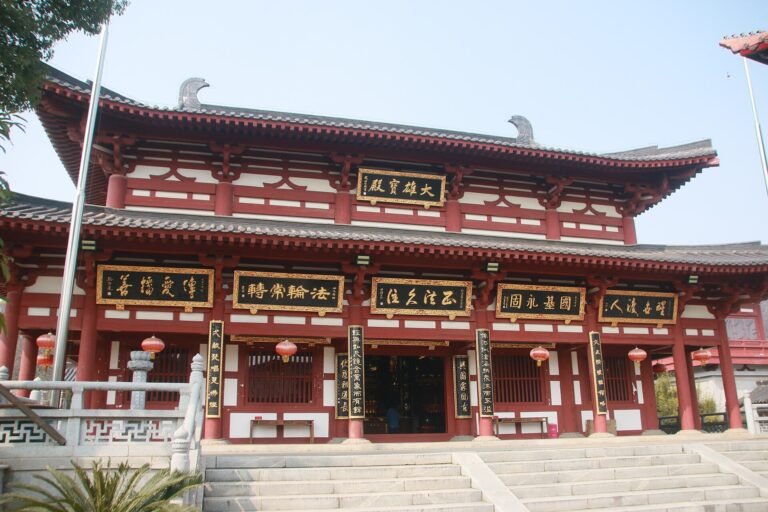
The first courtyards are the busy ones. You pass the mountain gate, the Hall of Heavenly Kings, and the main Buddha hall, each packed on a weekend. I found the genuinely moving moment came later, in the side courtyards where monks still move between buildings and the incense smell sits heavy in the cool air.
Do not expect silence. Shaolin is loud, commercial, and unapologetic about it. The shops lining the approach sell everything from staffs to tea, and the touts start before the gate. I bought nothing and felt no pressure once past the first hundred metres. The lesson: keep walking, and the noise thins out.
One practical note that caught me out: the ticket queue and the security check sit some distance from the actual monastery, and the walk in along the shop street takes a good ten minutes on its own. Budget that into your morning. The first time I visited I assumed the gate was the temple and dawdled at the stalls, which ate into the quiet window I had travelled early to catch.
If you want a monastic experience that keeps its calm, Lama Temple in Beijing is a different register entirely, incense and murmured prayer rather than loudspeakers and tour flags.
The kung fu performance
This is the part most visitors come for, and it is better than I expected. The performers are young, precise, and clearly trained hard; the choreography mixes weapon forms, balance work, and a finale where a man lies on spears. It lasts maybe twenty minutes and costs nothing beyond the through ticket.
Arrive early for seating. The arena is open-sided and the sightlines from the back are poor. I sat third row and could follow every form; a friend who arrived late stood at the side and saw little. For a site this commercial, the show is the one thing that felt earned rather than sold.
A useful comparison for temple atmosphere comes from Jokhang Temple in Lhasa, where devotion rather than demonstration sets the tone, and the contrast tells you something about how China’s sacred sites wear their fame. The two could hardly be further apart in feel: one built on spectacle, the other on pilgrimage, yet both draw the same question from first-time visitors about where the sacred ends and the tourism begins.
The Pagoda Forest
Walk past the main halls and the crowd thins. The Pagoda Forest is a field of several hundred stone stupas, each marking the burial place of an abbot or senior monk, built across centuries. It is the quietest spot in the complex and, for me, the most authentic. No music, no stalls, just weather and stone.
I spent forty minutes here with almost no one else. The towers vary in size from a metre to several storeys, and the older ones carry weathered inscriptions. If you remember one thing about Shaolin beyond the kicks, let it be this field, because it is where the monastery’s long life is actually written.
Climbing toward the Dharma Cave
Above the Pagoda Forest a path climbs toward the Dharma Cave, where the monk Bodhidharma is said to have meditated facing a wall for nine years. The walk is steep in places and takes around forty minutes one way. I did it on a clear morning and the view back over Dengfeng was worth the sweat.
Be honest with yourself about the payoff. The cave itself is small and the legend is the draw, not the object. If you are short on time or energy, the monastery and the Pagoda Forest already justify the trip. Save the climb for a cool day with spare hours.
For another set of imperial religious structures judged on their own terms, all about lingyin temple near Hangzhou offers carved rock and forest calm, a good counterpoint if your route bends east after Henan.
How to time your day
I would build the day like this: arrive at opening, walk the monastery fast before the coaches, catch the first performance, wander the Pagoda Forest slowly, then decide on the climb. Eat before you come or after you leave; the food strip outside is average and overpriced, and the better Henan noodles are back in Dengfeng town or Luoyang.
Best months are April, May, September and October. Summer is hot and the courtyards bake; winter is cold but empty. I went in late April and the mountain air was fresh, with just enough crowd to feel the place was alive without feeling crushed.
A different kind of sacred geometry appears at Temple Of Heaven Guide in Beijing, where the architecture was built for ritual rather than residence, and the open round altars make a striking contrast with Shaolin’s closed halls.
Shaolin versus the legend
The honest verdict: Shaolin is not the serene cradle the films promise, and it never will be again. But strip away the touts and the trinkets, and the bones are real — an ancient monastery, a field of stupas, and a living martial tradition performed with real skill. The disappointment some travellers report comes from expecting a retreat. Go expecting a busy heritage site that happens to be world-famous, and you will have a good day.
The monastery’s place in Buddhist history is well documented; as the Wikipedia entry on Shaolin Monastery lays out, the site grew from a 5th-century foundation into the head of the Chan school and a byword for martial arts. I lean on that source because the dating and the lineage are exactly the sort of detail worth getting right rather than guessing.
For travellers pairing Henan with a northern capital stop, Badaling Great Wall explained and everything you need to know about beihai park fill out a Beijing leg, while how big wild goose pagoda is really done covers the Tang pagoda in Xi’an if your train runs west instead.
Frequently Asked Questions
Is the Shaolin Temple worth visiting? Yes, with managed expectations. The monastery and Pagoda Forest are genuinely historic, and the kung fu show is entertaining. Go early, expect commercial noise, and you will get your money’s worth.
How much time should I spend there? Four to five hours covers the monastery, the performance, the Pagoda Forest and an optional climb. Rushing under three hours means you will only see the crowded front halls.
Can I see real kung fu training? The public show is a performance, not a class, but the skill is real. For deeper training culture you would need a longer stay at one of the nearby schools, which is a different trip altogether.
Is the Dharma Cave hike difficult? Moderate. The path is paved but steep in sections, about forty minutes up. Wear proper shoes and carry water; skip it in poor weather.
What should I eat nearby? Eat in Dengfeng town or bring snacks. The strip outside the gate is tourist-priced and uninspired. Henan’s braised noodles are the reliable local choice a short drive away.
When is the best time to go? April, May, September and October. Avoid midsummer heat and the worst of the National Day crowds in early October if you can shift your dates.