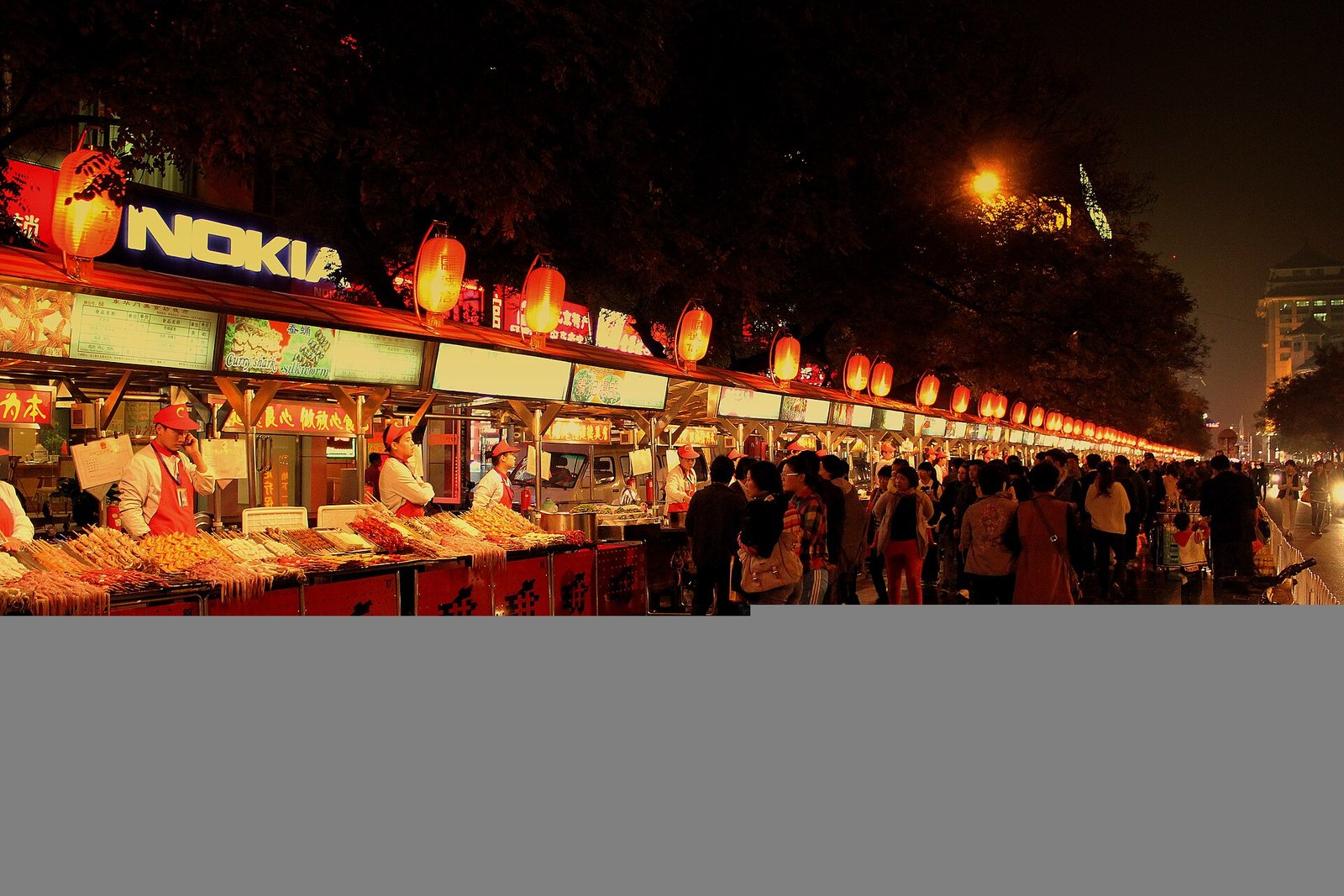
Halal Food in China: A Muslim Traveler’s Guide
“Sister, is there pork in this?” I asked, nodding at a steaming bowl on the counter of a noodle shop in Xi’an. “No pork, no pork,” the cook said, and I watched her shoulders drop as she said it. Then she leaned closer across the counter. “But I put a spoon of lard in the soup. Everyone does.” I set the bowl back down and spent the next twenty minutes learning the difference between “no pork” and “halal” the hard way, over a plate of plain fried eggs and rice. By the end of that week I had a working system, and this is the guide I wish I had handed her.
What qingzhen actually means
The word that matters is qingzhen (清真), usually translated as “halal” and painted in green above the door, often with a crescent or a line of Arabic script. It is a statement of intent as much as of ingredients: a qingzhen kitchen promises no pork, no lard and no alcohol in its cooking, and in the better places meat slaughtered in the prescribed way. As Wikipedia notes in its overview of Islam in China, Muslim communities have lived across the country for centuries, which is why you will find qingzhen restaurants in inland provincial capitals as readily as in the big coastal cities.
That history has a practical payoff. In places with a long Muslim presence, qingzhen is an ordinary local category rather than a special request, and the owner understands you the moment you say it. In a fashionable café in Shanghai, the same word may draw a polite blank stare. I have had waiters bring an English menu and then apologise, because the kitchen genuinely does not track what goes into the sauce. A green sign is a promise; a confident “no pork” without one is merely the start of a conversation.
One caution from that first afternoon: “no pork” and “no lard” are different claims. Vegetable dishes are often stir-fried with pork fat because it is cheap and most customers like the flavour. Ask about the oil, not just the meat.

Reading the menu and asking the right questions
I carry a small card in my wallet with four lines of Chinese, checked over by a friend who grew up in Lanzhou. The first is 清真, the second 我不吃猪肉 (“I don’t eat pork”), the third 不要猪油 (“no lard, please”) and the fourth 有没有酒 (“is there alcohol in this?”). Showing the card has never caused offence; in my experience it gets a nod and occasionally a larger portion. Speaking the phrases badly works too, because the effort is what people respond to, not the accent.
Finding the places is easier with the right tools on your phone. I search the local map and review apps for “qingzhen” rather than typing “halal”, and I filter by recent reviews because a restaurant can change hands quietly. That is exactly the sort of small, practical use I describe in Best Apps China Travel: the apps that save you are rarely the famous ones, and setting them up at home beats wrestling with them on the pavement outside a noodle stall. A review from three weeks ago is worth a hundred from three years ago.
A handful of words gets you through a market as well. 羊肉 is lamb, 牛肉 is beef, 面 is noodles and 米饭 is rice. Pointing at raw ingredients on a skewer is normal behaviour, and nobody has ever hurried me at a counter. The one phrase I avoid is “halal” on its own in a place with no green sign, because it tends to produce an eager but inaccurate yes. Ask the specific question before the pan is hot.
Where I ate best: four provinces compared
My strongest food memories come not from the cosmopolitan cities but from inland provinces where qingzhen cooking is part of the local fabric. The table below is the short version of what I would tell a friend choosing where to spend a fortnight.
| Province | What I actually ate | How easy to find qingzhen | What surprised me |
|---|---|---|---|
| Shaanxi | Lamb paomo, beef pancakes, cumin skewers | Very easy in Xi’an | Skewers sold by the dozen, not the stick |
| Gansu | Hand-pulled beef noodles, mutton soup | Easy in Lanzhou | Free extra noodles if you ask early |
| Ningxia | Grilled lamb, goji-infused dishes | Easy in Yinchuan | Lamb milder than I expected |
| Yunnan | Beef rice noodles, Muslim-run stalls in Kunming | Moderate | Halal and local Dai flavours overlap |
Xi’an gave me the best single meal of the trip: yangrou paomo, a thick mutton soup into which you tear your own bread. The tearing takes a good twenty minutes and is half the point. A bowl cost about 45 RMB when I went, and the owner refilled the broth twice without being asked. China Food Tour is a useful companion if you want to understand why a dish like this belongs to a city rather than to any one restaurant; it changed the way I order across a whole region.
In Lanzhou the noodles are pulled to order and the whole exchange takes under three minutes once you know the routine. I learned to say 细面 for thin noodles and 宽面 for wide ones, and still got it wrong on the second morning. travelling through Gansu and Ningxia is easy going for a Muslim visitor in a way that never feels like an accommodation; the food is simply what people there eat. Yunnan needs a little more notice, but the beef rice noodles in Kunming are worth the extra searching.
Mosques, hotels and the alcohol question
I plan my stays around two things: a mosque within a manageable walk and a hotel that understands a request for an alcohol-free minibar. The first is easy to check on a map before booking; the second needs an email, because the front desk rarely has authority to empty a fridge on the spot. Mosque visiting rules for non-Muslims vary, and several ask you to remove your shoes and cover shoulders and knees, so I keep a light scarf in my day bag.
For choosing where to sleep, Book Hotels China explained covers the practical side of reading reviews and picking neighbourhoods, and it saved me from a lovely hotel in a district with nothing to eat after nine at night. I now stay near a main square or a university area instead, where stalls run late. Confirm any religiously specific request in writing and again at check-in; policies change and staff rotate, so a note in the booking is worth more than a verbal promise.
Friday prayers are worth planning around rather than working against. I have twice arrived at a well-known mosque in the middle of prayers and been asked to wait outside, which was fine, but it cost me an hour I had not budgeted for. Ask at your hotel when the busiest times are and treat the answer as a starting point rather than a guarantee.
Building a route around your meals
A food-led trip does not need to be elaborate. If you have ten days, I would choose two inland cities and one coastal city rather than five cities and no time to eat properly. The version I now recommend to friends runs close to everything you need to know about china 10 day, with one change: I add half a day to whichever city has the best morning market, because that is where I learn the most.
With more time, the maths changes. how china 2 week is really done makes the case for slower legs, and it is the better fit if you want to include a third province without living on trains. My own fortnight took in Xi’an, Lanzhou and Yinchuan, and the journey between the second and third was the part I enjoyed most, largely because it was unhurried and there was time to stop for a proper lunch.
If organising halal-friendly drivers and restaurant bookings sounds tedious, I understand the appeal of handing it over. all about best china tour companies discusses operators who take dietary requirements seriously, though I still insist on seeing a sample menu in writing before I pay a deposit. A guide who says “no problem” without asking which style of cooking you mean has not quite understood the question.
When to go, and travelling with less mobility
Spring and autumn are the safest bets for an inland food route: April and May, then September and October, when the markets are full and the worst heat has not yet arrived. Best Time To Visit China covers the wider seasonal picture, including the public holidays that close small restaurants for a week at a stretch. I once arrived during a national holiday to find my favourite noodle shop shuttered, so I check the calendar first now.
Food travel also involves a fair amount of standing and queueing, which is worth thinking about honestly. my notes on china accessible travel sets out what I have learned about step-free access and asking for help, and the same advice applies at a crowded stall. Many old noodle shops have a step at the door and no chairs with backs. I have started asking a companion to order while I sit outside, and nobody has ever minded in the least.
The point of all this preparation is to stop thinking about it. Once the phrases, the apps and the hotel are sorted, a bowl of hand-pulled beef noodles in Gansu tastes like something you were invited to share, rather than something you had to negotiate for. That cook in Xi’an was not being difficult; she was doing what generations of cooks in her family had done.

Frequently Asked Questions
Is it easy to find halal food in China? In cities with a long Muslim population, yes: look for a green qingzhen sign. In smaller towns and tourist districts it takes more notice and often a phone call ahead. I have never gone a full day without a proper meal, though I have eaten a lot of plain rice while learning.
What should I say about lard and alcohol? Use the card method: 不要猪油 for no lard and 有没有酒 to ask about alcohol. Be specific and be friendly. Most cooks will change a pan or use a clean one if you ask before they start, which is much easier than asking afterwards.
Do I need to carry my own food? No. I pack a few emergency bars for long train legs, but the regions covered here have abundant qingzhen cooking.
Can non-Muslims visit mosques? Often yes, outside prayer times, with shoulders and knees covered and shoes removed. Rules differ by site, so check at the door or with your hotel rather than assuming.
Which city suits a first halal-focused trip? Xi’an, in my view, for the density of options and the confidence with which restaurants understand the request. Lanzhou is a close second if noodles are your priority.