The Classic China 2-Week Itinerary
The first time I stood on the Beijing subway at 7am, the woman next to me was balancing two thermoses of soy milk and a folded camp stool, heading out to Tiananmen like it was a Saturday errand. That is the thing about China: the scale is dizzying until you stop fighting it. Two weeks is the sweet spot most first-timers actually book. It is long enough to cross the country once and short enough that you are not living out of a suitcase for a month. If you have only ten days, my China 10 Day cuts the corners differently, but this is the full classic loop, the one I send to friends who ask for the “proper first trip”.
The route at a glance
This loop runs Beijing to Xi’an to Chengdu, then a domestic flight down to Guilin and Yangshuo, and finishes in Shanghai with a side trip to a nearby water town. It uses high-speed rail for the short legs and one flight (Chengdu to Guilin) to save a full day of sitting. I have ridden every link on this map, missed a connection in Xi’an once, and eaten far too many train-station bento boxes to pretend it is all smooth.
| Leg | Mode | Time | Rough cost (RMB) |
|---|---|---|---|
| Beijing to Xi’an | G-train | 4.5 to 6 hrs | 515 to 935 |
| Xi’an to Chengdu | G-train | 3 to 4 hrs | 263 to 397 |
| Chengdu to Guilin | Flight | 2 hrs plus transfers | 600 to 1,200 |
| Guilin to Yangshuo | Bus or rail | 1 to 1.5 hrs | 25 to 60 |
| Yangshuo to Shanghai | Flight | 2.5 hrs | 700 to 1,400 |
| Shanghai to Suzhou | G-train | 25 mins | 35 to 80 |
Before you book anything, spend an evening on all about best apps china travel. Alipay’s transport mini-program and the official 12306 train app are what keep this whole loop from falling over, and both need setting up before you land.
Beijing: Days 1 to 3
Land, recover, and resist the urge to sprint. Day 1 is the Forbidden City and Tiananmen Square. Buy the Forbidden City ticket online three days ahead, because the 80,000-daily cap sells out in peak season and there is no walk-up window for foreign passports at the main gate. Day 2 is the Great Wall. Badaling is the easiest from the city but the busiest; Mutianyu is quieter and has a toboggan run back down if you tire of the steps. Day 3 is temples and hutongs: the Lama Temple, the Summer Palace, and a slow wander through Nanluoguxiang.

The Wall is non-negotiable, and the earlier you go the better the light and the fewer the selfie sticks. A pre-booked Best China Tour Companies day trip takes the stress out of the public 877 bus logistics if you would rather not decode them yourself at 6.30am.
Back in the city, eat well on the nights you are not exhausted. A Beijing duck dinner at a local spot in the Qianmen area runs 150 to 200 RMB per person and the carving show at the table is half the fun. Save the hutong alleyways for a slow evening walk after dinner, when the lane lights come on and the tour groups have gone home.
Xi’an: Days 4 to 5
The high-speed train to Xi’an is the first real taste of how fast this country moves: roughly 1,200 km in under six hours, with a hot meal trolley that does a decent braised pork. The Terracotta Army needs a morning. Go at the 08:30 opening before the tour groups arrive at 10:00, and spend the extra hour at Pit 1 rather than rushing all three. The city wall is best at dusk on a bike. The full 14 km loop takes about 90 minutes if you do not stop and closer to two hours if you do, which you should.
For timing your visit around weather and crowds, Best Time To Visit China explained is worth a read before you lock dates. The difference between an April trip and an August trip is enormous, both in temperature and in how many other people are queuing for the same photograph.
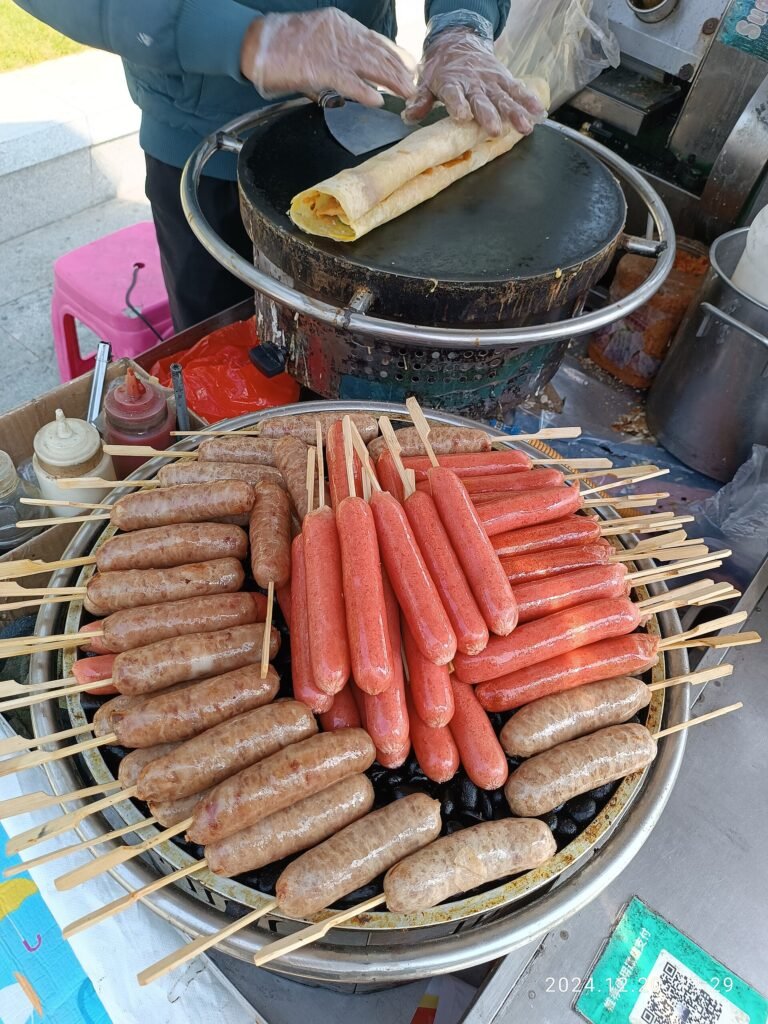
Spend your Xi’an evening in the Muslim Quarter, where the biangbiang noodles come wider than your wrist and the lamb skewers are grilled to order for a few RMB each. The night market runs late and the pacing is the opposite of the Army in the morning: slow, loud, and full of locals who are not there for the history.
Chengdu: Days 6 to 7
Chengdu is the decompression chamber of this trip. The panda base is genuinely good, but only if you arrive at 07:30 when the bears are fed and active. By 10:00 they are asleep in the trees and you have paid 55 RMB to watch fur. The rest of the day is teahouses, the Wide and Narrow Alleys, and Sichuan food that will rearrange your understanding of the word “spicy”. The hotpot at a local neighbourhood joint beats the famous tourist addresses every time.
When it comes to where you actually sleep each night, everything you need to know about book hotels china covers the booking platforms and the ID-registration quirk that catches almost every foreign visitor at check-in. Bring your passport; the front desk scans it, and a photocopy will not do.
Guilin and Yangshuo: Days 8 to 10
This is the leg most people cut when they only have ten days, and it is the one I would fight to keep. The Li River between Guilin and Yangshuo is the postcard you have seen a hundred times, and it is real. Take the four-star cruise down (around 210 RMB, four hours) or the slower bamboo raft if the weather is calm. In Yangshuo, rent an e-bike and ride out to the Moon Hill rice fields. The climb up Xianggong Mountain at sunrise is the best 360-degree view on the whole route, and the ticket is a modest 60 RMB. If you have the energy in the evening, the Impression Sanjie Liu outdoor show on the river is touristy by design but genuinely spectacular, with hundreds of performers lit across the water; book the second tier rather than the front, where the sightlines are clearer.
Shanghai and the water towns: Days 11 to 13
Shanghai is the full stop. The Bund at night, the former French Concession on foot, and a proper soup-dumpling breakfast in Jing’an. On day 12, pick one nearby water town. Zhujiajiao is closest by metro, but if you want better-preserved lanes, how china accessible travel is really done has notes that apply here too, because the stone paths in these towns are rough for wheeled luggage and worth knowing about before you drag a case across them.
A quieter option is my notes on china ancient water towns, which lays out which ones keep their character after the tour buses leave at 5pm. I favour Tongli for an overnight, since the evening light on the canals has no crowds at all.

Money, SIMs and the small stuff
Tourism in China is well documented at Wikipedia’s overview, and the headline numbers explain the crowds: hundreds of millions move around domestically on public holidays. Set an alert for Golden Week, which falls in early October, and for Spring Festival, and simply do not be there. Carry some cash for the small temples, sort an eSIM before you fly, and download your maps for offline use, because signal drops in the karst valleys and along remote Wall sections.
If you would rather not fly at all, the Beijing to Shanghai G-train (4.5 hours) lets you swap Chengdu and Guilin for more time in the east: Suzhou, Hangzhou, and a second Shanghai day. It is a calmer trip, but you lose the karst and the pandas. For the longer version of this same logic, China Itinerary 1 Month extends the route across four weeks instead of two, adding the southwest and the coast without the rush.
Frequently Asked Questions
Can I do this route in reverse? Yes. Starting in Shanghai and ending in Beijing works just as well, and it lets you fly home from the capital without backtracking. The rail and flight links run both directions on similar schedules, so the table above holds either way.
Is two weeks enough for China? Enough for a first, brilliant taste: Beijing, the Wall, Xi’an, the pandas, the Li River and Shanghai. You will miss the west and the far south, which is exactly why the one-month itinerary exists for return trips rather than as a first attempt.
Do I need a guide for the Terracotta Army? Not for the logistics. The site has good signage and an audio guide for 30 RMB. A human guide earns their fee only if you want the archaeology context, not help finding the entrance.
How much should I budget per day? Outside flights, plan 600 to 1,000 RMB a day for mid-range hotels, meals and local transport. The trains are the cheapest line item on the whole trip, and street food keeps costs down further.
What if I only have one free afternoon in Shanghai? The Bund plus a walk through the French Concession, then dinner in Jing’an. Skip the skyscraper queues; the view from street level is free and the photos are better.
Should I book trains in advance? For the Beijing to Xi’an and Shanghai legs, yes, a week ahead in peak season. The 12306 app releases tickets 15 days out, and the popular departures sell within hours of opening.