One Month in China: A Slow-Travel Route
On a thirty-day trip I boarded eleven trains, two buses and a ferry, and flew just once. A friend crossed the same country in nine days and flew six times; he collected more names on a map, but he cannot tell you what a morning smells like in any of them. My clearest memory is a Tuesday in Dali when I did almost nothing: coffee, a walk to the lake, lunch, then an hour sitting under a tree while the light moved across the water. A month is long enough for days like that to exist. A fortnight, in my experience, is not.
Why a month changes the maths
The obvious benefit of a longer trip is that you can see more. The real benefit is that you stop trying to. On earlier visits I planned every hour, measured a city by its list of sights and came home tired. With thirty days, I could spend a whole morning on one neighbourhood and still have an afternoon left. The itinerary below is the one I would repeat, but the principle matters more than the specific stops: choose fewer bases, stay longer in each, and let the gaps do some work.
That approach suits how the country is set up. As Wikipedia notes in its overview of Tourism in China, travel within the country is on an enormous scale, and the rail network carries far more people than the airports do. Trains are the quiet glue of a slow route. Stations are central, security takes twenty minutes if you arrive early, and a five-hour ride gives you time to read, eat and arrive in the centre of the next city rather than on its edge. I still flew once, from Kunming to Guilin, because the rail alternative ate a full day. Check the official site before you go for current fares and schedules; I have found printed timetables out of date more than once.
The other change is psychological. A long trip removes the pressure to make every day count. I started each week with two fixed plans and left the rest open, and almost every good thing I stumbled on happened in the open space.
The route at a glance
This is the skeleton of my month, north to south, with the legs that worked. Nights add up to twenty-nine, with the thirtieth spent travelling home.
| Leg | Base | Nights | Getting there | Why it earned a stop |
|---|---|---|---|---|
| One | Beijing | 6 | Fly in | History you can walk through, and a huge food scene |
| Two | Xi’an | 4 | High-speed train, roughly 5 hours | Terracotta Army and the best noodles of the trip |
| Three | Chengdu | 6 | Train, roughly 3.5 hours | Teahouses, pandas and the slowest mornings |
| Four | Kunming then Dali | 3 + 4 | Train, then a flight south | Mild weather and a lake worth a whole day |
| Five | Yangshuo then Shanghai | 4 + 3 | Flight, then train | Karst scenery, then a city to finish in |
I would not run this in reverse in winter. Starting north in spring meant Beijing was cool and green by arrival, and by the last week the south was warm enough for evenings outdoors. If your dates are fixed, check the seasonal picture before committing to a direction.
Week one: Beijing without the checklist
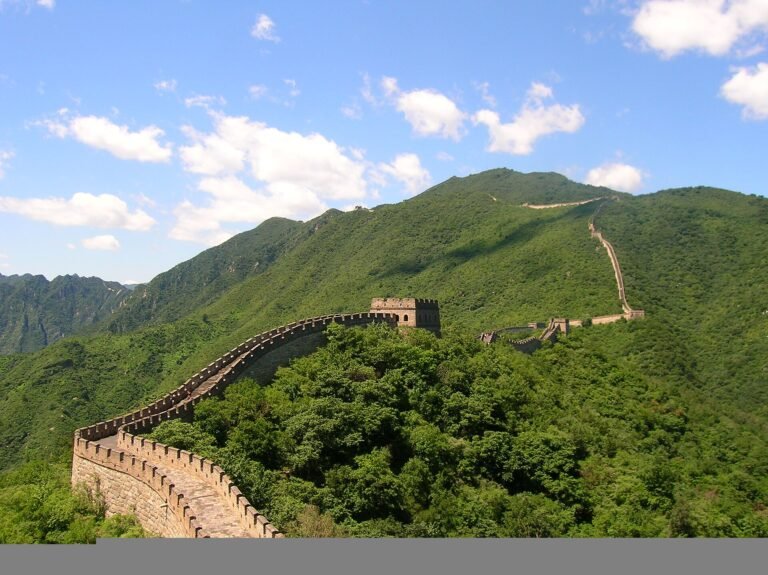
I gave Beijing six nights and saw perhaps a third of what guidebooks insist on. One morning at the Palace museum, a long afternoon walking old lanes near the Drum Tower, and a full day out at a Great Wall section I chose for its quieter path. That was it, and it was plenty. The trick was staying in one neighbourhood for the whole week, so the breakfast stall and the corner shop became familiar by day three. Still pricey by local standards, but a bowl of noodles at 20 RMB beat any hotel breakfast.
If you only have ten days for the whole country, you will want a tighter version, and China 10 Day lays out the classic compressed loop honestly, including what you lose by rushing it. I have done that version too; what I remember is the queueing, not the buildings. With a month I could visit the museum on a wet Wednesday instead of a packed Saturday, and the difference was enormous. Ticket rules and entry quotas change, so check the official site before you go rather than trusting a number from a blog.
One small habit helped more than any guide: I wrote my hotel’s name in Chinese on a scrap of paper and kept it in my coat. Every taxi handover became a two-second transaction instead of a ten-minute one.
Weeks two and three: the inland spine
The train to Xi’an took just over five hours, and I spent most of it watching the northern plain turn greener. Xi’an gets four nights in my plan because the Terracotta Army deserves a half day and the old city walls deserve a walk at sunset. The museum site is large; allow two hours inside and check the official site before you go for current entry rules. In the evening I ate at small noodle stalls where the menu was a picture and the queue moved fast.
From Xi’an I took a train to Chengdu and stayed six nights, the longest stop of the month. This is where slow travel pays. I spent one morning in a teahouse drinking tea that cost 15 RMB, watching regulars play cards, and another morning at the panda base before the crowds arrived. On the free day I took a day trip out to Leshan and came back tired but glad; when I skipped the second, I was glad about that too.
Put together, these two weeks form the spine of the trip, and all about china 2 week is a fair guide to the same stretch if your holiday is shorter. My addition would always be a spare day in Chengdu with nothing scheduled. Twice I filled such a day with the thing I enjoyed most, and once I filled it with laundry and a long nap, which was exactly what I needed.
Week four: southbound and the long way home
Chengdu to Kunming was a train ride of several hours through changing scenery, and Kunming’s mild air was a welcome reset. After three nights I moved on to Dali, which I reached by road and settled into for four nights near the old town. The lake is the reason to come. I borrowed a bicycle, rode a gentle stretch of the shore in about two hours, stopped for lunch in a village and came back with a sunburn I had not expected at that time of year.
From Dali I flew to Guilin and based myself in Yangshuo for four nights, mostly to walk and take a boat trip on the river. The pace is naturally slow here because there is no rush to get anywhere. The final three nights went to Shanghai, which felt almost frantic after the previous weeks but made a good ending: good trains and good shops.
Getting this leg right depends on small digital habits. I describe them in Best Apps China Travel, from booking train seats to screenshotting addresses in Chinese. Book the long hops early and the short ones late; I changed two trains mid-trip without trouble, but I had chosen my flights weeks before and was glad of it.
Who this suits, and who should change it
A month of moving every few days is not for everyone, and the parts I found easy were sometimes the parts others found hard. If you are travelling alone, the main adjustment is social rather than logistical: four nights in one place means you can find a regular café and a few familiar faces. a proper take on china solo female travel covers the practical side of that choice honestly, including when to accept company and when to keep your own space. I met two travellers in Dali by simply returning to the same tea shop three days running.
Mobility changes the route more than any other factor. Chinese stations are large, and a platform change can mean a long walk or a lift that is out of service. China Accessible Travel is where I have collected what I know about step-free routes and asking for help at ticket desks. If that is relevant to you, cut one leg rather than squeezing in an extra city; the Yangshuo section in particular is much easier with a driver than with public buses.
The small rules that make a month work
Long trips are smoother when the daily etiquette becomes automatic. I learned to let the hostess seat me, to tap two fingers on the table when someone pours tea, and to stop trying to tip in restaurants where it is not expected. everything you need to know about china travel etiquette is the list I read before each trip and the one I still refer to when I am unsure.
The other rule is to keep a routine. Mine was simple: up early, out before nine, one planned thing, one unplanned thing, and a proper lunch rather than a snack on the move. I carried a notebook and wrote three lines each evening, mostly so I could remember which stall to return to. Thirty days later those notes were more useful than any photograph. By the final week I was travelling more slowly than when I started, which I take as the sign that a long route is working.
Frequently Asked Questions
Is a month in China too long for a first trip? Not in my experience, provided you use the time to slow down rather than add cities. If you are unsure, do a fortnight first and see whether you want more.
How much of the month should I spend travelling between places? Around a third of my days involved a move of some kind, and that felt about right. Eleven train legs were manageable because most were under six hours. I would avoid two travel days back to back.
Do I need to book everything in advance? Book international flights, the first few nights and any long-distance hop you cannot replace. I left most trains until a week or two before and had no trouble outside public holidays. Check current booking rules and quota dates on the official site before you go.
Is the north-to-south order important? Only if you are travelling in spring or autumn, when the weather difference is real. In high summer the order matters less, and in winter I would reverse it to meet the cold earlier and finish somewhere mild.
Can this route work on a smaller budget? Yes, by swapping a couple of flights for trains and staying in simpler places. The Dali and Yangshuo sections are particularly good value once you are there. I spent more on transport than on rooms, which is the opposite of most short trips.