Qingdao: A Route Through Its Best Streets and Sights
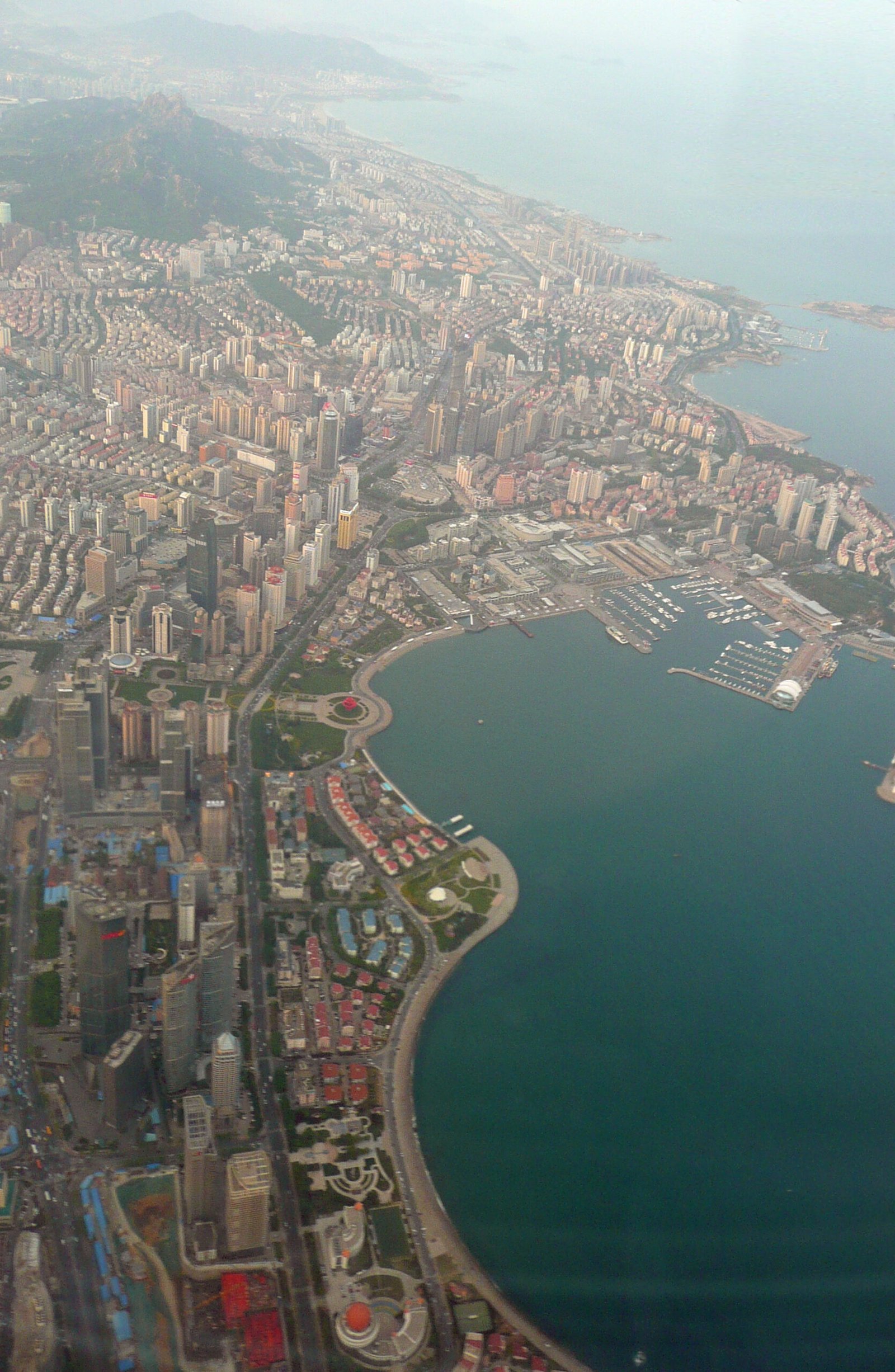
I watched a man in a flat cap cast a line from Zhanqiao Pier at six in the morning, the bay still grey, the only other sound a gull arguing with the wind. Qingdao does this to you: it looks like a resort and behaves like a working port, and the two sit about ten metres apart. I’d come up from Beijing on the high-speed line, three hours door to platform, expecting a quieter version of Changchun‘s industry and finding instead red roofs and sea air.
As the Wikipedia entry on the city explains, Qingdao grew from a small fishing village into a German leased territory in 1898, and that brief occupation left the grid of pale stone buildings and broad boulevards you still walk today. The Chinese part of town is newer and noisier; the interest, for me, was in the seam where the two meet.
A morning on Zhanqiao Pier
Start where the city started. Zhanqiao Pier (栈桥) was built in 1892 as a military landing stage and now stretches a few hundred metres into the bay, ending at the small Huiyi Pavilion (回澜阁). It is free, it is busy, and it is best at the open edge of the day before the coach tours arrive. I went at six, watched the fishermen, and was back at my hotel for breakfast by half past seven.
From the pier, walk north into the old town. The streets climb gently toward the hill, and the buildings get older and more European the higher you go. This is a city you read on foot, not from a bus window.
The German footprint: cathedral to Governor’s House
The old town’s set piece is St. Michael’s Cathedral (圣弥厄尔教堂), built in 1934 on Zhejiang Road, with two 56-metre spires you can see from halfway across the bay. It is free to view from outside and usually open for a small entry fee; check the official site before you go, since access varies with services. Stand in the square at dusk and the stone glows the colour of weak tea.
A ten-minute walk uphill brings you to the former Governor’s House (迎宾馆), the German governor’s residence turned museum, all carved wood, tiled stoves, and a staircase that means business. The ticket is modest and the rooms are a neat window into how a small European administration lived far from home. Unlike the imperial scale of Chengde Travel Guide, this is empire on a human, slightly absurd scale.
Badaguan: the villas, the trees, and the sea breeze
West of the centre, Badaguan (八大关) is the part of Qingdao people actually live in and the part I liked most. Around two hundred villas in a mix of Russian, British, French, and German styles line streets named after old passes, and the trees do the heavy lifting: crabapple in spring, plane shade in summer, maple in autumn. It is free to walk and almost empty before nine.
I spent a slow morning there with no plan and no ticket, which is the correct way to do it. The path down to the coast at the western end opens onto a clean stretch of sea with a view back at the red roofs. Bring nothing but comfortable shoes.
Beer, obviously: the Tsingtao museum
You cannot ignore the brewery, and you shouldn’t try. The Tsingtao Beer Museum (青岛啤酒博物馆) sits on the original 1903 site on Dengzhou Road and walks you through the malting, the copper kettles, and the bottling line, then hands you two glasses at the end — included in the ticket. I paid around 60 RMB, though check the official site before you go, as pricing and opening hours (roughly 8:30 to 17:30) move. The fresh draught from the on-site line tastes nothing like the exported bottle, and the museum makes a better morning than you’d expect.
The beer gardens across the city do the rest. A plastic crate of draught Tsingtao and a plate of clams is the city’s default evening, and it is hard to improve on. If you want later nights and louder music, the scale is closer to all about changsha than to the quiet old town, but Qingdao keeps earlier hours than most.
Mount Lao and the coastline beyond the centre
East of the city, Mount Lao (崂山) is a Taoist mountain that meets the sea, which is rarer than you’d think. The main temple, Taiqing Palace (太清宫), sits low near the water, and a cable car runs higher for a view back across the bay. Getting there takes a metro ride plus a bus or a taxi, and the combined ticket and cable car cost more than the city sights — confirm the current price on the official site before you set out, as it changes by season and route.
I treated Laoshan as a full half-day and did not regret it. The coastal road out there is its own attraction: fishing villages, small harbours, and seafood restaurants where the menu is whatever came in that morning. It is a different Qingdao from the pier, and worth the trip if you have more than a single day. I took the cable car up and walked down through the pine forest, which smelled of resin and sea at once — a combination I have not found anywhere else. The temples are working sites, not museums, so dress modestly and keep your voice down; the monks I passed offered a nod rather than a sell.
Eating Qingdao: clams, mackerel, and a proper pint
The food here is seafood first, and the city’s signature is simple: 辣炒蛤蜊 (stir-fried clams with chilli and garlic), eaten with a cold pint. The heat is gentle and the broth is the point — mop it up with a steamed bun. Spanish mackerel (鲅鱼) turns up as dumplings (鲅鱼水饺), a Qingdao comfort I now crave in winter. Neither dish has the numbing edge of Chengdu explained, nor the heavy oil of everything you need to know about chongqing; it is clean, saline, and quick.
| Dish | What it is | Where to try it |
|---|---|---|
| 辣炒蛤蜊 | Clams stir-fried with garlic and chilli | Any beer garden or harbour restaurant |
| 鲅鱼水饺 | Spanish mackerel dumplings | Specialist dumpling shops near the old town |
| 海肠 | Sea intestine, quickly stir-fried | Seafood restaurants along the coast road |
| 原壳鲍鱼 | Abalone served in its shell | Higher-end seafood houses |
| 青岛啤酒 (draught) | Fresh local lager from the source | The brewery museum and beer gardens |
For a cheap, loud intro, Pichaiyuan (劈柴院) off Zhongshan Road is the old snack alley, busy and touristy but fun once. For the real thing, head to the smaller harbours east of the centre where the boats unload. The pace suits travellers used to the slow seaside calm of how dali is really done, though Qingdao trades Dali’s lake for salt air.
A two-day street-by-street route
Day one, on foot: Zhanqiao Pier at opening, the cathedral and Governor’s House before noon, Badaguan after lunch, then the brewery museum and a beer-garden dinner. Day two: an early train or taxi to Mount Lao, back for an evening on the coast at Zhanshan or the No. 1 Bathing Beach if the weather holds. The No. 1 Bathing Beach (第一海水浴场) is central and crowded in summer; for a calmer swim, walk farther east. I found a stretch past the marinas where the only other people were a few anglers and a man practising sword forms on the sand at sunrise.
The metro covers the centre and reaches the Laoshan foot; taxis and ride apps fill the gaps. High-speed rail from Beijing runs about three hours, and from Jinan under two, so Qingdao pairs neatly with a Shandong loop.
Frequently Asked Questions
What is the best month to visit Qingdao? May to June and September to October are the sweet spots: warm enough for the sea, light on crowds. July and August are lively but hot and busy; winter is cold, grey, and quiet.
Can I drink the draught beer safely? Yes. The brewery and beer gardens serve fresh, properly handled draught. If you have a sensitive stomach, stick to the museum and established gardens rather than unnamed stalls.
How many days do I need? Two days covers the old town, Badaguan, the brewery, and a Mount Lao half-day. One day lets you see the centre and skip Laoshan. Add a third if you want beaches at a slower pace.
Is Qingdao walkable? The centre and Badaguan are best on foot. Mount Lao and the eastern coast need public transport or a taxi, so plan those as separate outings rather than fitting them between old-town walks.
Is it family friendly? Very. The pier, beaches, and brewery museum (with its free beer for adults and soft drinks for children) suit mixed-age groups, and the old town is flat enough for pushchairs in most stretches.
Do I need to book the Tsingtao museum ahead? In peak summer it helps to book, but I walked in on a weekday in autumn without trouble. Check the official site before you go, especially around holidays.