Beef Tripe: The Hotpot Staple
“Ten seconds. Count them. If you over-cook it I’m not eating it.” That was my friend Wei, standing over a Chongqing hotpot with a pair of chopsticks and a look of genuine worry. She wasn’t being dramatic. She was applying the rule every hotpot hand in Sichuan learns early — 七上八下, seven up, eight down — and she had watched enough visitors ruin her favourite cut to police the pot personally. I counted. She lifted. The tripe curled at the edges, crisp and glistening, and it was, I’ll admit, excellent.
That evening converted me, but it also confused me, because the menu listed four different “tripes” and nobody could agree which was which in English. It took visits to wet markets, arguments with butchers and a fair amount of over-boiled rubber before the picture snapped into focus. This guide is everything I wish that menu had told me. As Wikipedia’s article on tripe explains, tripe is the stomach lining of ruminant animals, and cattle happen to have four of them — which is where both the confusion and the variety come from.
The Four Stomachs and the Names That Matter
A cow’s digestive system has four chambers, and Chinese butchers sell three or four of them as distinct ingredients with distinct names. Getting these straight solves half the confusion on any Chinese menu.
| Chinese name | Stomach chamber | Look and texture | Where you meet it |
|---|---|---|---|
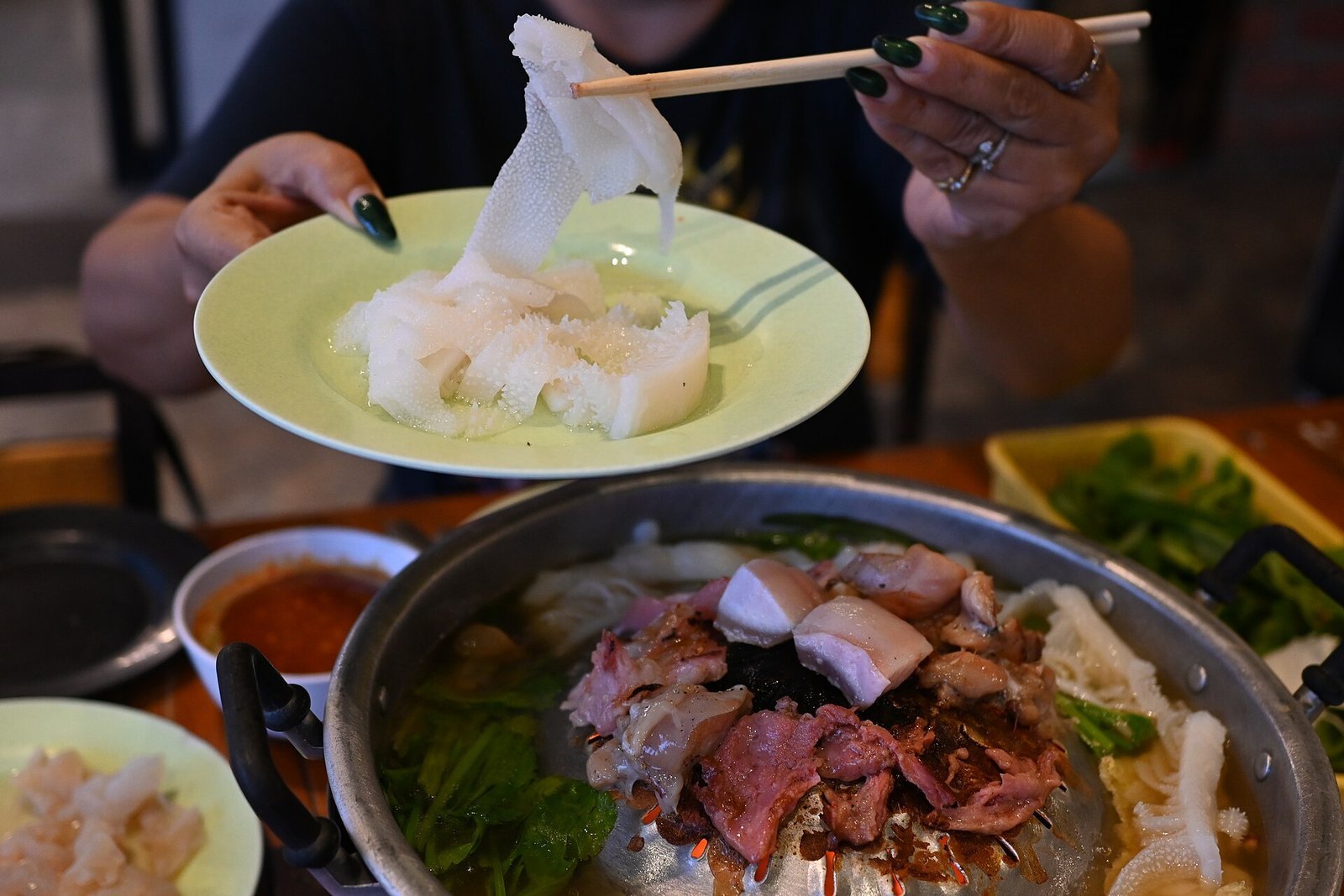
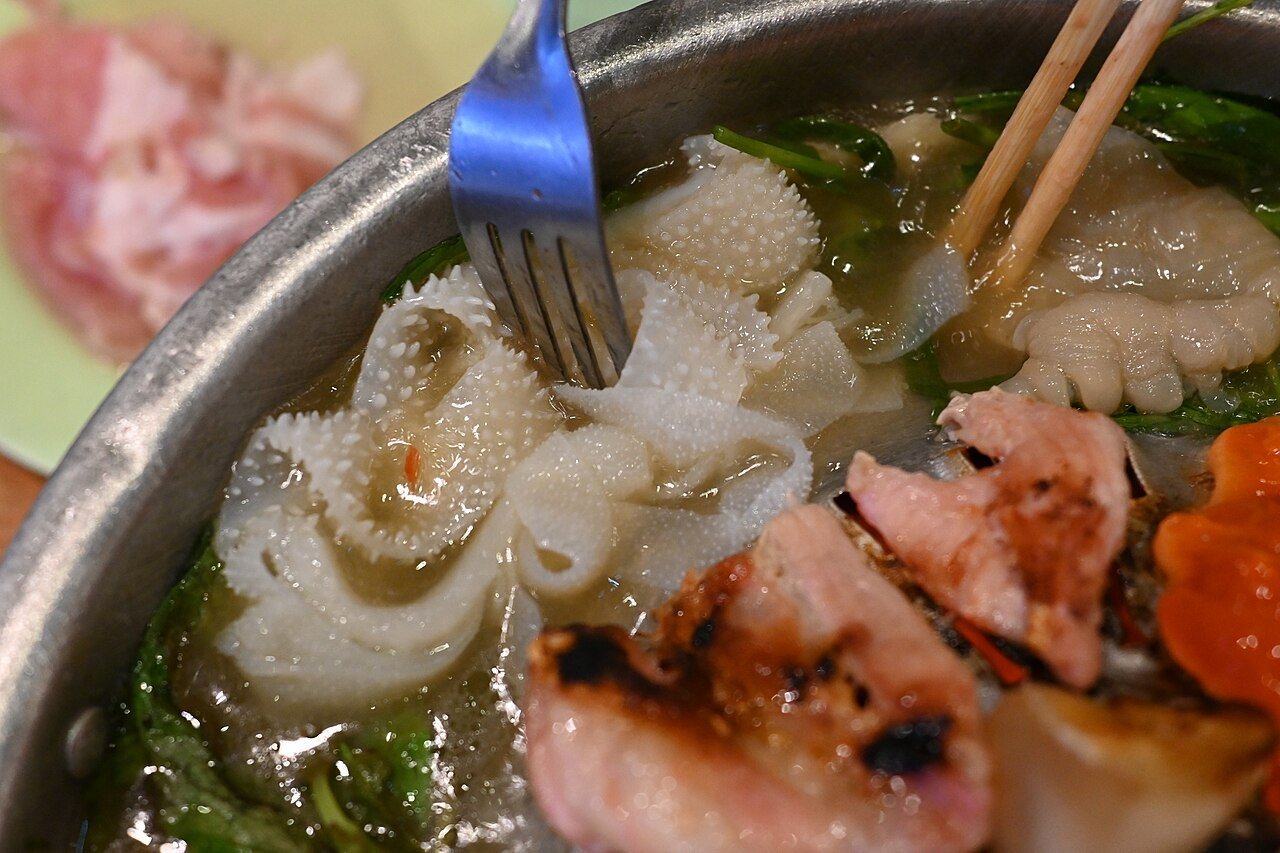
| 毛肚 (omassum) | Third, the manyplies | Thick leaf-flaps with coarse papillae; crunchiest | Hotpot, maoxuewang |
| 牛百叶 (leaf tripe) | Same chamber, thinner cut | Fine, book-like leaves; often black-green when unbleached | Quick blanching, cold dressed dishes |
| 金钱肚 (reticulum) | Second, honeycomb | Honeycomb pattern; chewy, takes long braising | Cantonese dim sum, curries |
| 牛肚 (rumen) | First, the big one | Smooth sheets; firm, beefiest flavour | Stews, braises, soups |
Note the overlap: 毛肚 and 牛百叶 both come from the omasum. The difference is cut and handling — 毛肚 is the thick-flapped version prized in Sichuan, 牛百叶 is sliced into thin leaves and common in the south, where it often keeps its natural dark colour. Cantonese cooks are the main market for 金钱肚, and if you’ve eaten at a dim sum trolley, you’ve probably met it braised in black bean sauce. The catch-all word 牛肚 simply means “cow stomach” and usually refers to the rumen in stews.
How regions split these is a good window into the wider divide I explored in my piece all about northern vs southern chinese food: the south dresses tripe gently — steamed, braised, cold-tossed — while Sichuan and Chongqing treat it as a fast-cooking playground for fire and numbing spice.
Crunch, Not Tenderness
Western cooking treats collagen-rich offal as something to stew towards softness, so the Chinese obsession with crunchy tripe catches newcomers off balance. In hotpot culture, tripe is judged entirely on 脆 — the crisp snap between the teeth. A perfectly cooked flap of 毛肚 should resist slightly, then break with a clean crunch, the way a good pickle does. Boil it two minutes too long and it turns to eraser. The whole technique of the dish lives inside a thirty-second window.
This is why texture-led eating matters so much in Chinese food generally. The same logic that makes tripe a delicacy makes century egg an acquired pleasure, which I set out in a proper take on century egg: the point is not softness but a particular, engineered mouthfeel. Once you accept that crunch is the goal rather than a defect, hotpot tripe stops being a dare and starts being the best thing on the table.
Seven Up, Eight Down: The Dip Done Right
The rule 七上八下 sounds like folklore but it is sound physics. You grip a strip of raw 毛肚 with chopsticks, dip it into the rolling spicy broth, lift it out for a second, dip again — seven times up, eight times down, about ten to fifteen seconds in total depending on how violent your broth is boiling. The repeated dips let the thin flap firm up in stages. What you’re watching for is the curl: when the flat strip contracts and the edges roll inward, it’s done. Keep it in the pot at that point and you’re past the window.
A few practical details I’ve picked up from watching hotpot veterans. Cut the strips wide enough to grip — about two fingers. Use the long raw-meat chopsticks, not your eating pair. And let the broth return to a full boil between batches; a lulling pot gives you grey, chewy disappointment. The dipped tripe goes straight into your sesame-oil dip, which cools it and buffers the chilli — the same fat-carrying-flavour logic I covered in everything you need to know about chili crisp, where oil protects the palate while it delivers the punch.
White Tripe or Black Tripe?
Unbleached beef omasum has a natural colour ranging from dark green-black to brown, thanks to the partially digested grass it processed in its previous life. Chinese wet markets sell it this way, and cooks who know it insist the unbleached version has more flavour and better crunch. The brilliant white tripe common in Western Chinese supermarkets and on dim sum trolleys has been cleaned with peroxide or similar food-grade treatments — not just for looks, though looks sell, but to strip the strong barnyard odour that puts some diners off.
So which should you buy? Honestly, either, as long as the seller is reputable and the treatment is food-grade. The bleached version is milder and more approachable for a first attempt at home cooking. The dark version rewards experience and suits strong-flavoured dishes where its character shows. What you should not accept is tripe that smells of chemicals rather than of nothing much — properly processed tripe of either colour should smell clean and faintly milky.
Cleaning Tripe at Home
If you find raw tripe at a Chinese butcher it is usually already cleaned, but a final pass at home does no harm and teaches you what the ingredient actually is. My routine, learned from a Guangzhou butcher who thought the whole exercise was hilarious: rinse under cold running water, then rub the surface with coarse salt and a splash of white vinegar, working the granules into every fold for two or three minutes. Rinse, scrape off anything dark and loose with the back of a knife, rinse again. The salt gives friction, the acid lifts odour, and the whole job takes five minutes.
Blanching comes next and matters more. Ten minutes in boiling water with a few slices of ginger and a spoonful of cooking wine removes the last of the smell and firms the surface. If you’re going to stew the tripe, use the same blanch-first logic I described in my Bamboo Shoots Guide — a quick pre-cook in plain water before the real cooking, for exactly the same reason.
Braised Beef Tripe, No Hotpot Required
For readers without a hotpot on the stove, here is the dish I make most often: slow-braised rumen tripe, Cantonese in spirit, endlessly adaptable. You need about 700 grams of cleaned 牛肚, cut into strips the width of your thumb. Sear it briefly in a heavy pot with ginger slices and a smashed stick of cinnamon. Add light soy sauce, a small piece of rock sugar, a splash of Shaoxing wine and enough water to cover, then let it murmur — barely a bubble — for two hours at around 95°C. Check at ninety minutes: a chopstick should slide in with gentle resistance. Ten minutes before the end, add daikon chunks cut large, so they soften without vanishing.
The finished tripe is tender at the edges but still has chew in the centre, in a glossy mahogany sauce. Serve over rice with something sharp on the side — pickled vegetables work, or a spoonful of chilli oil if you want it loud. If your palate runs towards Sichuan instead, this same braise chopped small and tossed with celery, chilli bean paste and a handful of peanuts lands somewhere near the flavour territory of Kung Pao Chicken, crunchy bits and all. Either way, the leftovers are better the next day, after a night in the fridge deepens the sauce.
And if you ever get the chance to eat tripe in Nanjing — duck blood soup city, but also a place that braises stomach with real conviction — take it. My notes on Nanjing Food cover the wider sweep of that city’s tables, and tripe shows up there in some unexpected company.
Frequently Asked Questions
What is the difference between 毛肚 and 牛百叶? They both come from the omasum, the third stomach. 毛肚 is the thick-flapped cut used for hotpot dipping; 牛百叶 is sliced into thin leaves, often keeps its dark natural colour, and is used in quick-blanched and cold dishes.
How long do you cook hotpot tripe? About ten to fifteen seconds of repeated dipping — the “seven up, eight down” method — until the strip curls at the edges. Thin leaf tripe needs even less. Anything over a minute turns it rubbery.
Why is supermarket tripe white and market tripe dark? The white version has been treated with food-grade peroxide to remove the natural dark colour and barnyard smell. The dark version is unbleached. Both are fine from reputable sellers; the dark one simply has more character.
How do I stop tripe from being rubbery? Match the cooking time to the cut: seconds for hotpot flaps, hours for rumen and honeycomb tripe. Rubberiness comes from stopping in the middle — long enough to toughen the collagen, too short to break it down.
Is tripe healthy? I write about taste and tradition rather than nutrition, so I’ll say only this: it is eaten daily across China, usually in moderate amounts as one dish among many, which is honestly how most food is best enjoyed.
Can I freeze tripe? Yes, cleaned and blanched, for up to three months. Thaw slowly in the fridge and expect slightly less crunch in hotpot use; it’s better saved for braised dishes after freezing.