How to Visit Kumbum Monastery Without the Crowds
I reached Kumbum Monastery at half past ten on a Sunday in July, which was about the worst hour I could have picked. The car park was full, the ticket queue ran back through the gate, and the main courtyard had that shuffling, slightly bad-tempered feel of a place where several hundred people are all trying to see the same three things at once. I had come prepared to be solemn. Instead I spent my first twenty minutes being steered along a barrier by a volunteer with a whistle.
A year later I went back at seven in the morning, before the buses, and found a different monastery: monks sweeping the steps, a handful of pilgrims turning prayer wheels, and the great stupa standing in clean light with nobody in front of it. The buildings had not changed. My arrival time had. Almost everything useful I can tell you about Kumbum follows from that comparison.
Why the early start changes everything
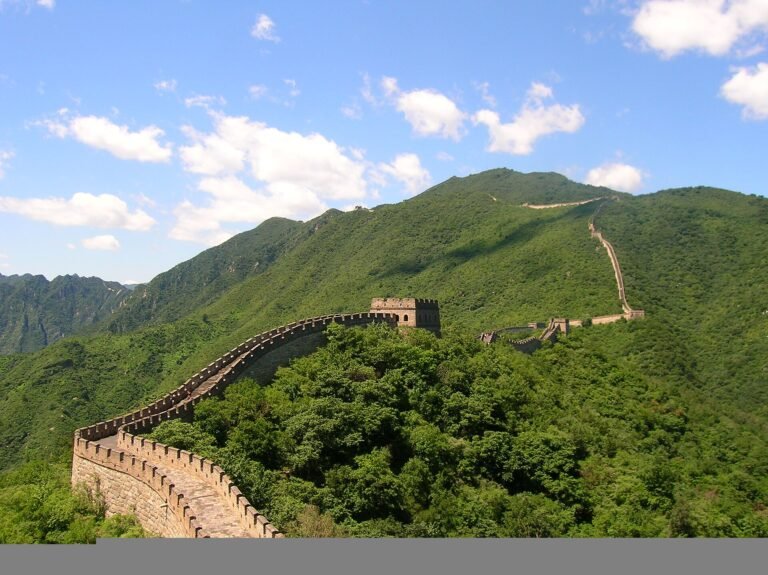
The queue at ten thirty was not the worst I have stood in — that distinction belongs to Badaling Great Wall, where the wall becomes a backdrop to the people climbing it — but it was enough to turn a monastery into a crowd-management exercise. Tour groups in Qinghai tend to arrive between nine and eleven, and most of them follow the same short route: the gate, the great stupa, the butter sculpture hall, the shop. Join that route at its busiest point and you will spend more time negotiating elbows than looking at anything.
I now treat the first two hours after opening as the whole visit. At seven the courtyards are quiet enough to hear a bell, and the monks go about their morning work without an audience. By nine the same spaces feel public again. Most visitors on a day trip from Xining leave after breakfast, which means the peak arrives exactly when a monastery is at its most photogenic. Getting up early is the single decision that improves the day, more than any route or ticket trick.
Opening hours shift with the season and around festivals, so check the official site before you go rather than trusting a number I wrote down last year.
The legend behind the name
Kumbum is a Tibetan word meaning “a hundred thousand”, and the name refers not to the size of the complex but to a story about its founding. As Wikipedia notes, the site grew up around the birthplace of Tsongkhapa, the fourteenth-century teacher whose reforms shaped the Gelug school of Tibetan Buddhism. A small shrine is said to have been built on the spot in 1379, with the monastery developing over the following centuries into one of the great Gelug centres. Tsongkhapa’s mother is said to have buried his umbilical cord here, and a tree later grew from the place, its leaves bearing relief images of him — hence the hundred thousand.
Whether you accept the account literally or not, it explains what you are looking at. Knowing the legend first made the busier halls easier to enjoy, because the crowds had something to be about beyond their own photographs. all about big wild goose pagoda covers a similar pattern in Xi’an, where a Buddhist landmark carries a weight of local pride that the architecture alone does not explain. Kumbum is heavier still: this is a working religious site, and the pilgrims you walk past are not sightseeing.
The route I walk now
The site is bigger than it looks from the gate, and the main halls are spread over terraces. My route starts at the great stupa, the Kumbum proper, which sits near the entrance and is the reason the monastery has its name. Inside, a sandalwood tree rises from a silver base, and the relief figures in its leaves are the famous hundred thousand images. I have seen visitors walk straight past it while queuing for the next hall, which seems like a mistake; give it ten minutes.
From there I work uphill rather than across, because the climb is gentle and the chapels on the higher terraces empty out quickly. The Golden Roof hall is the obvious high point, with its gilded tiles and views back over the complex to the hills. Beihai Park has a similar habit of concentrating its visitors around one view, but at Kumbum the spill is easier: ten minutes past the main courtyard and you are in a quiet corridor with painted beams and nobody else in it.
The downhill return takes in the smaller chapels, where the frescoes and statues reward slow looking. A whole visit at this pace takes three to four hours; if you have only two, stay with the stupa and the upper terrace and accept that you will not see everything.
The three treasures, and what you can photograph
Almost every guide to Kumbum mentions three things, and they are a genuinely useful shortcut. Here is how they compare, based on two visits:
| Treasure | What it is | Where I spent my time | Photography |
|---|---|---|---|
| The hundred thousand images | Relief figures of Tsongkhapa in the leaves of a sandalwood tree inside the great stupa | Ten minutes at the stupa, longer if the hall is quiet | Often restricted inside the hall; follow the signs |
| The frescoes | Wall paintings in the halls, with scenes from the Buddha’s life and the monastery’s history | A slow circuit of the upper chapels | Usually no flash, sometimes no photographs at all |
| The butter sculptures | Figures modelled in butter and pigment, displayed in dedicated halls | The hall where I stayed longest | Treat as no-photography unless told otherwise |
The butter sculptures are the surprise. They look like wax models until you learn the medium, and then the detail becomes almost unreasonable: figures, flowers and landscapes in coloured butter, kept cold and replaced for the festival. Assuming you may photograph them is the most common mistake I see. The rule is not unique to monasteries: Canton Tower Guide makes a similar point about reading a site’s signs rather than guessing. When in doubt, keep the camera in your bag and ask; the answer is usually a smile and a gesture towards a permitted corner.
Getting there and what it costs
Kumbum sits in Huangzhong, about 25 kilometres west of Xining, at around 2,600 metres. From Xining you can take a bus, hire a taxi, or join a half-day tour. I took a taxi on the second visit and the drive took roughly forty minutes, though traffic out of Xining can double that. The altitude is lower than at Qinghai Lake or Chaka, so this is a sensible first day out from the city.
Entrance has historically cost in the region of RMB 70, with reduced or free entry for certain categories of visitor; prices change, so check the official site before you go. Guides at the gate are worth considering if you want the stories behind the objects. I went without on the first visit and hired one on the second, and noticed far more.
If you are building a Qinghai itinerary, Kumbum pairs naturally with Chaka Salt Lake explained, since both work as day trips from Xining and together give you a monastery and a salt flat in two days. The lake is a much longer drive, so give it its own day rather than trying to bolt the two together.
When to go, including the butter sculpture festival
Late spring through early autumn is the comfortable window. May and June are pleasant on the terraces, and the tourist flow has not reached its July peak. September and October are my favourites: the light is lower, the air is sharp, and the place feels more like a monastery than a tour stop. Winter is serious here at 2,600 metres, with snow and short days, but it has one enormous draw.
The butter sculpture festival falls on the fifteenth day of the first lunar month, when the new sculptures are displayed and the monastery fills with pilgrims. It is the most photographed and most crowded time of the year, and the two go together. Book Xining accommodation well ahead and expect a different experience from the quiet morning I described. The same early-start logic applies at everything you need to know about chengdu panda base: the famous sight is at its best before the public arrives, and the difference shows up in your photographs.
Festival dates move with the lunar calendar, so confirm them locally rather than assuming a fixed week in January or February. For a first visit with no particular interest in the festival, take a clear weekday in May or September and keep the mornings free.
Building it into a wider trip
Kumbum is easy to add to a Xining stop and awkward to reach from elsewhere, which shapes how it fits into a China itinerary. Most people arrive from Beijing, Xi’an or Chengdu and treat Qinghai as a side trip. With a week to spare, the monastery anchors two or three days based in Xining, with a day for the salt lake.
how ciqikou is really done takes you into a Chongqing old town where the interest is in the lanes and the food; Kumbum is about a single community and its objects. my notes on crescent lake dunhuang heads west into Gansu, where the landscape does the work that the buildings do here. Both are a long way off, which is why a Qinghai detour feels like a change of country.
If your time is short, treat Kumbum as the reason to stop in Xining rather than a box to tick between flights. Two nights, one early morning, and a slow afternoon in the upper chapels will teach you more about Tibetan Buddhism in Qinghai than a week of hurried temples elsewhere.
Frequently Asked Questions
How much time should I allow? Three to four hours covers the site at a reasonable pace, including the stupa and upper chapels. Keep a second morning free if you want better light. Most people visit from Xining, so allow two nights rather than one rushed day trip.
Do I need to speak Tibetan or Chinese? Mandarin works at the ticket office and key signs carry some English. A guide at the gate is worth hiring if you want the stories behind the objects; the labels are brief and the history dense.
Can I take photographs? In the halls, often not. Butter sculptures and some interiors are off limits, and flash is discouraged. Ask before raising the camera; the answer is usually yes in the courtyards and no inside.
Is it suitable for older visitors? Partly. The terraces involve steps and the site sits around 2,600 metres, so rest often. Someone with limited mobility can see the great stupa and lower chapels, but will miss the upper terraces.
What should I wear? Dress as you would in any working monastery: covered shoulders and knees, nothing loud, shoes you can walk in. Take a warm layer even in summer; the mornings are cool here.
Can I visit during the butter sculpture festival? Yes, but expect crowds and book Xining accommodation ahead. The dates follow the lunar calendar, so confirm them locally. The sculptures are the reason to come then; the quiet is not.