
Communal Eating in China: Round Tables, Shared Plates and Chopstick Rules
Reviewed 31 October 2026 by the China Food Way editorial team
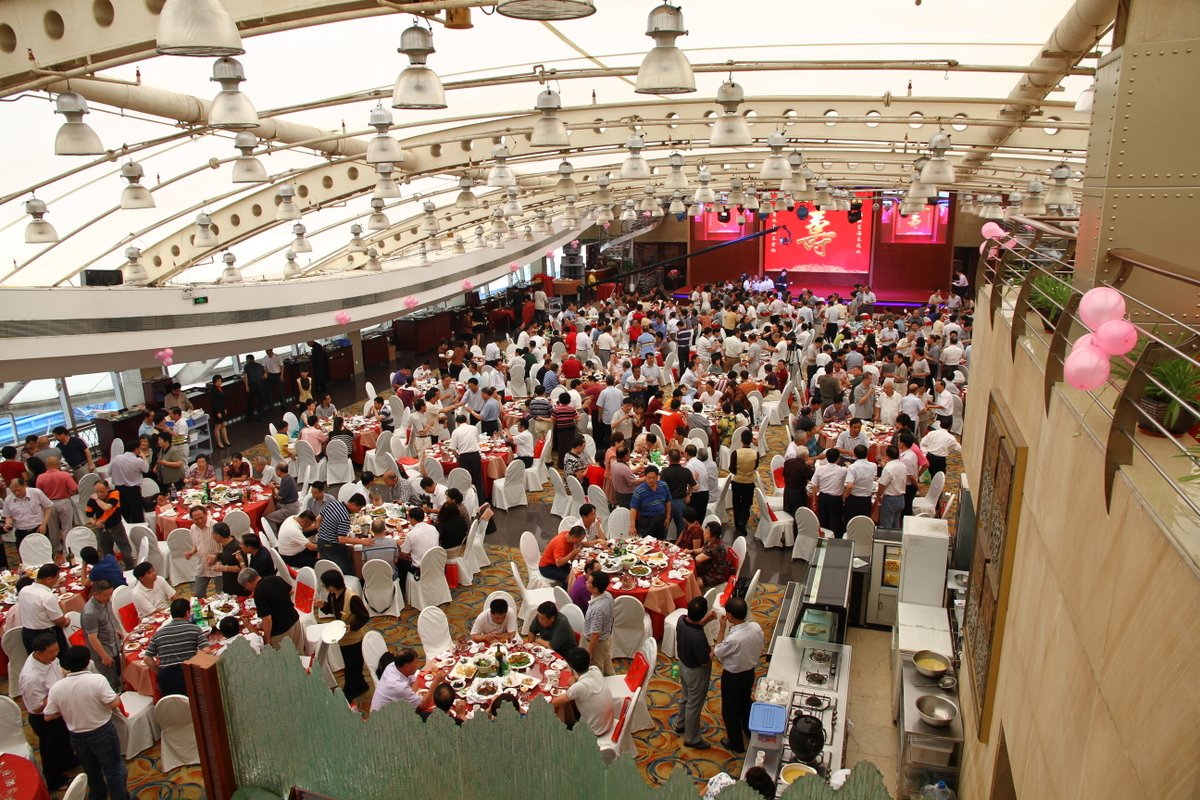
The first time I ate at a proper Chinese round table, I made a mistake within four minutes. A friend in Chengdu had invited me to dinner with his family, and when the first dish landed in the middle of the table — a whole fish, glossy with chilli oil — I did what any British guest would do. I waited to be served. Ten seconds passed. Nobody moved a muscle except the oldest man at the table, who reached across with his chopsticks, took a piece of fish from the part nearest him, and put it directly into my bowl. Then he gestured at the other seven dishes, kindness and confusion in equal measure. It took me most of the meal to understand what he was saying: you eat from the shared plates, you do not wait for a plate of your own.
That dinner reorganised how I think about a Chinese meal. Every assumption about portions and pacing was calibrated to the European system, where the plate is personal property and the table a neutral surface. In China, the table is the plate. The dishes belong to everyone, including the stranger at the far end, and the etiquette is not about individual grace but about keeping the commons working.
How many dishes should a table order for a group?
A table should order roughly one dish per person plus one or two for the table, so six people get seven or eight shared plates rather than six individual ones. I learned this when I ordered ‘for one’ at a group dinner and still received a table’s worth of variety, because the host judges a meal by breadth, not by each person’s portion. Rice arrives late as ballast, not as the centre of the plate, and nobody owns a serving. The practical rule is to let the senior or host set the count, then add a cold dish and a vegetable so the spread covers texture and colour. More dishes signals generosity; too few reads as mean.
Dishes Arrive Shared, Not Plated
The structural fact of a Chinese meal: food arrives in shared bowls, and each person has only a small bowl of rice, or nothing at all, in front of them. No serving spoon, no portioning step, no plate that is “yours”. You take food directly from the shared dishes with your chopsticks — usually the piece nearest you — and eat it off the rice bowl or straight away.

The consequences hit visitors immediately. Portions are ordered by the table, not the person — six people might order eight dishes and taste all of them. Rice arrives late, as ballast rather than the main event; a host judges the meal by variety, not by the size of anyone’s serving. Eat “for one” at a restaurant and you will still get a table’s worth of dishes, leftovers going home in a box.
This is the physics of Chinese dining culture: the meal is shared property, so the manners that matter are the ones that keep the property usable — hygiene, restraint, attention to what others at the table have and have not eaten. Dim sum, where small dishes circulate endlessly and nobody owns a plate, is the same idea at its extreme; the dumpling family of China is the place to start decoding those trolleys.
Where am I supposed to sit at a Chinese round table?
The seat facing the door is the host’s or the most senior guest’s, and you should take whatever chair is waved at you rather than choose. I made the error of sitting in the door-facing seat at a Chengdu family meal and the oldest man gently relocated me, then took it himself. The centre of the table, nearest the lazy Susan’s hub, is for the host who serves; the far side, away from the entrance, is lower status but perfectly fine for a visitor. The honest rule is to wait for a gesture and never claim the prominent seat. If unsure, stand until someone points, because seat order signals respect.
Who Sits Where
Seating at a Chinese table is not random. The seat of honour faces the entrance or the best view, and the most senior guest is steered into it; the host takes the worst seat, back to the door, where they can signal to waiters and watch the room. If you find yourself manoeuvred into the chair facing the door, resist the urge to trade — the seating has done its diplomatic work.
The rest is practical: the eldest sit near the centre, within reach of every dish; the youngest, or whoever will fetch from the kitchen, sit at the edge. At a banquet the tables themselves are ranked — the main table for senior guests, secondary tables for everyone else — a layout the Chinese banquet keeps at weddings and company dinners.
What is the polite way to take food from a shared dish?
The polite way is to use the serving spoon or the clean end of your chopsticks, taking a modest portion of the piece nearest you without rooting through the dish. I keep a spare pair of serving chopsticks by the bowl for exactly this, because reaching in with the sticks that just fed your mouth is the lapse visitors make most. If no serving utensil is offered, flip your chopsticks to the clean end and use that — it signals respect for the commons. Take from the near edge only; digging for the best piece at the far side is selfish and noticed. One quiet reach per turn keeps the table working.
The Serving Chopstick Question
If dishes are shared and everyone eats from them, what about hygiene? The answer depends on the meal, the region, and the generation. There are three levels of formality, and reading the room is the skill:
| Setting | What happens | What you should do |
|---|---|---|
| Family meal at home | Everyone eats from shared dishes with their own chopsticks; no serving utensils | Use the “far end” technique: take food from the part of the dish farthest from you, never digging |
| Ordinary restaurant meal with friends | Serving spoons (gongkuai, 公筷) may or may not appear; often one spoon per dish, sometimes none | If a serving spoon is provided, use it for that dish and return it. If not, follow the host’s lead |
| Formal banquet or business dinner | Serving chopsticks and spoons for every dish; the host serves guests as a courtesy | Accept what is served into your bowl, thank the server, and do not refuse |
The rule that survives all three settings is the “far end” technique: never dig through a shared dish hunting for the best piece, take what is near you, and if you have touched a dish with your own chopsticks, eat from it. Putting a half-grabbed piece back is the one move that marks you as a newcomer everywhere in China.
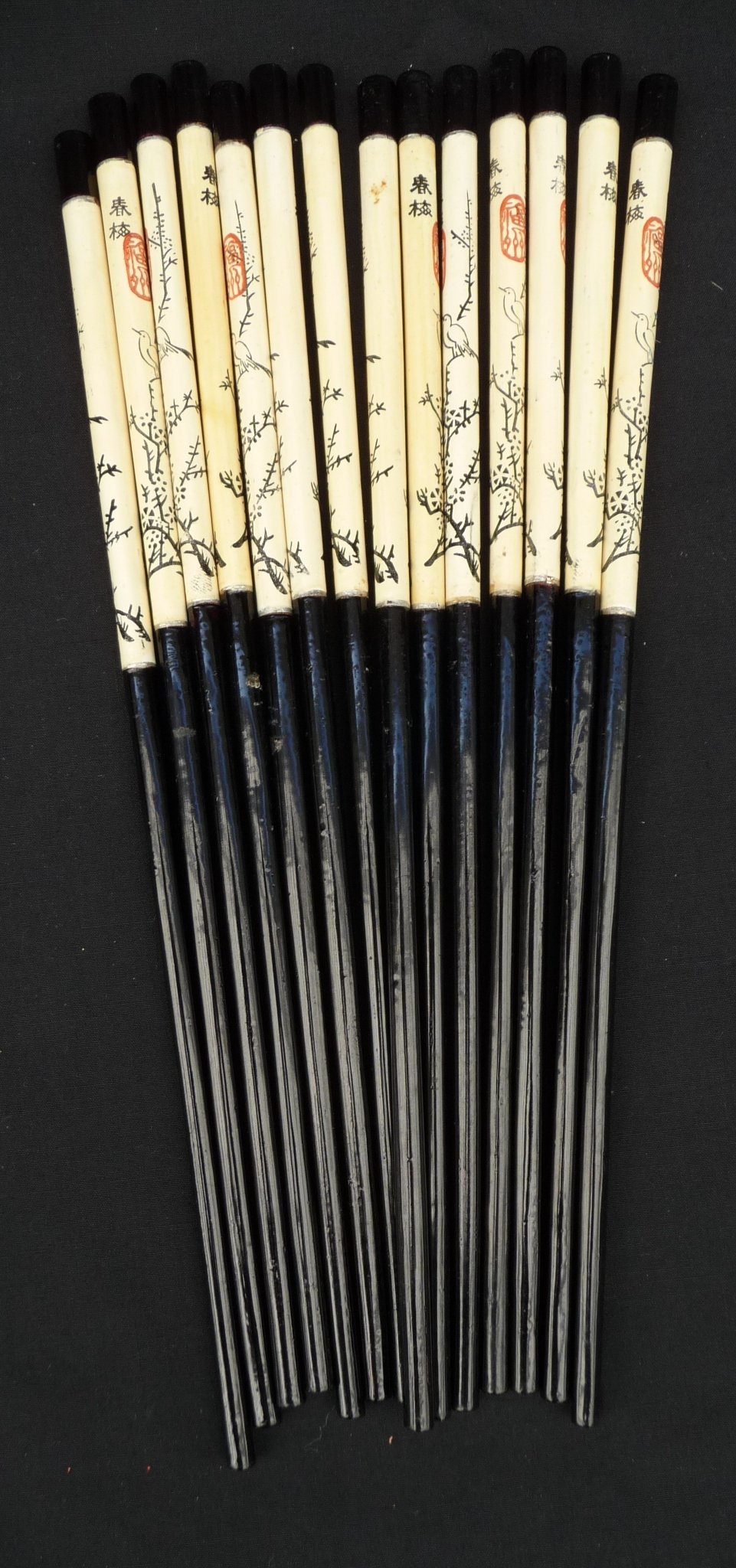
Since SARS, public-health campaigns have pushed serving chopsticks in restaurants; in cities you will increasingly find dark serving chopsticks (gongkuai) alongside your own pale pair. The distinction is colour — pale for you, dark for serving — and if you see two pairs, the longer or darker one is for the shared dishes.
The Chopstick Rules That Actually Matter
Some chopstick taboos are real; others survive only in travel guides. Having stuck mine upright in a bowl of rice in Chengdu and watched three people flinch, here is my honest ranking.
Sticking chopsticks upright in a bowl. Genuinely serious: upright chopsticks in rice resemble the incense burned at funerals and ancestral altars, and the association is with death, not “bad luck” — a taboo recorded, along with the passing rule below, in Wikipedia’s overview of chopsticks. Rest them on the chopstick rest, or lay them across your bowl, tips to the left.
Passing food chopstick to chopstick. Handing food directly between chopsticks evokes the passing of funeral ashes during cremation rites. Put food on their plate instead.
Pointing, waving, licking. A chopstick used as a pointer or drumstick reads as boorish rather than cursed, and the communal system depends on chopsticks clean at the tip — a lick transfers the problem to the next person.
Hitting the bowl for more rice. A beggar’s stereotype in older folklore; modern urban tables treat it as childish, not sinful. You will be teased, not thrown out.
And the etiquette of the first touch: when a dish lands in front of the host or the senior guest, let them take the first portion before you dig in.
Toasting, and the Glass That Stays Low
Drinking at a Chinese table has its own grammar. The core rule for toasts: when you clink with someone senior, position the rim of your glass below theirs — the lower the glass, the more respect it carries. If they keep lowering theirs in response, and they will, the graceful exit is to touch your rim to the body of their glass, or simply to stop and smile.
You do not drink alone. A gānbēi (干杯, “dry the glass”) is a shared event — the toast is made, the glasses emptied together, refills immediate. Sipping while someone toasts you is the drinking-table equivalent of passing on a dish untasted. For what to drink with what, the baijiu and wine pairing guide covers the territory.
Tea is calmer, with its own etiquette: never fill your own cup first. Fill the cups around you, oldest first, and when someone pours for you, tap two fingers on the table in thanks — a habit traced to a Qianlong-era emperor travelling incognito, his servants bowing without giving him away. Which tea to pour is its own subject; the tea and dim sum pairing guide works through the logic.
How do I handle the bill-paying scramble without causing offence?
Handle the scramble by letting the host or most senior person pay, and making one polite attempt to contribute rather than a real fight. I watched a dinner end in a three-way sprint to the counter, and the rule I now follow is to offer once, firmly, then yield if the host insists — pushing too hard reads as refusing their generosity. If you are the host, signal to the waiter quietly beforehand to bring the bill to you, avoiding the public wrestle. The honest caveat: splitting the bill is unusual at a Chinese business or family meal, so do not propose it first. A gracious thanks and a return invitation land better than a wrestling match.
Paying the Bill: The Contest Nobody Admits To
In Britain, splitting the bill is polite. At a Chinese table, reaching for your wallet mid-meal is a small declaration of war. The default assumption is that the host pays — all of it — and the guest’s job is to want to pay and be overruled.
The script: the bill arrives, you make a sincere, forceful attempt to grab it, the host blocks you equally forcefully. This repeats two or three times, sometimes with both parties standing. The host wins; the correct response is gratitude, not continued resistance — though a guest who never reaches at all has committed a small social failure. Among equals the convention rotates: whoever paid last time is exempt; whoever is newly promoted, newly married, or owes a favour pays this time.
What is genuinely rude: calculating your exact share, announcing it, and transferring it. Among younger urban Chinese, WeChat Pay has created a middle path — everyone contributes digitally, nobody performs the fight — but the old contest still governs formal occasions.
Communal plates produce communal leftovers, and doggy bags are normal in China, not an embarrassment. A two-thirds-finished dish gets packed without comment, and the host may send the remainder home with a guest — taking food home signals the meal was valued, not mismanaged. The exception is the formal banquet, where abundance is the message, and a picked-over whole fish rarely survives the trip home in anyone’s estimation, mine included.
Frequently Asked Questions
Is it rude to eat only from one dish?
Not rude, but noticed. The shared system assumes everyone grazes across the table; eating only the dish in front of you suggests pickiness, or that you found the rest inedible. Taste broadly, eat deeply from what you like.
Can I use my own chopsticks to serve myself from shared dishes?
In home cooking and most casual restaurants, yes — that is the default. Use the far-end technique. If serving chopsticks or spoons are provided, use those instead.
What if I drop food on the table?
Retrieve it, bin it or plate it, and carry on. Spills happen at every table; a wipe with the table纸巾 is all the response required.
What do I do with the bones and shells?
Chinese tables provide a plate, or the table surface itself, for shells and bones — many restaurants expect them beside your bowl, wiped away afterwards. Watch the host and copy; the answer varies by venue, not region.
The lazy Susan turns which way?
Either way works, but the convention is clockwise viewed from above. Turn it when taking food or offering the table a better angle; spinning it while people are mid-reach is the fast route to being the least popular person present.
The Point
Communal eating is not a set of restrictions bolted onto a meal; it is a different operating system. Once the table itself becomes the plate, everything else follows — the seating chart, the fight over the bill, the serving chopsticks, the two-finger tap of thanks. You do not need to memorise twenty rules. You need to notice that the food is shared property, and behave as you would in someone’s living room: take what is near you, leave the dish usable for the next person, and let the host do the hosting. For the restaurant-specific version of all this — calling the waiter, reading the menu, ordering without pictures — the guide to Chinese restaurant etiquette picks up where the front door leaves off.


