Sweet Potatoes in Chinese Cooking
It was minus four on a Beijing evening in January and the queue at the sweet potato cart was nine people long. The cart was a converted oil drum laid on its side with a chimney welded to the back, and the man running it had a pair of long tongs and no gloves. He turned the potatoes perhaps twice in ninety minutes, judged them by pressing a thumb into the skin through a rag, and handed them over in a paper sleeve hot enough to hurt through two layers of it. I have eaten a great many sweet potatoes since. None has been as sweet as that one, and I now know exactly why.
The Drum, and Why It Beats Your Oven
A street roaster is a 200-litre drum with embers at the bottom and a steel rack above them. The heat is dry and radiant, the drum leaks steam as fast as the potatoes make it, and the whole thing runs somewhere between 200°C and 260°C for an hour to ninety minutes depending on the size of the potatoes. What you get is a tuber that has lost water and gained sugar at the same time, with the skin blistered and the sugars that leak out of the splits caramelised into black tar on the metal.
Your oven does the opposite of at least one of those things. It is a sealed box, so the moisture that leaves the potato hangs around it, and instead of roasting, the potato partly poaches in its own steam. The result is edible and slightly damp, and never quite as sweet.
Two things fix this at home. Bake on a rack over a tray so air moves underneath, and give the potato a long low tail: 220°C for the first thirty minutes to soften the starch, then down to 160°C for another forty or fifty. For a 280 g potato that is about seventy minutes total, and the last third of it is where the sweetness comes from. An air fryer does a decent impression at 200°C for forty-five minutes, turning once, because the fan carries the moisture away. Prick the skin in three or four places whatever you use; a sealed sweet potato will sometimes burst.
What the Market Actually Sells
Chinese markets do not sell “sweet potato”. They sell named types, and the difference between them is bigger than any difference a recipe will make.
| Type | Chinese | Character | Texture when cooked | Best for |
|---|---|---|---|---|
| Orange-fleshed (红心) | hóng xīn | Wettest and sweetest, deep orange | Soft, almost jammy, “honey” flesh | Street-style roasting, 拔丝地瓜, mashed fillings |
| Yellow-fleshed (黄心) | huáng xīn | Balanced, moderately sweet | Fluffy, holds shape a little | Roasting, congee, braises with pork |
| White / chestnut (白薯, 板栗薯) | bái shǔ | Driest, least sweet, chestnut-like | Dense, crumbly, firm | Slicing into stir-fries, frying as batons, savoury dishes |
| Purple (紫薯) | zǐ shǔ | Drier, milder, faintly floral | Firm, starchy, vivid violet | Steamed buns, mooncake paste, café-style cheese bakes |
My own rule is simple: if the potato is the point of the dish, buy orange-fleshed; if it has to hold its shape next to meat or in a wok, buy white or chestnut. Purple is a colour ingredient more than a flavour one, and it goes grey-blue and soapy if you boil it in hard water — steam it instead.
What Heat Does to Starch and Sugar
Sweet potatoes contain an enzyme, beta-amylase, that breaks starch down into maltose. It works fastest somewhere around 60–75°C and dies above roughly 80°C. That window is the whole secret. Heat the potato slowly and it spends a long time in the window, and a lot of starch becomes maltose. Blast it and the enzyme is killed early and you eat starch that never had the chance.
This is also why roasting beats boiling, and why the sweetest ones are the ones stored for weeks after harvest rather than eaten straight out of the ground: commercial growers cure them at warm temperatures for about a week precisely to let that enzyme work. As Wikipedia’s entry on the sweet potato points out, it is not a potato at all — it sits in the morning glory family, Convolvulaceae — and it behaves nothing like one in the pan.
The practical consequences:
- Bake, steam or air fry. Boiling leaches sugar into the water. A steamed sweet potato at 100°C is pleasant but noticeably less sweet than a baked one; I steam when I want them for mashing and bake when I want them as they are.
- A microwave is not cheating. Eight hundred watts for seven minutes, then five minutes resting wrapped in a towel, gives a properly sweet potato. The texture is steamed rather than roasted, so it is the right call for fillings and the wrong one for eating from the skin.
- Low and slow, then rest. Ten minutes off the heat lets the last of the enzyme finish its work.
The Savoury Half
The savoury uses are the ones English-language cooking usually misses, and they are the reason I buy the dry white-fleshed type.
Sliced or shredded into a stir-fry, sweet potato needs help: raw slices take far longer to soften than the wok wants to give them. I par-cook them first — two minutes in boiling water, or four minutes in the microwave — then stir-fry hard with garlic, a spoonful of Doubanjiang and a splash of water, finished with spring onion. The chilli bean paste supplies salt and funk, the potato supplies sweetness, and the dish is done in five minutes from cold pan to table.
Grated and mixed with a little starch, the same potato becomes fritters. Squeeze the gratings dry first or they will never brown; then pan-fry spoonfuls flat in a thin film of oil over medium heat, three minutes a side. They are very good with all about chinese sweet chilli sauce, and a spoon of my notes on chili crisp over a plain roasted half is one of those combinations that sounds invented and tastes traditional.

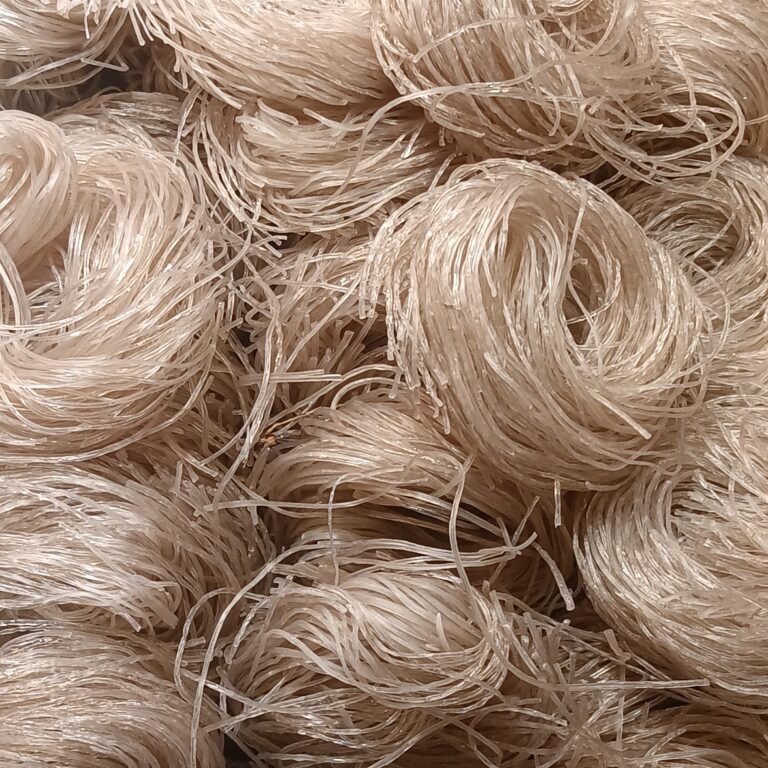
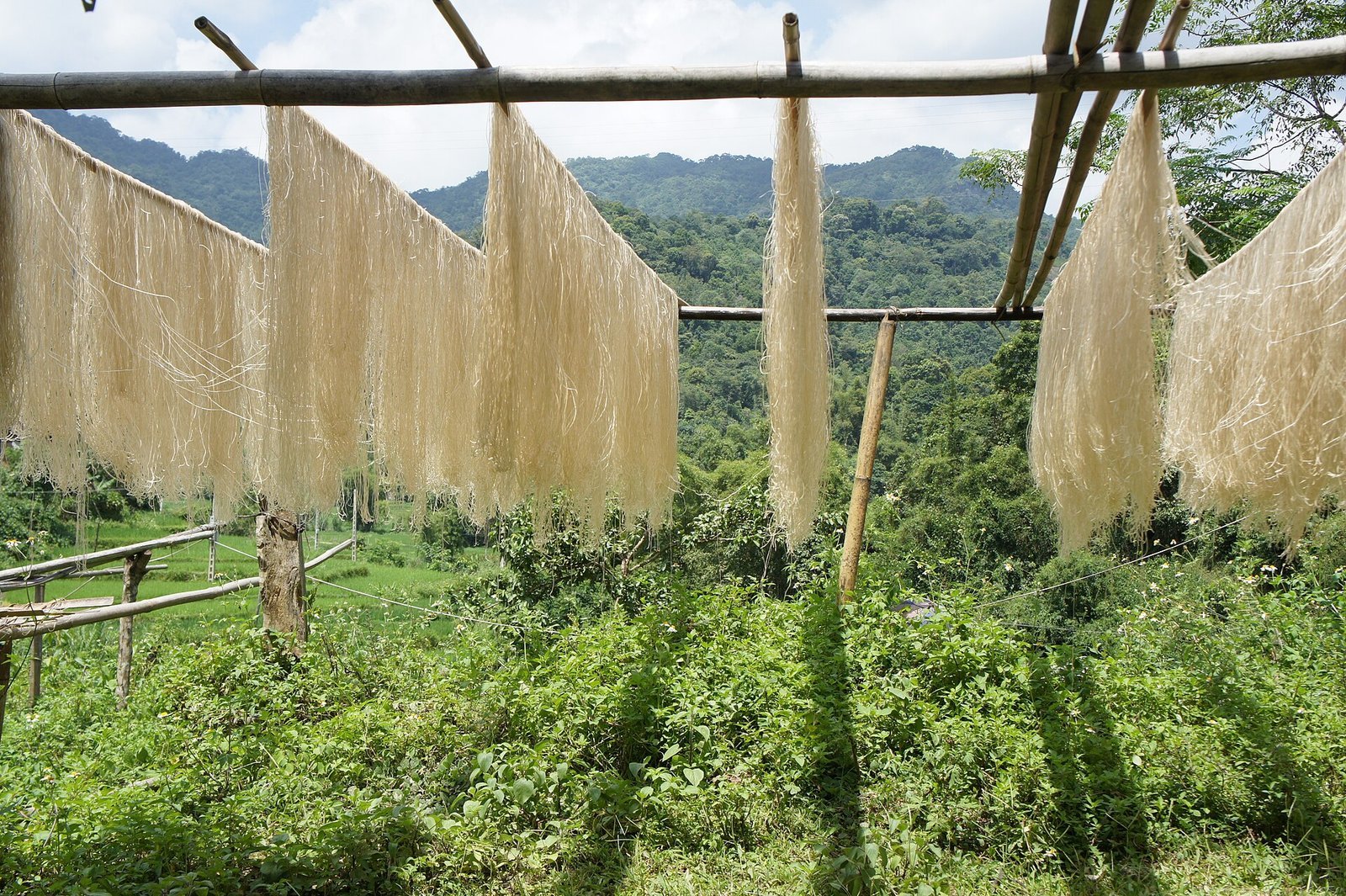
In Sichuan snack shops the thick sweet-potato noodle (红薯粉条) is the whole point of 酸辣粉, sour-hot noodles — the same bowl-building logic as Dan Dan Noodles: sauce assembled in the bottom, starch dropped on top.
The starch matters too. Sweet potato starch (红薯淀粉) is sold as a lumpy white powder and makes a glossy, elastic slurry that survives reheating far better than cornflour — the reason hot-and-sour noodles thickened with it still have body the next morning. The Cornstarch Potato Starch Guide sets out where each one earns its place; my short version is that I use sweet potato starch for braises and noodles, and cornflour for quick pan sauces.
Two more savoury places it belongs. In congee: a small orange-fleshed potato diced into rice at the start of the cook dissolves into the porridge and sweetens it, and a chopped how century egg is really done stirred through at the end is the version I make when I want breakfast to be an argument. And in red-braised pork: chunks added for the last half hour drink the fat and stay intact, doing the same job everything you need to know about bamboo shoots does in a mountain braise. If you want the crisp rather than the soft version, thin slices fried from raw behave much as Lotus Root explained — starch on the surface, water inside, and a hard listen while it fries.
The Dessert Half
The showpiece is 拔丝地瓜 (bá sī dì guā), literally “pulled-thread sweet potato”. Cut an orange-fleshed potato into fat batons, fry at 160°C for four minutes until just tender, then again at 190°C for a minute to set the outside. Melt four tablespoons of sugar with a tablespoon of water in a dry pan over medium heat, no stirring once it dissolves, until it turns the colour of pale amber — about 155°C, though I go by eye and by the smell. Kill the heat, throw in the batons, toss twice, and serve immediately with a bowl of iced water for dipping. The threads form when you lift the chopsticks and shatter when they hit the cold water.
Softer and far more common at home is 红薯糖水: diced sweet potato simmered in water with rock sugar and a few slices of old ginger for twenty minutes, eaten hot in winter and cold from the fridge in summer. The ginger is not optional in my kitchen; without it the bowl is just sweet. Purple ones baked with mozzarella at 200°C for fifteen minutes are a mainland café thing I sneered at and now make.

Buying, Storing, and Two Mistakes I Keep Making
The second is peeling Below about 12°C sweet potatoes take chilling injury: the flesh develops hard cores that never soften, the flavour goes flat and they can pick up a faintly chemical note. Keep them at cool room temperature in the dark with some air movement, and they will last two or three weeks. A sealed plastic bag is worse than nothing.
Buy potatoes of a similar size so they finish together, with unbroken skin and no soft patches.
The fridge first. Scrub them instead. The skin holds moisture in during the long bake and is perfectly good to eat, and once you have eaten a properly roasted one skin and all you will not go back. If they sprout, they are still fine — unlike true potatoes, there is no solanine problem — though the flesh gets stringy and is better grated into fritters than roasted.
For the record, the cart in Beijing cost me the equivalent of about eighty pence, and I have been chasing it with an oven for years.
Frequently Asked Questions
Is a sweet potato the same thing as a yam?
No. In American shops “yam” is a marketing word for orange-fleshed sweet potatoes. A true yam is a different plant in the genus Dioscorea, with rough bark-like skin and much drier white flesh.
Why are mine never as sweet as the street cart ones?
Almost always heat management. The cart’s drum leaks steam, runs hotter and holds the potato in the 60–75°C enzyme window on the way up. Bake yours on a rack with air around it, and give it a long low tail at 160°C instead of one constant high temperature.
Can I eat the skin?
Yes, and with a street-style roast you should: much of the caramelised flavour is on and just under it. Scrub rather than peel, and cut away any green or damaged patches.
Do purple sweet potatoes taste different?
Milder and drier than the orange ones, with a faint floral note and much less sweetness. I treat them as a colour and texture ingredient — steamed and mashed into dough, or baked — rather than something to eat on its own.
Is sweet potato starch the same as cornflour?
No. It is coarser, gives a glossier and more elastic sauce, and survives reheating in a way cornflour does not; it is the traditional thickener for Sichuan sweet potato noodles. For a quick pan sauce, cornflour is still the better tool.
I still buy from a cart whenever I can. The rest of the time I keep them out of the fridge and bake longer and lower than instinct suggests.