Taro in Chinese Cooking
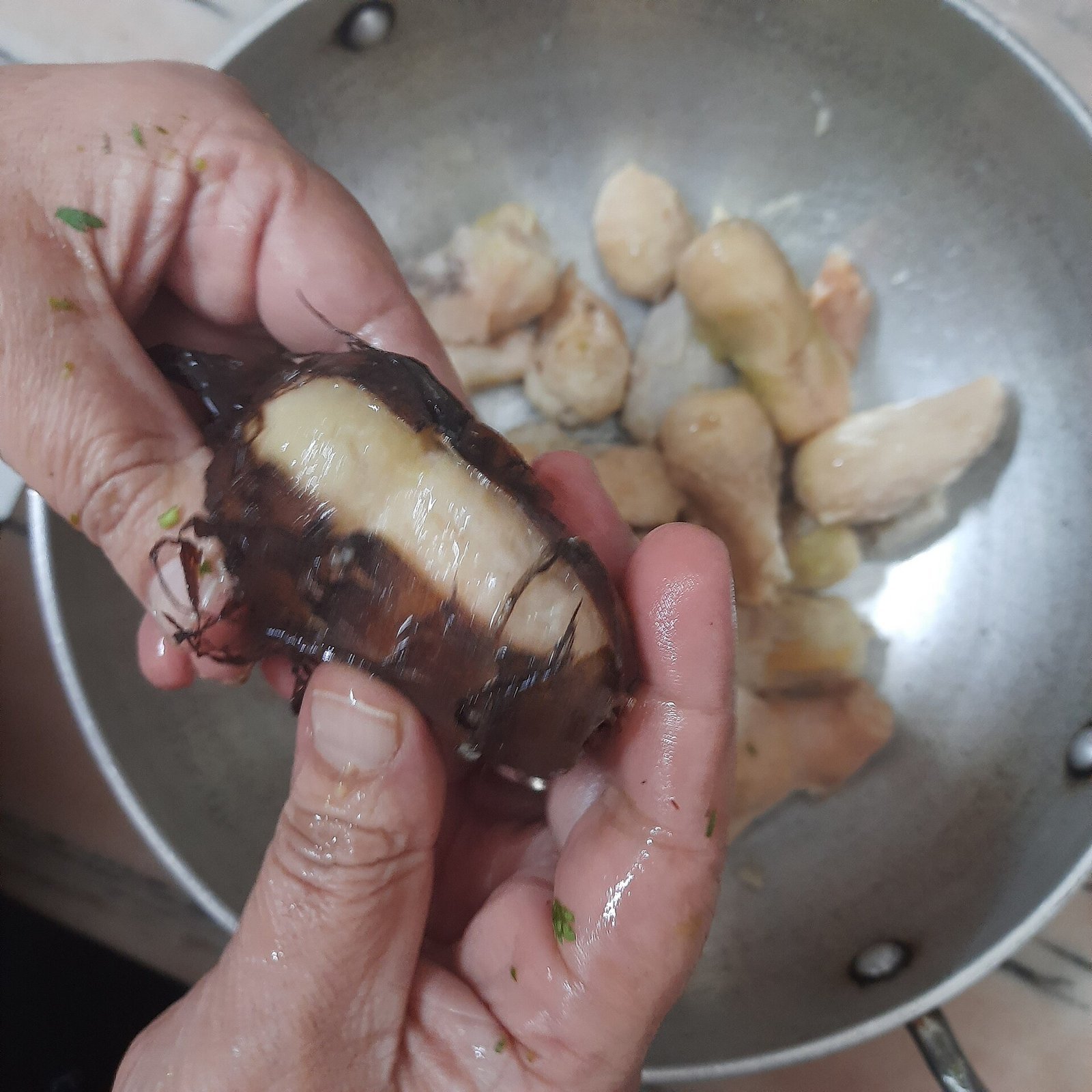
The first time I peeled a kilo of taro with my bare hands, I spent the rest of the evening with forearms that burned and itched, and a growing certainty that I had done something stupid. I had. The irritation is not an allergy and it is not imagination: raw taro is packed with needle-shaped calcium oxalate crystals, and rubbing them into your skin is exactly as bad an idea as it sounds. I now keep a box of nitrile gloves in the kitchen drawer for this one vegetable. That is the entire lesson, and it cost me an evening to learn it.
Everything after that is pleasure. Taro is one of the great textures of Chinese cooking: dry and floury when you want it to soak up pork fat, slippery when you want it to hold its shape in a braise, mild enough to disappear into sugar and coconut milk.
The Plant Behind the Brown Hairy Ball
Taro is Colocasia esculenta, and the part you eat is a corm — a swollen underground stem rather than a root, although every greengrocer will call it a root all day long. As Wikipedia’s entry on taro sets out, it is among the earliest cultivated crops on record, grown across Asia, the Pacific and Africa for thousands of years, and still a staple wherever rice struggles. In China it travels under two names, and the name tells you what you are holding: 芋头 yùtou for the big central corm, and 芋艿 yùnǎi — 毛芋 in some markets — for the smaller satellite corms clustered around it.
They are not the same eating experience at all, which is the thread running through everything below.
One confusion worth clearing up. The vivid purple of “taro” bubble tea and “taro” ice cream is frequently not taro: in Chinese dessert shops that colour often comes from purple sweet potato (紫薯), and in South-East Asian versions from ube, a yam in the Dioscorea family. Real betel-nut taro flesh is off-white with purple flecks and smells of nothing much — a clean starchiness.
Why Raw Taro Makes You Itch, and How I Handle It Now
The crystals are called raphides: tiny sharp bundles of calcium oxalate that puncture on contact. Heat destroys the problem completely, which is why nobody itches from eating a properly cooked piece. It is purely a raw-handling problem.
My routine is boring and it works. Gloves for peeling and cutting. If I am boiling the small ones I boil them unpeeled and slip the skins off afterwards, which is faster anyway and avoids the slippery sap entirely. Anything that touched the raw flesh gets washed in hot soapy water, and I wipe the board with a splash of vinegar — acid helps dissolve the oxalate, a habit I picked up from a market woman who watched me suffer and told me off.
If you forget the gloves: wash in hot water and soap, then rub with something acidic, lemon juice or vinegar, and do not scratch and do not touch your face. It fades. Taro should never be eaten raw, and if a clinician has told you to watch oxalate intake, raise taro with them rather than deciding from a blog — it is not a low-oxalate vegetable.
What I Look For at the Stall
Weight, first. A good corm feels heavy for its size, dense and solid in the hand; a light one has been sitting around losing moisture. Then the skin: dry, brown, fibrous, ringed in bands, hairy. Any soft patch, any dark wet spot at top or base, any sour smell, and I put it back — taro rots from the inside and you will not know until you cut it.
If the stall will show you a cut face, look at it. On a betel-nut type the flesh should be pale with purple flecks, faintly chalky and dry rather than damp and glassy. Buy whole, never pre-cut: cut taro weeps a slippery sap, dries at the surface and greys within hours.
You see far more of it from autumn onward, and stacks of the small 芋艿 around the Mid-Autumn period, when plenty of southern families serve it. My last kilo at a Chinese grocer cost me something in the region of £4; the small ones are dearer per kilo precisely because you are paying for the peeling, and they are worth it.
Starchy Versus Waxy: The Split That Decides Your Dish
This is the distinction that actually matters in a Chinese kitchen, and it maps cleanly onto the two names above. It is the same kind of starchy-versus-crisp logic that decides a proper take on lotus root, and once you have it in your head you stop having bad taro.
| Starchy / floury (粉) | Waxy / slippery (糯) | |
|---|---|---|
| Names | 荔浦芋 Lipu taro, 槟榔芋 betel-nut taro | 芋艿, 毛芋, 红芽芋 |
| Size | Large, 500 g to well over a kilo | Small, an egg or a golf ball each |
| Raw flesh | Pale with dense purple flecks | Near-white, smoother |
| Cooked texture | Dry, crumbly, like a good baking potato | Smooth, satiny, holds its shape forever |
| Best for | Mashing, deep-frying, steaming with pork | Braises, soups, scallion-oil tosses, desserts |
| Usual mistake | Boiling it, then wondering why it is watery | Expecting it to thicken a sauce |
Lipu taro, from Guangxi, is the famous one: steamed, it goes genuinely floury, and that dryness is exactly what you want when there is pork fat to absorb. The small ones stay slippery no matter how long you cook them, which is why a Jiangnan cook will drop them into a rib braise and still have whole pieces an hour later. In those same Jiangnan kitchens — the region I wrote about in all about huaiyang cuisine — the small corms are most often simply boiled, peeled and rolled in hot scallion oil with salt, which is the quickest good taro dish I know.
Savoury Taro: Steam, Braise and One Dish Worth the Effort
The dish I would point anyone at first is 芋头扣肉: alternating slices of starchy taro and pork belly, skin-down in a bowl, steamed a couple of hours, then turned out. The taro slices are usually fried briefly first so they keep their edges, and by the end they taste better than the pork — which is the point, and also why cooks argue about whose mother does it properly.
The rule I learned the hard way: taro goes into a braise late. Twenty to thirty minutes is plenty for small pieces. Longer and the starchy ones vanish into the sauce — fine if sauce was the point, miserable if pieces were.
It also will not thicken a pot. The liquid around taro stays thin; the gloss in a bowl of Hot And Sour Soup comes from starch slurry, not taro. Taro thickens only the mouthful it is in.
Mashed starchy taro also becomes a wrapper for the deep-fried dim-sum croquette 芋角, piped into a lattice that crisps around a pork filling — the same family logic as How To Make Chinese Dumplings, with taro instead of wheat. The steamed taro cake has its own page elsewhere; I am leaving that alone here, because this piece is about the vegetable rather than the dish.
If you are building an autumn braise at all, the partner I would put beside it is everything you need to know about bamboo shoots — both are mild, both want fat and time, and neither shouts.
The Sweet Half of the Menu
The Teochew sweet is the one that ruined two of my evenings before I got it right. 反沙芋头 is taro sticks, deep-fried until the edges are firm, then tossed in sugar syrup cooked to the thread stage, taken off the heat and stirred until it re-crystallises into a white frost. Stir too early and you get sticky syrup; too late and it sets hard in the pan.
Then there is 芋泥, the Fujianese paste: steamed starchy taro mashed with lard and sugar into a smooth, glossy, faintly grey mound, sometimes with a spoon of red bean paste. It is a banquet dish with one famous property — it looks cool and it is molten. I have the scar on the roof of my mouth.
The other sweet face is the Taiwanese 芋圆 ball, and here is the honest bit: the chew comes almost entirely from tapioca or sweet potato starch, not from the taro, which contributes flavour and colour. The Cornstarch Potato Starch Guide covers those starches properly.
My weekday version is lazier — waxy taro in coconut milk with sago, twenty minutes, a little rock sugar. Use the small waxy corms; the floury ones go grainy in liquid.

Storing It Without Losing a Kilo to Mould
Uncooked taro wants a cool, dark, dry place and absolutely not the fridge. I lost a kilo that way once: sealed in a plastic bag in the crisper, four days later it was black mould and a smell I still remember. Chilling damages it; plastic traps the moisture that does the rest.
Paper bag or an open basket, checked weekly, and use it within a week or two. If one corm develops a soft patch, cut it away generously and cook the rest that day. Peeled raw taro will keep overnight submerged in cold water in the fridge. Cooked taro keeps two or three days refrigerated; mashed taro freezes well for a couple of months and thaws perfectly well for dumpling filling or another batch of paste.
Most larger Chinese supermarkets also sell frozen grated or chunked taro, and for desserts it is a reasonable shortcut, because smooth is what you wanted anyway.
Frequently Asked Questions
Does taro need soaking before cooking? Not for safety, since cooking handles the oxalate issue on its own. Soaking peeled pieces in cold water for half an hour does wash away some of the surface starch and gives you less sticky results in stir-fries, and it is worth doing if you are deep-frying.
Why did my braise turn gluey? Almost certainly you used a starchy corm and cooked it too long, or you cut it too small. Use waxy 芋艿 for long braises, cut larger pieces, and add them in the final twenty minutes.
Is taro the same as ube or purple sweet potato? No. Ube is a Dioscorea yam and purple sweet potato is a sweet potato; taro is Colocasia. Recipes swap them freely because all three are starchy and mild, but the textures are not interchangeable and the colour in most commercial “taro” desserts is borrowed rather than real.
How do I stop the itch if I already forgot the gloves? Wash in hot soapy water, then wipe the skin with vinegar or lemon juice and wait. Do not scratch and do not touch your eyes. In my experience it settles within an hour or two.
Can I eat taro if I have been told to limit oxalates? Ask the clinician who told you, not a food blog. Taro is not a low-oxalate food, and it is cooked rather than raw which reduces but does not erase the question.