Rice Vinegar: Clear, Dark and Everything Between
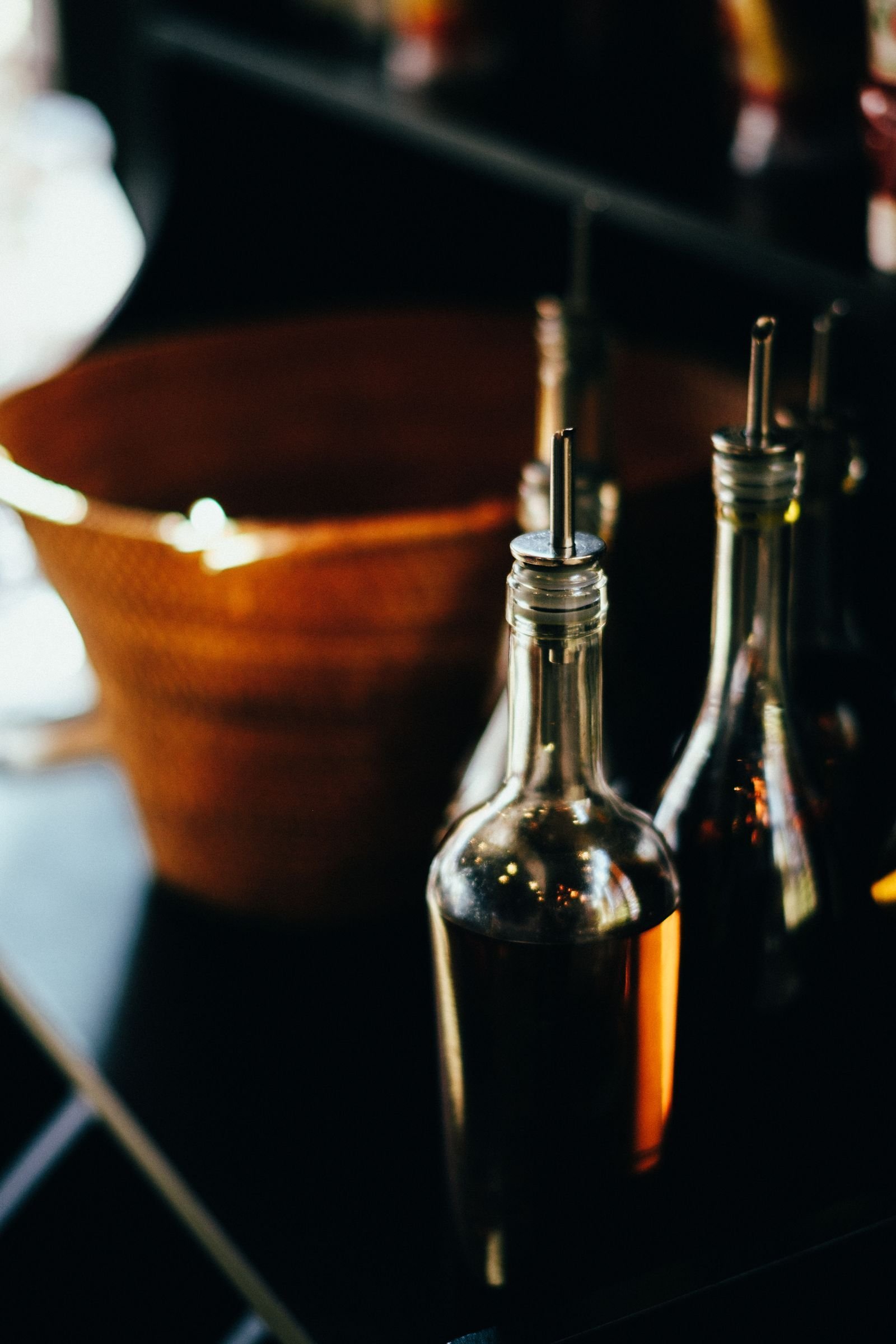
Clear rice vinegar is not a diluted or weaker version of dark Chinkiang vinegar, and treating it as one is the most common error I find in English-language Chinese recipes. Both are made from rice, both are sour, and both sit in the same cupboard; chemically and culinarily they are different products with different jobs. The clear one is a sharp, almost colourless acid with a clean finish, the dark one an aged, malty, brown liquid. I spent a year assuming the pale bottle was simply the mild option for cooks who could not take the dark one, and my sweet-and-sour dishes were flat for exactly that reason.
This guide confines itself to the clear, or white, rice vinegar sold in tall bottles across China and in every East Asian grocer abroad. I set the dark vinegar aside as a contrast rather than explain it again, and I keep rice wine and fermented rice in their place as related but separate things. The structure is a comparison, because that is where the confusion begins: three bottles, one grain, three entirely different outcomes.

What the Bottle Actually Contains
The first useful number is on the back label. Most Chinese clear rice vinegars I have tested sit between 4% and 5.5% acetic acid by volume; Japanese versions are milder, often around 4% to 4.5%, while the grain-based white vinegar sold as bai cu can reach 5% or more. That range is not trivial. A 4% vinegar and a 5% vinegar differ by a quarter in acid strength, which is the difference between a dressed cucumber that tastes bright and one that tastes watery. I now check the figure before buying, because two bottles that look identical in the pan behave differently in a cold dressing.
Production explains the clarity. Rice is steamed, its starch converted to sugar, the sugar fermented to alcohol, and the alcohol then oxidised to acetic acid; the pale liquid is filtered and, in cheaper bottles, diluted to the stated percentage. Wikipedia’s entry on rice vinegar notes that Chinese, Japanese and Korean versions differ chiefly in the rice used and in how far the final vinegar is diluted. The starting grain is often glutinous rice, the same grain that, dried and milled, becomes everything you need to know about chinese glutinous rice flour, though here it takes a wet, two-stage route rather than a dry one.
Nothing in that process adds colour or body. What comes out is water, acetic acid, a trace of residual rice solids and a faint grainy aroma, which is why clear vinegar can season a dish without visibly changing it.
Clear Against Dark
The persistent misunderstanding is that the dark bottle is simply the clear one with age and strength added. It is not. Both are roughly comparable in acidity; the dark vinegar gets its colour, malty aroma and faint sweetness from long ageing, often in sealed earthenware jars, and in many commercial bottles from added caramel and a little sugar. The aged product is covered properly in the Chinese Black Vinegar Guide, and I need it here only as a point of contrast. Using it where a clear vinegar is called for changes the dish in three ways at once: colour, sweetness and aroma.

| Clear rice vinegar | Dark Chinkiang vinegar |
|---|---|
| Nearly colourless | Deep brown-black |
| 4–5.5% acetic acid, sharp | Similar acidity, malty and rounded |
| Almost no sugar | Noticeable sweetness, sometimes caramel colour |
| Dressings, quick pickles, sweet-and-sour | Braises, dipping sauces, noodles |
I ran the comparison directly. I made the same sweet-and-sour sauce twice, once with 40 ml of clear vinegar and once with 40 ml of dark; the dark version came out muddy brown, tasted distinctly sweeter, and lost the clean top note that makes the dish readable. No adjustment to the sugar rescued it. The two vinegars are not points on a single scale of strength; they are different reagents, and the recipe assumes one of them.
Vinegar, Rice Wine and Fermented Rice
A second confusion puts rice wine and rice vinegar on the same shelf in the cook’s mind. Shaoxing wine is fermented rice at roughly 15–20% alcohol, barely acidic, used to lift a braise or a marinade; clear rice vinegar is the end of a further fermentation, sharp and with essentially no alcohol left. Adding wine where a recipe wants vinegar gives you neither the acid nor the bite. Adding vinegar where it wants wine gives you a sour, thin sauce with none of the wine’s rounded aroma.
| Liquid | What it actually is |
|---|---|
| Clear rice vinegar | Rice fermented to alcohol, then to acetic acid; sharp, no alcohol left |
| Shaoxing rice wine | Fermented rice, 15–20% alcohol, barely acidic, for cooking |
| Jiu niang | Sweet fermented rice, low alcohol, faintly sour, eaten as a dessert |
Jiu niang, the sweet fermented rice set out in Chinese Fermented Rice explained, belongs to the same family but sits further away again: it is eaten as a dessert or a soup base, lightly alcoholic and only faintly sour. It is a contrast here, not a substitute. I mention it because shoppers who meet all three in one aisle reasonably assume a shared sourness, when in fact only one of them is an acidulant.
Where Clear Vinegar Works
The clear bottle earns its place where colour and cleanliness matter. For a cold cucumber dressing I use 30 ml of vinegar, 10 g of sugar and 2 g of salt for 300 g of cucumber, dissolving the sugar in the vinegar off the heat at about 60 °C before it goes over the vegetables with a little coriander. A few drops also lift the sesame and chilli oil in Dan Dan Noodles in the versions I make at home, cutting the richness without adding a brown cast. In both cases the vinegar is a seasoning, not a visible ingredient.
Quick pickles are the other natural home. I cut 200 g of radish, courgette or aubergine into thin pieces, toss them with 40 ml of clear vinegar, 15 g of sugar and 3 g of salt, and leave them twenty minutes; the acid firms the surface and keeps the colour bright. A dark vinegar would stain the same vegetables brown within five minutes. These are refrigerator pickles eaten the same day, not preserves, and the whole point is that the vegetable still looks like itself.
In sweet-and-sour dishes the clear vinegar supplies the acid against sugar without adding weight, which is why it appears in the better versions of the sauce. how chinese plum sauce is really done typically includes a measure of clear rice vinegar to keep the fruit sweetness from cloying. Where a dish already carries the salty depth of all about chinese black bean sauce, the vinegar’s job is to cut through it rather than to add more body. In each case clear vinegar is chosen precisely because it brings acid and nothing else.
The Substitution Problem
The practical question is what happens when one bottle stands in for another, and the answers are less forgiving than recipe writers imply. Clear for dark in a braise leaves the dish pale and missing the malty depth; dark for clear in a dressing or a pickle stains it and sweetens it. Rice wine for vinegar leaves the dish flat and under-seasoned. I keep two bottles for this reason, a habit I practise without thinking now: a 500 ml clear vinegar for dressings and pickles, a small dark one for braises, and I label the clear one with its percentage so I do not confuse it with a grain white vinegar at 5% or above.
Some failures are not substitutions at all. The chilli-fermented heat of Doubanjiang is a different axis entirely from acidity, and no extra spoonful of vinegar will imitate it; I tried that once in a mapo-style sauce and simply made it sour as well as muddy. Acidity, salt, fermented funk and chilli heat are separate variables. Recognising which one a dish is missing is most of the work, and clear vinegar only ever answers the first.
Reading a Chinese Label
Buying is straightforward once you know the words. Mi cu or bai mi cu points to rice vinegar; bai cu on its own is often a cheaper grain vinegar, sharper and without the faint rice aroma, perfectly usable but not the same thing. Bottles labelled for pickling are usually at the higher end of the acidity range. I choose a clear vinegar between 4% and 5% for everyday dressings, and I avoid anything with added sugar or caramel colour if the label calls it rice vinegar, since that is a sign of a seasoned product rather than a plain one.
Storage is undemanding: a cool, dark cupboard, the cap tight, and a bottle finished within a year of opening. Acetic acid is stable, but an open bottle slowly loses its clean top note and picks up dust; I buy 500 ml rather than a large jug for that reason. My favourite bottle at the moment is a 4.5% one from a Zhejiang producer, chosen as much for the percentage on the back as for the flavour.
Frequently Asked Questions
Is clear rice vinegar simply a weaker black vinegar?
No. Both sit in a similar acidity range, roughly 4–5.5% acetic acid; the dark one gains colour, malty aroma and sweetness from ageing and sometimes added caramel. They are different products with different jobs, not two strengths of the same thing.
Can I use rice wine instead of rice vinegar in a dressing?
Not if you want acidity. Shaoxing wine is 15–20% alcohol and barely sour, so a dressing made with it tastes flat and rich rather than bright. Vinegar is the end of a second fermentation that converts that alcohol to acetic acid.
What does the percentage on the label mean?
It is acetic acid by volume. A 5% vinegar is a quarter stronger than a 4% one, which matters most in uncooked dressings where nothing else dilutes it. I choose 4–5% for everyday use and check the figure before buying.
Why did my quick-pickled vegetables turn brown?
Almost certainly a dark or seasoned vinegar. Clear rice vinegar keeps radish, courgette and cucumber bright for the twenty minutes a quick pickle needs; an aged Chinkiang vinegar stains them within five. Use the clear bottle wherever colour matters.
Why does my sweet-and-sour sauce taste flat even with enough vinegar?
Check which bottle you used. A dark vinegar sweetens and muddies the sauce, and a rice wine adds no acid at all, so the clean top note never appears. Measure 40 ml of a plain 4–5% clear vinegar and the balance usually returns.