“Water Chestnuts: Crunch in Chinese Cooking”
“Fruit or vegetable?” I asked a stallholder in Suzhou, holding a mud-dark bulb no larger than a walnut. She cut away its skin, rinsed the white centre and passed it over. The first bite cracked like a crisp pear, then released cool, grassy juice. I had eaten tinned water chestnuts for years, but this was a different ingredient entirely. The contrast made every familiar tinned slice suddenly seem strangely muted.
In China, fresh water chestnuts often appear in market fruit displays as well as vegetable rows. People snack on them raw, simmer them in sweet drinks and fold them into savoury fillings. Their talent is texture: even after a short spell in a fierce wok, the pieces keep a bright, watery crunch.
An Aquatic Corm, Not a Nut
The name causes unnecessary confusion. A water chestnut is the underground corm of an aquatic sedge, not a tree nut. The species profile for Eleocharis dulcis describes the plant behind the glossy brown corms sold across China. Beneath the papery skin, the flesh is ivory and ringed with fine cells that hold water remarkably well.
Fresh flavour is quiet but specific: sweetcorn, Asian pear and the faint earthiness of a raw potato. That restraint lets the corm take seasoning without disappearing. It is also why stale water chestnuts disappoint. Once the juice has gone, there is no powerful aroma to carry them.
In Jiangnan cooking, the ingredient feels particularly at home. The gentle sweetness and attention to crisp seasonal textures echo many dishes covered in Shanghai Food. In hotter preparations, it serves another purpose. Cubes of water chestnut interrupt the chilli, fermented bean and oil associated with Sichuan Cuisine without diluting their flavour.
From Muddy Bulb to Clean White Flesh
I usually see fresh corms from late autumn into winter. Prices in eastern Chinese markets have ranged from about ¥6 to ¥14 per 500 g in my notebooks, depending on size and whether the bulbs were washed. Muddy ones are not inferior. A thin coat of damp soil can protect them, while aggressively scrubbed bulbs sometimes dry and wrinkle faster.
Choose corms that feel heavy and resist thumb pressure. Their skin should be taut, dark chestnut-brown and free from soft black hollows. Smell the bag. Clean earth is normal; sourness or fermentation is not. Very large specimens are quick to peel, though medium corms, around 25–35 g each, often taste sweeter.
At home I rinse off loose mud but keep the skins on until needed. In a perforated bag at 3–5°C, sound corms keep for roughly a week. Once peeled, submerge them in cold water in a covered container, refrigerate and change the water daily. I use them within two days. If the water clouds rapidly or the surface becomes slippery, they go into the compost.
Peeling takes patience. Slice 3 mm from the top and root end, stand the corm flat, then run a small sharp knife down its curves. A swivel peeler skips over the knobbly sides and wastes less only on unusually smooth specimens. From 500 g unpeeled, I normally obtain 360–390 g clean flesh in about 12 minutes.
Fresh, Tinned or Frozen: What Changes
Tinned water chestnuts are cooked, peeled and convenient, but they are not a perfect substitute. Their crunch is dense rather than juicy, and the canning liquid can leave a flat, faintly metallic edge. Rinse them for 30 seconds and soak in fresh water for five minutes before use. Frozen sliced water chestnuts are less common; after thawing they work in fillings, though they shed more moisture in a stir-fry.
| Form | Texture | Flavour | Preparation | Best use |
|---|---|---|---|---|
| Fresh | Juicy, brittle crunch | Sweet, grassy, faintly earthy | Wash and peel | Raw snacks, quick stir-fries, sweet soups |
| Tinned | Firm, uniform crunch | Mild and slightly briny | Rinse and drain | Fast weekday dishes, sauced stir-fries |
| Frozen | Crisp centre, softer edge | Clean but subdued | Thaw and dry | Dumpling or meat fillings |
Fresh slices begin oxidising after cutting, although much more slowly than apples. If prep must wait, keep them in cold water with 1 teaspoon rice vinegar per litre. Drain and dry thoroughly before frying. Water on their surface lowers wok temperature and turns a quick fry into a steam.
Compared with the tender-fibrous bite discussed in all about bamboo shoots, water chestnut crunch is cleaner and more glassy. I would not swap one for the other in a dish built around texture, though both can bulk out pork or prawn fillings.
Three Cuts and the Jobs They Do
For stir-fries, I cut peeled corms across into 3–4 mm coins. They need only 90 seconds in a hot wok, added after the meat is cooked and before the sauce. Thinner pieces lose their identity; halves stay almost too raw in the centre. With 300 g peeled corms, 1 tablespoon oil is enough because their smooth surface does not absorb much fat.
For dumplings or lion’s head meatballs, use 4–5 mm dice. I mix 100 g diced water chestnut into 400 g minced pork, along with ginger, spring onion, soy sauce and 40 ml water. That 1:4 ratio gives every bite a small crackle without preventing the mixture from binding. Chop by hand rather than using a food processor, which creates wet rubble in seconds.
For sweet soup, quarter each corm. Simmer 250 g with 750 ml water, 25–35 g rock sugar and a strip of tangerine peel for 12 minutes. Add pear cubes for the final four minutes if desired. The liquid becomes delicately fragrant, while the quarters stay crisp. Boiling hard for 30 minutes gains nothing and dulls their fresh sweetness.
A useful freshness test happens in the pan. Newly peeled quarters sink at once and look almost translucent around the edge after simmering; old ones may float, turn opaque and taste corky. They are not rescued by extra sugar. When I prepare this soup for four, I taste a raw sliver from every fifth corm as I peel. One musty bulb can lend the otherwise clear broth a muddy smell.
Raw slices can go into salads, but hygiene matters because the plant grows in flooded soil. I scrub the skins under running water, peel with a clean knife and rinse the flesh again. When market handling is uncertain, I blanch peeled corms for one minute, then chill them. The centre remains crunchy.
Building a Stir-Fry Around Crunch
My standard combination starts with 250 g peeled water chestnuts, 150 g celery, 100 g carrot and 200 g prawns. I season the prawns with ½ teaspoon salt and 1 teaspoon cornflour, then fry them in 15 ml groundnut oil for about 75 seconds. They come out while still slightly translucent. Carrot goes in for one minute, celery for another minute, and the water chestnut coins for the final 90 seconds.
The sauce is deliberately light: 80 ml unsalted stock, 2 teaspoons light soy sauce, 1 teaspoon Shaoxing wine, ½ teaspoon sugar and 1 teaspoon cornflour. Once it boils and turns glossy, return the prawns for 30 seconds. Total wok time stays under five minutes. A heavy sauce would fill the small cracks in the vegetables and make every mouthful feel alike.
Water chestnuts also work with stronger seasonings, provided something dry or aromatic balances their wateriness. Fermented black beans, garlic and pork are excellent. The technique in everything you need to know about chinese black bean sauce helps keep the beans fragrant rather than scorchingly salty. Add the corms late, after the sauce has reduced.
For a cold dressing, chilli oil and vinegar make a lively contrast, but use restraint. The advice in how chinese black vinegar is really done is relevant here: 2 teaspoons vinegar per 250 g corms brightens their sweetness; much more overwhelms it. A spoonful of Chili Crisp explained supplies roasted texture, so I cut the corms into larger wedges to keep the two kinds of crunch distinct.
Pairings, Missteps and Useful Substitutes
Pork, prawn, chicken and firm tofu all welcome water chestnuts. Mushrooms provide the savoury depth the corm lacks, while celery, mange tout and carrots extend its crisp character. In steamed minced pork, I add the dice just before the dish goes into a 100°C steamer for 12–14 minutes. The meat sets around them while their centres stay juicy.
One frequent mistake is frying them from the beginning. They may remain physically crisp, but five or six minutes drives out their fresh juice and coats them with too much oil. Another is leaving peeled corms exposed in the refrigerator, where they develop leathery edges. Keep them cold and wet before cooking, then dry them well for the wok.
Jicama is the closest widely available fresh substitute. It is sweeter and less dense, so cut it slightly thicker and reduce cooking by about 30 seconds. A firm Asian pear can mimic the raw juiciness in salads, though it softens quickly under heat. Lotus root offers durability but brings a starchy, lacy bite. None is exact.
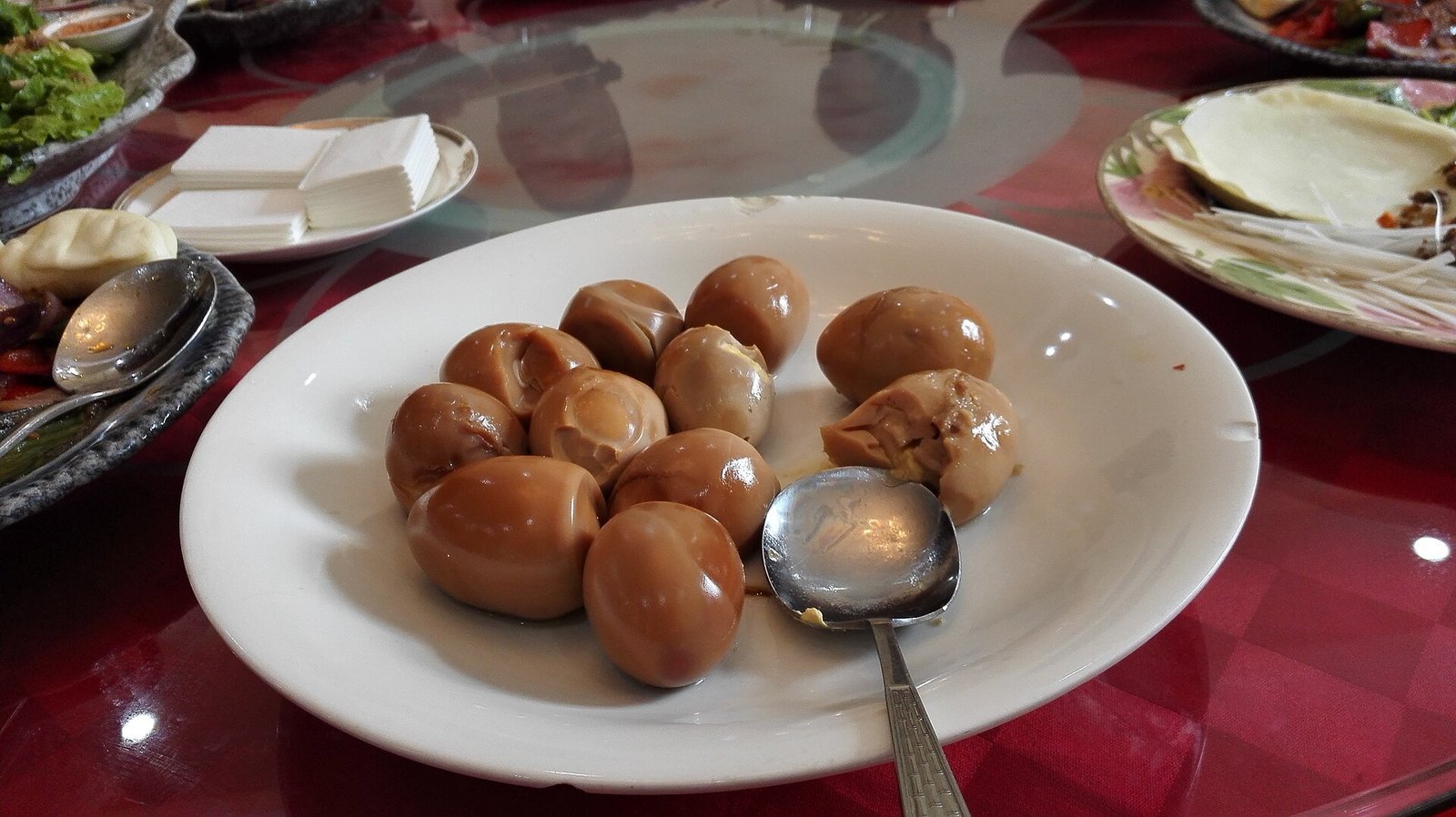
For a composed Chinese meal, use water chestnuts as a quiet textural counterpoint rather than the loudest flavour. Their clean crunch is welcome after smoked food, rich meat or a pungent starter such as the one described in the Century Egg Guide. That sequencing makes a modest ingredient memorable.
Frequently Asked Questions
Can water chestnuts be eaten raw?
Fresh water chestnuts are commonly eaten raw in China, where they taste sweetest and juiciest. Scrub them thoroughly, peel with a clean knife and rinse the flesh again because they grow in wet soil. If you cannot verify handling or water quality, blanch them for one minute before chilling and eating.
Are water chestnuts actually nuts?
No. They are the corms of an aquatic sedge and are botanically unrelated to chestnuts. Their brown rounded skin explains the English name. Anyone managing an allergy should still check packaged products for cross-contamination and other ingredients rather than relying on the product name.
Why are my fresh water chestnuts yellow inside?
Good flesh should be white to pale ivory. Slight cream colouring can occur after peeling, but strong yellowing, brown channels, softness or a fermented smell suggests age or decay. Cut one open before peeling the entire batch. Discard compromised corms rather than trimming around wet rot.
How long should I cook water chestnuts in a stir-fry?
Fresh 3–4 mm slices need about 60–90 seconds in a properly hot wok. Tinned slices are already cooked, so 30–60 seconds is enough to heat them through. Add either near the end, once tougher vegetables and proteins are nearly done.
Can I freeze fresh water chestnuts?
Yes, but the texture loses some of its juicy snap. Peel, blanch for two minutes, cool, dry and freeze in a single layer before bagging. I use frozen pieces within three months and put them into cooked fillings rather than raw salads or minimalist stir-fries.