Dali Old Town: Everything You Need Before You Go
The first thing I did wrong in Dali was arrive at the wrong gate. My bus from the railway station dropped me on the east side, where a bland ring road and a row of new hotels hid the old town completely. I stood with a backpack and a map app that insisted I was already “there,” when in fact the grey-tiled roofs and the wall were a twenty-minute walk west. If you only take one thing from this guide, let it be this: aim for the South Gate (Nan Cheng Men), because the old town makes sense from there.
Dali Old Town sits in Yunnan at roughly 2,000 metres above sea level, pressed between the Cangshan mountain range to the west and Erhai Lake to the east. The Bai minority make up a large share of the local population, and you will hear their language as often as Mandarin in the smaller lanes. As Wikipedia’s Dali City entry notes, the town was the capital of the medieval Nanzhao and Dali kingdoms, which is why the layout feels older and more deliberate than a ordinary market town. That history is the reason the streets run on a rough grid and why the main arteries still carry names older than the republic.
Getting in from the station (the bit I got wrong)
Dali has two stations you should keep apart. Dali railway station serves the high-speed lines from Kunming and Lijiang; Dali Fengyi airport handles the flights. From the railway station a taxi to the South Gate runs about 25 to 35 RMB and takes 20 minutes in light traffic, but the public bus is the cheaper habit if you are not hauling a case. I took the bus and paid under 5 RMB, then walked the last stretch on foot because the stop sits one block east of the wall.
Book your rail ticket ahead in spring and autumn, when the sleeper car from Kunming fills quickly. The journey from Kunming is around two hours by high-speed train, which beats the old eight-hour road trip I took a decade ago. If you came from the mountain towns further north, the route pairs well with a stop at Lijiang Old Town, though Lijiang sits higher and draws bigger crowds.
One practical note: the old town is car-light inside the wall. Taxis and private cars stop at the gates, and you wheel your bag the final hundred metres. Wear shoes that survive cobbles, not the smooth-soled loafers I regret carrying.
The South Gate and the walls
The South Gate is a rebuild, not the original Ming structure, but it is tall and photographed and it gives you a sightline down the main north–south street. Climb it early if you want a clean photo; by ten the steps are a queue. The wall walk is short — perhaps 300 metres — and the ticket desk there asks for a small fee I would not call essential, since the view from street level is nearly as good.
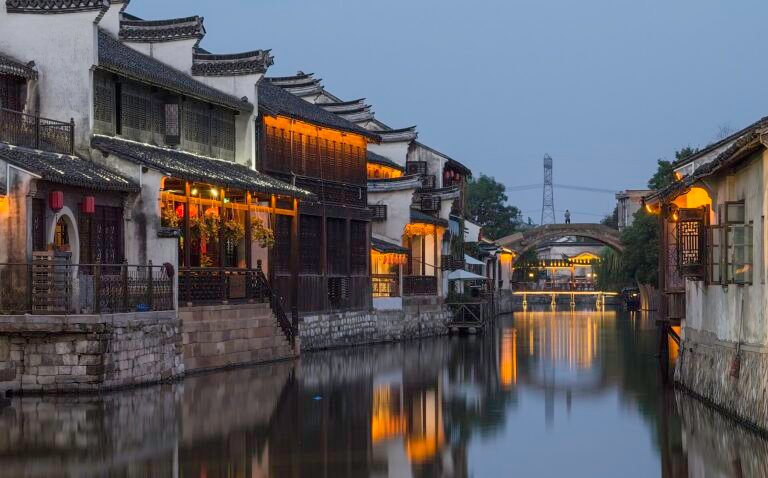
What I’d tell a friend is to use the gate as a clock. Everything in the old town radiates from it: the backpacker lanes to the north, the quieter residential blocks to the west, the lake-facing exits to the east. If you lose your bearings, walk downhill toward the gate and you will reconnect with the grid. The walls themselves are best at the blue hour, when the lanterns switch on and the grey tiles turn the colour of wet slate.
Where to actually walk
Most visitors funnel into Foreigner Street (Yangren Jie), and it is loud, lit, and lined with bars that stay open past midnight. I spent one night there and then spent the next three avoiding it. The streets worth your feet are the side lanes running parallel to the main drag, especially west toward the Cangshan foothills, where the Bai courtyards sit behind white walls with painted gables.
A full loop of the walled core is about 2.5 kilometres if you follow the perimeter roads. Inside, the grid is walkable in fifteen minutes corner to corner, so the joy is in the detours, not the distance. Give yourself two sessions: one in the morning when the light hits the tile roofs, one after eight in the evening when the food stalls open.
If you want a longer leg, walk west toward the Cangshan cable car base, which is roughly 40 minutes on foot from the gate and saves a taxi fare if your legs are fresh. The path is flat and shaded by plane trees for most of the way.
Food, tea and the Bai minority
Dali eats differently from the rest of Yunnan, and the standout is xi guo rou — a steamed pork belly with tamarind that cuts the fat with sourness. A full plate runs 35 to 50 RMB in a courtyard restaurant, and the better ones hide behind unmarked blue doors west of the centre. The local cheese, rushan, is grilled on sticks and dusted with sugar; it squeaks like halloumi and costs pocket change.
Bai tea ceremonies are a real custom, not a tourist trap, though the “three-course tea” show aimed at coaches can feel rehearsed. I preferred buying loose white tea from a shop on the north lane and brewing it in the guesthouse — the same leaf, a tenth of the price. For a broader sense of how other Chinese old towns feed visitors, how ciqikou is really done covers a Sichuan lane market that runs on similar instincts.
Vegetarians do well here: the Cangshan foothills grow wild mushrooms in summer, and a hotpot of mixed jun runs 60 to 100 RMB for two. Ask the vendor which are in season rather than trusting the picture menu, because the names shift with the rain.
Three Pagodas and the mountain behind
The Chongsheng Temple Three Pagodas sit about 1.5 kilometres north of the gate and are the one ticket I would actually buy. The entry is around 75 RMB, but check the official site before you go because the price moves with the season. The central pagoda is 69 metres tall and has stood, by most counts, for over a thousand years, which is a longer run than most things in Yunnan.
The reflection pond inside the complex spares you the walk to the far bank for a photo. From the same ticket area a path climbs toward Cangshan, where a cable car runs on clear mornings and shuts in high wind — I learned that the hard way when cloud rolled in and the car stopped selling tickets at eleven.

If you are building a longer Yunnan list, the everything you need to know about chengdu panda base sits a flight away and pairs well with a Sichuan leg after Dali. For a northern desert contrast, my notes on crescent lake dunhuang describe a very different kind of old settlement by water.
When to go, and how long to stay
The table below is the shortcut I wish I had before booking. Dali’s altitude keeps it cool compared with the lowland south, but the months differ more than the temperatures suggest.
| Month range | Day temp | Crowd level | My verdict |
|---|---|---|---|
| March – May | 15–24°C | Medium | Best overall; blossom on Cangshan |
| June – August | 18–26°C | High | Rainy, lush, but packed |
| September – November | 14–23°C | Medium | Clear skies, my favourite |
| December – February | 6–16°C | Low | Cold mornings, few tourists |
Plan three full days if you want the town, the pagodas, and one Cangshan half-day. Two days covers the core if you skip the mountain. I stretched to four and did not regret the slack, because the lake just east of town deserves a slow morning of its own.
A few practical comparisons
Dali is often lumped with other walled sites, but the fit differs. The table helps if you are choosing between stops on one trip.
| Site | Altitude | Nightlife | Best for |
|---|---|---|---|
| Dali Old Town | ~2,000m | Moderate | Chill lanes, Bai food |
| Lijiang Old Town | ~2,400m | Loud | Music, canals |
| Beihai Park (Beijing) | ~50m | None | Lakeside pavilions |
For the Beijing end of a trip, all about beihai park explains a very different, imperial kind of walled garden. If your route runs south instead, Canton Tower explained covers the modern skyline of Guangzhou, and Big Wild Goose Pagoda Guide handles Xi’an’s Buddhist landmark near the old city wall.
Should the north call you, the Badaling Great Wall is the obvious day trip from Beijing and a useful counterpoint to Dali’s low, tiled walls.
Frequently Asked Questions
How much is the entrance to Dali Old Town itself? The old town has no walled entry fee — you walk in freely. Only specific sites charge: the Three Pagodas run around 75 RMB, and the South Gate climb is a small separate ticket. Check the official site before you go, as prices shift by season.
What is the best month to visit Dali Old Town? March to May and September to November are the calm, clear windows. I favour September to November for blue skies and fewer tour groups, though March brings Cangshan blossom if you prefer spring.
Is Dali Old Town walkable with a suitcase? Partly. Taxis stop at the gates, and the inner lanes are cobbled and pedestrian. Wheel a small case to your guesthouse, but pack light — the smooth wheels on hard-shell bags hate the stones.
How many days do I need in Dali Old Town? Two days covers the core streets and the Three Pagodas. Add a third for Cangshan and a fourth if you want a slow morning by Erhai Lake, which sits just east of town.
Is the food safe for someone who dislikes spice? Yes. Bai cooking leans sour and savoury rather than fiery. The steamed pork with tamarind and the grilled rushan cheese are mild, and vegetarian mushroom hotpots can be ordered without chilli on request.
Can I visit Dali and Lijiang on one trip? Easily. The high-speed line links them in well under two hours, and both are walled old towns with different feels — Dali lower and calmer, Lijiang higher and louder. Stay a night or two in each rather than rushing.