Hefei Food Guide: Anhui’s Wild Herbs and Smelly Tofu
Reviewed 31 October 2026 by the China Food Way editorial team
The smell hit me two streets before the stall did. It was stinky tofu, and in most of China that means one place — Changsha — but I was in Hefei, and the local version got there first. Anhui’s capital is the kind of city travellers skip on the way to Huangshan, which is a shame, because the food is the quieter half of one of China’s great regional cuisines, built on wild things foraged from the mountains rather than the sea. The city is the flat, modern capital, but an hour south the hills begin, and the kitchen here is the plain’s interpreter of the mountains — the place where the foraged and the cured meet the wok. It is also a transport hub — high-speed lines from Beijing and Shanghai stop here — which is why its kitchens are more varied than a provincial capital has any right to be. This is a guide to eating Hefei the way it actually tastes — funky, herbal and unexpectedly bold.
The Stinky Tofu That Got There First
Hefei’s stinky tofu (臭豆腐) is fried rather than steamed, with a brittle amber crust and a soft, faintly blue interior that smells stronger than it tastes. The local claim, and it is a credible one, is that the Anhui tradition predates the Hunan one that made the dish famous, and that the Changsha version is a louder cousin of something already old here. I ate my first plate at a night-market stall near the old town, dipped in a sharp chilli-scallion sauce, and the texture — crackle, then cream — is the whole argument for the food. The Hefei version is fried until the crust blisters, then split and stuffed with a spoon of pickled chilli and coriander, so the funk is contained and the crunch leads. The smell is theatre; the taste is just fermented soy and confidence.
This is the dish to lead with if you want to understand why Changsha’s late-night food and the Hefei version are siblings rather than rivals. Order it with a beer and do not apologise to the people at the next table.
How is Luzhou roast duck different from Beijing duck?
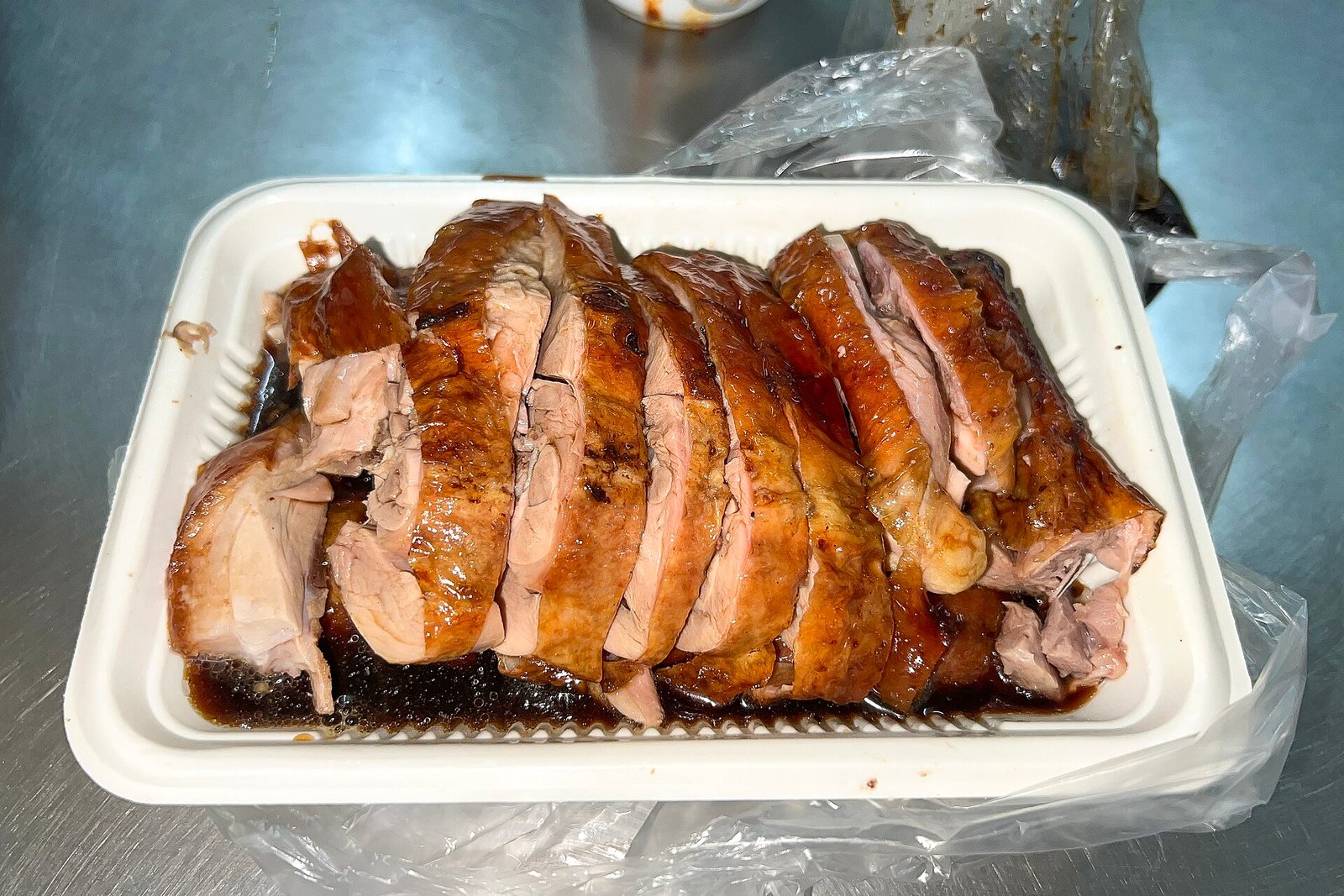
Luzhou roast duck differs from Beijing duck in the bird, the cook and the cut: it is a smaller, leaner Anhui duck roasted so the skin crisps without the honey-glazed lacquer of the northern style, then served chopped through the bone rather than sliced skin-and-meat separately. The flavour is more savoury and less sweet, closer to a country roast than a banquet set piece, and you eat it with a salt-and-pepper dip or a scrape of garlic rather than the Beijing pancakes and hoisin. The dish is everyday in Hefei, not ceremonial, which is why you find it in ordinary restaurants rather than specialist houses. The caveat is that a factory bird will not crisp properly, so the good versions use the local free-range duck with its thicker fat layer. Order it with a bowl of the city’s plain rice and the contrast does the rest of the work.
Luzhou Roast Duck
Less famous but more everyday is Luzhou roast duck (庐州烤鸭, Luzhou being the old name for Hefei). It is a glazed, oven-roasted duck with crisp skin and savoury meat, served chopped through the bone with a small dish of seasoned salt rather than the sweet sauce of the Beijing version. The Hefei kitchens have been doing it for generations, and the local pride is quiet precisely because the duck is so good that nobody needs to shout. I had a half-duck at a lunch counter for 38 yuan and the skin alone justified the trip.
The duck sits inside Anhui cuisine, one of China’s eight great regional traditions, and the one least likely to reach your local takeaway because its stars are wild and seasonal rather than portable.
What wild greens do Hefei kitchens actually use?
Hefei kitchens use a short, seasonal roster of foraged greens that the mountains an hour south keep supplying: bamboo shoots in spring, bracken fern tips in late spring, and a changing set of potherbs, malantou, shepherd’s purse, and the bitter leaf the locals call ku cai, through the warmer months. The Anhui kitchen values these for their astringency and bite, which cut the richness of the cured and roasted meats the region is also known for, and they are usually quick-blanched or stir-fried with a little garlic rather than buried in sauce. The point is terroir over technique, because the greens taste of the hills, not the wok. A caveat for foragers is that some of these leaves need proper blanching to drop their bitterness and any stray toxins, so this is one case where the restaurant version is safer than the roadside pick.
The Wild Larder: Bamboo, Fern and Potherb
What separates Anhui cooking from its neighbours is the foraging. The mountains east of the city — the same range that draws tourists to Huangshan — supply bamboo shoots in spring, fern fronds (蕨菜, jue cai) in early summer, and a range of potherbs that turn up stir-fried with garlic or braised with cured pork. The Chinese bamboo shoots here are the fresh, tapered kind, blanched to take the bitterness and then stir-fried with cured ham or pickled chilli, and they taste of the forest floor in the best possible way.
The cooking method is gentle braising rather than flash-frying, often finished with a spoon of local ham stock and a little rock sugar to deepen rather than sweeten, because the ingredients are delicate and the point is to taste the place they came from. A meal in a good Hefei kitchen is a map of the hills: a shoot here, a fern there, a mushroom from a log out back. It is the opposite of the shouty food of the coastal cities.
How does Anhui cure its winter meats?
Anhui cures its winter meats by salting and air-drying rather than smoking, hanging whole legs of pork and sides of bacon under the eaves through the cold, dry months so the wind does the preserving the fridge would otherwise do. The result is the famous Anhui ham, a lean, savoury cure that builds depth in the region’s braises and soups, used in small dice the way a French cook uses lardon. The practice came from a mountain province where winter was long, so the cure was survival before flavour. The honest note is that the ham is very salty and meant as a seasoning, not a slab to eat alone; a tourist who orders a plate of it straight will find it punishing. Used correctly, a few grams transform a pot of bamboo shoots into something the fresh version never reaches.
Cured Meats and the Winter Pantry
Anhui’s other larder is the cured one. Through the cold months the province makes la wei (腊味) — sausages, pork belly and sometimes fish, salted and smoked over a low fire until they keep without a fridge. In Hefei the best use of them is sliced thin over a plate of garlic sprouts or steamed on top of rice, where the fat renders down and flavours everything beneath. The taste is smoky and concentrated, and it is the flavour of the provincial New Year table as much as the fresh mountain vegetables are the flavour of spring. I bought a length of cured sausage from a market stall and the stallholder insisted, correctly, that it needed nothing but steam and time.
The Tea That Grows Next Door
Anhui is one of China’s great tea provinces, and Hefei sits a short train from the gardens that produce Huangshan maofeng and the Keemun black tea the West knows as English Breakfast’s cousin. The local habit is to drink a cup of green tea with the heavy, savoury food rather than after it, and the bitterness of a good maofeng cuts the cured pork and the fried tofu in a way that soft drinks never manage. It is the pairing the province forgot to put on the menu, and the one I reached for most.
When is crayfish season around Hefei?
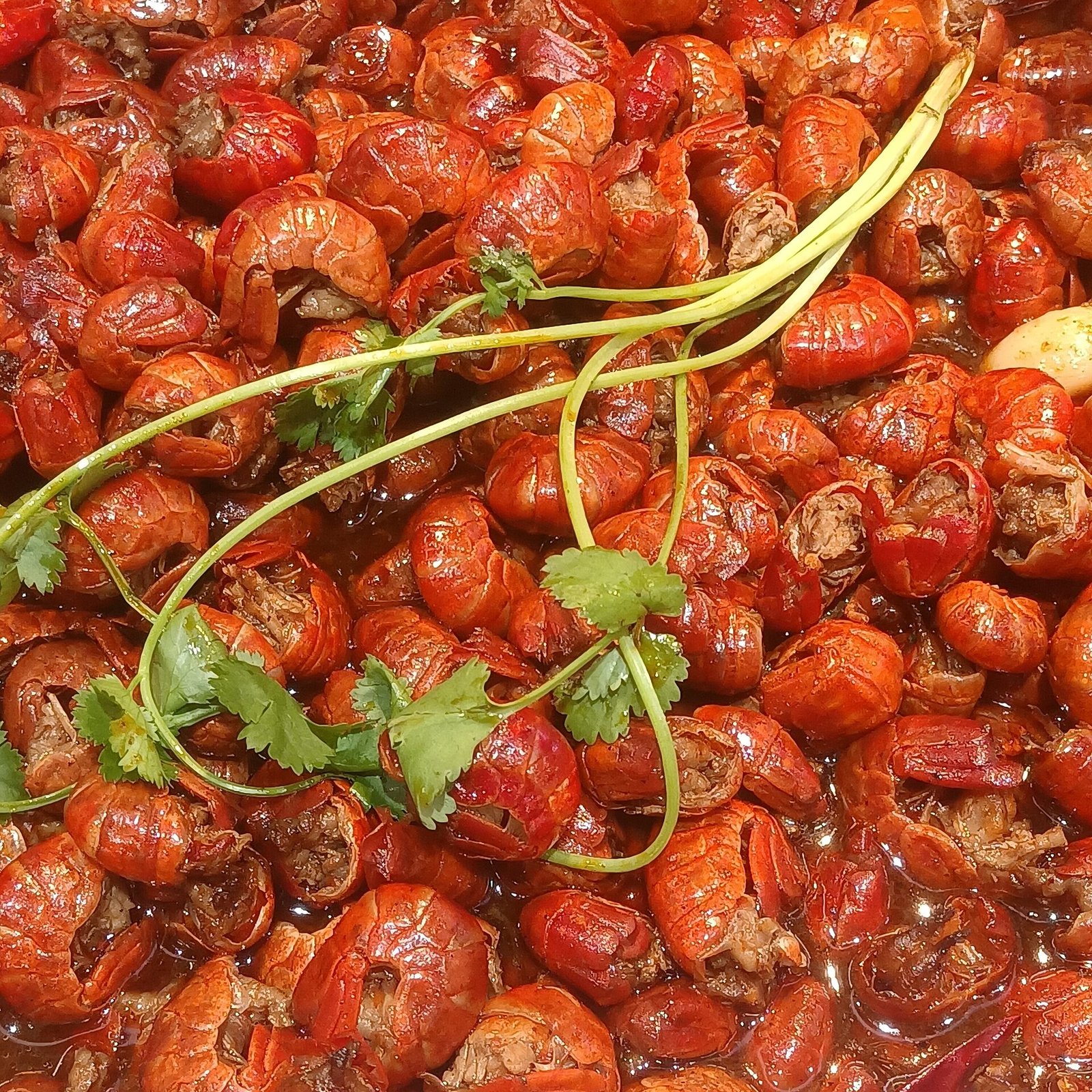
Crayfish season around Hefei runs from roughly May to September, peaking in June and July when the warm Yangtze-tributary water fattens the animals and the night stalls along the river towns turn their vats to a steady red. The local style is the spicy thirteen-spice braise, shellfish simmered in a dark, aromatic broth of chillies, star anise and a dozen spices, eaten by hand with a beer and a stack of napkins. The earlier months give smaller, thinner shells; the deep summer ones are meatier but need a longer cook to soften the armour. The caveat is freshness: buy them alive and kicking, because a crayfish that has sat is the fastest route to food poisoning in Chinese street food. The season is short and loud, and the rest of the year the stalls switch to other things, so time a visit to the heat if this is your motive.
The Crayfish of the Yangtze Towns
In summer the city changes its mind about subtlety. The Yangtze towns around Hefei do crayfish (小龙虾, xiao long xia) the way the whole middle Yangtze does — boiled, then wok-tossed with cumin, chilli and a lot of garlic, served in a heap with the heads sucked and the tails peeled by hand. It is eating Chinese street food as a communal sport: a table, a mountain of shells, and a clock that stops meaning anything. The Hefei versions lean more on cumin and salt than on the heavy chilli of the south, and they are the thing to order when the weather turns warm and the beer comes out. The beer is local and cheap, the gloves are provided at the better places, and the table next to you will be doing exactly the same thing until the shells are ankle-deep.
The same chilli that runs through Anhui’s neighbours keeps going south, and if you follow it the food of Nanchang is where it peaks in the east — a useful reminder that Hefei sits on a gradient, not an island.
What to Order, and What It Costs
Hefei is moderate in price and generous in portion, and the wild-vegetable dishes are seasonal, so ask what is fresh rather than reading the menu blind. The table below is what I paid in late spring.
| Dish | What you get | Typical price (RMB) |
|---|---|---|
| Stinky tofu | Fried, with chilli-scallion dip | 10–15 |
| Luzhou roast duck | Half duck, chopped, with salt | 38–58 |
| Stir-fried bamboo shoots | With cured ham or chilli | 28–42 |
| Fern with garlic | Wild jue cai, quick-fried | 26–38 |
| Crayfish (per jin) | Spiced, by the half-kilo | 45–70 |
As Wikipedia’s overview of Anhui cuisine notes, the tradition is defined by its use of wild herbs and a restrained, braising-led technique — a description that fits Hefei’s table far better than the city’s quiet reputation suggests.
Frequently Asked Questions
Is the stinky tofu as alarming as it smells?
Less. Fried stinky tofu has a crust that holds most of the aroma in, and the inside is mild and creamy. If you can eat a ripe cheese you can eat this. The Hunan steamed version is stronger; the Hefei fried one is the gentle introduction.
What does Anhui cuisine taste like, in one line?
Wild, savoury and light-handed — more about the vegetable and the mushroom than the oil and the fire.
Are the bamboo shoots bitter?
Fresh shoots need blanching, and a good kitchen does it, so the finished dish is sweet and clean. If you bite into a faint bitterness that is the mountain talking, and it is meant to be there.
When is crayfish season?
Summer, roughly May to September, when the shells are full and the prices drop. Outside that window you will pay more for less, and the street piles get smaller.
Is Hefei worth a food trip on its own?
Yes, especially if you are combining it with Huangshan — the mountain produce on the coast is the same produce at the source, and the city is the easy place to eat it. Give it two days and a loose waistband.
Does Anhui cuisine use much oil or chilli?
Less than you might expect. The stinky tofu is the exception; most of the mountain cooking is braised and mild, relying on the ingredient and a little cured ham for depth. If you want heat, you ask for it.
What tea should I order with the food?
A local green, Huangshan maofeng if they have it, drunk hot alongside rather than after — it is the traditional counterweight to the cured and the fried, and it costs almost nothing.