Lijiang Travel Guide: What to See, Eat and How to Get Around
The first time I visited Lijiang I made the classic mistake: I arrived on an overnight train from Kunming, walked straight into the old town at noon, and spent two hours lost in streets that all looked the same. By the time I found my guesthouse the crowds had arrived, the canals were packed, and the mountain I had come to see was hidden behind a wall of tour-group flags. I have been back twice since, and the lesson stuck: Lijiang rewards anyone who plans the rhythm of the day before they plan the sights.
As Wikipedia notes, Lijiang is a UNESCO World Heritage site in northwestern Yunnan, shaped over centuries by the Naxi people. That heritage is real, but so is the commercial noise. The trick is to use the busy parts as a base and slip out early to the quieter corners.
Getting to Lijiang
Most travellers fly into Lijiang Sanyi Airport, which has direct connections from major hubs. If you are already in Yunnan, the high-speed train is the better story. The line from Kunming takes roughly three to four hours, and the station sits about 30 minutes by bus or taxi from the old town. I prefer the train: you arrive rested, and the approach through the valleys is genuinely good.
Getting around town is straightforward but easy to overpay. Inside the old town, vehicles are restricted, so you walk. For the mountain and the gorge, you have three realistic options: join a van tour, hire a driver for the day, or use the public buses that run to the Jade Dragon cable car base. A private driver for the Snow Mountain loop cost me around RMB 300 a few years back, but prices move, so check the official site before you go. If you are building a longer Yunnan route, pairing Lijiang with Dali and Shangri-La makes a natural three-stop arc by road and rail.
The Old Town of Dayan
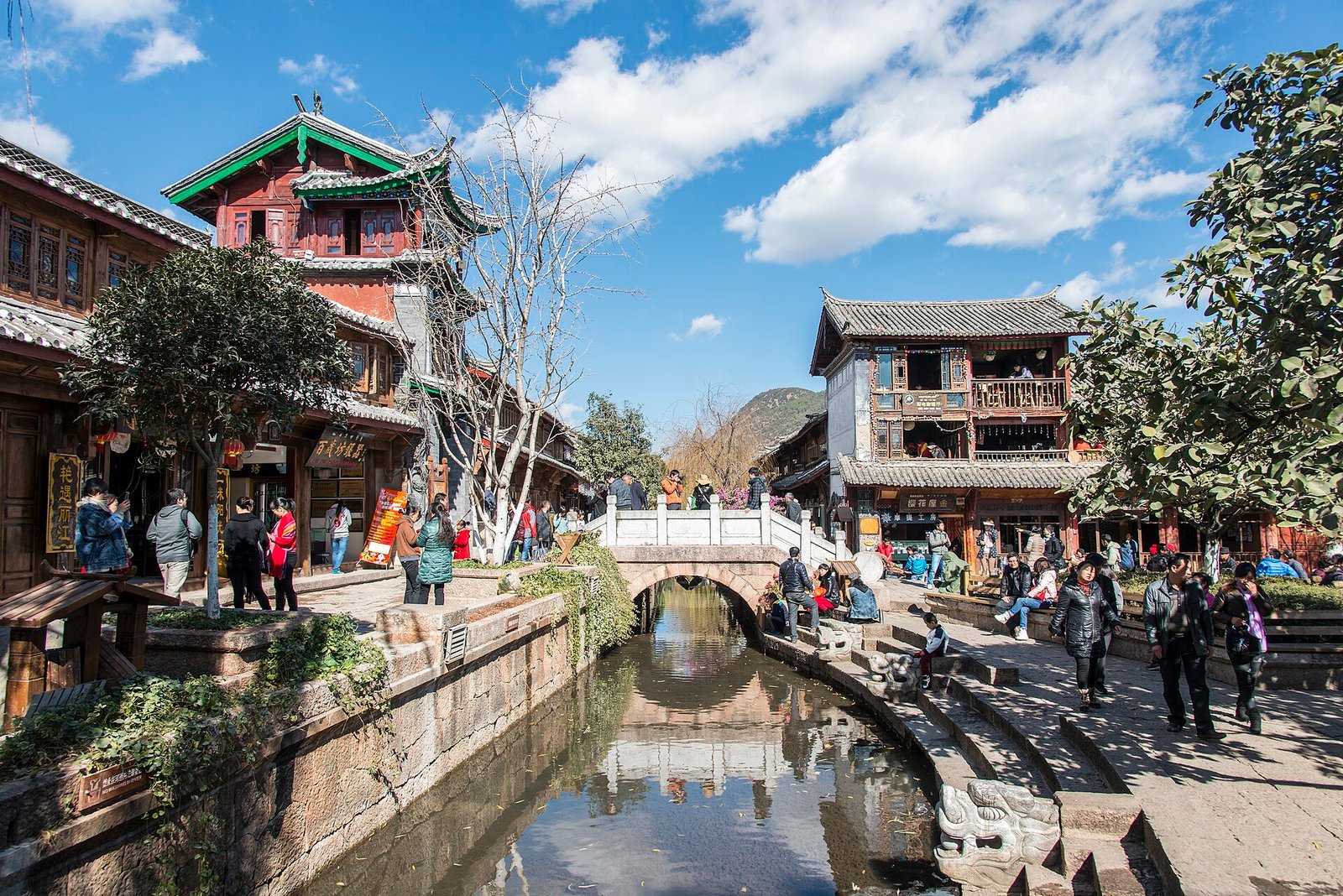
Dayan is the old town everyone photographs: grey tiled roofs, stone channels running with meltwater, and timber houses with carved windows. It is a UNESCO site for good reason, and the layout still follows the old Naxi water system, where every lane had its own stream. The atmosphere is best before 9:30am, when the shop shutters are down and the only sounds are water and the occasional cart.
The downside is the evening crowds and the constant offer of “traditional” shows and bars. I found the sweet spot was to wander the outer rings — the lanes north towards the ramparts — rather than the central Square Street, which is essentially a shopping mall with a roof. The Naxi music performances are worth one evening if you like that sort of thing; just buy through your guesthouse rather than from touts on the street.
Mufu Palace and Lion Hill
Mufu was the seat of the Mu clan, the local rulers who governed the area for centuries, and it sits at the foot of Lion Hill on the west side of town. The palace compound is a compact version of a Forbidden City layout: gates, courtyards, and a small museum on Naxi history. I spent about 90 minutes there, and the view back over the tiled rooftops from the upper terrace is one of the best in town.
Lion Hill itself is worth the short climb for the Wangu Tower at the top, which gives you a 360-degree look at Dayan and, on a clear morning, the snow mountain beyond. Go early. By midday the hill path is a conveyor belt of selfie sticks. If you are comparing Yunnan’s old seats of power with those up north, a Chengde Travel Guide shows a very different imperial scale, while Lijiang’s feels domestic and local.
Jade Dragon Snow Mountain and the Cable Car
This is the headline excursion, and it is the one to plan carefully because of altitude. The massif rises to over 5,500m, and the highest cable car takes you to a viewing platform near 4,500m. The air up there is thin enough that I felt light-headed after two minutes of walking, and I am reasonably fit. The park sells blue canisters of supplemental oxygen at the base, and the buses run you through a few stops including the Glacier Park and the Blue Moon Valley, a set of turquoise pools that are far less crowded and, to my taste, more rewarding than the summit scramble.
Buy the combined ticket and cable car slot in advance where possible; the mountain limits daily visitor numbers, and walk-up slots sell out in peak season. Dress in layers even in summer — the wind at the top is fierce. Anyone coming from lower elevations, including a stop in Chengdu on the way, should give themselves a night or two in Lijiang first to adjust before going up.
Tiger Leaping Gorge
About two hours from Lijiang by road, Tiger Leaping Gorge is one of the deepest river canyons on the continent, where the Yangtze squeezes between cliffs. You can do it as a long day trip, but the better move is to stay a night in the guesthouses along the upper trail and walk a section at your own pace. The full high trail takes most people two days; a half-day from the middle gorge to the “28 bends” gives you the famous view without the commitment.
I did the gorge as a day return and regretted not staying. The light in the late afternoon on the far wall is the photo everyone chases, and by the time I climbed back down the last shuttle had gone, leaving a slow, expensive taxi back. If you want a city with proper hiking infrastructure beforehand, everything you need to know about chongqing is the place for steep walks, though nothing on this scale.
What to Eat in Lijiang
Naxi food leans hearty rather than spicy. The dish I came back for is guoqiao mixian, a bowl of rice noodles served with a separate plate of toppings you slide in yourself — a Yunnan staple you will also meet in a proper take on chengdu country cooking. In Lijiang look for the local variation with preserved vegetables and a clear pork broth.
Around the old town you will find grilled yak cheese on sticks, a smoky, salty snack sold from small braziers in the evening. The baba, a flat Naxi bread, is the breakfast to grab from a street stall rather than a restaurant. For a sit-down meal, the cured pork ribs hotpot is the local speciality; portions are large, so order for the number of mouths at the table. Prices for a noodle bowl ran me RMB 15–25 last visit, but menus change, so check the official site before you go if you are budgeting tightly. If your route started in the northeast, the food culture is a world apart from Changchun, where the table is about dumplings and cold noodles.

Where to Stay and How to Get Around
Stay inside the old town if you want atmosphere, but ask about noise before you book — the bars near Square Street run late. Shuhe, a smaller old town 15 minutes north by shuttle, is quieter and still connected, and Baisha, further out, is the most relaxed of the three. Below is how I weigh them.
| Base | Atmosphere | Distance to centre | Best for |
|---|---|---|---|
| Dayan (old town) | Lively, crowded evenings | In the middle of it | First visit, nightlife |
| Shuhe | Calmer, still historic | 15 min shuttle north | Couples, longer stays |
| Baisha | Quiet, local | 40 min bus north | Painters, slow travellers |
Inside the towns you walk. For the mountain, gorge, and further trips, agree a price with a driver before you get in the car, and confirm whether fuel and parking are included. Touts at the town gates will quote low then add fees later; the guesthouse desk is the safer booking point. For context on a very different capital-scale visit, Beijing runs on metro and taxi logic, whereas here it is all narrow lanes and negotiation.
Frequently Asked Questions
How many days do I need in Lijiang? Three full days covers the old town, the Snow Mountain, and a taste of Tiger Leaping Gorge. Add a fourth if you want a night in Shuhe or Baisha to slow down.
Is the altitude a real problem? At 2,400m the town is fine for most people, but the Snow Mountain cable car reaches near 4,500m, where shortness of breath is common. Spend a night or two adjusting first and take the oxygen canisters seriously.
When is the best time to visit? Spring (April to May) and autumn (September to November) give the clearest mountain views and comfortable temperatures. July and August are wet and busy; winter is cold but the snow scenery is superb.
Do I need to book the Snow Mountain ticket ahead? In peak season, yes. Daily visitor numbers are capped and walk-up cable car slots sell out. Check the official site before you go for the current booking system.
Is Lijiang safe for solo travellers? Yes. The towns are well patrolled and the main risks are petty overcharging and altitude, not personal safety. Keep valuables in your guesthouse and agree transport prices in advance.
What should I pair Lijiang with? all about changsha is far south and a different trip entirely, but the natural Yunnan loop is Dali and Shangri-La, both reachable by road and train from Lijiang.