Sanya Food Guide: Seafood Markets and Beach Barbecues
Last reviewed 31 October 2026 · China Food Way editorial team
The first time I did the Sanya seafood shuffle I paid 90 RMB for a crab I had watched climb out of a tank, carried it twenty metres to a restaurant whose menu was a photocopied sheet, and ate it steamed with ginger for a 15 RMB cooking charge. The total beat any hotel dinner by half, and the crab had been swimming forty minutes earlier. That is the entire Sanya food economy in one transaction: the market sells the live animal, the kitchen next door sells the cooking, and nobody pretends otherwise.
On my second visit I went properly methodical. I arrived at the First Market (第一市场) at 5:30pm, picked a grouper that the vendor weighed in front of me at 1.2 jin, paid 38 RMB, carried it still flapping to a cooking shop whose photocopied menu listed a 15 RMB steam fee, and sat down to a fish that hit the table twelve minutes later. The total — fish plus cooking plus a plate of garlicky prawns I added on impulse — came to 96 RMB for one, and I left fuller than I had any right to be.
Sanya is the beach end of Hainan, the resort coast where Wikipedia’s entry on the city notes the population swells with domestic tourists and a long-standing Russian visitor community. It is also, as the island’s broader food culture makes clear, the place where Hainan’s mild, fresh cooking meets a barbecue and a beach. Haikou, the provincial capital, is the more serious eating town; Sanya is the one you come to in flip-flops.
How does the Sanya seafood market actually work?
The market sells the live animal and the kitchen next door sells the cooking, and nobody pretends otherwise. You buy from a tank by weight, priced per jin (500 grams), and watch the scale; a modest haul for two runs 120 to 200 yuan. You then carry your bag to an adjacent restaurant that charges a flat 10 to 25 yuan per dish, or a percentage of your spend, to steam, stir-fry or ginger-scallion it to order. The model grew out of necessity: small family kitchens without capital for live tanks buy at the public market and charge only for cooking, so the customer gets transparency and the kitchen gets a margin without the risk. The honest market is the First Market in the old town, with visible scales and a shouting crowd.
The Market Model, Step by Step
The system is the same in every coastal town on the island, but Sanya does it at the largest scale. Here is how not to get stung:
The model grew out of necessity rather than theatre. Hainan’s fishermen land their catch at dawn, and the island’s restaurants — many of them small, family-run, without the capital to hold live tanks — realised that buying from the public market and charging only for cooking was a cleaner business than gambling on inventory. The customer gets transparency (you saw the crab alive and you saw the scale); the kitchen gets a margin without the risk. It is a rare arrangement where everyone is incentivised to be honest, and in a tourist town that feels almost suspicious until you have done it twice.
- Go to a proper market, not a “seafood street” with tanks on the pavement. The First Market (第一市场) in the old town is the honest one. Tanks, scales, and a shouting crowd.
- Buy by weight and watch the scale. Mantis shrimp, grouper, clam, crab, lobster — priced per jin (500g). A modest haul for two is 120–200 RMB.
- Take your bag to a cooking restaurant. They charge a flat fee per dish (10–25 RMB) or a percentage of your spend. Confirm the number before you hand over the bag.
- Specify the cooking. Steamed for delicate fish, chilli-stir-fried for prawns, ginger-and-scallion for crab. The kitchen is yours to direct.
- Settle the beer separately. The cooking place sells drinks; the market does not.
The seafood kitchens of China run on this logic elsewhere, but nowhere does it with Sanya’s volume of tourists who have never done it before, which is exactly why the scale-watching matters.
Which fish should a first-timer pick from the tanks?
Grouper, and keep the cooking plain. A firm, white, sweet fish steamed with ginger and soy is the default choice and anything more elaborate wastes it; a 1.2 jin grouper I bought was weighed in front of me at 38 yuan and on the table twelve minutes later. Mantis shrimp are the spiny ones with sweet tail meat, best stir-fried with chilli or steamed plain, and razor or bamboo clams are fast cooks that want vermicelli, garlic and a little fermented bean. The rule that settled the whole exercise is simple: the plainer the creature, the plainer the cooking it deserves, so a 40 yuan grouper steamed with three ingredients beats a 200 yuan lobster drowned in a sweet sauce every time.
What’s Actually in the Tanks
The point of the market is the range, and a first-timer’s eye glazes over the species. The ones worth knowing:
- Grouper (石斑鱼, shi ban yu). The default choice — firm, white, sweet. Steamed with ginger and soy; anything else wastes it.
- Mantis shrimp (皮皮虾, pi pi xia). The spiny ones with the sweet tail meat. Ask for the females if you see roe; stir-fry with chilli or steam plain.
- Razor clam and bamboo clam (蛏子, 竹蛏). Fast cooks, best with vermicelli, garlic and a little fermented bean.
- Crab (螃蟹, xie). Hairy crab is not the local one; look for the blue-swimmer or the mud crab, steamed and cracked at the table.
- Lobster and geoduck (龙虾, 象拔蚌). The showy buys, priced per jin, best simply steamed so the texture is the event.
The rule I settled on: the plainer the creature, the plainer the cooking it deserves. A 200 RMB lobster drowned in a sweet sauce is a tourist’s mistake; a 40 RMB grouper steamed with three ingredients is the meal.
Where should I go for the best beach barbecue?
To the independent stalls where the sand meets the promenade, not the lit-sign chains with celebrity endorsements. Those grilled-fish restaurants are consistent and safe but boring, while the half-oil-drum grill with no menu in English is where a local would send you. A butterflied pomfret, two corn cobs and a plate of clams came to 110 yuan and tasted of nothing but smoke and salt, which is the whole point. The resort hotels will sell you the same idea for three times the price and half the flavour, so once the market closes its liveliest hours the waterfront takes over and the better meal is almost always the one further from the view and closer to the charcoal.
Beach Barbecue After Dark
Once the market closes its liveliest hours, the waterfront takes over with grill stalls — whole fish butterflied and crisped over charcoal, squid brushed with chilli, corn and sweet potato, and the inevitable tourist-priced lobster. The grilled-fish chain restaurants (the ones with the lit signs and the celebrity endorsements) are consistent and safe but boring; the independent stalls where the sand meets the promenade are where a local would send you. A grill plate for two runs 120–200 RMB with drinks.
I found my best beach barbecue by walking past the first three stalls with menus in English and stopping at the fourth, where the grill was a half oil-drum and the only language was pointing. A butterflied pomfret, two corn cobs and a plate of clams came to 110 RMB and tasted of smoke and salt and nothing else. The resort hotels will sell you the same idea for three times the price and half the flavour.
The Fruit You Cannot Get at Home
Hainan’s warmth means fruit that northern China treats as a luxury grows here for the price of a snack. The stalls along Sanya’s main roads sell mango by the kilo, pineapples peeled to order, dragon fruit, and — the one worth the fuss — durian, in season roughly May to September. Chinese street food in Sanya is as much about the fruit cart as the grill. Buy a bag of cut mango with a chilli-salt dip and walk the beach; it is the cheapest luxury on the island.
The mango here is the small, fragrant Tainong variety, eaten firm with a pinch of chilli-salt that sounds wrong and is right. Pineapple is cored and spun on a spiral cutter for five RMB. And if you have never smelled a durian before, do it in the open air on a Sanya roadside rather than in a hotel corridor — the smell is part of the holiday, not a hazard to be managed.

Why does Sanya have Russian cafés at all?
Because the city has been a winter destination for Russian visitors since the 1990s, and a strip of Cyrillic-signed cafés serving blini, borscht and strong coffee grew up alongside the Chinese breakfasts. It is a genuine if odd layer of the food scene, the cuisine of a winter migration rather than a marketing plan, and worth one morning just to sit with a coffee and a blin hearing as much Russian as Chinese. The other Sanya argument is the chicken-rice one: Hainan claims poached chicken with oily rice alongside Singapore and Malaysia, and in Sanya you eat the plainer island version, with the Wenchang bird, rice cooked in its fat, and a bowl of broth on the side.
The Russian Café Scene (and the Chicken-Rice Argument)
Because Sanya has been a winter destination for Russian visitors since the 1990s, the city has a strip of Cyrillic-signed cafés serving blini, borscht and strong coffee alongside the Chinese breakfasts. It is a genuine, if odd, layer of the food scene and worth one morning just to see it. Sit at one with a coffee and a blin and you will hear as much Russian as Chinese, which is its own kind of travel. The food is not Chinese and not quite Russian — it is the cuisine of a winter migration, and it was the most unexpected thing I ate in Sanya.
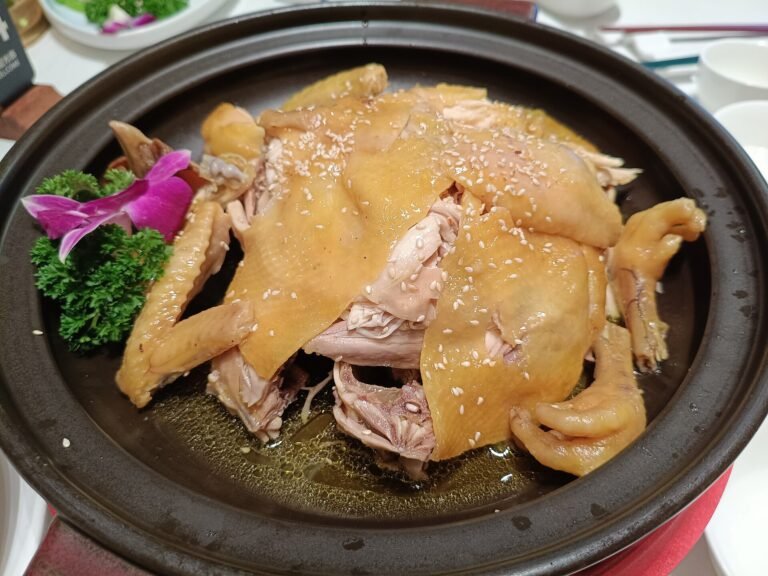
The other Sanya argument is the chicken-rice one: Hainan chicken rice — poached chicken with oily rice cooked in the broth — is claimed by the island, by Singapore and by Malaysia in roughly equal volume of opinion. In Sanya you eat the Hainan version: the same Wenchang bird as in Haikou, with rice cooked in its fat and a bowl of the broth on the side. It is plainer than the Southeast Asian versions and, if the chicken is right, better. The Sanya airport shops even sell it as a chilled take-home box, which is the clearest sign a dish has become a local brand rather than merely a meal, and the one thing worth bringing home if you are flying out the next morning.
A Practical Market-Visit Table
| Step | Where | What to expect |
|---|---|---|
| Buy live seafood | First Market | 120–200 RMB for two |
| Cooking fee | Adjacent restaurant | 10–25 RMB per dish |
| Beach grill | Waterfront stalls | 120–200 RMB for two |
| Fruit by the kilo | Roadside stalls | 6–15 RMB |
| Russian café breakfast | Seafood-square area | 30–60 RMB |
Frequently Asked Questions
Is the market model a tourist trap? The model isn’t; individual vendors can be. Use a market with visible scales, agree the weight aloud, and take your own bag to the cook. The honest ones outnumber the cheats.
Do I need to speak Chinese? Enough to point and hold up fingers for the weight. The cooking restaurants deal with foreign visitors daily and will gesture you through the menu.
Is the seafood safe? Yes — it was alive an hour ago and it is cooked over heat. The risk is price, not hygiene.
When is durian in season? Roughly May to September. Out of season you will pay imported-fruit prices and the quality drops.
How is Sanya different from Haikou for eating? Haikou is markets and old town; Sanya is beach, barbecue and resort. Sanya costs more for the same fish but gives you the sea to eat it beside.
Can I eat well on a budget? The market model is the budget play: a seafood feast for two under 250 RMB beats any hotel. Skip the waterfront restaurants with the view and the English menu.