Haikou Food Guide: Hainan’s Tropical Table
Last reviewed 31 October 2026 · China Food Way editorial team
The chef at the small restaurant on Haikou’s Bo’ai Road set a plate of chicken in front of me, pale and glistening, chopped through the bone, with a saucer of chopped ginger and spring onion beside it. No sauce, no glaze, no chilli. “This is the chicken,” he said, and went back to his wok. That restraint — the confidence to serve a bird with almost nothing on it — is the entire personality of Hainanese food, and Haikou is where it is practised most purely.
Hainan is China’s smallest province and its only island one, and as Wikipedia’s overview points out, it sits firmly in the tropics. It is also, Britannica notes, historically the place Cantonese and returned overseas Chinese met the sea. The cooking reflects all of that: seafood pulled from warm water, fruit that grows without effort, and a preference for letting an ingredient taste like itself. If you arrive expecting Sichuan fire or Hunan smoke, you will be confused for a day and then relieved.
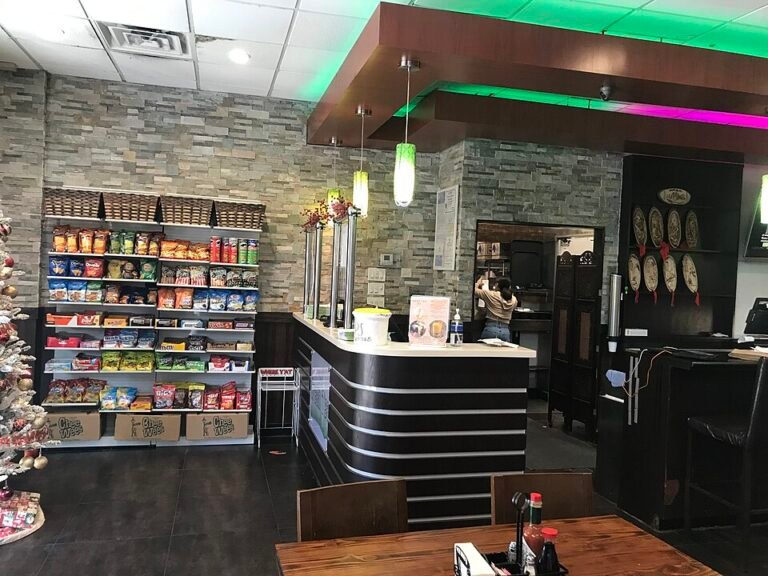
I ate at that Bo’ai Road shop three times in a week, always alone, always at a small table by the window, and the staff stopped explaining the menu by the second visit. The chicken was 78 RMB for a half bird, the ginger-scallion dip came in a porcelain saucer the size of a coaster, and the check never moved. In a city where a resort seafood dinner can quietly reach four figures, the old town’s restraint extends to the bill.
The Four Dishes Everyone Orders
Hainan has a fixed canon, the “four famous dishes” (四大名菜), and a Hainanese restaurant menu is basically a variation on them.
- Wenchang chicken (文昌鸡). The bird is free-range, fed on rice and peanut cake, and cooked by gentle poaching so the skin stays silky and the meat stays just this side of pink. You eat it with ginger-scallion dip. The Wenchang breed is the whole point — a factory bird will not do it. The chickens you see ranged across the island’s villages are this bird, and the gap between them and a supermarket chicken is the gap between the dish and a disappointment. A good bird is never more than a few hours from farm to pot, which is why the dish tastes of chicken rather than of sauce.
- Jiaji duck (加积鸭). From the town of Jiaji near Qionghai, a fattened duck roasted or braised and served with a sweetish dip. Richer than the chicken, less delicate, and the one to order if you want something with a bit more fat and crackle. It is the dish to order in winter, when the duck has fattened on the late rice and the meat carries a little more depth.
- Hele crab (和乐蟹). A mangrove crab from the Hele area, steamed and eaten with vinegar and ginger. Sweet, dense, and entirely about freshness — a crab that travelled badly would be a waste of the train fare. Order it steamed, never stir-fried, so the sweetness is not buried under the wok.
- Dongshan lamb (东山羊). From the rocky Dongshan hills, a small goat cooked in a clear broth or braised with fermented red tofu. Mild, not gamey, and the dish that surprises visitors who assumed island food meant only seafood. It is the one of the four that proves Hainan eats more than fish — the hills inland raise the goat the coast cannot.

These four are the spine of the table, but the philosophy behind them — taste the thing, don’t mask it — runs through everything cheaper and humbler too.
How can you tell the seafood is genuinely fresh?
Genuinely fresh Hainan seafood shows in three things before it reaches the wok: clear, unclouded eyes on the fish, firm flesh that springs back when pressed, and a clean sea smell with no hint of ammonia. At the Haikou markets the best stalls display the catch on ice with the gills still red, and they let you point at the exact crab or prawn you want weighed. The trap is the tourist seafood houses near the marina that keep stock in aerated tanks for days; the animals survive but the flavour flatters no one. Cook it the simplest way offered, steamed with ginger, because a heavy sauce is how a tired fish hides. A caveat worth knowing: prices are quoted live by weight in jin, a unit of about 500 grams, so agree the rate before it leaves the scale.
Seafood, and Why Freshness Is Non-Negotiable
Haikou’s fish markets open before dawn and the good restaurants buy by the crate at first light. The coastal seafood tradition here is about a short distance between water and wok: steamed grouper with a spoon of soy and a scatter of spring onion; clams stir-fried with black bean; prawns flash-fried with garlic; a whole pomfret scored and steamed until the flesh lifts off the bone in sheets. The dish is a vehicle for the ingredient, not the other way round.
The coconut is the island’s other staple. Wikipedia’s entry on the coconut describes a crop that grows across the tropics, and on Hainan it turns up in savoury soups, in a young-coconut water served straight from the husk, and in the desserts that close a meal. A chilled young coconut on a Haikou street corner in August is better than any soft drink.

Why does coconut turn up in savoury Hainan dishes?
Coconut turns up in savoury Hainan cooking because the island grows the fruit in such volume that it became a cheap, everyday seasoning rather than a dessert-only ingredient. The mature flesh is grated and steeped to make coconut milk, which then braises chicken, softens bitter greens, and loosens the starch of a rice pot without any dairy. It reads as richness, not sweetness, in the local hand: a Wenchang chicken cooked in coconut water stays savoury, with the fruit rounding the edges of the meat rather than sugaring it. The habit comes from the tropical larder, because where a mainland kitchen might reach for stock, a Hainan one reaches for the nearest coconut. The one thing to watch is the young-green version, whose water is sweet and belongs in drinks, not the braise.
Coconut: the Island’s Quiet Staple
If Wenchang chicken is Hainan’s headline, the coconut is its background music. The palms line every coastal road and the fruit is used with a lack of ceremony that only comes from having too many of them. Young coconuts are hacked open with a cleaver at the roadside and handed over with a straw; the water is sweet, faintly floral, and the best cold drink on the island. The mature flesh goes into savoury soups — a coconut-chicken soup is a restaurant standard — and into the steamed cakes and puddings that close a meal.
The Hainanese do not romanticise the coconut; they simply assume it will be there, the way a northern city assumes tap water. I came to like the young coconut so much that I started the day with one and ended it with one, and nobody in Haikou found this odd.
What marks Haikou street food as Cantonese?
Haikou street food reads as Cantonese in its restraint: light soy and ginger over chilli, steamed rather than fried, and a preference for letting a single ingredient lead. You see it in the congee stalls that sell a thin, clean rice gruel with a hundred small toppings, in the steamed bun carts that never load the dough with sugar, and in the way a bowl of noodles arrives with broth you can actually see through. Until 1988 Hainan sat inside Guangdong, and the old cooking travelled south with the administrators and the returned overseas Chinese who built the arcade streets. The giveaway is the seasoning ratio, less oil, less noise, more faith in the raw material, which is why a Haikou breakfast feels closer to Guangzhou than to the chilli belt two provinces over. The loud stuff is the tourist layer, not the local one.
The Cantonese Hand and the Street Scene
Hainan was administratively part of Guangdong for most of the last century, and the Cantonese hand is visible everywhere — the clean steaming, the congee, the dim-sum-adjacent breakfast buns. But Hainan is looser and warmer about it: more coconut, more herb, more open-air eating. The border city of Sanya, further south, pushes the seafood-and-beach model harder; Haikou keeps one foot in the old town and the morning market.
For street food, Haikou’s Qilou (骑楼) old quarter — the arcaded shophouses built by returned overseas Chinese — is the place to walk and graze. Chinese street food here means grilled squid on a stick, fried noodle rolls, coconut-milk jelly, and the local Qingbu liang (清补凉), a cold sweet soup of mung bean, melon seeds, sago and coconut milk that exists mainly to lower your core temperature.
What does a typical Haikou day of eating look like?
A typical Haikou day opens with congee or a rice-noodle soup at a street stall before eight, then drifts into a mid-morning piece of Wenchang chicken if you are with family, and settles at noon with a plate of stir-fried greens and a small fish steamed with ginger. The heat pushes the main meal earlier than in the north, and the afternoon belongs to fruit, mango, pineapple and the local jackfruit eaten cold from a knife on the pavement. Evening is the real show: seafood by weight at a market stall, coconut-water braises, and a bowl of qingbuliang if the night is warm. The rhythm is loose and repeated, not coursed. The one mistake is saving your appetite for a resort dinner, because the city’s best food is the stuff sold by the half-portion from a window, and it is gone by ten.
A Day on the Plate
The rhythm of eating in Haikou is gentle. Breakfast is congee and a steamed bun at a corner shop, or — if you are doing it properly — a bowl of the local rice noodle (后安粉, hou an fen) from a specialist stall that opens at six and sells out by nine. Mid-morning is for fruit and coffee. Lunch is the big meal: a half chicken shared, a whole steamed fish, greens stir-fried with garlic, and rice.
The afternoon slows. The heat pushes everyone indoors, and the serious eating moves to the evening, when the seafood restaurants fill and the Qilou streets light up. Dinner is the crab, the grouper, the clams, eaten late and slowly with beer. Dessert is the cold sweet soup or a coconut. There is none of the snack-all-day urgency of a city like Chengdu; Haikou eats in three calm movements and then goes to bed.
What to Order and What to Pay
| Dish | Setting | Typical price (RMB) |
|---|---|---|
| Wenchang chicken, half | Restaurant | 68–98 |
| Steamed grouper (per 500g) | Seafood restaurant | 60–120 |
| Hele crab (per crab) | Seasonal stall | 40–80 |
| Qingbu liang (cold sweet soup) | Street | 8–15 |
| Coconut, young | Any corner | 6–10 |
Prices rise on the waterfront and in hotel dining rooms; the old-quarter shops are where locals eat and where the value sits. A full seafood dinner for two with a chicken to start and a crab to finish runs 250–400 RMB if you pick the mid-range place rather than the view.
Frequently Asked Questions
Is Hainanese food bland? Not bland — restrained. The salt, the ginger, the soy are there to point at the ingredient, not cover it. If you need chilli, the chilli dip on the table is fierce enough.
Do I have to eat the chicken cold? It is served at room temperature, which is how the skin stays silky. It is not cold leftovers; it is the correct temperature for the dish. Try it before you ask them to reheat it.
Is the seafood safe for a visitor? Yes. The turnover is fast and the cooking is hot. Pick a tank-and-menu place where you point at the swimming crab, and you will be fine.
What is the best season? November to March is the cool, dry window and the best time to travel. The seafood is good year-round, but summer is hot enough that you will mostly want the cold sweet soup and a fan.
How is Haikou different from Sanya for food? Haikou is the old capital: markets, Qilou streets, a slower table. Sanya is the resort coast, built around tourist seafood and beach barbecue. Both are Hainanese; Haikou is the more honest version.
Can I eat well cheaply? Easily. The chicken, a bowl of congee, a coconut and a plate of greens will feed you for under 60 RMB, and the street sweet soup is a few coins.