Why Shaoxing Deserves More Than a Day Trip
Here is the number that rewrote my plan. Shaoxing is fifty minutes from Hangzhou on the high-speed train and under ninety from Shanghai, which puts it inside the same day-trip bubble as a dozen famous towns. And yet across three days there I counted maybe a dozen foreign tourists, against the coachloads you meet in the headline water towns an hour north. The place is easy to reach and almost empty of visitors who aren’t Chinese, which is usually the sign you’ve found something the guidebooks trimmed for length. The turning point on my second visit was a tea-stall owner near the Lu Xun lanes who, on learning I had only an afternoon, closed up his shop and walked me to the harbour so I’d catch a boat before it shut. That kind of unscripted generosity is the real product here, and you only meet it if you stay long enough to be noticed.
Shaoxing: day trip or two nights?
The standard advice is to bolt it onto a Hangzhou visit and leave by mid-afternoon. I did that the first time and spent the whole train ride back annoyed at what I’d skipped. Shaoxing is not a single sight; it is a low, wet, literary city that unfolds at the pace of its boats, and a whistle-stop misses the point. Stay two nights and the place relaxes into something closer to how locals actually live it.
If you are building a wider eastern route, the imperial gardens up at Chengde Travel Guide show the formal, courtly end of Chinese landscaping, which makes a useful mirror to Shaoxing’s small, scholar’s-garden style. And Beijing, three hours north by rail, is the obvious anchor if you are flying in and working south.
Lu Xun’s hometown and the scholar’s garden
Most visitors come for Lu Xun, and the childhood home does not disappoint if you arrive before the school groups. The 百草园 (Hundred-Plant Garden) is smaller than the stories imply, but the 三味书屋 (Three-Flavour Study) where he was taught still has the desk carved with his character for “early,” and the lanes around it are the real old town, not a reconstruction. Walk them slowly and you understand why his writing is so rooted in place.
The adjoining streets sell the fennel-flavoured peas his stories made famous, and the 咸亨酒店 (Xianheng Hotel) nearby is a working restaurant as much as a shrine. Go early. By ten the narrow lanes are shoulder to shoulder, and the quiet that makes the place legible is gone.
The canals, the black boats and the yellow wine
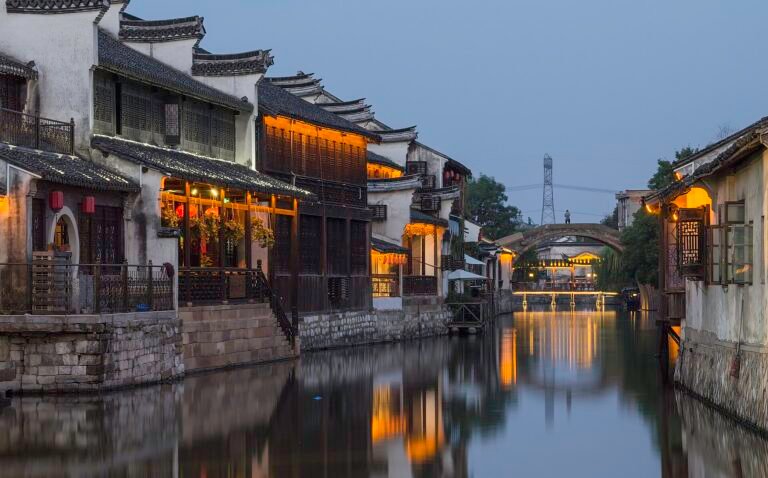
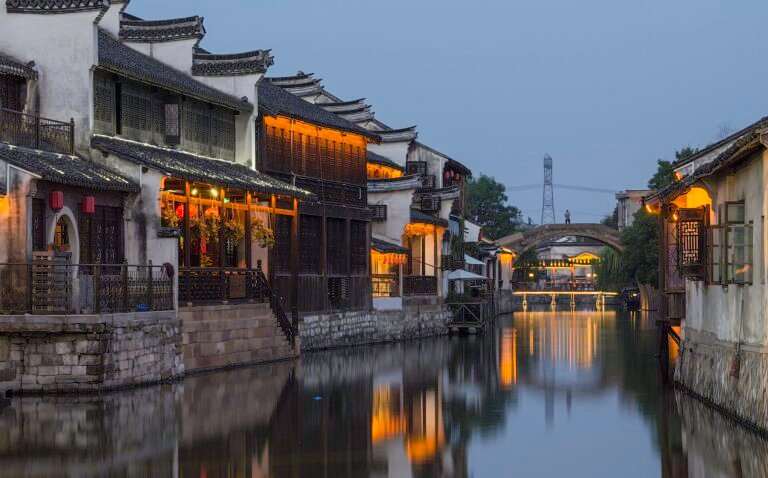
Shaoxing’s waterways are its spine. The 乌篷船, a black awning boat punted with a foot-oar, is the slowest and best way to read the city, and a twenty-minute ride from the old harbour takes you past washing lines, tiled roofs and the occasional heron. I took one at dusk and the boatman sang, badly and happily, into the echo of the bridges.

The wine is the other reason to come. Shaoxing 黄酒 (yellow wine) is fermented from rice rather than distilled, served warm in winter, and the 女儿红 variety was traditionally buried at a daughter’s birth and dug up at her wedding. The 沈园 (Shen Garden) pairs the two: a small, melancholy garden built around a poem of separated lovers, best visited late when the lanterns come on and the tour groups have gone.
The state winery on the edge of town runs a short tour and a tasting room where you can try three or four vintages side by side, from a dry style to the syrupy 香雪 that tastes more like sherry than wine. I went on a weekday and had the room to myself; the pours were generous enough that I skipped lunch and napped on a canal bench afterwards. Buy a bottle of the mid-range 花雕 and it travels fine in checked luggage if you wrap it, and it makes a better souvenir than anything in the gift lanes.
If you want a food comparison, the street eating in all about changsha runs hot and loud, while Chengdu explained walks you through a slower, numbing table. Shaoxing’s food is gentler and built around the wine — drunk, cooked with, and braised into the local pork.
East Lake and the quarry cliffs
East Lake, a few kilometres east of the centre, is the one sight that earns its postcard. It is a former quarry where stone was cut from the cliff face until only narrow walls of rock remained, now filled with green water and crossed by a walkway that ducks through carved tunnels. The contrast of vertical grey stone and still water is genuinely striking, and the boat that threads the cliffs is the highlight. The cliff walkway and the boat are separate tickets, and I would take the boat over the walk if you have to choose — the tunnels only make sense from the water, where the stone closes overhead and the oar echo doubles back on itself.
Give it a morning. It gets busy by late morning, and the boats queue. Arrive at opening and you get the tunnels to yourself, which is the whole point.
Anchang: the water town that isn’t a theme park
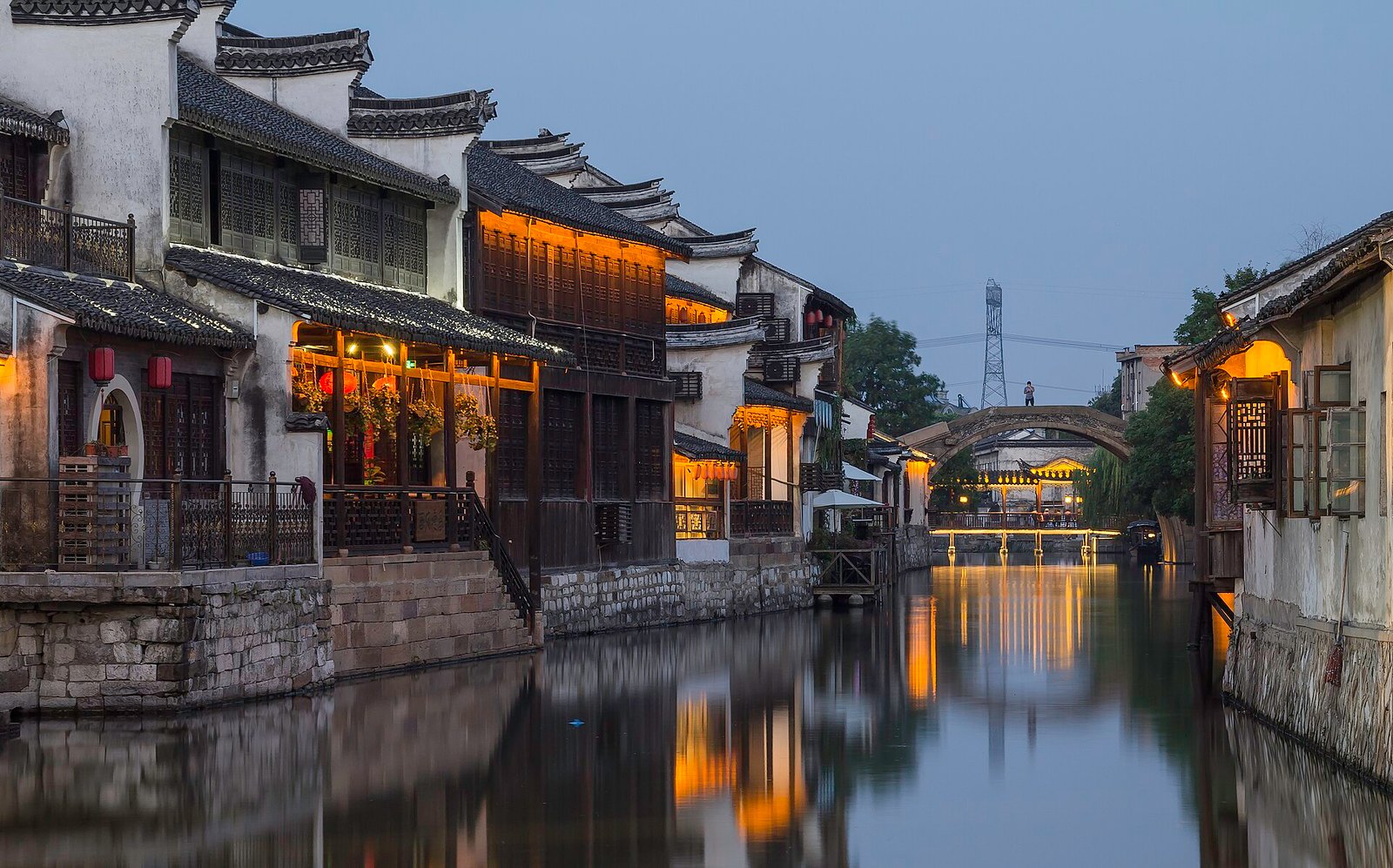
If you only have energy for one outlying town, make it Anchang, about forty minutes by bus from the centre. Unlike the restored showpieces nearer Hangzhou, Anchang is still a working place: stone bridges, a covered riverside market, and lanes hung with cured duck and pork that the locals make every winter. I arrived on a Saturday and watched a grandmother negotiate the price of a goose while a toddler chased a dog under the meat. The morning market is the moment to aim for: between seven and nine the lanes fill with produce, live fish and the year’s cured meat being hung, and the photography is better than at any other hour. By afternoon it thins to a few stallholders and a quieter, sleepier version of the same place, which has its own appeal if you’d rather wander than watch.
There is a small entry charge to the lane’s heritage houses but the town itself is free to walk, and the food stalls along the water sell the best steamed buns I ate in Zhejiang. Come hungry and leave with a bag of the sweet fermented rice wine if you can carry it.
How long, and what it costs
The case for staying is clearest in the maths of a longer visit, because the first day covers the famous names and the second day is where Shaoxing actually opens up.
| Plan | Covers | Misses | Good for |
|---|---|---|---|
| 1 day | Lu Xun home, Shen Garden, a boat ride | East Lake, Anchang, the wine | Tight Hangzhou add-on |
| 2 days | Above plus East Lake and Anchang | Night market, side lanes | Proper first visit |
| 3 days | Everything at a slow pace | Nothing much | Writers, photographers |
Budgets are gentle. Entrance fees run RMB 20–60 per sight, a boat ride is a few tens of yuan, and a solid noodle or bun meal costs under RMB 30. The 黄酒 tasting at the state winery is cheap and pours generously.
For travellers weighing a slower, small-town pace against a bigger itinerary, how dali is really done makes the same argument from a Yunnan perspective, and everything you need to know about chongqing shows what happens to the river-city idea at ten times the scale. Those coming from the far northeast after reading about Changchun will find Shaoxing a softer, warmer contrast in every sense.
As Wikipedia notes, the city has been a centre of Chinese letters for two millennia and produced not only Lu Xun but the poet Lu You and the calligrapher Wang Xizhi, which is why its gardens feel less decorated than earned.
Frequently Asked Questions
Is Shaoxing worth more than a day trip? Yes, for most travellers. A single day covers the headline sights but skips East Lake and Anchang, which are the two places I’d least want to miss. Two nights is the sensible minimum.
How do I get to Shaoxing from Hangzhou or Shanghai? High-speed train to Shaoxing North station, then a taxi or bus into the old town. From Hangzhou it is around fifty minutes; from Shanghai about ninety. Both run frequently through the day.
What is Shaoxing yellow wine, and should I try it? It is a rice-fermented wine, lower in alcohol than baijiu and served warm in winter. Try it braised into pork or by the cup at the state winery; the tasting is cheap and a good introduction if you have never had it.
Is Anchang suitable for someone without a car? Easily. Buses run from Shaoxing’s bus station and drop you within walking distance of the old lane. A car saves time but is not needed, and the town is flat and compact once you arrive.
When is the best time to visit? Spring and autumn are mild and good for walking the lanes and taking boats. Winter is cold but the cured-meat season in Anchang is a draw in itself, and summer is hot enough to push boat rides to the early morning.
Do I need to be interested in Lu Xun to enjoy Shaoxing? No. The canals, the wine, East Lake and Anchang stand on their own. Lu Xun’s home is the obvious first stop, but the city rewards travellers who wander past it more than those who treat it as the whole point.