
Shunde Food Guide: UNESCO City of Gastronomy
Reviewed 31 October 2026 by the China Food Way editorial team
The counter hand counted three things before he wrote anything down: which fish, how many catty, and whether we wanted the head and bones back as soup afterwards. It was 7pm on a Tuesday in Daliang, Shunde’s old town centre, and the tank he was pointing at held grass carp the size of a forearm. “Two catty, one fish four ways,” my host said — a little under 1.2 kilos — and the answer came back without hesitation. Forty minutes later we had been served four courses from one animal, in a room with plastic tablecloths, fluorescent light and no English menu.

Shunde is not a city most travellers can point to on a map. It is a district of Foshan — mulberry banks, dykes and fish ponds — and in 2014 UNESCO named it a City of Gastronomy. What happened over that fish dinner is the reason: this is a place where technique is the point, and where the cooking has never been industrialised out of existence.
What does ‘hung in water’ mean and is it worth paying for?
It means the fish was moved into clean flowing water and left unfed for five to ten days before killing, which firms the flesh and clears any muddy pond taste. The Cantonese call this 吊水 (diu séui), and a fish treated this way costs noticeably more than the standard tank option. It is worth paying for, because the difference shows within two slices: cleaner bite, no off note, no need to drown it in sauce. Ask the counter hand whether the fish has been hung, and if the answer is yes, take it. If the answer is a shrug, order something else or accept the cheaper, muddier version knowingly.
The Fish Counter: Every Serious Meal Starts at a Tank
Ordering fish here is closer to specifying a butcher’s cut than choosing a dish. The standard tank fish is grass carp (鲩鱼, hwàhn yú in Cantonese), but you may be offered choices the menu never mentions: whether this fish has been “hung in water” (吊水, diu séui), meaning it was moved into clean flowing water and left unfed for five to ten days, which firms the flesh and clears any muddy taste. A fish that has been treated this way costs noticeably more, and it is worth paying. I once ordered the cheaper tank option out of politeness and could taste the difference within two slices.
This is the delta version of Cantonese seafood cooking: less interested in the sea than in the pond, and far more exacting about hours than about species. A fish is not “fresh” here in the general sense; it is fresh to the minute, killed when the order goes in.
What are the four ways a single fish gets served?
The standard order splits one fish across four courses built around the whole animal. First comes yúshēng, the raw slices you dress yourself with oil and salt at the table. Then a gentle steaming or clear broth using the meaty cuts. The head and bones return as a soothing soup, and the remaining trim is stir-fried, often with fermented black beans or pickled greens. Nothing is wasted, which is the point: a forearm-length grass carp becomes four textures from one order. Ask for the head and bones back as soup when you book the fish, because the kitchen only makes it if you say so.
One Fish, Four Ways
This order is standard across Daliang and Ronggui, and it is not arbitrary: it runs from the most delicate flesh to the bones.
| Course | Name | What arrives | Notes |
|---|---|---|---|
| 1 | 鱼生 (yúshēng) | Very thin slices of raw fish, translucent, fanned on a cold plate | Mixed at the table with a dozen condiments |
| 2 | 凉拌鱼皮 (liángbàn yúpí) | Blanched fish skin, chilled, dressed with sesame and chilli | Rubbery-springy, not slimy; the test of a good kitchen |
| 3 | 鱼滑 / 煎鱼饼 | The remaining flesh pounded to a paste, fried as patties or poached into soup | The paste is beaten, not minced — the texture depends on it |
| 4 | 鱼头汤 or 拆鱼羹 | Head and bones simmered into a milky soup, or shredded into a thickened gēng | Usually where the meal ends, with rice |
The mixing ritual for yúshēng matters more than it looks. You are given the plate of fish plus a ring of small dishes: shredded ginger, scallion, garlic, white radish, pickled things, toasted sesame, crushed peanuts, sugar, salt, pepper, oil, and something citrus. The order locals use is oil first — tossing the slices to coat them so the salt does not draw water out and tighten the flesh — then salt, then everything else, then a hard toss with chopsticks and eaten within about three minutes. Get distracted and take photographs for ten minutes, and you have warm, slightly chewy fish. Ask me how I know.
The Safety Question Nobody Raises at the Table
I will be blunt, because most guides are not: this is raw freshwater fish, and in parts of southern China freshwater fish carry the Chinese liver fluke (Clonorchis sinensis), a long-documented public-health issue in Guangdong. Traditional practice pairs yúshēng with warm rice wine and plenty of garlic, which is folk logic, not sterilisation. Locals eat it every week without incident; plenty of visitors skip it, and waving course one away is not rude. Ask them to blanch the slices for fifteen seconds (白灼, baahk cheuk) instead — you lose very little.
Why does a town in rice country make a milk pudding?
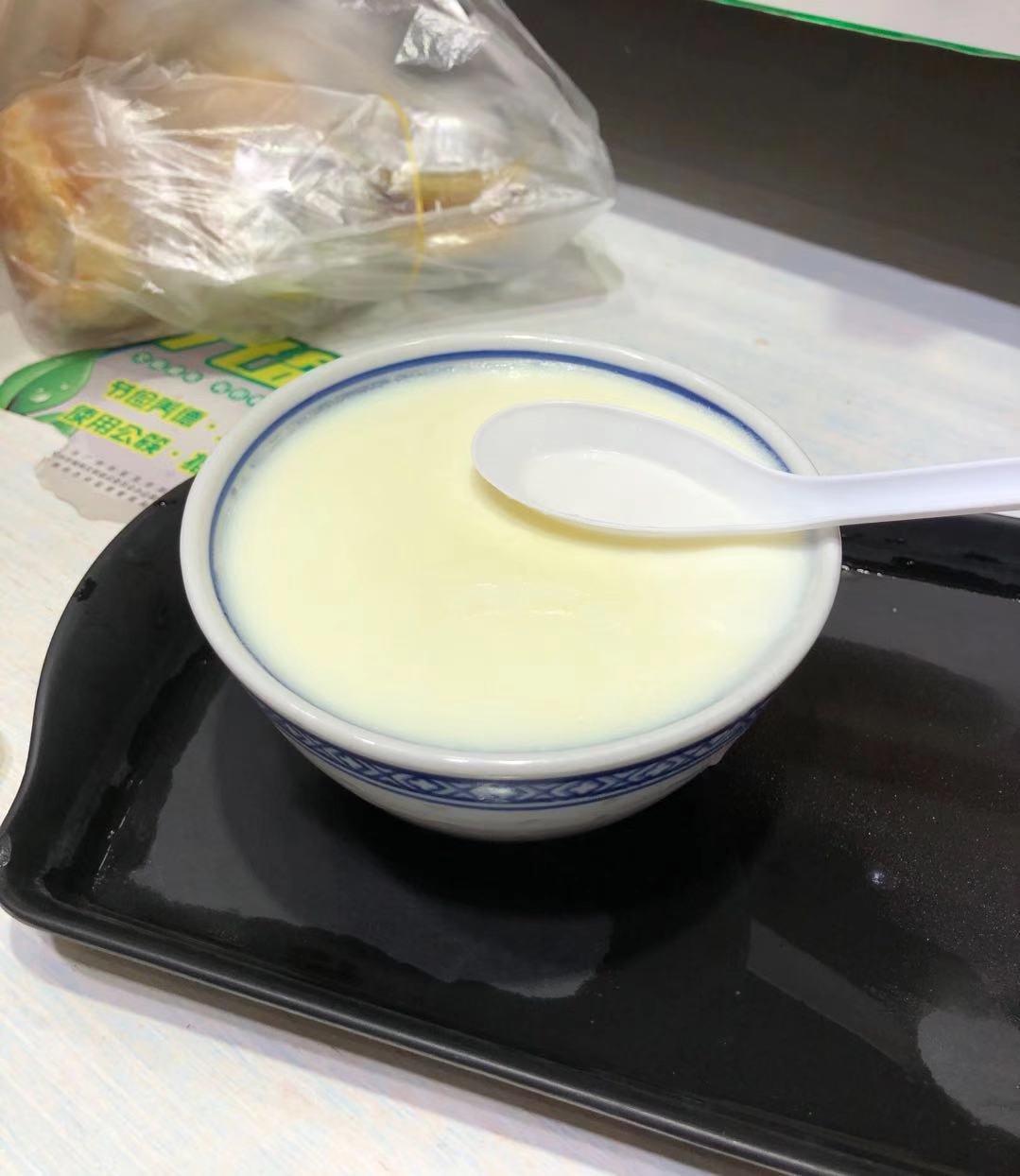
Because the Pearl River delta has kept water buffalo for centuries, and the leftover milk became a local craft rather than a western import. Shunde’s double-skin milk pudding, set with egg and steamed in a shallow bowl, turns that buffalo milk into a soft, faintly caramel custard that eats nothing like a European dessert. The ‘double skin’ is the layer of cream that forms on top as it cools and is folded back in. It is a daytime snack sold by the bowl in old Daliang, sweet but not heavy, and it is the one Shunde speciality you can eat without a tank or a knife in sight.
Why There Is Milk in a Chinese Delta Town
The second surprise of Shunde is dairy, which nobody expects from Chinese cooking. Walk along Huagai Road in Daliang at three in the afternoon and every third shop window holds bowls of 双皮奶 (sēung pèih náaih, “double-skin milk”): milk heated, poured into bowls, cooled until a skin forms, the milk poured out from under that skin, mixed with egg white and sugar, poured back, and steamed gently so a second skin rises to the top. Done properly the top is faintly wrinkled, the body wobbles like a set custard, and it costs ¥10–15. I have eaten six versions in a day and the best was the plainest — served warm, no red bean, no mango, no nonsense.
Then there is 炒牛奶 (cháau ngàuh náaih, stir-fried milk). Nothing is fried. Egg white, milk and cornflour are folded together over the lowest heat and moved without stopping until they just set into soft curds; the moment colour appears it has gone too far. It arrives finished with crab meat or shrimp and roasted nuts, looking like something that took three minutes rather than the twenty it did. My home attempts produced scrambled eggs, then a lumpy mess, and something edible on the fourth try — which tells you how much of this is wrist rather than recipe.
In Jinbang village there is even a cheese — small white discs of salted cow’s milk pressed into wheels and kept in brine, sold in jars. It is not eaten on its own. Two slices dissolved into a bowl of plain rice congee is the local breakfast, and it turns congee salty, faintly sour, and nothing like the sweet thing most visitors know.
Whole Pig in a Wooden Box
Jun’an, one of the district’s southern towns, is known for 蒸猪 (jīng jyū): a whole pig steamed upright in a custom-built wooden box for the better part of an hour, then pricked all over with a spike so the fat runs, then seasoned and returned briefly to the steam. No crackling, no roasting — the skin comes out pale and slightly chewy and everything under it is soft. It is festival food, historically cooked for clan ancestral ceremonies rather than for restaurants, and you will see it announced on red banners at village events rather than listed on a laminated menu. If you find it at a restaurant, order it with plain rice and nothing else.
The village-festival impulse also produced the snacks: 伦教糕 from Lunjiao, a fermented rice cake with a faint sour-sweet tang and a honeycomb interior; 大良崩砂, a fried pastry shaped like a butterfly, which travels badly and should be eaten the day it is made; and 陈村粉 from Chencun — rice sheets cut into thin ribbons, paler and slightly thinner than the usual rice noodle roll, served cold with sesame and soy or steamed over spare rib.
Why is Shunde called a city of gastronomy?
Because cooking here is a recognised profession with a deep bench, not a hobby. The district has produced generations of chefs who trained in its banquet kitchens and went on to run tables across Guangdong and beyond, and UNESCO named it a City of Gastronomy in 2014 precisely because the technique never industrialised out of existence. You feel it at the fish counter, where the counter hand specifies cuts like a butcher, and in home kitchens where a child learns to knife a fish before they learn to write. The title is earned, not marketed.
Chef Country
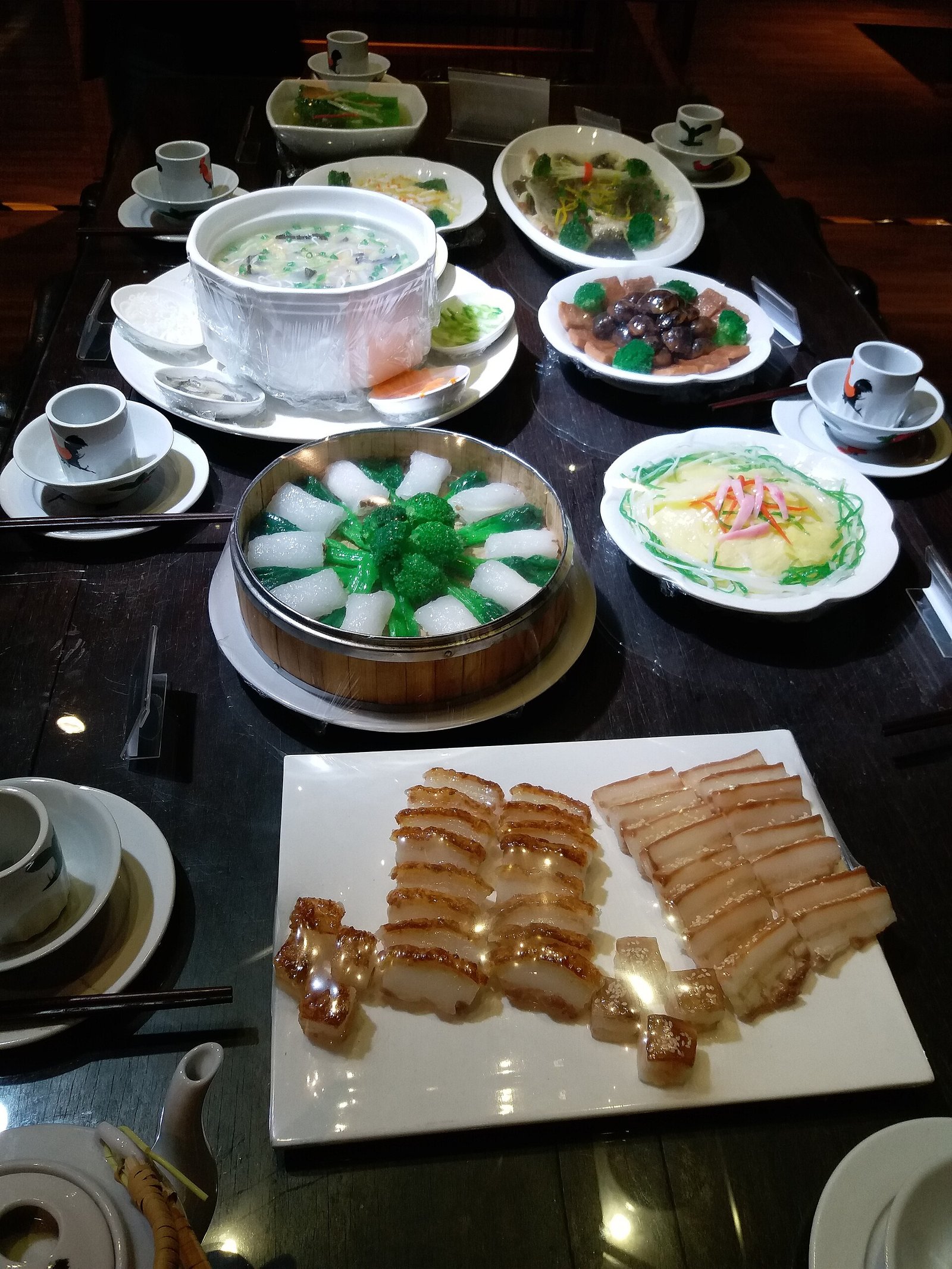
The old saying in Guangdong is 食在广州,厨出凤城 — “eat in Guangzhou, the chefs come from Fengcheng” — Fengcheng being another name for Daliang. It is not folklore with nothing behind it. Through the nineteenth and twentieth centuries Shunde men left in numbers for the kitchens of Guangzhou, Hong Kong and later Singapore, and a working knowledge of Shunde knife skills became a baseline for anybody aiming at the top of a Cantonese kitchen. The district still has training schools, and the Museum of Shunde keeps a hall of reconstructed dishes and table settings that is the best single-room introduction to the region I have visited.
That history also explains what is absent here. There are no tasting menus and no chef’s tables — there is talent that simply never left, which is why an ordinary dining room for ¥80 a head beats a capital-city restaurant at three times the price. The whole of Cantonese cuisine rests on skills like these, and a good deal of what the region exports as Chinese dim sum traces back to hands trained in these towns.
Practicalities
Shunde has no airport and no tourist centre worth the name. You come from Guangzhou — about 50 minutes by taxi — and move around by Didi afterwards. Pick two towns a day rather than trying to cover six.
| Town | Go for | Timing | Rough cost |
|---|---|---|---|
| Daliang (大良) | Four-way fish, double-skin milk, Qinghui Garden | Lunch and mid-afternoon | ¥80–150 per head |
| Ronggui (容桂) | Wúmǐzhōu rice-less congee hot pot | Dinner | ¥90–130 per head |
| Chencun (陈村) | Rice-noodle ribbons, morning tea | Breakfast / late morning | ¥20–40 |
| Jun’an (均安) | Steamed pig, village weekends | Saturday lunch mainly | ¥60–100 |
| Leliu (勒流) | Fish restaurants along the dykes | Dinner | ¥100–160 |
| Lunjiao (伦教) | Fermented rice cake to take home | Any time | Under ¥30 |
One local trick worth knowing: 毋米粥 (mòuh máih jūk), “no-rice congee”. Rice is cooked down and pounded, then the solids strained off, leaving a velvety liquid used as a hot pot base. With no starch clouding the pot, everything cooked in it tastes cleaner: fish slices first, then prawns, then beef, then greens, each piece dipped in beaten egg before it goes in so it comes out coated. The strained solids arrive at the end, with egg and scallion.
Ordering without Cantonese is easier than it looks. Point at the tank, hold up fingers for catty, and say 招牌菜 (jiū páai choi, “signature”) to let the kitchen decide.
Frequently Asked Questions
Is Shunde worth a day trip from Guangzhou?
Yes, and it is worth a night so you can do the fish dinner and the next morning’s tea rather than rushing both. It also combines neatly with what to eat in Guangzhou on the way back, or with a morning of eating in Foshan twenty minutes up the road.
How much should a four-way fish dinner cost?
Expect ¥150–260 for the fish itself depending on species and weight, plus ¥20–40 per side dish. Two people eating well with one fish and two vegetables land around ¥250 total. Ask the price per catty before they kill it.
Can I do this if I don’t eat raw fish?
Completely. Skip course one and ask for it blanched, or have the whole fish cooked — steamed, salt-baked, or in clear soup. The fish-skin salad and the fish-paste patties are cooked anyway.
What is the single dish I shouldn’t leave without eating?
Stir-fried milk, if you can find a kitchen doing it properly; failing that, warm double-skin milk from a Daliang shop window, which nobody manages to ruin. Both argue that this region never respected the boundaries other Chinese kitchens do. As Wikipedia’s entry on the district notes, Shunde has been a commercial and craft centre within Guangdong for centuries — the food is what that history tastes like.
When is the best time of year?
October to December, when the weather is dry and the carp are fat. Summer is brutally humid, and much of the best eating is outdoors or under a tin roof.
Where This Leaves the Map
What stays with me is how little of it has been packaged. No reservations worth making, no restaurant names to memorise — tanks, knife skills, and six things done better than anywhere else. Go hungry, order whole rather than à la carte, and let the counter hand decide.


