Snow Peas and Sugar Snap Peas: A Cook’s Guide
Sugar snap peas were invented in 1979. That fact still irritates me slightly, because for years I assumed the fat, shiny pods I was buying were simply snow peas that had been left to fill out — an older version of the same thing. They are not. They are a deliberate cross between a snow pea and a shelling pea, bred by an American plant breeder named Calvin Lamborn, and Wikipedia’s snow pea article is fairly clear that the whole point of the cross was to get a pod you could eat whole and a pea with something in it. The flat pod and the fat pod are not two stages of one vegetable. They are two separate solutions to the same problem.
Which is a long way of saying that this guide is really about learning to buy the right one, because they do not cook the same way at all.
Three Peas, Three Jobs
| Snow pea (荷兰豆) | Sugar snap (甜脆豆 / 蜜糖豆) | Garden pea (豌豆) | |
|---|---|---|---|
| Pod | Flat, near-translucent, seeds barely visible | Plump, rounded, waxy, visible peas inside | Tough and inedible |
| Eaten | Whole, pod and all | Whole, pod and all | Shelled; only the seeds |
| Texture | Crisp, brittle, snaps cleanly | Juicy, thicker, crackles | Soft, starchy, sweet |
| Best heat | Very high, 60–90 seconds | High, 2–3 minutes | Boiled or steamed 3–4 minutes |
| Fails when | Overcooked — goes limp and grey | Under-cooked — raw and squeaky | Overcooked — dull and floury |
The one that catches people out is the middle column. A sugar snap looks like it will cook in the same time as a snow pea, and it will not; the pod wall is thicker, and ninety seconds leaves the peas inside raw. I give sugar snaps roughly double the time I give snow peas.
What the Names Actually Mean
In Chinese, snow peas are 荷兰豆 (hélán dòu) — “Dutch peas” — which is one of those names that tells you more about trade history than botany. Sugar snaps are usually 甜脆豆 or 蜜糖豆, both of which translate roughly to “sweet crisp pea”, and shelled garden peas are 豌豆 (wān dòu). In a British supermarket the flat ones are often labelled mangetout, which is French for “eat everything” and is a better description than either English name. Pea shoots, 豆苗 (dòu miáo), are the young leaves and tendrils of the same plant and are a different ingredient again, sold by the handful and cooked for about forty seconds.
The reason any of this matters at the cooker is that a Chinese recipe calling for 荷兰豆 wants the flat pod. If you substitute sugar snaps because they looked fresher, the dish will be sweeter, wetter and slower to cook, and it will not taste like the thing the recipe was written for.
Buying Them: A Two-Minute Inspection
I buy snow peas the way a Cantonese cook I watched in Guangzhou did, which is to say suspiciously. She turned over the whole pile rather than taking the top layer, and when I asked why she pointed at the bottom of the tray: pods that had been sitting in their own moisture had gone translucent and slightly slimy at the seams. Since then I have done the same, and I have thrown away far less.
What I look for: pods that snap rather than bend when folded; a bright, even green with no yellowing at the tip; a surface that feels dry and faintly waxy, not damp. Avoid any pod whose seam has split — once it splits, it is seconds from limp. For 250 g I pay about £2 in a UK supermarket and ¥8 in Kunming, where a vendor once refused to sell me her last pile because they had been picked two days earlier and were “not for stir-frying today”. I believed her.
Stringing: modern snow peas mostly do not need it, but run the tip of a knife along the straight edge of one pod and pull. If a tough thread comes away, string them all — it takes three minutes for 250 g and it is the difference between crisp and chewy. Sugar snaps almost always want stringing along the curved side.

Heat, Timing and the Ninety-Second Rule
The failure I keep meeting in home kitchens — including mine, for about two years — is treating snow peas as a vegetable that needs cooking rather than a vegetable that needs shocking. Three minutes of gentle frying and they go grey-green, the sweetness flattens out, and the pods droop. What they want is the opposite: the hottest flame you have, and then out.
My method now: a carbon steel wok over the largest burner, preheated until a drop of water skitters and vanishes. One tablespoon of groundnut oil, a teaspoon of smashed garlic, ten seconds. Then 250 g of snow peas, tossed for sixty to ninety seconds — I count, because it is shorter than you think — with a pinch of salt and a quarter teaspoon of sugar. Out onto a cold plate immediately, so they stop cooking. The sugar is not there to sweeten them; a small amount rounds off the raw green edge the way it does in a tomato sauce.
If the pods are thick or the pan is crowded, I blanch instead: two litres of water at a full boil with a tablespoon of salt, pods in for forty-five seconds, straight into iced water for thirty, drained very well. Then they go into the wok for thirty seconds with the aromatics, purely to be reheated and coated. This is the version I use when I am cooking for more than three people, because a domestic burner cannot recover its heat fast enough to stir-fry 500 g properly.
For sugar snaps I add a proper lid-on minute: same start, then 2 tablespoons of water, lid on for ninety seconds, lid off, thirty seconds to reduce. They come out glossy, still crackling when you bite them.
What I Cook With Them
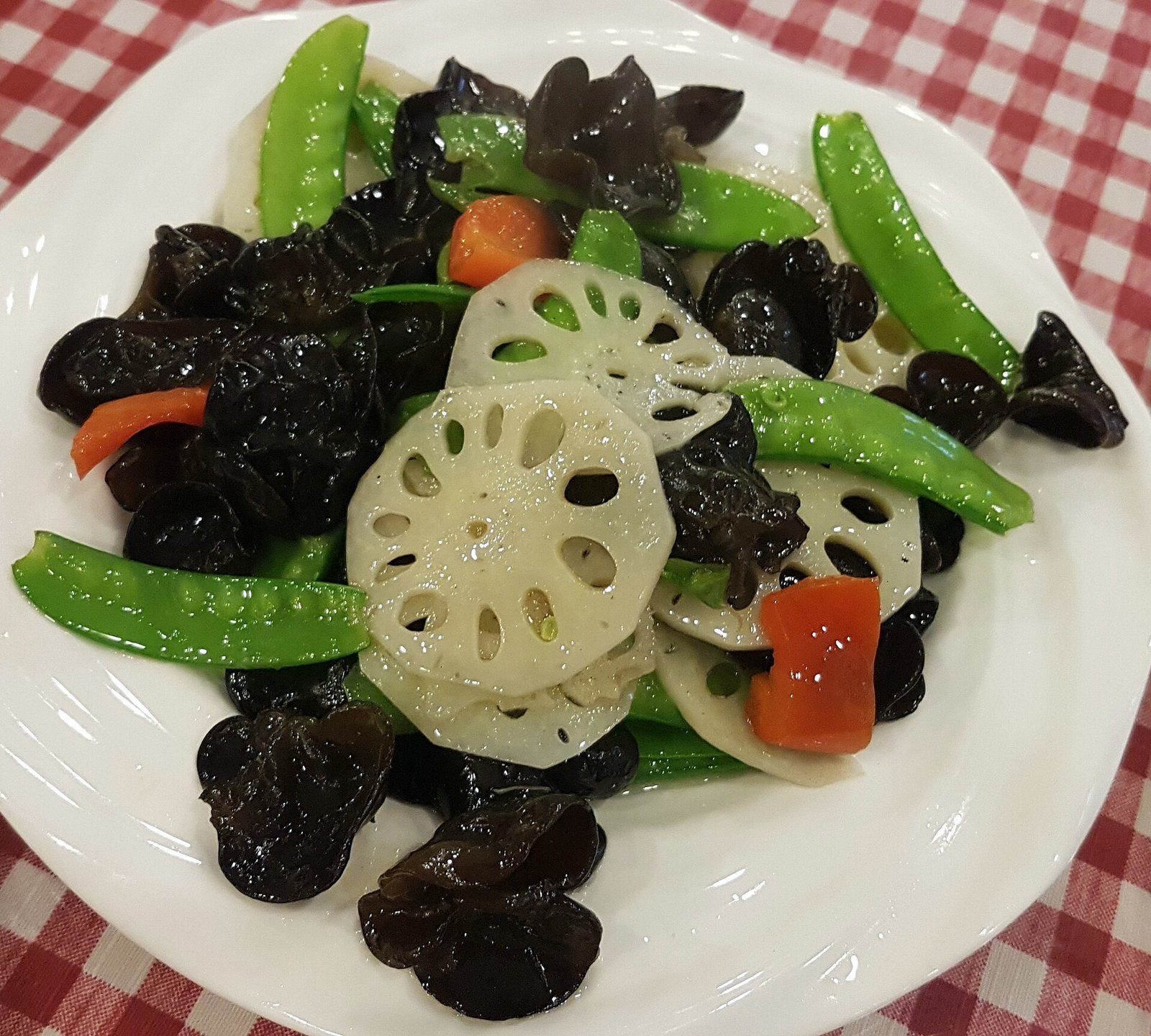
Garlic is the default and is what most Guangdong kitchens do: 蒜蓉荷兰豆, the dish above, with nothing but garlic, salt and a few drops of sesame oil. It is a side dish that gets ordered to make a table of five dishes look more balanced, and it is ready in four minutes.
The second dish I come back to is snow peas with 腊肉 (là ròu, cured pork belly) or 腊肠 (là cháng, cured sausage): 100 g of cured meat sliced thin and rendered in the wok first over medium heat until the fat runs, then the pods in at high heat for ninety seconds with a splash of Shaoxing wine. The fat does the seasoning. If I want heat instead, I use a heaped teaspoon of Doubanjiang in the oil before the meat and cut the salt entirely, which turns the same dish into something closer to a Sichuan home plate.
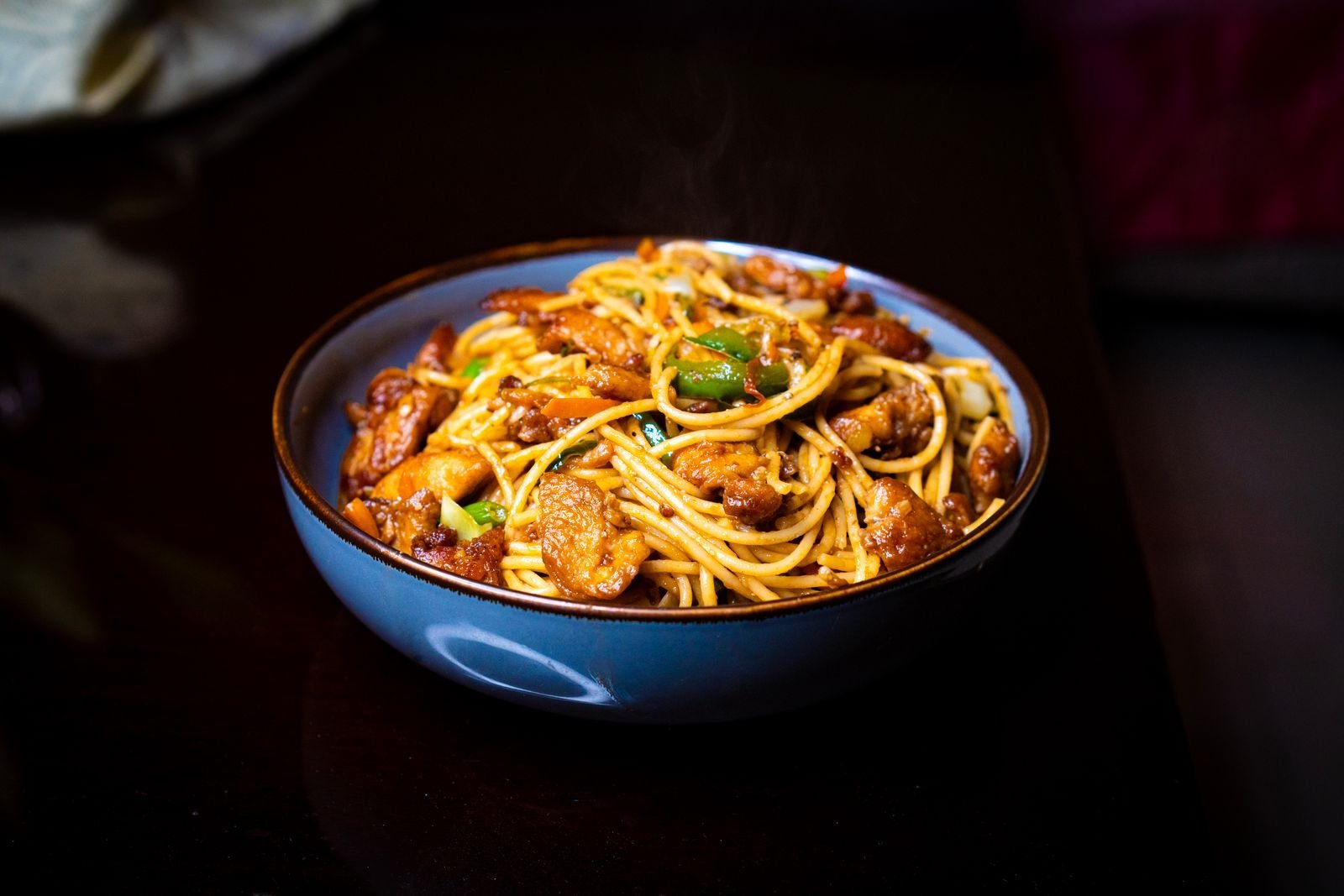
Sugar snaps go into noodles. They are one of the few vegetables that survive being tossed with cooked noodles without going limp, and they are the best thing I have found to put in a bowl of all about easy chow mein at the last minute — in with the noodles, thirty seconds, toss, out. They also work cold: blanched, iced and dressed with a little chilli oil and black vinegar, as a plate to sit next to something heavier like Dan Dan Noodles, where the crispness is the whole point of having them on the table.
Pea shoots are the fast version of the same flavour and are treated almost like a garnish: 200 g in a pot of simmering superior stock with a everything you need to know about century egg cut into six wedges and a few goji berries, forty seconds, out. 上汤豆苗 is the restaurant name for it, and it is the closest thing to a five-minute soup that still tastes like it came from a kitchen.
Keeping the Colour, and the Seasoning Question
Two things make snow peas go grey, and neither is the cooking time alone. The first is a pan that was not hot enough; the second is crowding. Cook 250 g at a time, not 500 g, and if you are feeding four people cook two batches. It takes ninety seconds each.
On seasoning: I keep a small knob of Rock Sugar Guide in the cupboard for this, because the crystals dissolve more slowly and give a rounder sweetness than caster, and a quarter teaspoon is enough for 250 g of pods. Anything more and you are making a dessert. Salt goes in at the end, not the start — salt draws water out of the pod and you lose the snap you were trying to preserve.
For a mixed-vegetable plate, snow peas pair well with things that stay firm rather than things that collapse: a proper take on bamboo shoots is the obvious partner, and both want the same short, violent heat. Sliced carrot, wood ear mushrooms and lotus root all behave; courgette and aubergine do not, because they release water and drop the pan temperature the moment they land.
Storage
Snow peas are at their best within two days of buying and are noticeably worse by day four. Store them unwashed in a perforated bag or a cloth bag in the salad drawer, and wash them only just before cooking. If you must keep them longer, blanch for forty-five seconds, ice, dry thoroughly and refrigerate for up to two days — they will not regain the snap of a fresh pod, but they will hold their colour.
Freezing works better for sugar snaps than for snow peas, which come out of the freezer limp and only really usable in a soup or a stir-fry with a sauce. Never defrost them first; straight from the bag into a hot pan, and accept that you are making a different dish.
Frequently Asked Questions
Are snow peas and mangetout the same thing?
Yes. Mangetout is the French name and is used by most British supermarkets; snow pea and 荷兰豆 are the same flat-podded pea under other names.
Can I eat sugar snap peas raw?
Yes, and they are good raw — that is what the breeding was for. Snow peas are also edible raw, though I find them a bit thin and grassy unless they are very young.
Why did my stir-fried snow peas turn grey?
Either the pan was not hot enough, or there was too much in it, or they cooked for too long. All three are the same problem in different clothes: they steamed instead of frying.
Do I have to string them?
Usually not with young snow peas, but test one. Sugar snaps nearly always have a tough thread along the curved seam, which is unpleasant to eat and worth three minutes of your time.
What is the difference between snow peas and pea shoots?
Pea shoots (豆苗) are the young leaves and tendrils of the same plant, not the pod. They cook in about forty seconds and are usually used in soup or a quick garlic stir-fry.
Can I substitute frozen peas for snow peas?
Not really. Frozen garden peas are shelled seeds with a completely different texture — soft and starchy rather than crisp.