Wuhan Travel Guide: Beyond the Postcard Stops
Three numbers frame Wuhan better than any travel poster. It is a city of more than eleven million people, split into three former towns — Wuchang, Hankou, and Hanyang — by two rivers that meet in its centre. It holds the largest urban lake in China, bigger than the famous West Lake in Hangzhou. And it sits in one of the hottest summer regions in the country, which is why locals shrug at heat that would empty other cities. The poster shows one tower; the reality is a sprawling, river-cut metropolis that rewards patience.
Wikipedia notes that Wuhan has been a transport and trade hub for centuries precisely because of where those rivers join, and that geography still explains the city’s shape today. You do not visit Wuhan for a single sight. You visit it to understand a crossroads.
Spring: cherry blossoms and the university
Spring is the season that finally put Wuhan on the tourist map, and the reason is Wuhan University. Its campus turns pink with cherry blossoms for a few weeks, usually late March into early April, and the crowds are real — the university has at times required advance booking to manage the flow. Go on a weekday morning if you can, because the blossoms and the old grey stone buildings together are genuinely worth the fuss.
The rest of spring is mild and good for walking the riverbanks. The Hankou waterfront (Jiangtan) is where the city relaxes in the evening, with the older concession-era buildings behind you and the Yangtze in front. It is free, it is local, and it tells you more about Wuhan than any ticketed hall.
The same mild weather suits East Lake, which in spring is green and uncrowded compared with the blossom crush at the university. The lake’s botanical garden and the nearby wetland reserve make an easy half-day, and the paths are flat enough for a slow circuit. If you only have one spring day, choose the university blossoms in the morning and the lake in the afternoon, when the light softens and the tour groups have gone home.
Summer: the furnace, and how to survive it
Wuhan is one of China’s “three furnaces,” and the nickname is earned. July and August are hot, humid, and still, and the only sensible plan is to do things early, hide at midday, and live by the water after dark. The malls, the museums, and the lakeside paths are your friends. I spent one August afternoon in the provincial museum’s cool halls and considered it the smartest decision of the trip.
The malls are genuinely useful here, not just an escape from the heat — Wuhan’s underground and multi-level shopping streets connect metro stations and let you move across town without surfacing. The Optics Valley (Guanggu) area in the east is the modern face of the city, all new rail and student energy, and worth a look if you want to see where Wuhan is heading rather than only where it came from.
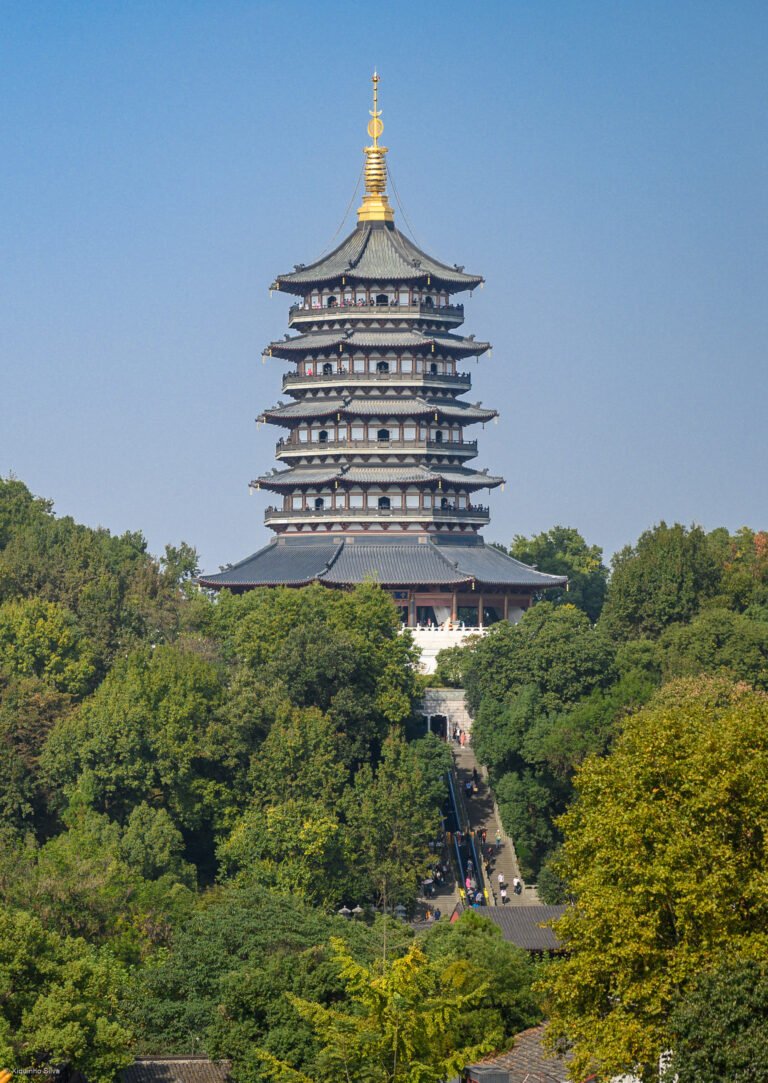
If you must see the headline sights in summer, do the Yellow Crane Tower at opening and be off the summit before the heat builds. The tower is a reconstruction, rebuilt several times across the centuries, but the view back across the Yangtze and the bridge is the real article and worth the climb. Treat it as a thirty-minute stop, not a half-day.
Autumn and winter: the comfortable seasons
Autumn is the safest bet — clear, dry, and warm enough for long walks without the furnace. Winter is colder and greyer but emptier, and the river mists give the bridges and towers a different mood. Neither season draws the blossom crowds, so you get the city at a calmer pace.
This is also the time for East Lake without the summer swell of visitors. The lake rings the city with paths, a botanical garden, and a wetland reserve, and you could spend a full day just walking one shore. It is free to enter the green space, with some attractions inside priced separately.
The Yangtze River cruise, short and cheap, runs between the banks and gives you the bridge and the skyline from the water — better in autumn when the air is clear. Walking the bridge itself is free and takes about half an hour end to end; do it at dusk in autumn and you get the city lights switching on across both rivers, which is the image most visitors actually remember.
Beyond the tower: what’s actually good
The Yellow Crane Tower gets the photo, but the Hubei Provincial Museum is the deeper reward. Its headline object is a set of bronze bells (bianzhong) from the tomb of a Warring States marquis, still playable, with scheduled performances where the ancient tones are struck in front of you. Allow half a day; the museum is large and the bells are only the best-known piece.
The Yangtze River Bridge is worth crossing on foot or by bus at least once, if only to feel how the three towns connect. And the 1911 Wuchang Uprising, which began here and helped end the last dynasty, is marked at the Red Building and related sites — a thread of modern history that most visitors miss entirely.
Guiyuan Temple, in the Hanyang part of the city, is a working Buddhist monastery with a wildly decorated hall of five hundred arhat statues, each one different, and it is far calmer than the tower queue. For a greener half-day, the Wuhan Botanical Garden on the East Lake edge combines the lake walk with plant collections you will not see in the centre, and it is a reliable escape from the summer heat.
A quick seasonal comparison
| Season | Weather | What to do | My verdict |
|---|---|---|---|
| Spring | Mild, blossom crowds | Wuhan University, riverbanks | Best for first-timers |
| Summer | Very hot, humid | Museums, lakeside evenings | Tough but manageable |
| Autumn | Dry, clear | East Lake, bridges, towers | The safest choice |
| Winter | Cold, quiet | River mists, empty sights | Good for photography |
Food that the postcards skip
Wuhan’s breakfast culture, called guozao, is a meal in its own right, and the dish to know is hot dry noodles (reganmian) — sesame-paste noodles served room temperature, not soupy, with a sharp savoury edge. You eat it standing at a stall, quickly, before the day starts. Duck neck (zhouheiya) is the other local obsession, spiced and braised, sold from the chain’s red-fronted shops on nearly every block.
Hubu Lane is the famous snack street, but it is tourist-priced and crowded; the better move is any working breakfast lane near a metro stop, where the queues are full of residents rather than cameras. That is where the real guozao lives, and the prices are a fraction of the postcard version.
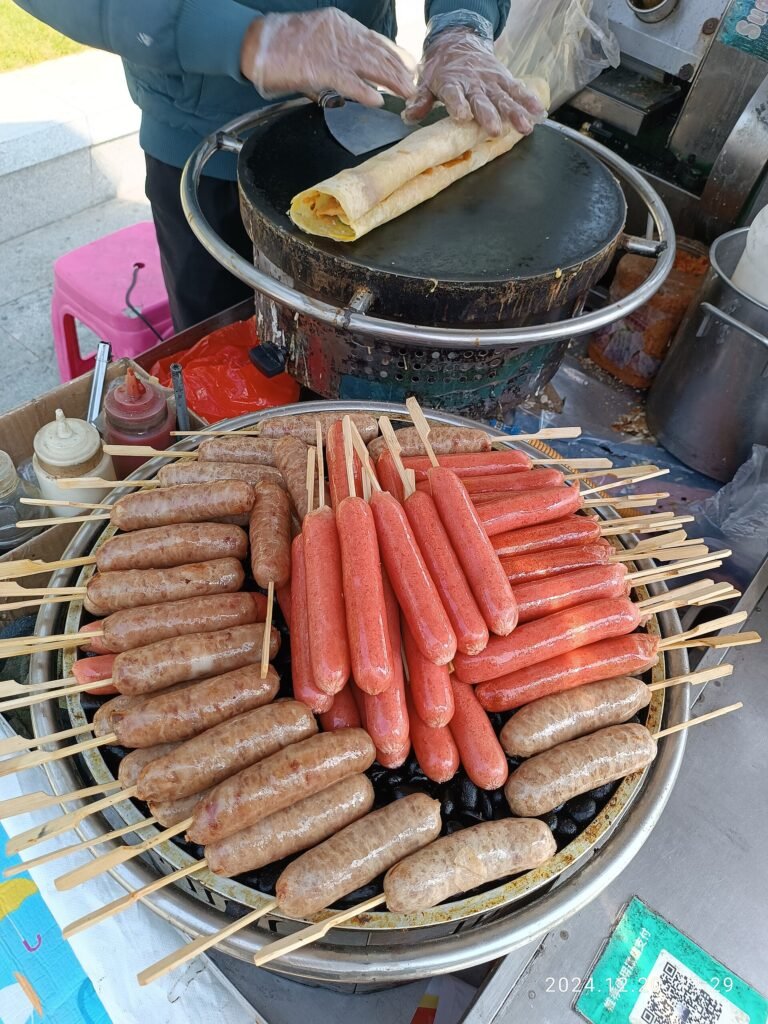
Beyond noodles, look for doupi (a crisp rice-and-egg parcel with savoury fillings), mianwo (a fried rice-flour ring, best from a street stand), and the loaded sesame cakes sold warm from roadside ovens. None are complicated, all are cheap, and together they make the case that Wuhan eats better than its reputation suggests. The breakfast lanes near any metro exit are where you find them at resident prices rather than tourist ones, and the turnaround is fast enough that nothing sits long enough to go cold.
Getting around and linking Wuhan to a wider trip
Wuhan’s metro is extensive and the sensible way to cross between the three towns, because the rivers make surface journeys long. The high-speed rail links are excellent: Beijing is roughly four to five hours north, and the network fans out across the country from here. Factor the rivers into your planning — a hotel in the wrong town can add an hour to every outing.
For a broader central-China route, Chengde Travel Guide is the odd one out geographically but useful if your trip runs north to the old imperial sites, and all about changsha is the natural southern neighbour, Hunan’s capital with its own fierce food scene an hour or two down the line.
Sichuan and the west are covered in Chengdu explained, while everything you need to know about chongqing pairs well as a second river city with a very different character. Further out, Changchun sits in the northeast and how dali is really done offers a slow, lake-and-old-town alternative if you want to end the trip somewhere calm. For a coastal counterpoint, my notes on dalian cover the northeastern port city and its beaches.
Frequently Asked Questions
Is Wuhan worth visiting, or just a transit city? Worth visiting if you give it two days. The museums, the lake, and the food scene are strong, and the river geography is genuinely interesting. As a half-day stop it feels like anywhere, which is why most people misjudge it.
When is the best time to visit Wuhan? Autumn is the safest — clear and dry. Spring is lovely for the blossoms but crowded. Summer is brutally hot, and winter is quiet and cold. Avoid midsummer unless you tolerate heat well.
How many days do I need in Wuhan? Two full days covers the tower, the provincial museum, East Lake, and a riverbank evening. Three lets you add the university in blossom season or a slower lake day.
What is Wuhan’s signature food? Hot dry noodles (reganmian) for breakfast and spiced duck neck as a snack. The guozao breakfast culture is the real local tradition; skip the famous tourist lane and find a resident queue instead.
Can I see the three towns in one day? You can cross all three, but not properly. Pick Wuchang for the lake and university, Hankou for the riverfront and old buildings, and treat Hanyang as the bridge connection. The metro makes hopping possible; the rivers make dawdling expensive.
Is Wuhan walkable? The centres of each town are walkable, but the rivers are wide and the crossings are long, so use the metro to move between towns. Within a town, walking the riverbanks and lake paths is the best way to see the place.