How to Visit Wuzhen Without the Crowds
“Everyone Says It’s Packed” — A Conversation at the Gate
“I came here in 2015 and couldn’t move,” the man next to me said, fanning himself with a folded map. “You’ll hate it today, bank holiday and all.” We were standing at the West Gate ticket office in Wuzhen, a water town in Tongxiang, Jiaxing, in northern Zhejiang, and he had already decided my afternoon was ruined. I thanked him, bought a ticket, and walked straight into a near-empty lane. The truth about Wuzhen is that the crowds are real but they are also predictable, and most visitors never learn the rhythm. What I’d tell a friend: the town is split into two separate scenic zones, the East Gate (Dongzha) and the West Gate (Xizha), and almost everyone piles into the wrong one at the wrong hour. The two zones sell separate tickets and sit a ten-minute shuttle apart, so the first decision is not “Wuzhen or not” but “which gate, and when.” Get that right and the rest is easy.
The first time I visited, I made the same error the man had. I went to Dongzha at ten in the morning, joined a river of tour flags, and left convinced the place was a trap. The second time, I slept inside Xizha and stepped out at seven the next morning. The difference was not the town. It was the clock.
The Number That Changes How You Plan
Here is the figure that reframes the whole visit. Wuzhen receives something on the order of seven million visitors a year, yet by the counts the scenic board has published, the great majority of them enter between 9:30 and 15:00 and never leave the first two streets of whichever gate they chose. That means the same stone bridges that are jammed at noon are nearly empty at 7:00 and again after 17:30, when the day-trippers have boarded their buses back to Hangzhou or Shanghai. The town does not close when the crowds leave — Xizha in particular stays open into the evening, and that is the version worth planning around.
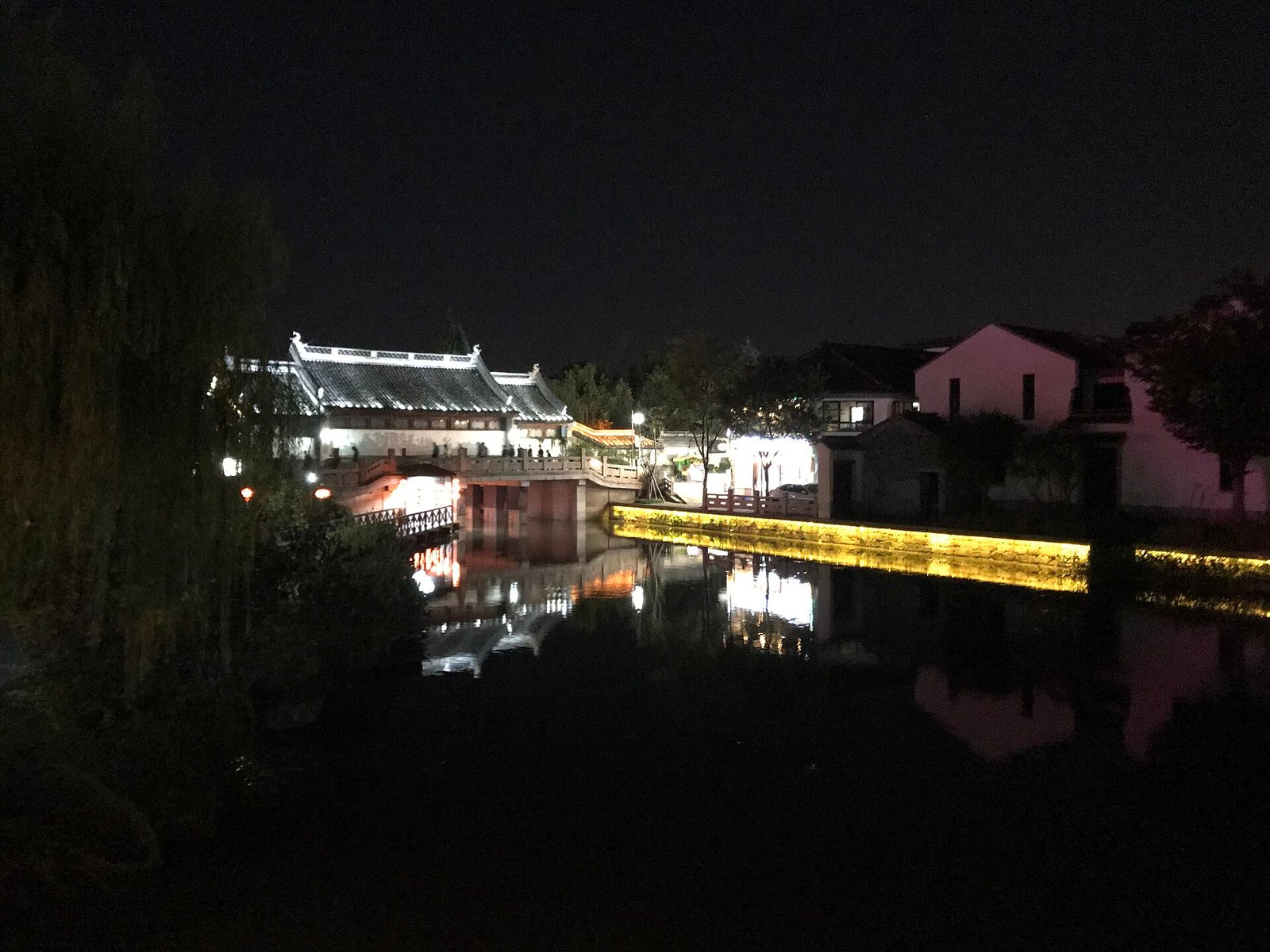
So the single most useful thing you can do is not “avoid Wuzhen” but “arrive before the gate rush.” I now treat the 9:30 wall as a hard line. Be inside the zone before it, or return after it, and you will share the canals with locals walking their dogs rather than with coach tours. Xizha also turns on its lantern-lit canal scene after dark, which pulls a second, smaller wave of evening visitors — but they cluster at the central bridge, and the outer lanes stay still if you walk away from the glow.
East Gate vs West Gate: Pick One, or Time Both
The two zones are a short drive apart and sell separate tickets, so you need a plan rather than a hope. They are not interchangeable. Dongzha is the older, smaller, more museum-like half; Xizha is the larger, rebuilt-and-preserved half with guesthouses, restaurants and evening light shows. I have done both in a day, but only by entering Dongzha at opening and crossing to Xizha in the late afternoon.
| East Gate (Dongzha) | West Gate (Xizha) | |
|---|---|---|
| Size | Small, walkable in 2 hours | Large, needs half a day or an overnight |
| Feel | Museum-like, more original fabric | Polished, more places to eat and sleep |
| Best time | Opening to 9:30 | Late afternoon into the evening |
| Crowd risk | High mid-morning | High midday, calm at dawn and dusk |
| Overnight | Limited | Plenty, inside the gated zone |
If you only have one afternoon, choose Xizha and arrive late. If you want the older workshops and dye houses, choose Dongzha and go early. Trying to “do both properly” in a single rushed day is how people end up hating the place.
The shuttle between the two gates runs every twenty minutes or so and is included if you hold a through-ticket, though a through-ticket only helps if you genuinely want both halves; check the official site before you go for the current RMB figure and whether the combined pass exists that season. Most first-timers do better holding a single Xizha ticket and spending the saved money on a boat ride.
A Quiet Route Through Xizha
When I stay inside Xizha, this is the loop I walk, timed so the busy stretches are behind me before the tours arrive. Minutes are on foot.
- West Gate entrance to the main stone bridge — 4 minutes. Cross at first light for the reflection shot with no one on it.
- Bridge to the indigo-dye workshop — 9 minutes. The cloth hangs in long blue sheets; go before the演示 (demonstration) crowds form.
- Workshop to the old bathhouse lane — 7 minutes. A residential feeling few tourists reach because it has no shopfront.
- Bathhouse lane to the canal-side teahouse — 12 minutes. Sit, order a pot, and watch the boats that the day-trippers are queuing for elsewhere.
- Teahouse back along the western water lanes — 15 minutes. This is the stretch that stays empty even at noon.
That is roughly 45 minutes of walking and three to four hours with pauses. The boat ride through Xizha takes about 50 minutes end to end and reaches the back channels you cannot walk, so I treat it as the reward rather than the shortcut. Confirm the per-boat fare at the dock, because the scenic area has adjusted pricing more than once; check the official site before you go for the current RMB figure and the running hours.
The indigo cloth on this route is not a prop. Wuzhen has produced 蓝印花布, blue printed cloth, for centuries, and the workshop still dips and hangs it the old way; I watched a woman stamp a pattern with carved oiled paper, then submerge the cloth until the white resist bloomed into deep blue. It is the one craft here I would actually buy, and a folded length costs a few tens of RMB at the on-site counter.
Eating and Sleeping Inside the Zone
Food in Wuzhen follows the Zhejiang table: freshwater fish from the canal, the local zha rou (smoked and braised pork), and small sweet rice cakes steamed in leaves. A plate of the pork with a bowl of greens ran me somewhere in the low tens of RMB at a lane-side kitchen last visit, though you should check the official site before you go if you want a fixed menu price rather than a chalkboard one. The stall by the north bridge sells a rice cake I still think about, warm and faintly herbal, for a few RMB.
Where I Slept
I stayed in a guesthouse whose door opened straight onto a canal, and the value was not the room — it was the hour. At 6:30 the next morning the whole zone belonged to me, and I photographed the bridge the tours would later clog with no one on it. Sleeping inside costs more than a budget hotel in Tongxiang town, but it buys you the two quiet windows that matter. If you are on a tight budget, a same-day arrival at 16:00 gives you the evening calm without the room.
The Morning Water Market
If you are awake early enough, the canal by the north bridge becomes a floating market around 6:00, when small boats tie up and sell river greens, tofu and the day’s first fish to the guesthouse kitchens. I bought a stalk of water bamboo for a few RMB just to watch the bargaining; it is the most unselfconscious version of the town and it is gone by the time the first tour flag appears at the gate. Go once and you will stop thinking of Wuzhen as a theme park and start seeing it as a working place.
Where Wuzhen Sits in a Wider Trip
Wuzhen is an easy add-on to any eastern-China route, and it pairs naturally with the big cities that bracket Zhejiang. If your trip opened in the capital, you may have already walked the ramparts at the Badaling Great Wall or drifted the imperial lake at Beihai Park. Heading west, Xi’an rewards a stop for all about big wild goose pagoda, while a southern swing takes in a proper take on chengdu panda base and the hillside lanes of everything you need to know about ciqikou near Chongqing. And when the journey bends toward Guangdong, the Canton Tower Guide gives you a modern skyline as a deliberate opposite to all this grey tile and slow water.
As Wikipedia notes, Wuzhen has a recorded history of over 1,300 years and was a thriving trade town on the route between Hangzhou and Suzhou, which is why its layout still reads as a working settlement rather than a film set. That continuity is the reason the quiet hours feel authentic instead of staged.
Frequently Asked Questions
Can you really avoid the crowds at Wuzhen? Yes, with timing rather than luck. Enter Xizha before 9:30 or after 17:30, and you will miss the bulk of the day-trippers who arrive by coach from Hangzhou and Shanghai.
Should I visit the East Gate or the West Gate? Pick one if you have half a day: Xizha for atmosphere and overnight calm, Dongzha for older workshops and dye houses. Doing both needs an early start and a late crossover.
Is it worth staying overnight inside the zone? For me, yes. The guesthouses inside Xizha let you use the 7:00 and post-dusk windows when the canals are nearly empty, and that is the town at its best.
How do I get to Wuzhen from Hangzhou or Shanghai? It is roughly an hour to ninety minutes by bus or car from either city; many visitors combine it with a day in Hangzhou. Check the official site before you go for the current departure points and fares.
What is the food like and is it expensive? The table is classic Zhejiang — canal fish, smoked pork, leaf-wrapped rice cakes — and a lane-side meal runs in the low tens of RMB. The tourist-front restaurants on the main drag cost more for the same cooking.
Do I need a visa to visit? Most travellers need a Chinese visa arranged before arrival; check the official site before you go for the latest rules, as transit exemptions and regional policies shift from year to year.